 JIMD_editors
What does a Social Media editor do?
If you know, please tell me... but something I've decided to do is work with authors to create Visual Abstracts for their articles. In 2024 we've shared 24 visual abstracts for accompany our publications.
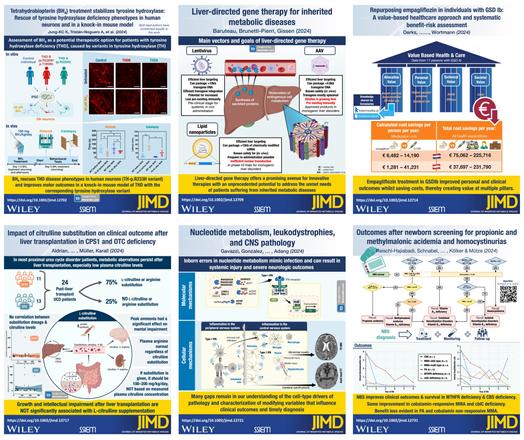
What does a Social Media editor do?
If you know, please tell me... but something I've decided to do is work with authors to create Visual Abstracts for their articles. In 2024 we've shared 24 visual abstracts for accompany our publications.
Interesting new #PKU publication exploring the use of AI to review descriptive language work. The authors find a difference between patients and controls and see a notable variation between those with high and low Phe levels.
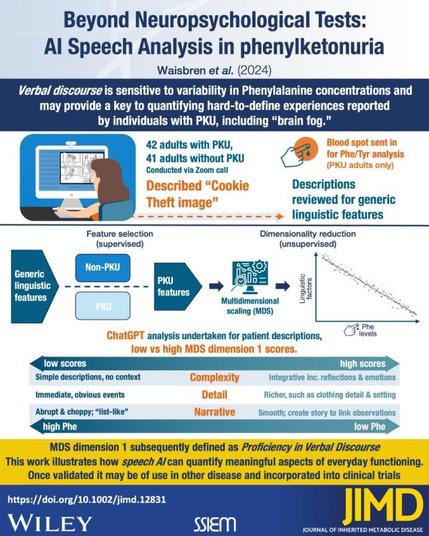
New in the main journal (with #visualabstract)
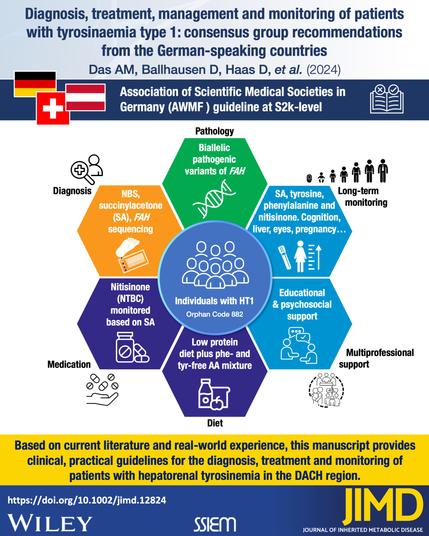
Diagnosis, treatment, management and monitoring of patients with tyrosinaemia type 1: Consensus group recommendations from the German-speaking countries
Anibh M. Das, et al
https://doi.org/10.1002/jimd.12824


Beyond Oblivion No. 3 Throw Pillow by Jeremy Aiyadurai. Our throw pillows are made from 100% spun polyester poplin fabric and add a stylish statement to any room. Pillows are available in sizes from 14" x 14" up to 26" x 26". Each pillow is printed on both sides (same image) and includes a concealed zipper and removable insert (if selected) for easy cleaning.
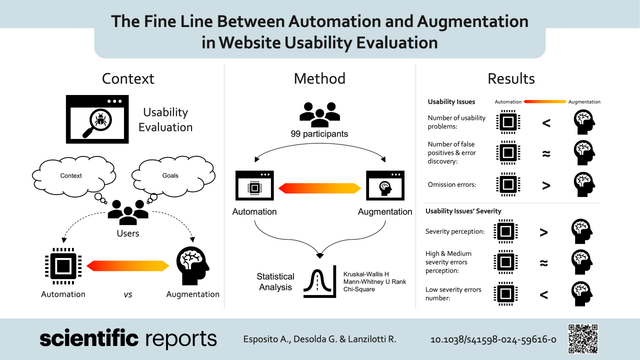
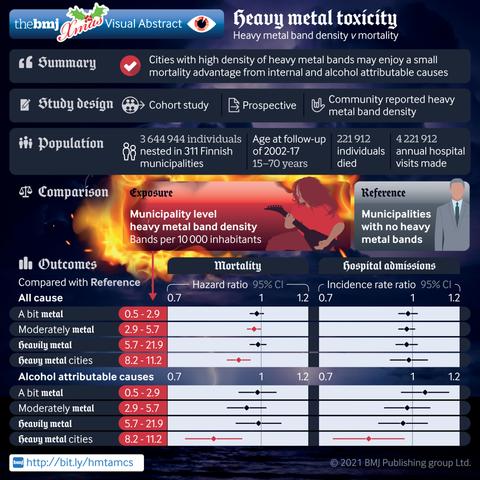
I'm preparing to give a full-day Graphical abstract workshop tomorrow and came across this beauty of a graphical abstract about heavy metal toxicity. 😅
cool example of fixing #confounding - antibiotics and stone edition (no, it ain't any fancy regression or propensity score matching)
https://journals.lww.com/jasn/Fulltext/2023/08000/Outpatient_Antibiotic_Use_is_Not_Associated_with.11.aspx in JASN with a #VisualAbstract from @CorinaT #Epidemiology

higher during the first year after antibiotic use. However, this risk was no longer evident after adjustment for comorbidities and excluding participants with prior urinary symptoms. Findings were consistent across antibiotic classes and the number of antibiotic courses received. This suggests that antibiotics are not important risk factors of kidney stones. Rather, kidney stones when they initially cause urinary symptoms are under-recognized, resulting in antibiotic use before a formal diagnosis of kidney stones (i.e., reverse causality). Background Antibiotics modify gastrointestinal and urinary microbiomes, which may contribute to kidney stone formation. This study examined whether an increased risk of a first-time symptomatic kidney stone episode follows antibiotic use. Methods A population-based case-control study surveyed 1247 chart-validated first-time symptomatic kidney stone formers with a documented obstructing or passed stone (cases) in Olmsted County, Minnesota, from 2008 to 2013 and 4024 age- and sex-matched controls. All prescriptions for outpatient oral antibiotic use within 5 years before the onset of symptomatic stone for the cases and their matched controls were identified. Conditional logistic regression estimated the odds ratio (OR) of a first-time symptomatic kidney stone across time after antibiotic use. Analyses were also performed after excluding cases and controls with prior urinary tract infection or hematuria because urinary symptoms resulting in antibiotic prescription could have been warranted because of undiagnosed kidney stones. Results The risk of a symptomatic kidney stone was only increased during the 1-year period after antibiotic use (unadjusted OR, 1.31; P = 0.001), and this risk was attenuated after adjustment for comorbidities (OR, 1.16; P = 0.08). After excluding cases and controls with prior urinary symptoms, there was no increased risk of a symptomatic kidney stone during the 1-year period after antibiotic use (unadjusted OR, 1.04; P = 0.70). Findings were consistent across antibiotic classes and the number of antibiotic courses received. Conclusions The increased risk of a first-time symptomatic kidney stone with antibiotic use seems largely due to both comorbidities and prescription of antibiotics for urinary symptoms. Under-recognition of kidney stones that initially cause urinary symptoms resulting in antibiotic use may explain much of the perceived stone risk with antibiotics (i.e., reverse causality)....
The #KDPI sucks, exhibit 467 in the CJASN
#Transplant
don't discard organs based on high KDPI? @ChristosArgyrop
#VisualAbstract from Divya Bajpai
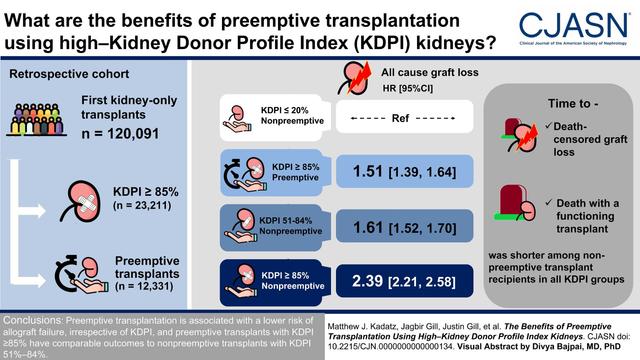

ation without prior maintenance dialysis) is associated with longer allograft survival than transplantation after dialysis; however, it is unknown whether this benefit extends to high-KDPI transplants. The objective of this analysis was to determine whether the benefit of preemptive transplantation extends to recipients of transplants with a KDPI ≥85%. Methods This retrospective cohort study compared the post-transplant outcomes of preemptive and nonpreemptive deceased donor kidney transplants using data from the Scientific Registry of Transplant Recipients. 120,091 patients who received their first, kidney-only transplant between January 1, 2005, and December 31, 2017, were studied, including 23,211 with KDPI ≥85%. Of this cohort, 12,331 patients received a transplant preemptively. Time-to-event models for the outcomes of allograft loss from any cause, death-censored graft loss, and death with a functioning transplant were performed. Results Compared with recipients of nonpreemptive transplants with a KDPI of 0%–20% as the reference group, the risk of allograft loss from any cause in recipients of a preemptive transplant with KDPI ≥85% (hazard ratio [HR], 1.51; 95% confidence interval [CI], 1.39 to 1.64) was lower than that in recipients of nonpreemptive transplant with a KDPI ≥85% (HR, 2.39; 95% CI, 2.21 to 2.58) and similar to that of recipients of a nonpreemptive transplant with a KDPI of 51%–84% (HR, 1.61; 95% CI, 1.52 to 1.70). Conclusions Preemptive transplantation is associated with a lower risk of allograft failure, irrespective of KDPI, and preemptive transplants with KDPI ≥85% have comparable outcomes with nonpreemptive transplants with KDPI 51%–84%....
#TheEvidenceSpeaks for March is LIVE:
https://cheos.ubc.ca/research-in-action/the-evidence-speaks-march-2023/
Learn about:
▶ #Mpox vaccine promotion and uptake
▶ Impact of organized activities on child wellness
▶ How patient priorities could help inform disease management decisions

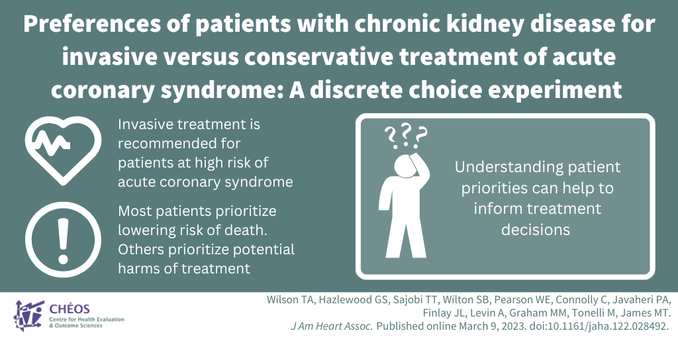
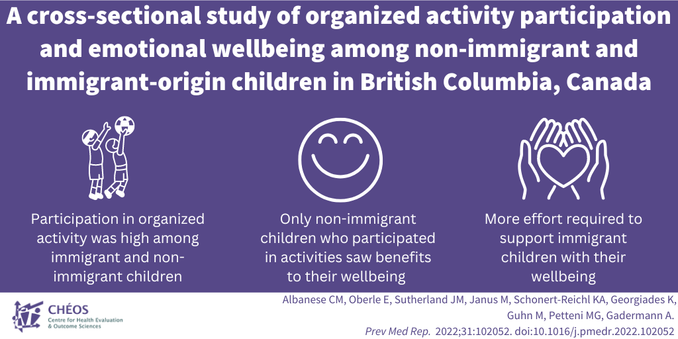

This edition includes research on Mpox vaccine uptake among STI clinic clients, organized activities and the emotional wellbeing of children, and patient preferences for managing acute coronary syndrome
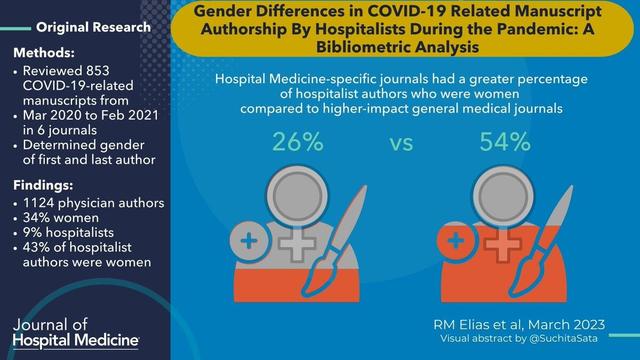
It's an honor and a privilege to be a part of an organization that centers ideas like gender-equity and then makes concerted efforts to make it happen.
Tip my hat to @SamirShahMD and the rest of the @JHospMedicine team for this accomplishment
---
RT @JHospMedicine
🤩 Exciting to see validation of the progress 📈 we are making at JHM to promote gender equity in hospital medicine research 🎉
.
.
.
https://bit.ly/3FmzKKX
#VisualAbstract…
https://twitter.com/JHospMedicine/status/1638939438205272066
 Jeremy
 Andrea Esposito
 Liesbeth Smit
 Swapnil Hiremath
  MD
MD CHÉOS
CHÉOS Charlie Wray, DO, MS