 Carlton Carnivores
‘Nother Species Spotlight: Orange-striped Ribbon Snake!
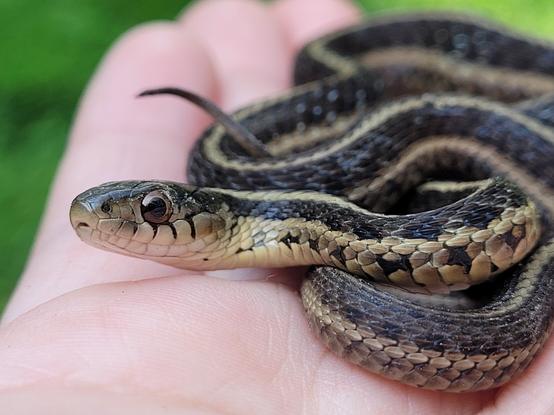
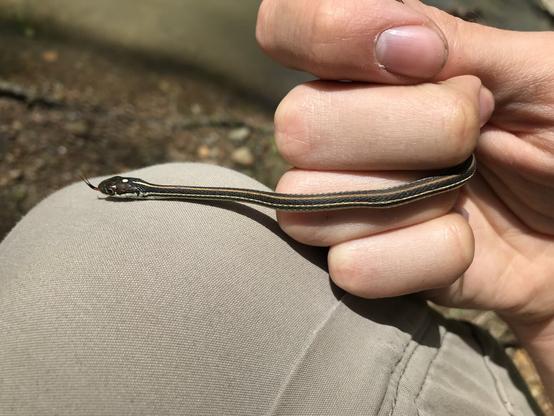
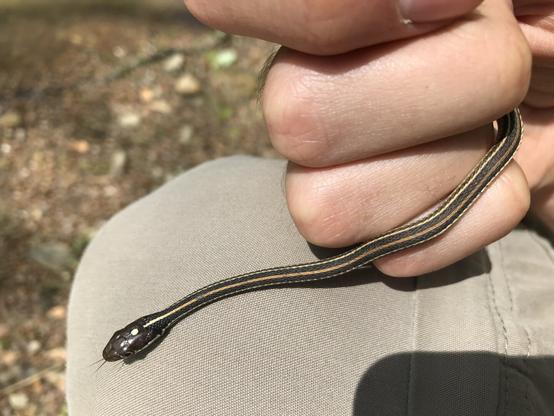
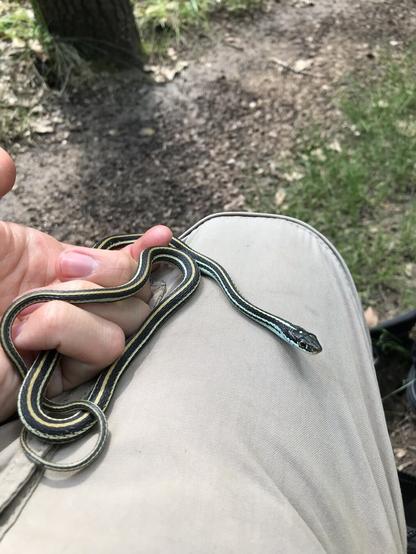
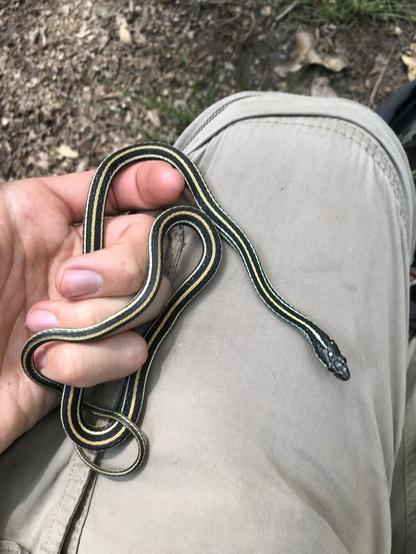
Thamnophis proximus proximus, the nominate and probably most widespread of the western ribbon subspecies, this slender garter snake is found from a spotty distribution in the upper Midwest down through most of the Mississippi Valley and eastern Plains states in pretty much every area that has some riparian habitat and especially permanent water (oddly though, they seem to be missing in reports from much of the Ozark Plateau). They’re of similar length to other garters, averaging between 20-30 inches when mature and maxing out at around 4 feet on rare occasions, but they are built notably slimmer than their relatives and frequently show far less additional pattering between their stripes. This subspecies tends to have orange dorsal striping (hence the common name) and dark brown to black background, with a lateral stripe and belly that range from creamy white to green or blue tinted, and along with the eastern ribbon has a characteristic white spot ahead of the eye that in concert with their build and sinple striping help identify these species compared to other garters.
Ribbons are somewhat more specialized in diet than other garters, very attuned to small fish, amphibians, and slimy invertebrates and tend to remain more tied to wet locations. Like the rest of their genus they possess a mild venom to stun these small prey items that they otherwise consume whole and alive, delivered through enlarged rear teeth…but are harmless to people, as they would usually rather smear musk on a predator than bite and don’t often chew when they nip in self defense, so experiencing even the mildest of reactions to their exceedingly mild venom is unlikely. Spastic wiggling is usually their most violent of defenses.
#thamnophis #thamnophisproximus #ribbonsnake #snake #educational #species #animals #herpetology #wildlife #nature #reptiles #biology #carltoncarnivores
Thamnophis proximus proximus, the nominate and probably most widespread of the western ribbon subspecies, this slender garter snake is found from a spotty distribution in the upper Midwest down through most of the Mississippi Valley and eastern Plains states in pretty much every area that has some riparian habitat and especially permanent water (oddly though, they seem to be missing in reports from much of the Ozark Plateau). They’re of similar length to other garters, averaging between 20-30 inches when mature and maxing out at around 4 feet on rare occasions, but they are built notably slimmer than their relatives and frequently show far less additional pattering between their stripes. This subspecies tends to have orange dorsal striping (hence the common name) and dark brown to black background, with a lateral stripe and belly that range from creamy white to green or blue tinted, and along with the eastern ribbon has a characteristic white spot ahead of the eye that in concert with their build and sinple striping help identify these species compared to other garters.
Ribbons are somewhat more specialized in diet than other garters, very attuned to small fish, amphibians, and slimy invertebrates and tend to remain more tied to wet locations. Like the rest of their genus they possess a mild venom to stun these small prey items that they otherwise consume whole and alive, delivered through enlarged rear teeth…but are harmless to people, as they would usually rather smear musk on a predator than bite and don’t often chew when they nip in self defense, so experiencing even the mildest of reactions to their exceedingly mild venom is unlikely. Spastic wiggling is usually their most violent of defenses.
#thamnophis #thamnophisproximus #ribbonsnake #snake #educational #species #animals #herpetology #wildlife #nature #reptiles #biology #carltoncarnivores
 Cindy Cinnamon
 Charring Auh
 Chuckling Duck
 Lauren Harter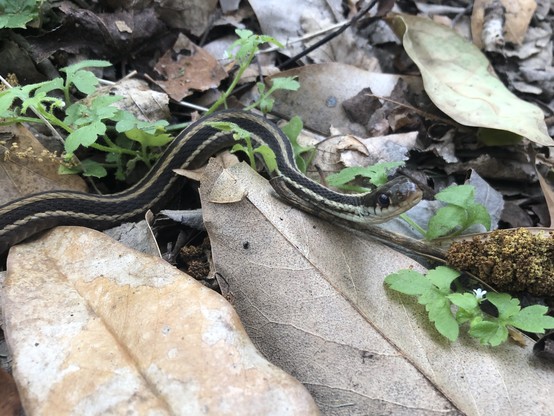
 Colin Purrington
 snake
snake