"Cool, cool, cool..."😎
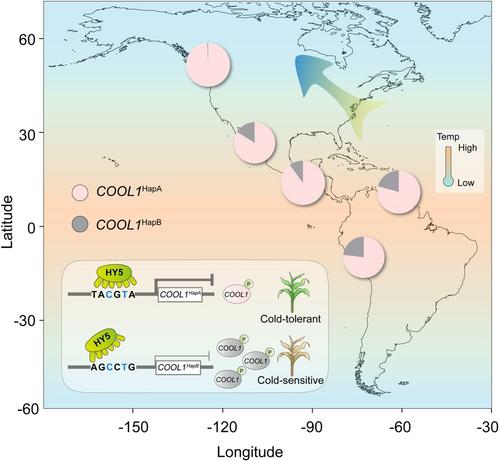
In a new JIPB commentary, Xiaoyu Guo and Kang Chong discuss new work from Zeng et al. (2025, Cell) that explores the role of COOL1 in #maize cold #adaptation: its significance for high-latitude adaptation and potential for breeding cold-tolerant maize. https://doi.org/10.1111/jipb.13865
@wileyplantsci
#PlantSci #JIPB #ClimateCrisis #CropSci #teosinte #botany 🔓
Corn's ancient ancestors are calling: Genomic encyclopedia sheds light on domestication 9,000 years ago

The domestication of maize is one of the greatest examples of humankind's impact on evolution. Early farmers' pre-industrial plant breeding choices turned corn from a nearly inedible crop into the major global food source it is today.

Phys.org
Research traces modern maize back to a hybrid created 5,000 years ago in Mexico

Maize is one of the world's most widely grown crops. It is used for both human and animal foods and holds great cultural significance, especially for indigenous peoples in the Americas. Yet despite its importance, the origins of the grain have been hotly debated for more than a century.

Phys.org
How maize got to Peru
Ancient DNA analyses reveal the origins of some of the oldest corn husks in the world.
The plant we know today as maize or corn began its story 9,000 years ago in modern-day Mexico, when farmers of the Balsas River basin started to carefully breed its ancestor, the wild grass teosinte parviglumis.
https://elifesciences.org/digests/83149/how-maize-got-to-peru 3maize #corn #peru #DNA #mexico #teosinte
How maize got to Peru

Ancient DNA analyses reveal the origins of some of the oldest corn husks in the world.

eLife Sciences Publications, Ltd