KillBait News
Buster Keaton Tested His Voice for the Transition to Talking Films
📰 Original title: Actor Buster Keaton Listening to His Own Voice, ca. 1920s
🤖 IA: It's not clickbait ✅
👥 Users: It's not clickbait ✅
View full AI summary: https://en.killbait.com/buster-keaton-tested-his-voice-for-the-transition-to-talking-films.html?utm_source=mastodon_world&utm_medium=social&utm_campaign=killbait.mastodon_world
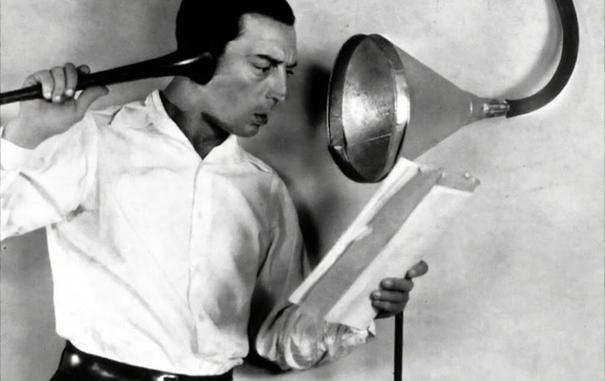
Buster Keaton Tested His Voice for the Transition to Talking Films
In the late 1920s, silent film legend Buster Keaton undertook an unusual yet practical task: he listened to recordings of his own voice to ensure it matched the persona that had made him famous, the stoic 'Great Stone Face.' The transition from silent films to 'talkies' posed a significant challenge for many actors, as audiences expected a voice that complemented their established screen image. Keaton, fascinated by both performance and the mechanical aspects of filmmaking, carefully evaluated how his deep, slightly Midwestern, gravelly voice would sound on early sound equipment like Vitaphone, which was prone to distorting pitch and tone. Unlike some of his contemporaries who struggled to adapt, Keaton’s voice proved well-suited to the silent-film persona he had developed over the previous decade. His first full-length talking picture, 'Free and Easy' (1930), confirmed that his natural speaking style translated effectively to sound film. While his career later faced setbacks due to studio control issues at MGM rather than any vocal shortcomings, Keaton’s meticulous preparation for the arrival of sound movies highlights his dedication to his craft and his keen understanding of how technology could influence performance.
 KillBait
 🧙🏽Muirén🦉
 Jack Taylor
 Georgiana Brummell
 Giuseppe Michieli
 infini
 John Brophy
 Bruce Sterling @bruces
 Social Newsia