 mtp
mtpCloudflare can officially go drown in a bag of dicks.
The unusual activity you detected was the swearing you heard from me through my screen.
Cloudflare can officially go drown in a bag of dicks.
The unusual activity you detected was the swearing you heard from me through my screen.
#NetGouv26 : On passe à la fragmentation d'Internet (#Splinternet) avec :
Ksenia Ermoshina (@cis_cnrs , @cnrs) : Surveiller la santé de l'Internet : métrologie de trafic comme outil de gouvernance collective
Kianoosh Yasaei (CÉMTI, Paris 8) : Le Réseau national d’information en Iran comme infrastructure de censure et de contrôle
Riccardo Nanni (@cis_cnrs, @cnrs : Une arme des faibles ? Une économie politique de la fragmentation d’Internet
Discussion par Raphaël Maurel
Új publikáció az Információs Társadalom folyóiratban az Internet szétagol(ód)ásáról, Clément Perarnaud, Francesca Musiani és Lucien Castex-el.
https://inftars.infonia.hu/pub/inftars.XXVI.2026.1.12.pdf
A @cis_cnrs támogatásával
After all these blocks and restrictions, it’s highly unlikely the internet will ever be the same. Even without diving into technical specs or the security levels of specific tools, one thing is clear: we are living in a time when everyone, one way or another, uses a VPN. The network has already changed irrevocably. There is likely no going back.
Privacy used to be a hobby for geeks. Today, even people far removed from IT are trying to figure out Delta Chat and its relays, setting up bridges, and seeking alternative communication channels. Some go even further, deploying Meshtastic to create independent communication nodes that don’t rely on an ISP or a central server. Using email aliases and password managers is no longer a matter of "good etiquette"—it’s a basic survival skill. Even lamers are learning to protect their digital perimeter as naturally as they lock their front door.
Trust in centralized giants is shattered. When any service can turn into a pumpkin at the flick of a regulator's switch or due to sanctions, people begin to value what is under their full control. Sane users are migrating to federated networks (like Mastodon), where there is no single "kill switch." Some are hosting their own instances and using protocols that are harder to track and block.
The global web is fracturing into a patchwork quilt. Instead of a unified information space, we’ve ended up with a Splinternet — a system of isolated segments connected by guerrilla paths. The internet is becoming more complex, slower to configure, and more demanding of the user’s knowledge. Yet, at the same time, it’s becoming more resilient. Attempts at control give birth to bypass tools that make the network decentralized — essentially what it was always meant to be.
The old "transparent" internet is dead. The new internet is a territory of digital resistance, where anonymity, encryption, and owning your own infrastructure are the only ways to stay connected. The dumber ones will eventually realize that access to information is not a right, but the result of a correctly configured tunnel or proxy. The era of digital naivety is over.
The ultimate irony of this censorship saga is that this very "yeast" is breeding a hyper-technical generation. By trying to shield itself, the state machine has inadvertently triggered a digital evolutionary leap that might have taken a century in peacetime. We are hurtling toward a reality where the "average user" goes extinct; the standard proficiency in anonymization and decentralization tools will soon rival that of modern-day hackers. Consequently, attacks on state infrastructure will inevitably grow in volume and sophistication. This transformation is happening right now, and in about five years, we’ll witness a far more hardcore level of digital confrontation.
Welcome to our glorious bright future, to the brave new world, and finally — to the cyberpunk reality (high tech, low life).
#DigitalResistance #Splinternet #CyberSecurity #Privacy #InternetFreedom #VPN #Decentralization #Hacktivism #Censorship #FutureIsNow #TechSavvy #GuerrillaTech
The road to Splinternet

Borders no longer live only on maps. They are encoded in routing tables, DNS responses, certificate authorities, and platform rules. The same request can be routed differently, blocked quietly, or resolved by alternate authorities depending on where it originates. The network follows the protocol perfectly, even as the world it connects fractures.
Traffic flows, handshakes complete, and connections succeed while invisible checkpoints dictate what is reachable. The internet is quietly splitting into archipelagos, each governed by unseen rules, and no one told the packets they needed permission to cross. Welcome to the splinternet.
#Splinternet #Networking #CyberSecurity #Infosec #DigitalDystopia
@sphcow As much as I have deep #splinternet concerns, what's being demonstrated isn't necessarily fragmentation. It's being demonstrated that freedom of access and expression for the Internet is not universal. This was already true for economic reasons.
Most of our reminders about this tend to be inconsistent censorship regimes.
RE: https://mastodon.social/@artefr/115702235778301318
En complément
Qu’est-ce que le #splinternet ? Et les raisons pour lesquelles il faut s’y intéresser
https://www.internetsociety.org/fr/blog/2022/03/quest-ce-que-le-splinternet-et-les-raisons-pour-lesquelles-il-faut-sy-interesser/
 julienrossi
 Rасhеl Lеviеvа
 eqtv
eqtv Fraggle
 Truone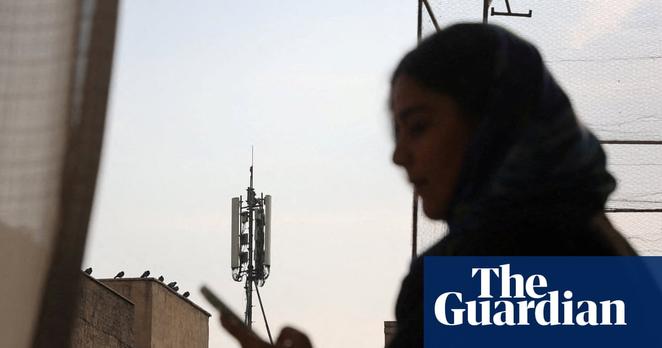
 Jeffrey Haas
 Deep Press Analysis
 out of bounds, anywhere out