36/37
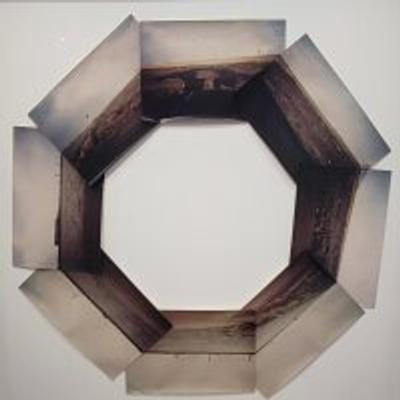
In some posh neighborhoods of Brussels, you can find private owners that claim to restrict access to "their" road and square, based on some old legal rules from the Rural Code. Who the fuck thinks a 19th-century agricultural code should apply to an urban capital? Such a lazy sense of self-entitlement, with norms that so obviously go against common decency, makes you want to cross their imaginary lines right in front of them. Even if you'd rather be anywhere else than in their boring ass area.
#filmphotography #colorfilm #lomography400 #minoltahimatic #pointandshoot #nowarbutclasswar #privateproperty #spatialsegregation

【💡High Cited 2020-2022 】
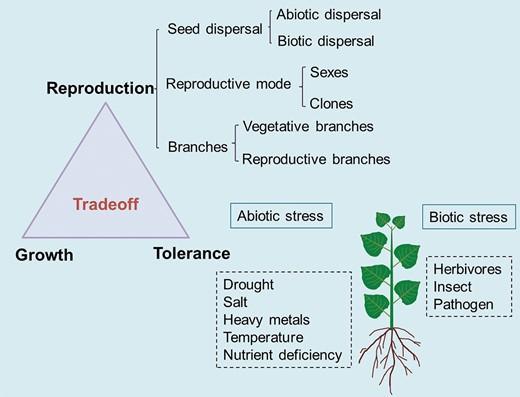
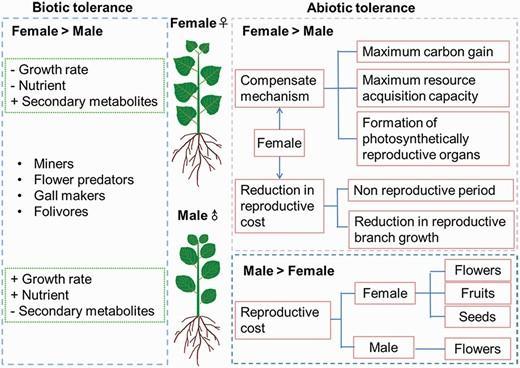
Sexual differences and #SexRatios of dioecious plants under stressful environments

Research points:
1️⃣ #SexualDimorphism
2️⃣ sex-specific responses
3️⃣ sex ratio biases

#Dioecy | #StressTolerance | #Competition | #SpatialSegregation

https://doi.org/10.1093/jpe/rtab038

Published in the special issue "Negociating one's place in the #mountain" (2024):

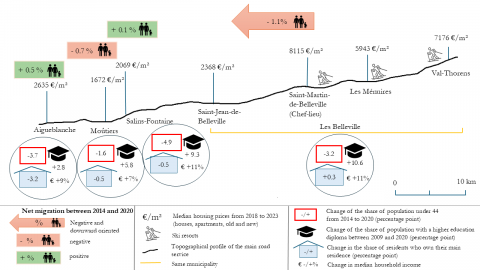
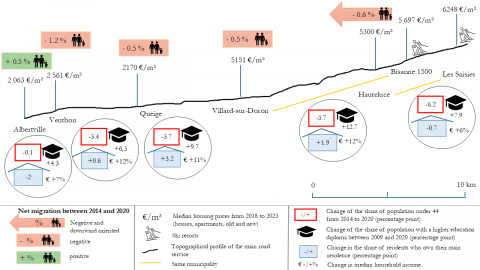
"'Altitudinal Gentrification' and 'Social Descent in the Valley' through the Lens of #Housing Access in the French #Alps.

> Are there spatial segregations between permanent residents, seasonal workers, and second-home owners within tourist municipalities or in the valleys?

https://journals.openedition.org/rga/13553

#segregation #SpatialSegregation #SeasonalWorkers #tourism

“Altitudinal Gentrification” and “Social Descent in the Valley” thr...

Introduction The areas characterised by winter sports tourism have experienced an evolving socio-economic dynamic and demographic change since the emergence of ski resorts (André-Poyaud et al. 2010...

Join us on Thursday 08.06 at 4pm BST to the next #SSLSeminars session by @ilgit0 who'll talk about her work on the persistence of #SpatialSegregation in 15 US cities using #SpaceSyntax. @spacesyntax

Register: https://ucl.zoom.us/meeting/register/tJcsdeioqjksGtAeWHwd4H69Y5XE32udFIni
More details: http://bit.ly/SSLSeminars

Welcome! You are invited to join a meeting: Space Syntax Lab Seminars - Dr Ilgi Toprak. After registering, you will receive a confirmation email about joining the meeting.

Redlining Persistence in US Cities: Segregation Through the Lens of Urban Configuration Spatial disparities in the US are closely related to systemic inequality, as historically underprivileged communities were restricted to specific areas by government policy. This policy has significantly impacted segregation, but current income inequality and increased land value have intensified spatial disparities, resulting in segregation to persist. My previous study at SSS13 found that different US cities have unique configurations resulting in diverse integration and segregation forms, systemic exclusion, intentional self-segregation, or enclaving strategies of different racial and ethnic groups. Although the results were meaningful, the sample size needed to be increased to generalize findings. My ongoing study allows the statistical investigation of more cities with different factors contributing to the persistence of redlining. In this research, I attempt to answer which factors contribute to redlining persistence by systematically examining segregation patterns across 15 US cities and investigating configurational, demographic, economic, and social factors that might contribute to segregation in these cities. I aim to propose a data-informed exploration and a regression model in three steps: (1) exploring spatial correlations of historical residential segregation patterns and urban configuration with street network analyses (NAIN and NACH) using data visualizations, (2) followed by a multivariate regression model that assesses the factors contributing to the persistence of residential segregation due to redlining in US cities, and finally (3) using feature selection to choose which factors help the model increase its statistical significance. _ This event is organised by the Space Syntax Laboratory, Bartlett School of Architecture, University College London. Dr Kimon Krenz ([email protected])

Zoom