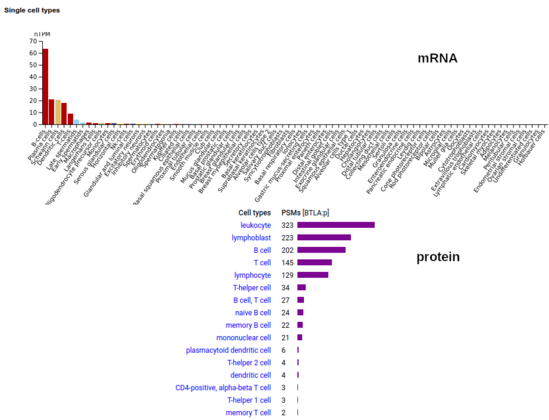
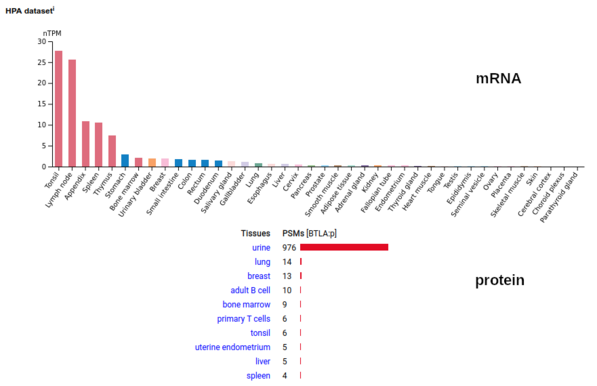
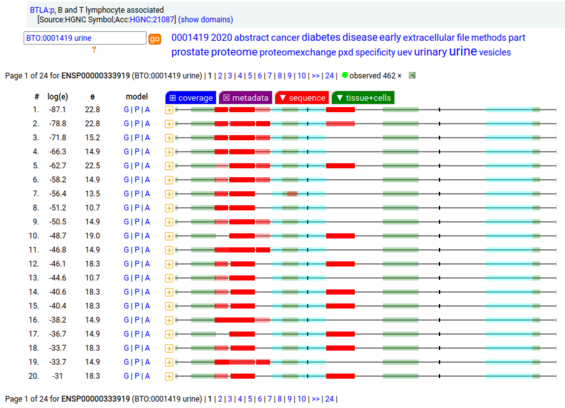
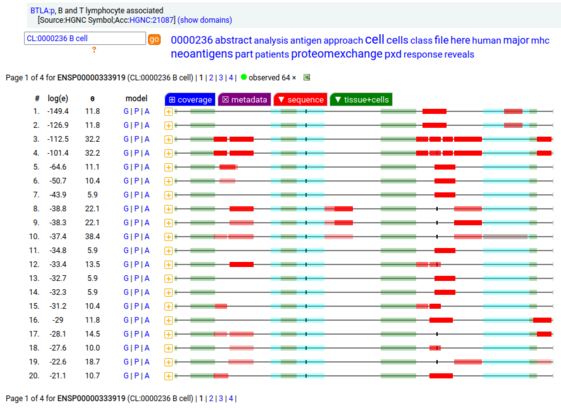
A lymphocyte antigen that is a type I membrane protein with 1 extracellular immunoglobulin-like fold. Signal peptide: (1-30); extracellular region: (31-152); TM domain (153-175); intracellular SY-phospho-IDR (175-289). The soluble urine/blood plasma form does not have signals cward of K194.

Human B and T lymphocyte associated (#BTLA:p, #CD272:p)―HPA mRNA tissue & cell type distributions paired with GPMDB protein tissue & cell type tabbulations. #proteomics #sources_sinks
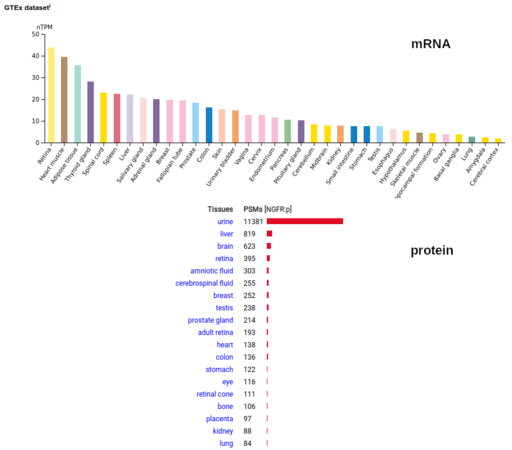
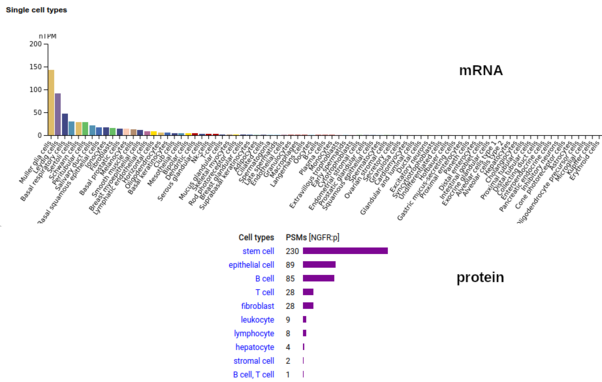
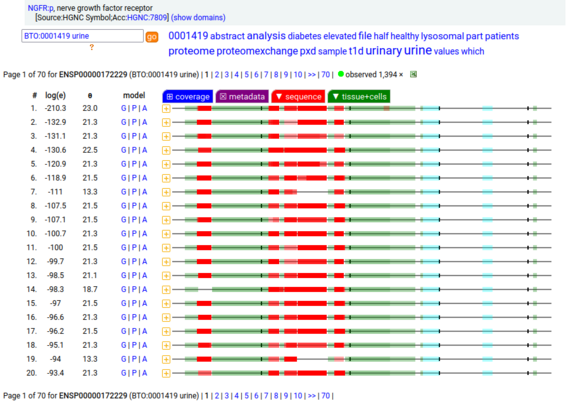
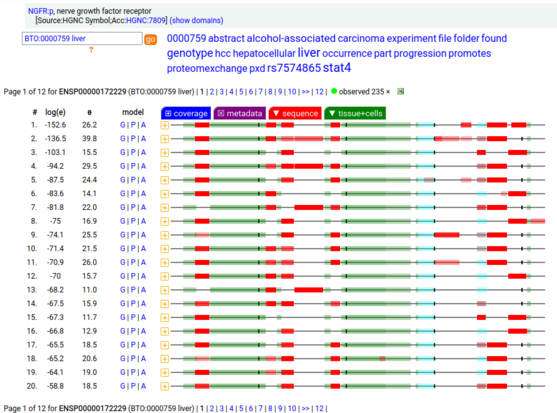
A tissue antigen that is a type I membrane protein with 1 extracellular TNF receptor domain. Signal peptide: (1-28); extracellular region: (29-249); TM domain (250-272); intracellular ST-phospho-IDR region (273-427). The soluble urine/amniotic fluid form does not have signals cward of R194.

Human nerve growth factor receptor (#NGFR:p, #CD271:p)―HPA mRNA tissue & cell type distributions paired with GPMDB protein tissue & cell type tabbulations. #proteomics #sources_sinks
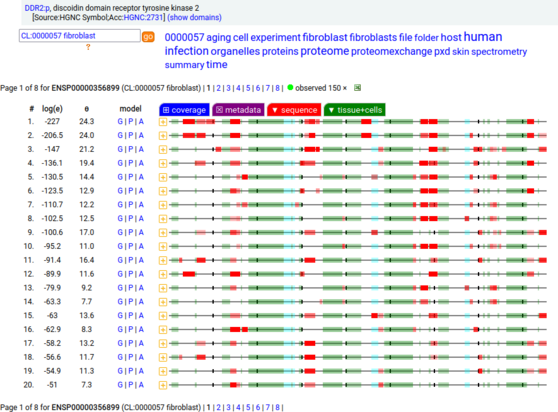
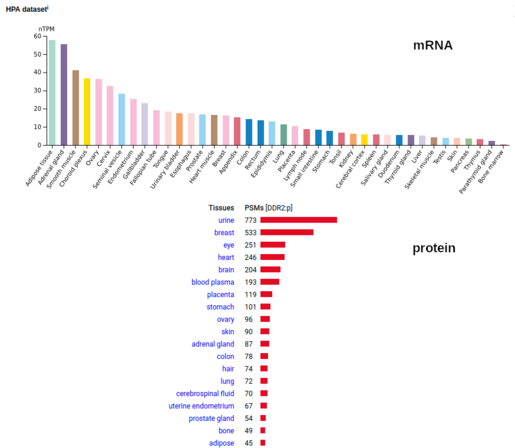
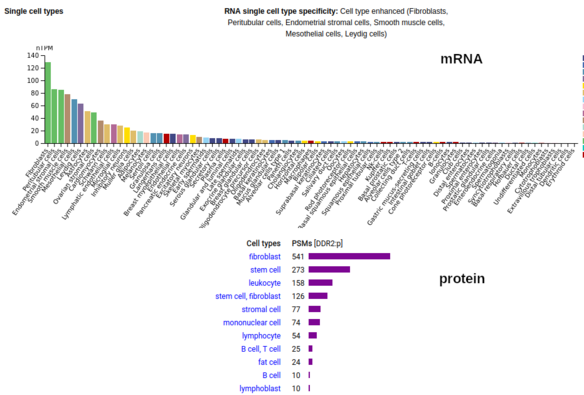
This fibroblast antigen is a type I membrane protein with 1 extracellular F5/8 type C domain. Signal peptide: (1-23); extracellular region: (24-498); TM domain (399-421); intracellular SY-phospho-IDR+kinase region (422-855). The soluble urine/blood plasma form does not have signals cward of R341.

Human discoidin domain receptor tyrosine kinase 2 (#DDR2:p, #CD167B:p)―HPA mRNA tissue & cell type distributions paired with GPMDB protein tissue & cell type tabbulations. #proteomics #sources_sinks
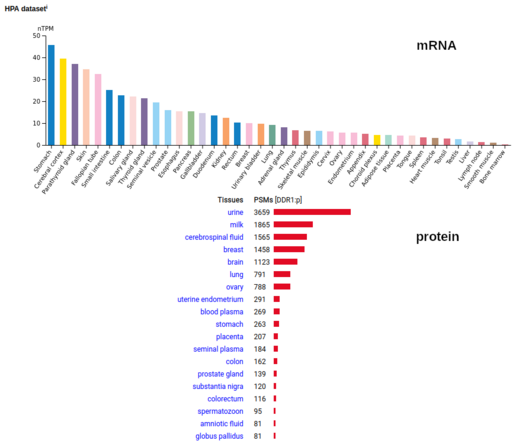
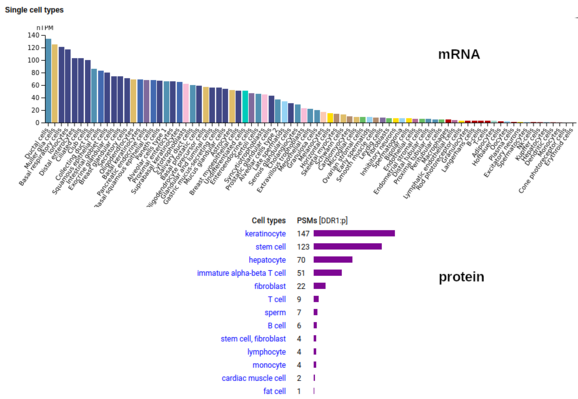
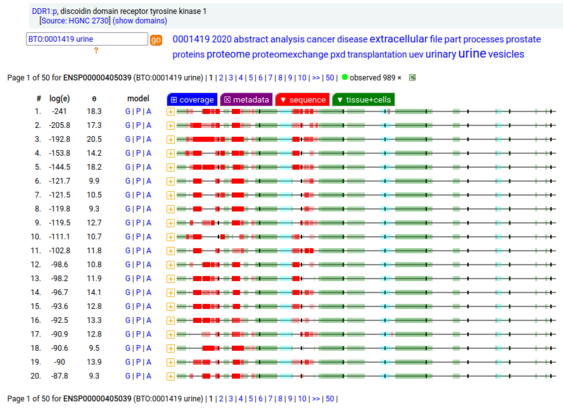
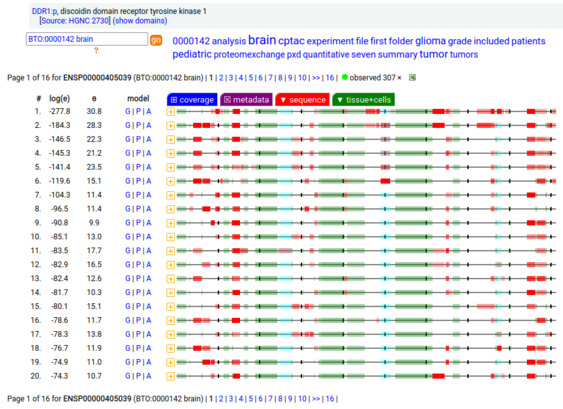
This antigen is a type I membrane protein with 1 extracellular F5/8 type C domain. Signal peptide: (1-20); glycosylated extracellular region: (21-416); TM (417-439); intracellular Y-phospho-IDRs + kinase domain (440-913). The soluble urine/milk/blood plasma form does not have signals cward of R341.

Human discoidin domain receptor tyrosine kinase 1 (#DDR1:p, #CD167:p)―HPA mRNA tissue & cell type distributions paired with GPMDB protein tissue & cell type tabbulations. #proteomics #sources_sinks
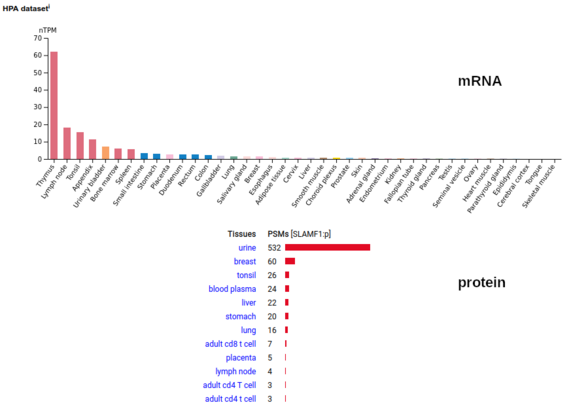
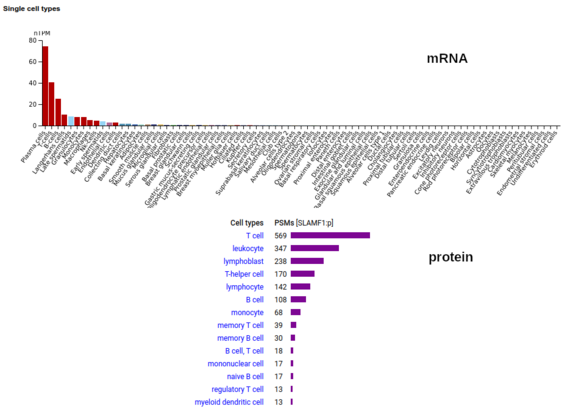
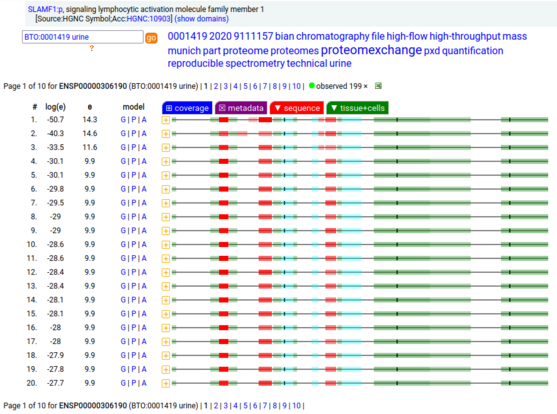
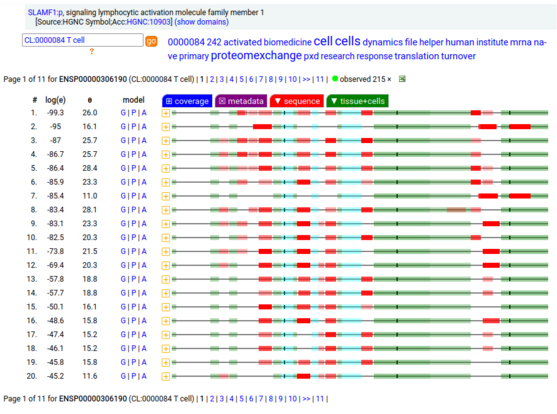
This lymphocyte antigen is a type I membrane protein with 2 extracellular immunoglobulin-like folds. Signal peptide: (1-20); glycosylated extracellular region: (21-237); TM domain (238-260); intracellular Y-phospho-IDR (261-335). The soluble urine form has no signals cward of K147.

Human signaling lymphocytic activation molecule family member 1 (#SLAMF1:p, #CD150:p)―HPA mRNA tissue & cell type distributions paired with GPMDB protein tissue & cell type tabbulations. #proteomics #sources_sinks
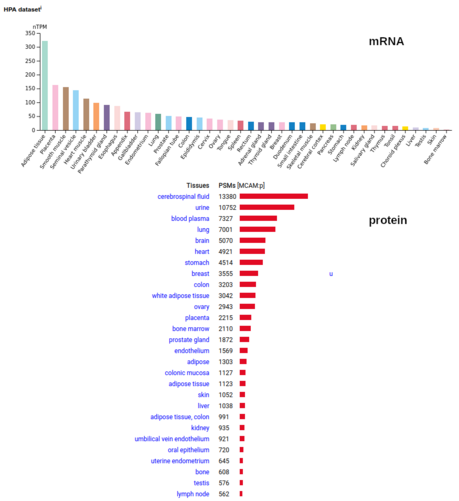
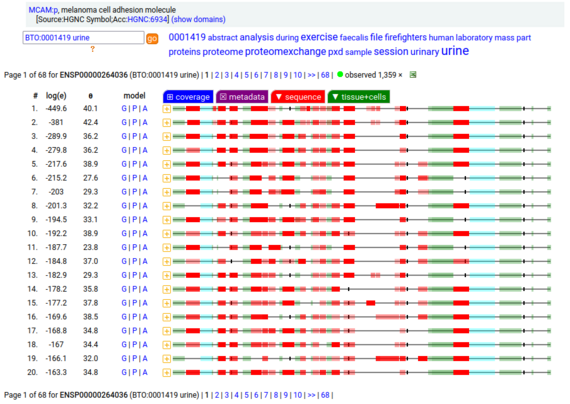
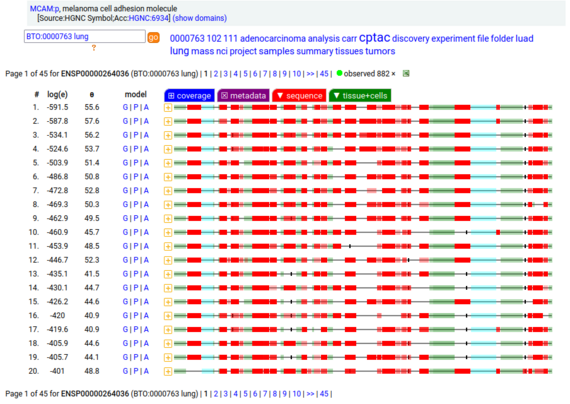
This solid tissue surface antigen is a type I membrane protein with 5 extracellular immunoglobulin-like folds. Signal peptide: (1-23); N-glycosylated extracellular region: (24-559); TM domain (560-582); intracellular SY-phospho-IDR (583-646). The soluble urine/blood/CSF form does not have signals cward of K507.

Human melanoma cell adhesion molecule (#MCAM:p, #CD146:p)―HPA mRNA tissue & cell type distributions paired with GPMDB protein tissue & cell type tabbulations. #proteomics #sources_sinks
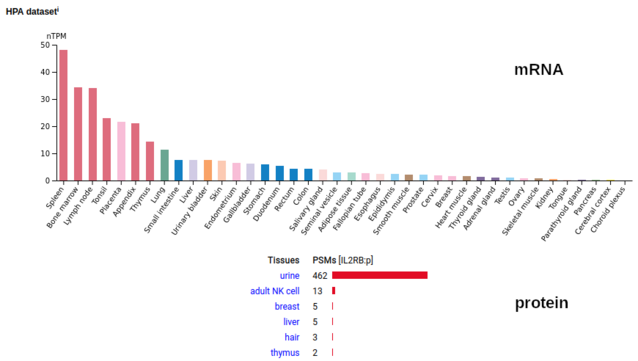
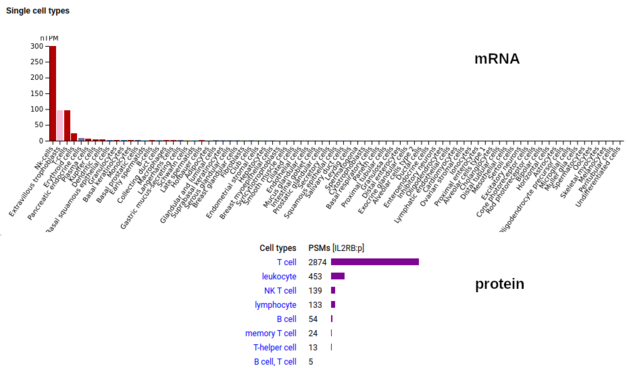
This T cell antigen is a type I membrane protein with 2 extracellular immunoglobulin-like folds. Signal peptide: (1-26); extracellular region: (27-242); TM domain (243-265); intracellular S-phospho-IDR (266-551). The soluble urine form only has rare signals cward of R230.

Human interleukin 2 receptor subunit beta (#IL2RB:p, #CD122:p)―HPA mRNA tissue & cell type distributions paired with GPMDB protein tissue & cell type tabbulations. #proteomics #sources_sinks
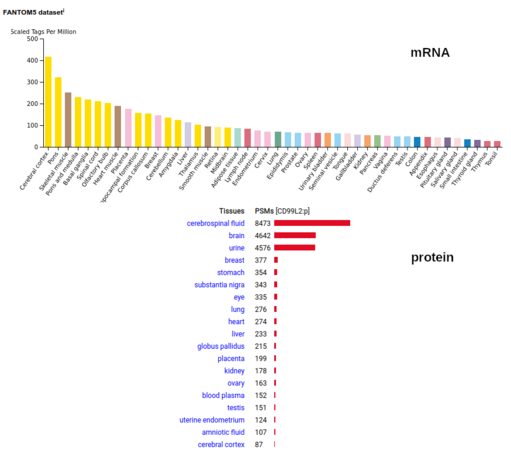
While CD99L1:g turned out to be a pseudogene, this protein is a type I membrane protein without extracellular folds. Signal peptide: (1-[24-28]); extracellular region: ([25-29]-185); TM domain (186-208); intracellular phospho-IDR (209-262). The soluble urine form only has rare signals cward of K163.

Human cluster of differentiation member 99-like 2 (#CD99L2:p)―HPA mRNA tissue & GPMDB protein tissue tabbulations. #proteomics #sources_sinks
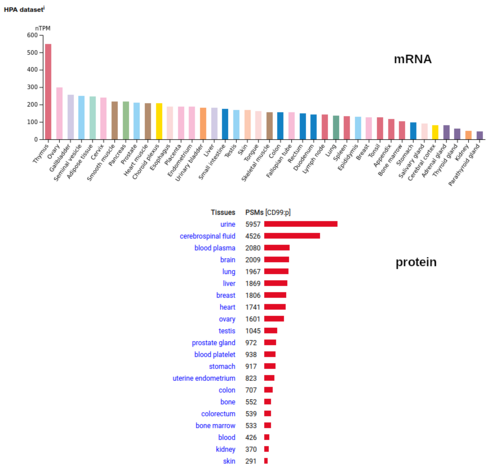
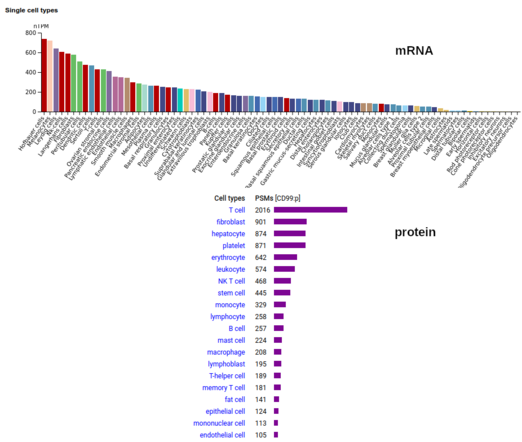
Part of the largely forgotten XG blood group of antigens, this one is a type I membrane protein without any extracellular structure. Signal peptide: (1-21); extracellular region: (22-125); TM domain (126-148); intracellular ST-phospho-IDR (149-185); T41, S48+glycosyl. The soluble form in urine has no signals cward of V135.

Human cluster of differentiation member 99 (#CD99:p)―HPA mRNA tissue + cell type distributions & GPMDB protein tissue + cell type tabbulations. #proteomics #sources_sinks
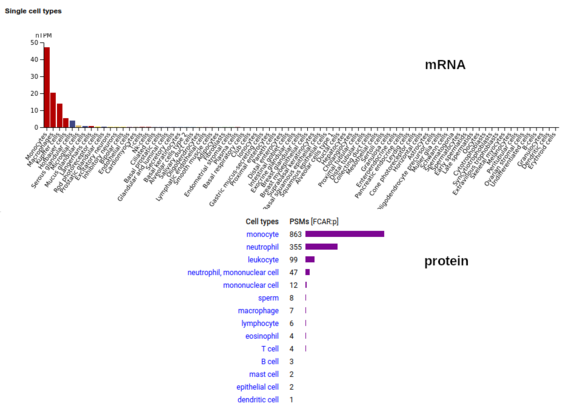
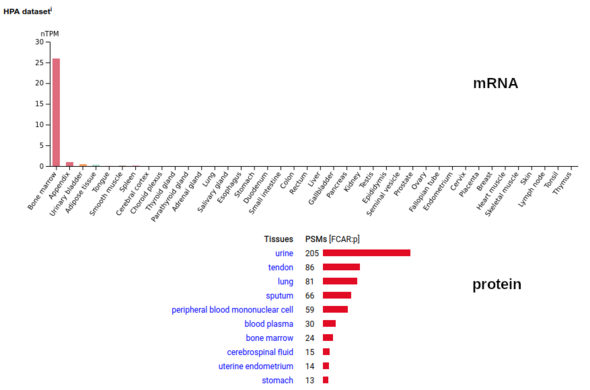
FCAR:p may be found in the monocyte lineage: a type I membrane protein with 2 extracellular Immunoglobulin-like folds. Signal peptide: (1-21); extracellular region: (22-227); TM domain (228-246); intracellular S-phospho-IDR (247-287); N79, N141, N186+glycosyl. The soluble form in urine has no signals cward of R230.

Human cluster of differentiation member 89 (#CD89:p/#FCAR:p)―HPA mRNA tissue + cell type distributions & GPMDB protein tissue + cell type tabbulations. #proteomics #sources_sinks