 ComputerBase
Sony Alpha 1 II: DSLM-Kamera mit State-of-the-Art-Technik kostet 7.500 Euro https://www.computerbase.de/news/audio-video-foto/sony-alpha-1-ii-dslm-kamera-mit-state-of-the-art-technik-kostet-7-500-euro.90356/ #sony #sonyalpha #sonyalpha1

 Unofficial PetaPixel Bot
It Took Six Months, But CFexpress Card Makers (Mostly) Cleaned Up Their Acts https://petapixel.com/2024/07/08/it-took-six-months-but-cfexpress-card-makers-mostly-cleaned-up-their-acts/ #videoperformanceguarantee #compactflashassociation #cfexpresstypea #cfexpresstypeb #sonycameras #sonyalpha1 #Editorial #Equipment #cfexpress #sonya9iii #standards #Features #features #facts #data #Sony #cfa #vpg

 petapixel (unofficial)
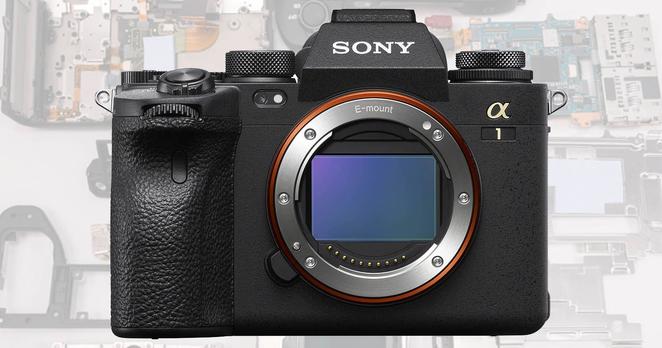
Sony Alpha 1 Teardown: The Inside of a Flagship Mirrorless Camera
#equipment #technology #a1 #alpha1 #camera #disassembled #disassembly #flagship #mirrorless #sony #sonya1 #sonyalpha1 #takenapart #teardown

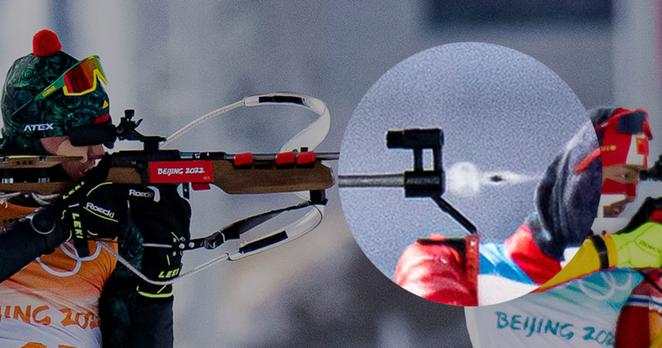
Olympic Photographer Catches Bullets in Mid-Air with the Sony Alpha 1
#educational #equipment #spotlight #biathlon #bullet #flyingbullet #olympics #sonyalpha1 #speedingbullet #vytautasdranginis

Sports Photographer Shares What It’s Like Capturing the 2022 Olympics
#features #spotlight #travel #2022 #2022olympics #actionsportsphotography #beijingolympics #nickdidlick #olympics #sony #sonyalpha1 #sports #sportsphotography #winterolympics

The Sony Camera That Tumbled Down an Olympic Ski Slope Survived
#culture #news #2022olympics #2470mmf28gm #accident #alpha1 #beijingolympics #durability #mishap #nickdidlick #olympics #oops #sony #sonyalpha1 #survived #winterolympics
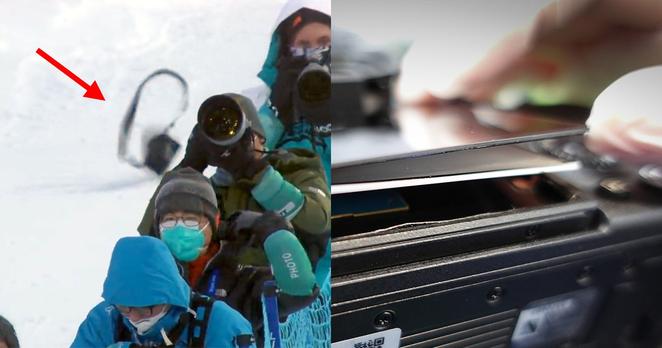
Photographer’s Camera Tumbles Down Ski Run at Winter Olympics
#culture #news #2022olympics #accident #alpha1 #beijing2022 #caughtoncamera #olympics #oops #sony #sonyalpha1 #weathersealing #winterolympics

Canada’s Largest News Organization Moves Exclusively to Sony Cameras
#equipment #industry #news #canada #journalists #photojournalists #sony #sonyalpha1 #sonyalpha9ii #sonycameras #thecanadianpress
PetaPixel’s Bold Camera Predictions for 2022
We're starting a new tradition here at PetaPixel , where our staff gets together to discuss the things they know, not just think, will transpire over the course of the next calendar year. As bold predictions go, we're almost certainly going to get a lot of this wrong.
Thanks to our constant inundation with technology, imaging, and art news, we at PetaPixel get to talk about some of the coolest technology and most interesting trends all the time and can't help but speculate on what is going to happen next. And while we are probably too informed on the topic given that we are steeped in it on a daily basis, that probably doesn't mean we'll be right by much more than they would be (like how being knowledgable about football doesn't mean you're going to draft a great fantasy team), but it's still a blast to discuss.
2021 had a lot of great stuff come out, and there is no reason to believe 2022 will be any different. Below are 10 bold camera industry predictions that the PetaPixel team discussed as a group that we know without a shadow of a doubt will come to pass.
1) Canon will launch at least two cameras in the first quarter, but the R1 won't appear until 2023.
There have been no shortage of rumors regarding new cameras that are expected to come from Canon next year, and we agree that a few of them are right on the money. We aren't able to say definitively what they'll be, but an EOS R5c and an APS-C RF model are very likely to show up. When they do, it will be in the first three months of the year.
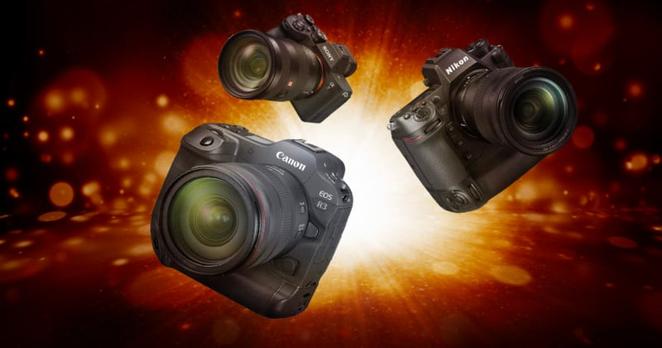
But what you won't see at all next year is the EOS R1. A lot of fans expect to see Canon's answer to the Alpha 1 and the Z9 in 2022, but what is expected to be called the R1 is still a ways away yet. We actually don't expect Canon to even announce that it is in development until the spring of 2023, with a launch later that fall.
2) The Canon M series will be abandoned.
Speaking of a new APS-C camera model next year, Canon will use that to move away from its M line of cameras. Canon's EOS M line has had its ups and downs over the years, but the system is nearly a decade old now and it still has done next to nothing meaningful to advance Canon's mirrorless tech. Sorry EOS M fans, even though you like it, you're in the minority.
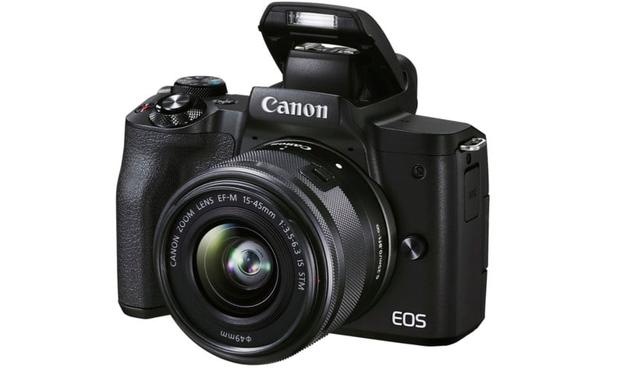
It cannot be argued that Canon didn't start to turn heads in mirrorless until it developed the RF system, and even Canon was rumored to be internally debating if the M series was worth continuing. Now that it has two mirrorless mounts to support and the RF system is far more popular, Canon will make up its mind and let the M series quietly die off and will replace it with an RF APS-C mount, making the EOS M50 Mark II the final EOS M series camera to be produced.
3) Everyone is going to make a shutterless camera.
The Nikon Z9 changed the game in two major ways this year, one of them was in proving that a physical shutter was no longer necessary. While we still haven't seen the Z9 roll out to customers, initial reports are extremely positive. By eliminating the shutter, Nikon also did away with one of the few parts that had a physical lifespan. Photographers can now fire away without worrying about reaching maximum shutter actuations on a camera and needing to get it replaced. The secondhand market also no longer has to worry about that physical part in determining the value of a used Z9.
This is only the beginning. By the end of 2022, we'll have evidence to show that every major camera manufacturer is going to follow in Nikon's footsteps and leave the physical shutter behind.
4) Some high-end cameras will get cheaper, but not all of them.
The second major way Nikon changed the game is in pricing: the Z9 is absurdly cheap for what it offers. Now, Nikon likely had to do this in order to find its way back into the market in a meaningful way, but what is done is done, and pandora's box has been opened. Now that consumers know that the features of a flagship-level camera can be had for less than $5,000, good luck convincing us that any camera manufacturer making a device of similar caliber can ever charge more.
That said, we expect to see a couple of tiers when it comes to "flagship" level cameras. Nikon has a history of making multiple versions of its flagships, and it's highly likely that if they do so again with the Z9 series, it'll be at a higher price. But the Sony Alpha 1 Mark II and Canon R1 are going to have a big hill to climb if they think they can only match or barely exceed what the Z9 offers and ask for $1,000 to $1,500 more. Those days are behind us.
5) Nikon won't surpass either Sony or Canon in camera sales, despite the Z9's wild success.
The Z9 is going to sell incredibly well. So well, in fact, that Nikon is expected to be able to churn out maximum production capacity for the next six months to a year and still not make enough of them to have any sitting on store shelves for a walk-in purchase. It will be Nikon's best-selling camera in years and will very likely be met with serious critical acclaim.
But it won't do much to change Nikon's profits compared to Sony and Canon. Not only will Nikon not surpass either Canon or Sony in camera sales, it won't come even close to matching them.
Don't get us wrong, Nikon is definitely going to see strong financial performance throughout next year, but the Z9 is only the beginning of the company's recovery since hitting rock bottom in early 2021. The Z9 starts what subsequent cameras will finish, and it will be years yet before Nikon is more than a distant third place in camera sales profits to the two top dogs.
6) We won't see Sigma's Foveon camera in 2022.
Honestly, we might never see it, but Sigma's Foveon camera isn't coming next year. Sigma's next-generation mirrorless Foveon camera has almost become the stuff of mythology at this point, it's been so long since it was promised. Earlier this year, Sigma had to "go back to the drawing board" on the camera and start entirely from scratch. That was, mind you, a year after the company delayed the camera "indefinitely."
This project feels cursed and that's not changing in 2022.
7) Sony won't change its camera body design.
If you think that seeing both Canon and Nikon release larger, pro-level-sized bodies with integrated battery grips would spur Sony to finally follow suit, you're dreaming. Sony is rabidly dedicated to what it calls the "Five Fundamentals." One of those fundamentals is "compact," and Sony is not going to deviate.
So no, even with multiple major global news organizations switching to Sony, those photojournalists who have spent the last decade-plus using integrated-grip-style cameras will have to get used to the detachable kind, because Sony's not going to change the style of its camera bodies.
8) Another leading manufacturer will make a Camera powered by Android… and it will fail.
Someone is going to make a camera powered by Android thinking it will succeed where others have failed, but they will be doomed to fail. Samsung tried to ride this line and they're long gone out of the mainline camera industry and Zeiss tried again with the ZX1 which, after some brief initial fanfare, disappeared into obscurity, no doubt helped by it's absurd $6,000 asking price.
For folks who want this integrated experience, modern smartphones provide exactly what they're looking for and anything standalone like the ZX1 isn't going to be worth the cost. But that's not going to stop someone from trying it again. Hopefully they'll at least be smart enough to make it somewhat approachable in price.
9) Sony will finally use a rear LCD with more than 2 million pixels.
It's gotta be coming. We have the technology. You sort of have to believe Sony will be forced to, right?
…right?
10) Canon and Nikon are done making DSLRs.
You've seen the last new DSLRs from Canon and Nikon that will ever be made. Both companies are firmly in the mirrorless market now, and while they'll both continue to support their current DSLR customers, investment is fully in mirrorless. The writing has been on the wall here for some time and even though the 5D Mark IV continues to be popular, Canon has been slowly discontinuing EF lenses and hasn't done much to support DSLRs other than make small updates to the 1DX Mark III.
Pentax might be alone on the DSLR hill, but that's probably just fine with them.
Image credits: Elements of header photo licensed via Depositphotos.
#editorial #features #opinion #2022 #boldpredictions #canon #canoneosr3 #canonesor1 #foveon #nikon #nikonz9 #predictions #sigma #sony #sonyalpha1
The PetaPixel Awards: The Best Photography Products of 2021
We are proud to announce the first-ever PetaPixel Awards which praise a number of new photography products that our staff has voted on as the best in their respective categories.
In this, our first year, the PetaPixel staff was asked to vote on their picks for the best products released in 2021 and are currently available to photographers across six categories: camera, smartphone, monitor, computer, software feature, and photography accessory.
Methodology: Because PetaPixel 's staff is made up entirely of current and former photographers, all were asked to vote for a camera of the year. In the remaining categories, the experts within each section each submitted their selections and the votes were tallied. In all cases, those who deal directly with sales and marketing were excluded from voting to retain objectivity.
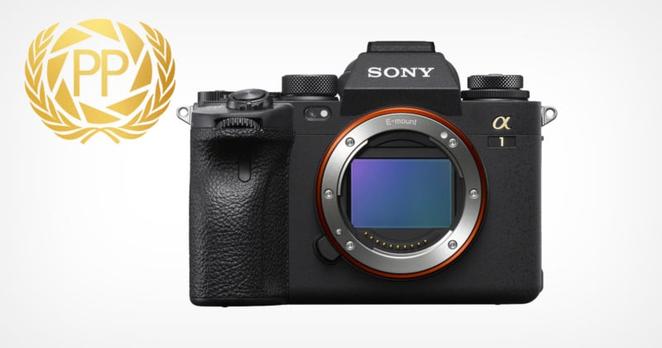
Camera of the Year: Sony Alpha 1
Sony started the year off strong with a show-stopper of a camera in the Alpha 1. Like most products, it was heavily hyped and bore with it massive expectations. Most would buckle under that weight, but the Alpha 1 shouldered it like a champion.
And a champion it is, and the recipient of PetaPixel 's 2021 Camera of the Year Award. Sony impressed with its mixture of resolution and framerate, as the Alpha 1 is capable of 50-megapixel photos at up to 30 frames per second. It also features a robust and reliable autofocus system, excellent ISO performance, a blackout-free shooting experience, and the ability to capture 8K video at up to 30 frames per second along with the ability to output 4.3K 16-bit RAW video or record in Sony S-Cinetone. In short, it is a monster of a camera that can excel in both photo and video applications.
Read more: Sony Alpha 1 Review -- Yeah, It Really Is That Good
Of particular note is that the Alpha 1 is not only PetaPixel 's pick, but the choice was unanimous among the writing and editorial staff.
Honorable mentions in this category go to the Canon EOS R3 and the DJI Ronin 4D, both of which received multiple votes and each are deserving of merit.
Editor 's Note: The Nikon Z9 was not considered this year as it is not yet available. It will be considered in 2022.
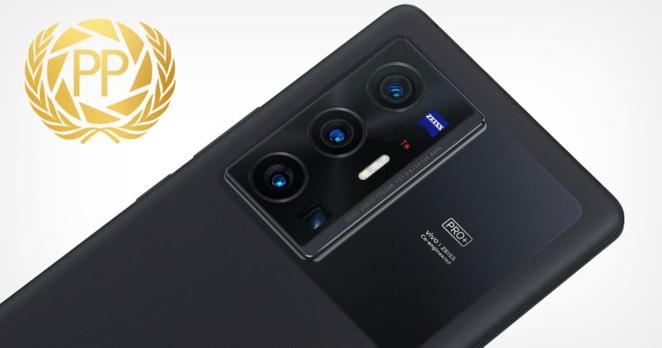
Smartphone of the Year: Vivo X70 Pro+
The smartphone camera market has never been more competitive, and rising to the top required a camera that offered a mix of versatility and consistency across a wide set of use cases. For that, we could find no other more deserving than the Vivo X70 Pro+.
While it is certainly possible to take better photos with the Google Pixel 6 Pro or the Sony Xperia I, the X70 Pro+ is far more consistent across the board. It comes loaded with features that are truly tailored to photographers and the overall quality of the device is up there with the best in the industry.
Read more: Vivo X70 Pro+ Review -- An Encore Ready to Take on the Best
Vivo is a relatively new brand in the smartphone market and distribution in the west is still spotty, yet the performance of the X70n Pro+ is top of the line and worthy of praise.
Monitor of the Year: Dell U4021QW Ultrawide
The Dell U4021QW Ultrawide monitor isn't the most color-accurate nor is it the best deal among all-new displays this year, but it is the most versatile and is truly one-of-a-kind. There is something to be said for having a 5K by 2K display that supports true 10-bit, and the sheer workspace it offers makes it tough to beat.
Read more: Dell U4021QW Review -- The Premiere Ultra-Wide Monitor for Photo Editing
The Dell U4021QW is a phenomenal ultra-wide. It is one of the best on the market and the premiere ultra-wide monitor for photo editing thanks to its dynamite combination of size, aspect ratio, resolution, color accuracy, and gamut coverage. It's a productivity dream, and can truly replace a dual-monitor setup for those who demand both resolution and color accuracy.
Computer of the Year: Apple MacBook Pro with M1 Max
Apple created the most impressive computer we saw this year in the MacBook Pro with M1 Max, and it wasn't close. The MacBook Pro smoked the competition in nearly every performance category and did so with or without direct wall power. A remarkably consistent machine, the MacBook Pro also sports incredible battery life, an outstanding display, a wonderful keyboard, and the return of a plethora of ports including MagSafe.
Read more: Apple MacBook Pro with M1 Max Revie -- Hail to the King
The MacBook Pro with M1 Max looks, feels, and operates like a real professional machine, and it dominates the competition because of it. Right now, there is no better buy for sheer editing performance than the MacBook Pro. Welcome back to the top Apple, we've missed you.
Software Feature of the Year: Adobe Photoshop Super Resolution
Adobe wasn't the first to create a powerful artificial intelligence-based image upscaler, but its addition into Photoshop made it the most easily accessible. On top of that, it works incredibly well. Multiple tests show that Super Resolution is able to make photos that would normally only be suitable for sharing online into those capable of being printed and framed. Not only that, it's simple, fast, and reliable.
Read more: Adobe Photoshop’s ‘Super Resolution’ Made My Jaw Hit the Floor
Super Resolution is a feature that Adobe did not mange to over hype and under deliver on, but quite the opposite. It's one of the best new features to come to Photoshop and is one our team uses regularly.
Photography Accessory of the Year: Manfrotto Move
The Manfrotto Move didn't land with nearly the splash that new computers or cameras do, but it is one of the most useful workflow enhancement tools that has been released in recent years. Many accessories either make no or small meaningful changes to a photographer's workflow on set, but the Manfrotto Move can truly revolutionize speed and efficiency.
Read more: The Manfrotto ‘Move’ is a Modular Support System for the Hybrid Shooter
This small, unassuming puck gives photographers and filmmakers far more flexibility on set by making it ridiculously easy to swap tools between support tools like tripods, gimbals, jibs, and sliders. The quick-release plate pops in and out of the Move catcher with ease and just as quickly snaps back into place. Not only that, tripod heads don't move unless you want them to, meaning there are few to no drawbacks to using the Move system.
The Manfrotto Move is not exciting. It doesn't grab headlines nor does it warrant hype, but what it does do is work, and work exceedingly well. For that reason, it is the most impressive accessory we saw this year.
#editorial #equipment #adobephotoshop #apple #applem1 #applemacbookpro #awards #best #bestof #cameras #dellmonitor #m1max #manfrotto #manfrottomove #mirrorlesscameras #monitor #petapixelawards #petapixelawards2021 #smartphone #sonyalpha1 #superresolution #ultrawide #vivox70proplus