#paperOfTheDay is "Lips: p-adic and singular phase space" from 2023. This article is quite different from the ones I usually read, in that it is not about a computation, but rather it describes a software. It is normal for research projects in theoretical #physics to involve large amounts of programming and computer use. Almost all of these operations rely on purpose-built #scientificSoftware , and there is a great number of open source libraries for all kinds of specialist physics computations.
The present article describes the package "Lips" (short for "Lorentz invariant phase space"), whose primary purpose is to generate valid sets of momenta for scattering amplitudes: A scattering amplitude is a function of masses and momenta of a set of particles, and it usually implies various constraints to these (e.g. masses should be positive, momenta should be conserved, individual momenta should square to given values, etc.). This makes it a non-trivial task to produce concrete numerical values of momenta that satisfy these constraints. Beyond that, one might also require specific types of numbers (rational, complex, p-adic, etc), or represent the momenta as spinors. The package can also do further calculations that arise in this context, such as evaluating spin-helicity expressions.
https://arxiv.org/abs/2305.14075

Lips: p-adic and singular phase space

I present new features of the open-source Python package lips, which leverages the newly developed pyadic and syngular libraries. These developments enable the generation and manipulation of massless phase-space configurations beyond real kinematics, defined in terms of four-momenta or Weyl spinors, not only over complex numbers ($\mathbb{C}$), but now also over finite fields ($\mathbb{F}_p$) and p-adic numbers ($\mathbb{Q}_p$). The package also offers tools to evaluate arbitrary spinor-helicity expressions in any of these fields. Furthermore, using the algebraic-geometry submodule, which utilizes Singular [1] through the Python interface syngular, one can define and manipulate ideals in spinor variables, enabling the identification of irreducible surfaces where scattering amplitudes have well-defined zeros and poles. As an example application, I demonstrate how to infer valid partial-fraction decompositions from numerical evaluations.

arXiv.org

@nicholdav @astrojuanlu I think maybe the most important law of software architecture is Conway's Law - the structure of the program will tend to reflect the structure of the organization. Most scientific apps will probably reflect the very simple structure of the lab that supports them.

#rse #ScientificSoftware

➡️ Explore the OSF Open Source Ecosystem: https://www.cos.io/ose

➡️ 2026 BSSw Fellows & Honorable Mentions: https://lnkd.in/e-yaEih7

#OpenScience #OpenSource #ScientificSoftware #OSF #ResearchInfrastructure #CenterForOpenScience

Advancing Open Science Through Open Source Development

Scholarship advances best when knowledge, tools, and data are shared as public goods. Just as societies invest in roads, power grids, and internet infrastructure for the benefit of all, research communities need durable, open infrastructure to support discovery. Open source provides that foundation by ensuring that research systems are transparent, adaptable, and built for the long term.

Building ML Tools Scientists Will Actually Use

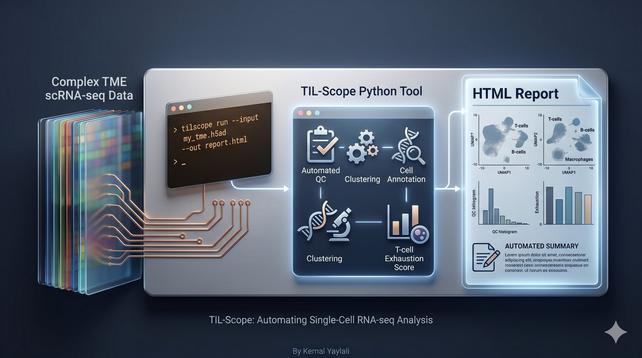
The Gap Between Models and Tools I've seen a lot of impressive ML models in biopharma that never get used. Not because the science is wrong, but because the tool doesn't fit into anyone's workflow. The model might be published in Nature Methods with beautiful receiver operating characteristic curves, but if a discovery scientist can't access it without filing an IT ticket or if it requires command-line expertise, it sits unused. This is the reality of building ML tools for scientific users: […]

https://kemal.yaylali.uk/building-ml-tools-scientists-will-actually-use/

Building ML Tools Scientists Will Actually Use – Kemal's

New Preprint Alert!

We're excited to share our latest work on #ChemRxiv! MARCUS (Molecular Annotation and Recognition for Curating Unravelled Structures) is a web-based platform for extracting chemical information from scientific papers.

📄 Preprint: https://doi.org/10.26434/chemrxiv-2025-9p1q1

🔗 Try it out: https://marcus.decimer.ai

#Cheminformatics #OpenScience #ChemicalDatabases #AIinScience #ScientificSoftware #ResearchTools

MARCUS: Molecular Annotation and Recognition for Curating Unravelled Structures

The exponential growth of chemical literature necessitates the development of automated tools for extracting and curating molecular information from unstructured scientific publications into open-access chemical databases. Current optical chemical structure recognition (OCSR) and named entity recognition solutions operate in isolation, which limits their scalability for comprehensive literature curation. Here we present MARCUS (Molecular Annotation and Recognition for Curating Unravelled Structures), a tool to aid curators in performing literature curation in the field of natural products. This integrated web-based platform combines automated text annotation, multi-engine OCSR, and direct submission capabilities to the COCONUT database. MARCUS employs a fine-tuned GPT-4 model to extract chemical entities and utilises an ensemble approach integrating DECIMER, MolNexTR, and MolScribe for structure recognition. The platform aims to streamline the data extraction workflow from PDF upload to database submission, significantly reducing curation time. MARCUS bridges the gap between unstructured chemical literature and machine-actionable databases, enabling FAIR data principles and facilitating AI-driven chemical discovery. Through open-source code, accessible models, and comprehensive documentation, the web application enhances accessibility and promotes community-driven development. This approach facilitates unrestricted use and encourages the collaborative advancement of automated chemical literature curation tools. We dedicate MARCUS to Dr Marcus Ennis, the longest-serving curator of the ChEBI database, on the occasion of his 75th birthday.

ChemRxiv

At the request of a journal editor, I reviewed a paper by leading researchers on one of my favorite #chemistry topics - tautomers! This article was featured in the Journal of Chemical Information and Modeling. I am grateful for the #PeerReview certificate presented by the American Chemical Society. It was an honor to be entrusted with this responsibility.

Reminder that I'm #OpenToWork for #cheminformatics or #scientificSoftware development. Let's discuss how my skills can benefit your team.

The 2025_03_1 release of #RDKit release includes my contribution to speed up part of getting 2D fingerprints for a molecule by ~75x! So if you generate #chemical fingerprints, now is a good time to upgrade.

Reminder that I'm #OpenToWork so if you're hiring for #cheminformatics or #scientificSoftware development, let's talk.

#chemistry #DrugDiscovery #pharma #PythonForChemists

https://github.com/rdkit/rdkit/releases/tag/Release_2025_03_1

Release 2025_03_1 (Q1 2025) Release · rdkit/rdkit

Release_2025.03.1 (Changes relative to Release_2024.09.1) Acknowledgements (Note: I'm no longer attempting to manually curate names. If you would like to see your contribution acknowledged with you...

GitHub

I'm excited to present "Finding Tautomers" at the first North American #RDKit User Group Meeting in the #Boston #MA area on Friday April 11!

Reminder that I'm #OpenToWork so if you're in the area and hiring for #cheminformatics or #scientificSoftware development, let me know and we can meet to discuss your needs.

Interested in #MPI and #OpenMP parallel programming to speed up your scientific applications written in #C, #Cpp, #Fortran or #Python (with #numpy)?

Attend our course in #Mainz at the Johannes Gutenberg University (#JGU) for a 4-day course from 1. April to 4. April 2025!

See our announcement page for further details and to register: https://indico.zdv.uni-mainz.de/event/34/

Note, it is an on-site course.

#RSE #HPC #scientificsoftware

Parallel Programming with MPI and OpenMP (4-Day Workshop)

Dive into the world of high-performance computing with our hands-on workshop, focusing on the programming models MPI and OpenMP. Gain practical experience with Message Passing Interface (MPI) basics and shared memory directives of OpenMP through interactive sessions in C or Fortran. Agenda: A preliminary course outline can be found here. Location: Takes place at the computing centre of the University of Mainz. Detailed travel directions will be provided to accepted participants in advance....

Indico

The #Energy #Climate & #Environment program at #IIASAVienna had its quarterly meeting last Friday (~100 researchers), so I had to reflect on our role as community data hub and what to present on behalf of the #ScenarioServices & #ScientificSoftware team.

We developed a new #ScenarioExplorer front-end last year, and we made a lot of progress with our #opensource packages for scenario analysis, validation & data-management.

Step by step towards #OpenScience and reusable, reproducible analysis...