Update on infected #GreenAsh trees. They were removed by #MaineDOT thoroughly, since they were on the public way. Good coordination with #MDIFW and #MDOT. (I praise MDOT when it's due...)

#EmeraldAshBorer #EmeraldAshBorerAwarenessWeek #SaveTheTrees #ProtectTheSacred #MaineTrees

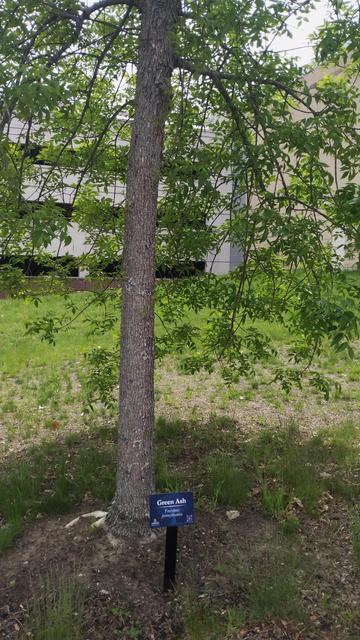
So, a lot of #AshTrees in #PortlandME have been taken down because of #EmeraldAshBorer . I came across a young #GreenAsh tree that seems to be healthy. I'm hoping it stays that way...

#EmeraldAshBorerAwarenessWeek #EAB #SaveTheTrees #ProtectTheSacred #MaineTrees #Maine #SolarPunkSunday

#Maine - This is #EmeraldAshBorer Awareness Week

"The Maine Department of Agriculture, Conservation and Forestry’s Maine Forest Service is asking residents, landowners, and municipalities to help slow the spread of the invasive emerald ash borer (#EAB), a destructive insect responsible for killing millions of ash trees across North America.

As the emerald ash borer continues to threaten Maine’s forests and communities, the Maine Forest Service encourages the public to learn how to identify #AshTrees and signs of infestation, participate in monitoring efforts, and help prevent the spread of invasive pests.

Here are five ways to help slow EAB:

White vs brown Ash

Learn how to identify ash trees
May is a great time to identify ash trees. While all the other hardwood trees are leafing out, Maine's ash trees still look like sticks in the sky. For white and green ash, look for opposite branching and small, ridged bark arranged in a diamond pattern. Brown ash bark (also known as black ash) is characteristically gray to dark gray, with a spongy, corky texture.

Ash Blonding

Learn how to identify signs of emerald ash borer

Now that you know what an ash tree looks like, look for signs of emerald ash borer in the trees. You may spot "blonding" on ash trees, the shallow flecking of the bark by woodpeckers going after EAB larvae and pupae. If you think you see "blonding," take some good quality photos, note your location, and report your findings on the EAB Report Form.

Learn how to identify emerald ash borer
Chances are, you won't see EAB adults in May, but come June, you may see some as they start to emerge from ash trees. If you think you see an EAB, try to capture it or take a photo and report your findings on the EAB Report Form.

Create a girdled ash tree to monitor for emerald ash borer

Your tree can be part of the EAB monitoring network. Knowing the whereabouts of EAB helps the DACF and others make good management decisions about ash.

Leave your firewood at home and prevent the spread of invasive pests
Planning a camping trip? Learn about Maine’s firewood laws, and get your firewood at the campground or go to FirewoodScout.org to find other local sources.

For more information about emerald ash borer, identification resources, and reporting tools, visit the Maine Forest Service Emerald Ash Borer page."

Maine DACF Emerald Ash Borer Page:
https://www.maine.gov/dacf/mfs/forest_health/invasive_threats/eab/index.shtml

Source:
https://content.govdelivery.com/bulletins/gd/MEDACF-4183cfe?wgt_ref=MEDACF_WIDGET_161

#SolarPunkSunday #SaveTheTrees #NatureConservation #ProtectTheSacred #AshTrees

Emerald Ash Borer (EAB) : Forest Health & Monitoring : Maine Forest Service : Maine Agriculture, Conservation, Forestry (DACF)

May 17–23 is #EmeraldAshBorer Awareness Week: Here’s What You Need to Know

By Ginger Nickerson, May 20, 2026

"The emerald ash borer (#EAB) has been in #Vermont since 2018, when it was first found in northern Orange County. Since then, it has spread to every county except Essex County and is in 145 of Vermont’s 247 municipalities.

"The EAB is a beetle introduced from Asia that attacks all native ash trees (trees in the Fraxinus genus). If trees are not treated, this insect is expected to kill nearly 99% of Vermont’s ash trees.

"To raise awareness about this pest and the damage it causes, May 17–23 has been named National Emerald Ash Borer Awareness Week. The Vermont Urban and Community Forestry program is helping by sharing and encouraging people to get involved. Vermonters can learn about the pest, host a neighborhood tree-tagging event, or share information on social media.

"An online Emerald Ash Borer Awareness Week toolkit is available on the Vermont Invasives website: go.uvm.edu/invasivesorg-toolkit. It includes posters, videos, sample social media posts, and resources for educators. It also has guides for identifying ash trees and tips for leading tree walks or ash tagging events."

FMI:
https://thebridgevt.org/2026/05/may-17-23-is-emerald-ash-borer-awareness-week-heres-what-you-need-to-know/

#SolarPunkSunday #SaveTheTrees #ProtectTheSacred #AshTrees

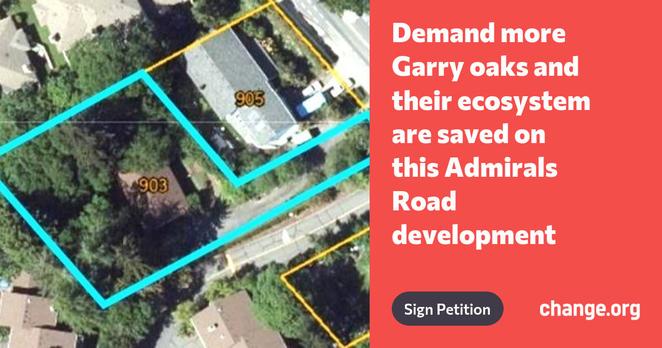
A proposed development for a private property on Admirals Road will result in the removal of 33 #GarryOak trees. The #Esquimalt #Climate Organizers have started a petition to prevent this from happening.

This petition asks the #EsquimaltCouncil to deny the current #development permit for the property and require it to be redesigned to allow for the #preservation of the Garry Oak and #DouglasFir #ecosystem. The removal of these #trees would have a large negative impact on #habitat and hydrology for the community, and will require 66 #replacement trees elsewhere as per Esquimalt’s #TreeProtection bylaw.

Please sign the #petition
https://c.org/kgxpP2yfLd

#SignPetition #ClimateAction #Ecological #VictoriaBC #YYJ #ViewRoyal #VancouverIsland #VanIsle #CapitalRegionalDistrict #SaveTheTrees #biodiversity

Have you seen this petition yet?

Demand more Garry oaks and their ecosystem are saved on this Admirals Road development

Change.org

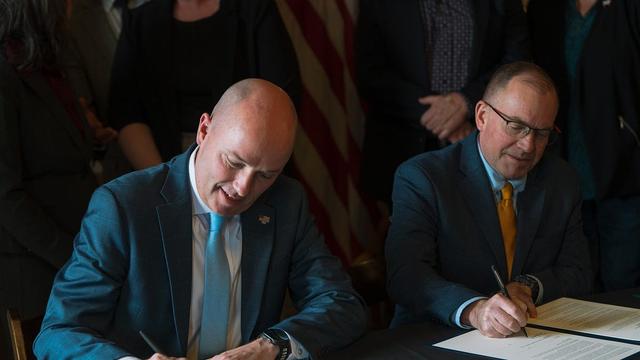
Trump Administration Orders Dismantling of the U.S. Forest Service
The headquarters is going to Utah. Every regional office is being shuttered. The research program is being destroyed.

One hundred and ninety-three million acres of your national forests. An area larger than Texas. The largest public land agency in the country. Just handed, on a silver platter, to the people who’ve spent their entire careers trying to destroy it.

They’re destroying it because science is an obstacle.
Because a scientist who says “you can’t log that watershed without destroying it” is inconvenient. A researcher who publishes data showing that a timber sale will wipe out a salmon run is a problem. A lab that documents the damage from mining runoff or road-building or clear-cutting is an enemy.

What You Must Do Right Now

Call your senators. Call your representative. Not next week or later. Now.

Tell them this is not a reorganization — it’s the destruction of a federal agency by executive fiat and that Congress must intervene. Tell them to block all funding for this relocation and restructuring until the full implications have been studied, debated, and voted on by the people’s elected representatives.

#USpol
#SaveTheTrees

https://morethanjustparks.substack.com/p/breaking-trump-administration-orders

senators https://www.senate.gov/senators/senators-contact.htm

reps https://www.house.gov/representatives

via https://weatherishappening.network/@ColesStreetPothole/116329632100003419

BREAKING: Trump Administration Orders Dismantling of the U.S. Forest Service

The headquarters is going to Utah. Every regional office is being shuttered. The research program is being destroyed.

More Than Just Parks
I love how unique each tree 'skeleton' is! I went for a late afternoon walk in my local park over the weekend, and there they were in all their individual, unique beingness. Such beauty in the most pared back form. It was like they were calling out to be noticed. It's a small park, but the tree diversity is amazing!
🪾🪾🪾
#treeskeleton #treesilhouette #treelovers #savethetrees #treephotography

#MDACF - #InvasiveInsects on the Horizon: #BoxTreeMoth and #SpottedLanternfly

February 25, 2026

"Two invasive insects are spreading in the United States. Neither is known to be established in Maine, although both are closing in around our borders. Please be aware of these insects and report any suspicious sightings to help our efforts to manage them.

Box Tree Moth

If you have #boxwood plantings, keep your eyes out for box tree moth. This invasive pest was first discovered in #NewYork in 2021 and has subsequently spread to at least 10 other states despite state and federal quarantines. It has also been confirmed in #NewBrunswick, Canada near the Maine border.

Boxwoods infested with box tree moth are characterized by leaf defoliation, the presence of silken threads, and girdling of twigs. A heavy infestation will lead to plant mortality.

Although adult moths are strong fliers, box tree moth mostly moves to new areas as eggs and overwintering caterpillars on boxwood plants. These life stages are easy to miss, so it's important to check your boxwoods carefully for signs of this new invasive insect. If you suspect you have box tree moth, immediately contact [email protected].


Spotted Lanternfly

The spotted lanternfly (SLF) is a large planthopper that has been spreading around the eastern half of the United States since 2016, where it is now in 18 states. It is still not known to be established in Maine, although we periodically receive reports of adult lanternflies, generally observed at rest areas and in warehouses.

Originally from Asia, the spotted lanternfly "hitchhiked" to Pennsylvania as egg masses on stone tile imports. When the eggs hatched in the spring, the little planthopper nymphs found their way to some preferred host plants, like tree-of-heaven, maple, and grape. Planthoppers have straw-like mouthparts (stylets) that they insert into plants to suck out the juices. This type of feeding can severely weaken the plant and sometimes spread diseases. The spotted lanternfly sticks its stylet into the stem and bark of plants, extracting the sap and exuding honeydew," a sticky liquid that rains down on surfaces, promoting the growth of sooty mold.

The spotted lanternfly has caused plant mortality in states where its firmly established. Please familiarize yourself with the different life stages of this bug and report any sightings. Please send photos or collect the specimen and email us: [email protected]."

Source:
https://www.maine.gov/dacf/about/news/news.shtml?id=13343929

Box Tree Moth
(Cydalima perspectalis)

Exotic Insect Pest Fact Sheet (via #CornellUniversity)

https://cals.cornell.edu/integrated-pest-management/outreach-education/fact-sheets/box-tree-moth

#SolarPunkSunday #SaveTheTrees #Forestry #Stewardship #CitizenScience #InvasiveSpecies #InvasiveSpeciesWeek
#MaineDepartmentOfAgricultureConservationAndForestry

News: Newsroom: Maine Department of Agriculture, Conservation and Forestry

#Maine - #EmeraldAshBorer - Watch for #Woodpecker Activity

#MDACF - February 26, 2026

"Emerald ash borer (#AgrilusPlanipennis) has been detected in new towns in Maine. Watch for woodpecker activity and report trees that have signs of emerald ash borer.

Emerald ash borer (EAB) is an invasive wood-boring beetle that attacks and kills native ash trees (Fraxinus spp.), resulting in significant cultural, ecological, and economic impacts.

In winter, woodpeckers knock off tree bark in search for food (including EAB larvae), which may help us identify trees with EAB from a distance:

- Light patches of missing bark on stems of ash trees
- Dark chips of ash bark littering the snow
- "S" shaped tunnels underneath the ash bark

Check for these signs while on a snowshoe track, swooshing down slopes, or even sitting down for a meal at your local Chinese restaurant (it happened!). We are actively monitoring for EAB statewide and could use your help checking ash trees.

Stay Informed

Although EAB has caused destruction of ash ecosystems across North America, including here in Maine, there is hope for these trees. In our area, groups like Ash Protection Collaboration Across #Wabanakik (#APCAW) and Sustaining Ash Partners Network (#SAPNe) are building collaborative efforts towards keeping ash in our forests. Join SAP-Ne to learn how to preserve and propagate ash seed and about efforts towards maintaining the genetic diversity of ash in our region."

Learn more:
https://www.maine.gov/dacf/about/news/news.shtml?id=13343928

#SolarPunkSunday #SaveTheTrees #Forestry #Stewardship #CitizenScience #InvasiveSpecies #InvasiveSpeciesWeek #NewEngland #ProtectTheSacred
#MaineDepartmentOfAgricultureConservationAndForestry