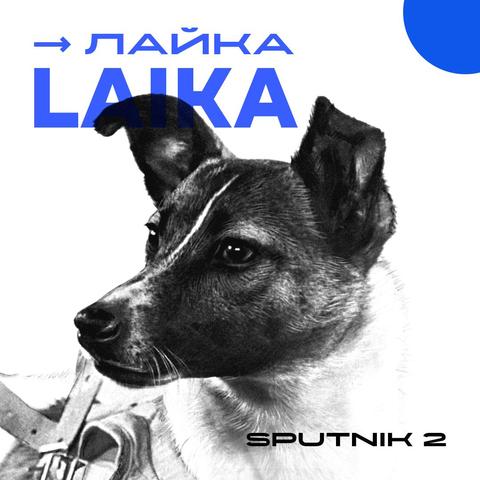
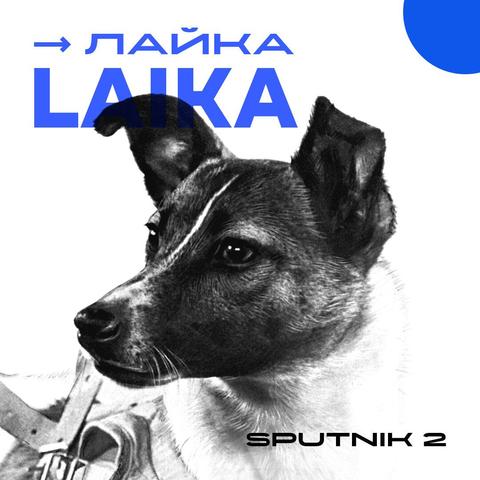
Laika, a street dog and first living creature in history to orbit the earth! 🐶🚀🌍
Her launch took place during the Sputnik 2 mission on 3 November 1957, only 32 days after Sputnik 1 huge success.

Image credit 📸 ИТАР-ТАСС/Архив

#roscomos #lowearthorbit #laika #dog #dogofmastodon #animalinspace #space #science #orbit #spacerace #spacescience #spaceexploration #retrospaceflight #teamspace

1/4

After the successful launch of the world’s first artificial satellite by the Soviet space program, the United States turned their attention toward their own space program efforts. And so the space race was on! 🌍🚀✨

Catch you in the next post! 👩‍🚀👨‍🚀

4/4

#roscomos #sputnik1 #teamspace #nasa #spaceexploration #orbit #satellite #spacerace #retrospaceflight #betweenbrightplaces

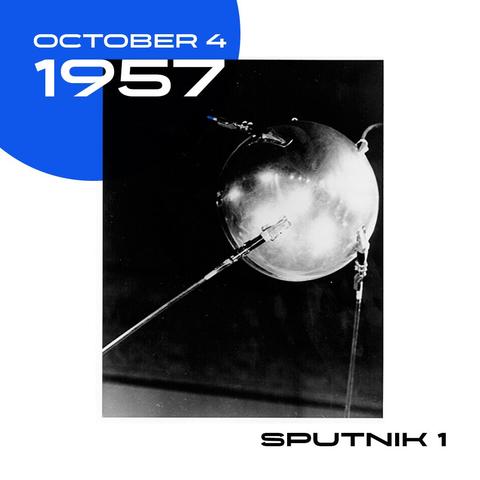
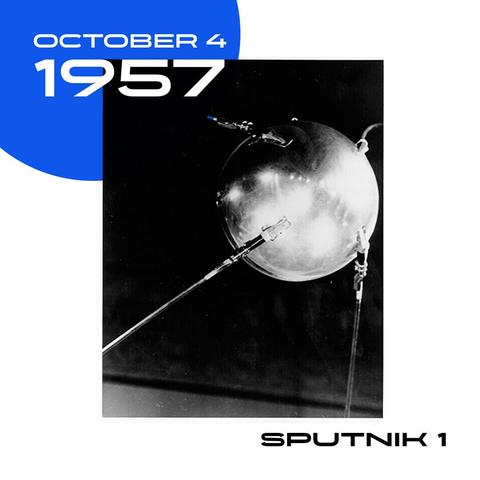
Sputnik 1, the first man-made device put into space on October 4, 1957. 🚀🛰

Sputnik 1 ( or Prosteyshiy Sputnik-1 ) was designed by space scientist and engineers at OKB-1 (Special Design Bureau 1) to be simple, light weight (under 100 kg) and easy to construct.
The final satellite weighted 83.6 kg and was a metal sphere of 58 cm (23 in) in diameter.

Image credit 📸 #nasa

1/4

#roscomos #sputnik1 #teamspace #spaceexploration #orbit #satellite #spacerace #retrospaceflight #betweenbrightplaces

Laika, a street dog and first living creature in history to orbit the earth! 🐶🚀🌍
Her launch took place during the Sputnik 2 mission on 3 November 1957, only 32 days after Sputnik 1 huge success.

Sputnik 2 was a cone-shaped capsule of 4 m high, a base diameter of 2 m and weighed 500 kg. It contained several compartments for radio transmitters, a telemetry system, a programming unit, a regeneration and temperature-control system for the cabin and scientific instruments. A separate sealed cabin gave enough room for Laika to lie down or stand. The pressurized cabin could provide food and water in a gelatinized form, contained an air regeneration system to provide oxygen, and monitored The canine cosmonaut’s vital activity with electrodes.

Unfortunately, the mission wasn’t plan to bring Laika back to earth safely, as political pressure gave very little time to scientists to prepare a return mission. Even if the mission provided valuable first data on the behavior of a living organism in space, a return mission would have enable to get a lot more useful data. In 1998, Oleg Gazenko, the scientist who trained and selected Laika, expressed regrets regarding Laika death and said:
“Work with animals is a source of suffering to all of us. We treat them like babies who cannot speak. The more time passes, the more I’m sorry about it. We shouldn’t have done it. We did not learn enough from the mission to justify the death of the dog.”

Image credit 📸 ИТАР-ТАСС/Архив

Catch you in the next post! 👩‍🚀👨‍🚀

For more content follow @betweenbrightplaces

#roscomos #lowearthorbit #sputnik2 #laika #dog #dogofmastodon #dogofpixelfed #animalinspace #space #science #orbit #spaceexploration #spacerace #spacescience #spaceexploration #retrospaceflight #teamspace #betweenbrightplaces

Sputnik 1, the first man-made device put into space on October 4, 1957. 🚀🛰

Sputnik 1 ( or Prosteyshiy Sputnik-1 ) was designed by space scientist and engineers at OKB-1 (Special Design Bureau 1) to be simple, light weight (under 100 kg) and easy to construct.
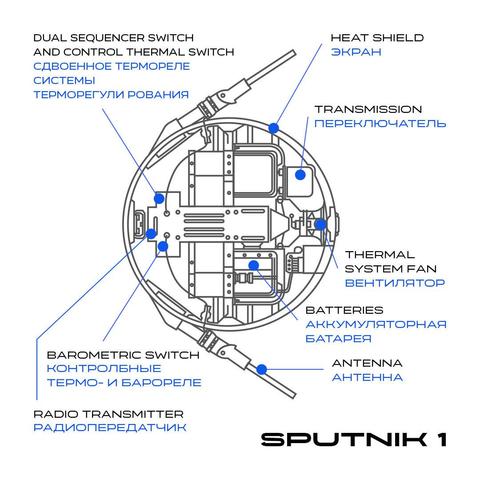
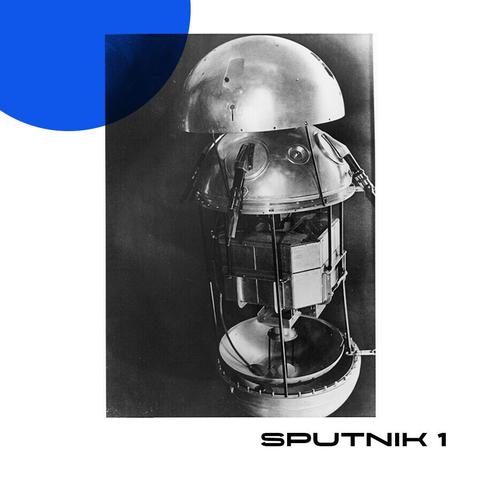
The final satellite weighted 83.6 kg and was a metal sphere of 58 cm (23 in) in diameter. It was assembled from two hemispheres that were hermetically sealed with O-rings and connected with 36 bolts. It was equipped with four external radio antennas, two radio transmitters, three silver-zinc batteries, a barometric switch and a 1 mm thick heat shield that covers the hemispheres. It also had a temperature regulation system (composed of a thermal system fan, a dual sequencer switch and a control thermal switch) to regulate the internal temperature between 20 °C (68 °F) and 36°C (97 °F).
PS-1 was designed to be only observed, without controls over its flight. So all tracking of the flight had to be conducted passively. The satellite, with its radio signal, sent valuable information about the electron density of the ionosphere, and the density of the upper atmosphere could be deduced from the rate of decay of its orbit.
After the successful launch of the world’s first artificial satellite by the Soviet space program, the United States turned their attention toward their own space program efforts. And so the space race was on! 🌍🚀✨

Image credit 📸 @nasa

Catch you in the next post! 👩‍🚀👨‍🚀

#roscomos #sputnik1 #teamspace #nasa #spaceexploration #orbit #satellite #spacerace #retrospaceflight #betweenbrightplaces

#SpaceMission #Roscomos #Expedition67 #SoyuzMS21

#Cosmonauts Oleg Artemyev, Denis Matveev, and Sergey Korsakov returned to Earth on the Soyuz MS-21 spacecraft, which landed in Kazakhstan. They spent just over 6 months on the International Space Station, where they arrived on March 18, 2022, as part of Expedition 66.

https://english.tachyonbeam.com/2022/09/29/the-return-of-three-cosmonauts-from-the-international-space-station-marks-the-end-of-expedition-67/

The return of three cosmonauts from the International Space Station marks the end of Expedition 67

A little while ago, cosmonauts Oleg Artemyev, Denis Matveev, and Sergey Korsakov returned to Earth on the Soyuz MS-21 spacecraft, which landed in Kazakhstan...

Dmitry #Rogozin, il direttore di #Roscomos (che mi ha bloccato da tempo su Twitter) sta dando fuori di matto. Adesso copre con adesivo le bandiere dei paesi che collaborano con la 🇷🇺 nei lanci satellitari. 😂🤦‍♂️ https://twitter.com/Rogozin/status/1499043075586469900
@AstronautiCAST
РОГОЗИН on Twitter

“Стартовики на Байконуре решили, что без флагов некоторых стран наша ракета будет краше выглядеть. https://t.co/jG1ohimNuX”

Twitter
Thomas Pesquet retournera à bord de l'ISS en février 2021

Le départ de Thomas Pesquet pour sa deuxième mission à bord de la Station spatiale internationale a été avancé de six mois. L’astronaute européen s’envolera en février 2021 pour un séjour de...

L'unique télescope spatial russe, RadioAstron, ne répond plus

La Russie a perdu le contrôle de son unique radiotélescope spatial Spektr-R, aussi appelé RadioAstron, mais travaille à rétablir la communication avec l'engin, a annoncé ce lundi l'agence spatiale russe Roscosmos. Le télescope ne répond plus aux instructions de son centre de contrôle sur Terre...

https://www.futura-sciences.com/sciences/breves/radiotelescope-unique-telescope-spatial-russe-radioastron-ne-repond-plus-327/

#radiotélescope #télescope_spatial #Radioastron #Hubble_russe #Roscomos #Russie

Via RSS : https://www.futura-sciences.com/rss/actualites.xml
L'unique télescope spatial russe, RadioAstron, ne répond plus

La Russie a perdu le contrôle de son unique radiotélescope spatial Spektr-R, aussi appelé RadioAstron, mais travaille à rétablir la communication avec l'engin, a annoncé ce lundi l'agence spatiale...