YouTube’s Brand Safety Rules Override EU Public Interest

By Cliff Potts, CSO, and Editor-in-Chief of WPS News

Baybay City, Leyte, Philippines — June 21, 2026

Reporting

YouTube maintains that its content policies balance safety, free expression, and public interest. In communications with European regulators, the platform emphasizes that enforcement decisions are guided by clear standards designed to protect users and advertisers alike.

In practice, advertiser preferences often determine outcomes.

EU journalists, educators, and civic commentators report that content addressing lawful but sensitive topics—war reporting, political corruption, labor disputes, public health failures—faces reduced distribution or demonetization despite compliance with platform rules. The common factor is not illegality, but perceived brand risk.

YouTube’s own guidance distinguishes between content that is allowed and content that is “not suitable for ads.” Yet the consequences of ad unsuitability extend beyond revenue. Reduced monetization frequently coincides with diminished recommendations and visibility, even when content remains publicly available.

Analysis

Brand safety functions as a parallel governance system.

While public-facing policies describe content standards, advertiser-facing controls shape what is amplified. Decisions made to reassure advertisers can quietly outweigh considerations of public interest, particularly in news and civic contexts. Because these controls are framed as commercial rather than editorial, they receive less regulatory scrutiny.

This hierarchy reflects incentives set at the parent level. Google operates one of the world’s largest advertising networks. Protecting advertiser confidence is central to that business. When commercial risk and civic value conflict, systems optimized for revenue predictably favor the former.

For EU regulators, this creates a mismatch. Laws designed to protect democratic discourse and media pluralism can be undermined by private brand safety standards that are neither transparent nor accountable.

What Remains Unclear

YouTube does not disclose how brand safety classifications affect recommendation systems within the EU. It does not publish data showing how often public-interest content is restricted for advertiser reasons, nor whether such restrictions vary by country or topic. Without this information, the scale of the impact cannot be assessed.

Why This Matters

Public-interest content often addresses uncomfortable realities. If its reach depends on advertiser tolerance rather than legal standards, then commercial considerations effectively set the boundaries of permissible discourse.

EU law does not grant advertisers veto power over lawful speech. Yet opaque brand safety systems can produce that outcome indirectly. When visibility and sustainability hinge on advertiser comfort, creators are incentivized to avoid topics that matter most to democratic accountability.

For oversight to be meaningful, regulators must examine not only formal content rules, but the commercial systems that quietly determine which voices are heard. Until those systems are transparent, claims of balanced governance remain incomplete.

References (APA)

European Commission. (2024). Digital Services Act: Protection of civic discourse and media pluralism.
Center for Democracy & Technology. (2023). Brand safety, advertising, and online speech.
Napoli, P. M. (2019). Social media and the public interest. Columbia University Press.


#advertising #brandSafety #EURegulation #Google #publicInterest #YouTube

RE: https://mastodon.social/@nixCraft/116780494584602899

For humanity to reach its potential, financial resources must be prioritized for collective needs rather than billionaire wealth.

#ForAll #CommonGood #PublicInterest #Bezos #amazon

A quotation from Teddy Roosevelt

Under the spoils system a man is appointed to an ordinary clerical or ministerial position in the municipal, Federal, or State government, not primarily because he is expected to be a good servant, but because he has rendered help to some big boss or to the henchman of some big boss. His stay in office depends not upon how he performs service, but upon how he retains his influence in the party. This necessarily means that his attention to the interests of the public at large, even though real, is secondary to his devotion to his organization, or to the interest of the ward leader who put him in his place.

Theodore Roosevelt (1858–1919) American politician, statesman, conservationist, writer, US President (1901–1909)
Autobiography, ch. 5 “Applied Idealism” (1913)

More about this quote: wist.info/roosevelt-theodore/8…

#quote #quotes #quotation #qotd #teddyroosevelt #theodoreroosevelt #civilservant #civilservice #corruption #employment #favoritism #graft #influence #merit #partisanship #politics #publicinterest #quidproquo #spoils #spoilssystem

Roosevelt, Theodore - Autobiography, ch. 5 "Applied Idealism" (1913) | WIST Quotations

Under the spoils system a man is appointed to an ordinary clerical or ministerial position in the municipal, Federal, or State government, not primarily because he is expected to be a good servant, but because he has rendered help to some big boss or to the henchman of some big…

WIST Quotations

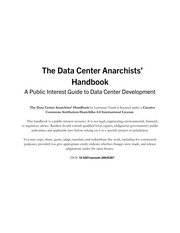
Data centre proposals can be overwhelming by design.

So I pulled together the questions communities should be asking before approvals happen.

Not slogans. Not panic. Just the questions that matter.

The Data Center Anarchists’ Handbook is free:

https://archive.org/details/the-data-center-anarchists-handbook

#DataCenters #AI #PublicInterest

The Data Center Anarchists Handbook : Lawrence Nault : Free Download, Borrow, and Streaming : Internet Archive

The Data Center Anarchist’s Handbook is a free public-interest guide by Lawrence Nault for residents, community groups, journalists, municipal officials,...

Internet Archive
💰 Tell regulators to stop this $67 billion utility power grab. Data center demand should not become an excuse for corporate consolidation, higher electric bills, and less accountability for ordinary families. civicshout.com/p/block-the-... #CorporateGreed #PublicInterest
Check out this chat

Here's a chat someone thought you'd want to see.

ChatGPT
Post by @climatejustice1 · 1 video

💬 0  🔁 0  ❤️ 0 · Meet the Press Full Episode — Kristen Welker sits down exclusively with President Donald Trump to talk about the economy, the war with Iran and the path to peace. Ashley Etienne, M…

Tumblr

A good post on the state of civic tech today.

Many practitioners are rushing to implement harmful solutions, more efficiently

https://blog.ronbronson.com/better-technology-for-cruelty-or-administrative-burden-as-a-service

#Government #PublicInterest #PublicSector #CivicTech

💰 Tell regulators to stop this $67 billion utility power grab. Data center demand should not become an excuse for corporate consolidation, higher electric bills, and less accountability for ordinary families. civicshout.com/p/block-the-... #CorporateGreed #PublicInterest

Block the Data Center Utility ...
Block the Data Center Utility Mega-Merger

NextEra and Dominion want to create a $67 billion utility giant — and federal regulators must stop it before households are forced to pay the price. The companies are pitching this merger as a response to rising power demand from AI data centers. But consumer advocates warn that the deal could create an enormous, hard-to-regulate utility monopoly with more power to raise rates, influence politicians, and shift the costs of data center growth onto ordinary families. That is not the public interest. Data centers are already straining power grids, driving expensive infrastructure fights, and raising serious questions about who pays for the electricity boom. Regulators should not reward two massive utilities with even more market power just because Big Tech wants more energy. Tell the Federal Energy Regulatory Commission and other state and federal regulators: block the NextEra-Dominion merger and protect ratepayers from a data center-driven utility power grab. If this merger goes through, the new company would serve millions of customers across multiple states. That scale could make it harder for communities to fight unfair rate hikes, harder for regulators to enforce accountability, and easier for corporate executives to use the data center boom as an excuse to expand infrastructure while customers absorb the risk. Utilities are supposed to serve the public. They should not be allowed to use public concern about electricity demand to consolidate power, boost shareholder returns, and lock families into higher bills for years to come. State and federal regulators have the authority to scrutinize this deal, demand proof that it benefits the public, and reject it if it would harm ratepayers, competition, or the clean energy transition. They must use that power now. Add your name to demand regulators block this utility mega-merger before data center greed drives up costs for everyone else. The petition to the Federal Energy Regulatory Commission and other state and federal regulators reads: "Block the proposed NextEra-Dominion merger. Protect ratepayers from a data center-driven utility mega-merger that would concentrate corporate power, raise costs, weaken accountability, and undermine the public interest."

civicshout.com
💰 Tell regulators to stop this $67 billion utility power grab. Data center demand should not become an excuse for corporate consolidation, higher electric bills, and less accountability for ordinary families. civicshout.com/p/block-the-... #CorporateGreed #PublicInterest