`Here, we show that the nascent polypeptide-associated complex controls the cotranslational modification of histones H2A and H4 by recruiting NatD and the upstream enzyme MetAP1 to ribosomes. MetAP1 and NatD cooperate on the ribosome to create a confined environment for the efficient sequential modification of the nascent histone chain.`

https://www.science.org/doi/10.1126/sciadv.aeb1017

#histone #postTranslationalModifications

How iron helps collagen enzymes work - and what happens when it doesn’t #PostTranslationalModifications #DNAViruses #Dioxygenases https://doi.org/10.1107/S2053230X25003735
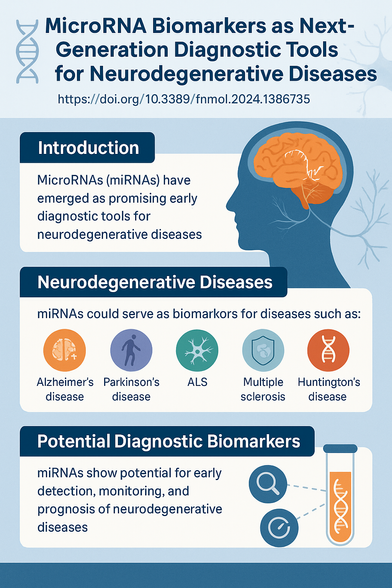
Frontiers | MicroRNA biomarkers as next-generation diagnostic tools for neurodegenerative diseases: a comprehensive review

Neurodegenerative diseases (ND) are characterized by abnormalities within neurons of the brain or spinal cord that gradually lose function, eventually leadin...

Frontiers
The role of post-translational modifications in influencing protein structure and function, and the frequency and representation of these modifications in the PDB, are examined #PostTranslationalModifications #ProteinDataBank #Glycosylation t.co/iocwcaTdCy

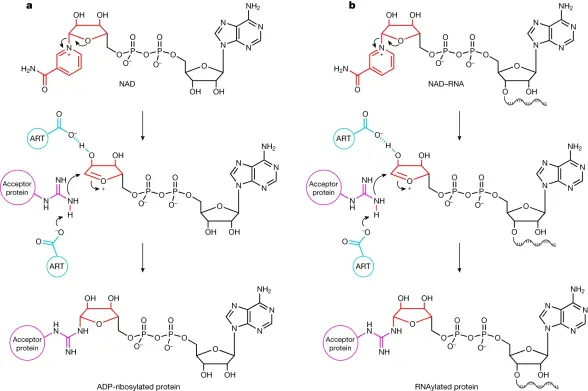
A viral ADP-ribosyltransferase attaches RNA chains to host proteins (2023).
#Virus #Phage #PostTranslationalModifications

https://www.nature.com/articles/s41586-023-06429-2

A viral ADP-ribosyltransferase attaches RNA chains to host proteins - Nature

Bacteriophage T4 uses an enzyme known as ADP-ribosyltransferase ModB to modify the translational apparatus of bacteria it infects, not only by ADP-ribosylating proteins, but also by attaching entire RNA chains in a process known as RNAylation.

Nature