Marcion of Sinope
Marcion of Sinope was born in Sinope (a port city in Pontus, modern-day Turkey). He passed away in circa 160 CE. He was a theologian in early Christianity.
Marcion preached that God had sent Jesus, who was distinct from the “vengeful” God (Demiurge) who had created the world. He considered himself a follower for Paul the Apostle. Marcion believed that Paul was the only true apostle of Jesus. His doctrine is/was called Marcionism. Marcion published the earliest record of a canon of New Testament books.
Early Church writers such as Justin Martyr, Irenaeus, & Tertullian denounced Marcion as a heretic or antichrist. Marcion was excommunicated by the Church of Rome around 144. He published his own canon of Christian sacred scriptures, which contained 10 Pauline epistles (including the Epistle to the Laodiceans, while excluding the Pastoral epistles) & the Gospel of Marcion which historically is claimed to be an edited version of the Gospel of Luke.
This made Marcionism a catalyst in the process of the development of the New Testament canon by forcing the proto-orthodox Church to respond to his canon.
In the late 130s or early 140 CE, Marcion arrived in Rome, joined the Roman church, & donated 200,000 sesterces. This is equal to millions in today’s money. Sesterces are/was an ancient Roman coin, made from silver or brass. He was influential for several years until his “radical” teachings became harder to ignore.
In 144 CE, the Roman elders did something almost unheard of. They gave Marcion his money back! Then Marcion was promptly excommunicated.
Marcion was undeterred by his excommunication. He just switched tactics. He used his shipping routes (he was a mariner & ship-master by trade) to start Marcionite churches all along the Mediterranean. By the end of the 2nd century, the Church Father Tertullian complained that Marcion’s “heretical swarms” were everywhere.
After Marcion’s death, his churches retained their following & survived Christian controversy & imperial disapproval for several centuries.
To Marcion, the God of the Old Testament isn’t the same as the New Testament. He proposed a dualism:
- The Creator (The Demiurge):
- The God of the Hebrew Bible. He’s just. But harsh, legalistic, & focused on “an eye for an eye.” He created this flawed, material world & is the God of the Jews.
- The Heavenly Father:
- A previously “Unknown God” of pure mercy & love. This God had no prior connection to humanity until He sent Jesus to save us from the Creator.
The Docetic Connection: Because Marcion believed the Creator made the physical world (flesh), he believed flash was inherently “dirty.” So, the “Good God” would never take on REAL flesh. In Marcion’s view, Jesus came down directly from Heaven to earth as a fully formed grown-up adult man. Jesus skipped birth (no Nativity), childhood (no 12 year old Jesus in the Temple), & biology entirely.
Marcion studied the Hebrew Bible (with some other writings circulating in the nascent Church), which led him to conclude that the teachings of Jesus weren’t compatible with the actions of Yahweh (the God of the Hebrew Bible).
Marcion developed a ditheistic system of belief around 144. The idea of 2 gods – a higher transcendent 1 & a lower world-creator & ruler – allowed Marcion to reconcile his perceived contradictions between Christian Covenant theology & the gospel proclaimed by the New Testament.
So Marcion created/came up with the first-ever “closed” list of Christian books, (which he edited to remove any “pro-Jewish” or “pro-material” sentiment:
- The Gospel of Marcion:
- A stripped-down version of Luke. He cut the birth narrative, the genealogy, & any mentions to Jesus fulfilling Old Testament prophecy.
- The Apostolikon:
- 10 letters of Paul (Galatians, 1 & 2 Corinthians, Romans, Philippians, & Philemon).
- The Antitheses:
- His own theological treatise explaining why the 2 gods were different.
The Church realized that if they didn’t act, Marcion would codify & define Christianity. This led to 3 major developments:
- The Four Gospel Canon:
- To counter Marcion’s “One Gospel,” the Church emphasized 4 (Matthew, Mark, Luke, John) to show a diversity of eyewitnesses.
- The Inclusion of the Old Testament:
- The Church insisted that the God of Abraham is the Father of Jesus.
- The Apostles’ Creed:
- Lines like “I believe in God, the Father Almighty, Creator of Heaven & Earth” were specifically added to refute Marcion’s claim that the Creator was a lesser, separate deity.
One-Time Monthly Yearly
Make a one-time donation
Make a monthly donation
Make a yearly donation
Choose an amount
$1.00 $5.00 $10.00 $1.00 $5.00 $10.00 $5.00 $10.00 $15.00
Or enter a custom amount
$
Your contribution is appreciated.
Your contribution is appreciated.
Your contribution is appreciated.
DonateDonate monthlyDonate yearly
#144 #144CE #1stCorinthians #2ndCentury #2ndCorinthians #Abraham #ApostlesCreed #ChristianCovenant #Christianity #ChurchFather #Demiurge #Docetic #Early140CE #EpistleToTheLaodiceans #FourGospelCanon #Galatians #GospelOfLuke #GospelOfMarcion #HebrewBible #Irenaeus #Jesus #John #JustinMartyr #Late130s #Luke #MarcionOfSinope #Marcionism #Mark #Matthew #Mediterranean #Nativity #NewTestament #PastoralEpistles #PaulTheApostle #PaulineEpistles #Philemon #Philippians #Pontus #ProtoOrthodoxChurch #Romans #Rome #Sesterces #Temple #TheAntitheses #TheApostolikon #TheGospelOfMarcion #Turkey
 Antinous the Gay God

 Spirituality & Religious Studies
 Greg Johnson
 Nils Hammer
 Assembly Bethesda

 royal
royal Venice church of Christ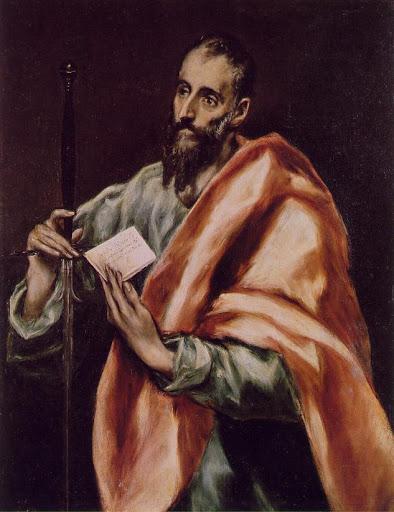
 Der Zarte Kulturträger