Endangered #seabirds return to Pacific island after century-long absence https://news.mongabay.com/2024/12/endangered-seabirds-return-to-pacific-island-after-century-long-absence/

"Endangered Polynesian storm #petrels have returned to #Kamaka Island for the first time in more than 100 years, after #conservationists used #drones to remove the invasive rats eating the #birds’ eggs and chicks... Scientists attracted the birds back to the island using solar-powered speakers playing bird calls recorded from a neighboring island, with monitoring cameras showing regular visits"

Endangered seabirds return to Pacific island after century-long absence

Small seabirds skim the open ocean at night, patting their legs on the surface as they hunt for small fish. Now, for the first time in more than 100 years, endangered Polynesian storm petrels (Nesofregetta fuliginosa) have returned to a far-flung island in French Polynesia. These rare birds began exploring Kamaka Island just three weeks […]

Mongabay Environmental News

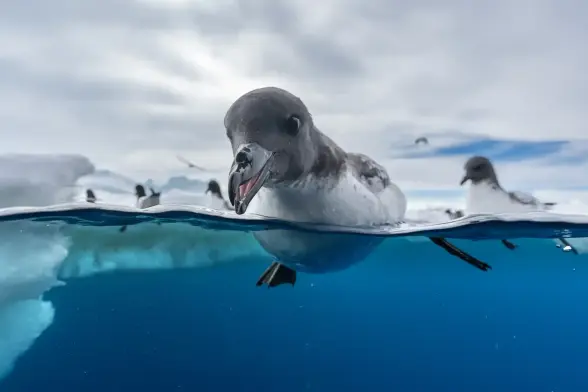
Feeding frenzy, Jonas Beyer, Denmark. Category: Birds in the Environment – Bronze award winner

@photography
#birds
#petrels
#Antarctica

Kyle Melnick: Most #birds avoid #hurricanes. This species chases them, scientists say. A study found that Desertas #petrels, rare seabirds that live on a Portuguese island, follow hurricanes for days to search for prey in the Atlantic Ocean.

"A rare seabird that lives on an uninhabited Atlantic Ocean island has an unusual response to hurricanes, new research shows: They fly toward the storms, rather than away from them.

It is unusual behavior for birds, which typically avoid hurricanes by flying around them or hiding to protect themselves from strong winds. But biologist Francesco Ventura found that not only are Desertas petrels — pigeon-size seabirds with gray wings and black beaks — unbothered by the storms, they also see them as opportunities to gain an advantage over their prey."

https://www.washingtonpost.com/climate-environment/2024/07/17/desertas-petrel-bird-hurricane-study/

Most birds avoid hurricanes. This species chases them, scientists say.

A study found that Desertas petrels, rare seabirds that live on a Portuguese island, follow hurricanes for days to search for prey in the Atlantic Ocean.

The Washington Post

New study reveals oceanic #seabirds chase tropical cyclones https://phys.org/news/2024-07-reveals-oceanic-seabirds-tropical-cyclones.html paper: https://www.cell.com/current-biology/abstract/S0960-9822(24)00806-6

"Initial studies suggested that sea #birds either circumnavigate #cyclones or seek refuge in the calm eye of the storm. However, these Desertas #Petrels did neither; instead, one-third of them followed the cyclone for days, covering thousands of kilometers... the storms churn up #mesopelagic prey from deep within the vertical column, giving the seabirds an easy meal at the surface"

New study reveals oceanic seabirds chase tropical cyclones

A new study published today in Current Biology, "Oceanic Seabirds Chase Tropical Cyclones," reveals that the rare Desertas Petrels (Pterodroma deserta), a wide-ranging seabird in the North Atlantic, exhibit unique foraging behaviors during hurricane season.

Endangered #Seabirds Flourishing on Island for First Time in Decades as Invasive Rabbits Removed
https://www.goodnewsnetwork.org/endangered-seabirds-flourishing-on-island-for-first-time-in-decades-as-invasive-rabbits-are-gone/

"For the first time in over four decades, Peruvian diving #petrels have four active natural nests on #Chañaral Island after a dedicated #conservation group cleared the island of a deadly #InvasiveSpecies... invasive #rabbits eroded their nesting habitat, preventing the #birds from nesting."

Endangered Seabirds Flourishing on Island for First Time in Decades as Invasive Rabbits Removed

For the first time in decades, Peruvian diving petrels are breeding on Chañaral Island after conservationists cleared the island of rabbits.

Good News Network

Ridding #MacquarieIsland of pests pays off as #seabirds come back from the brink – but recovery has just begun
https://theconversation.com/ridding-macquarie-island-of-pests-pays-off-as-seabirds-come-back-from-the-brink-but-recovery-has-just-begun-221992

"Sealers and whalers introduced cats, rats, rabbits and other #animals to the island in the 19th century... From 2011-14, the last non-native #pests were cleared from the island... Species of #petrels listed as threatened have recovered to the point where they can be delisted. There’s still a long way to go before their populations return to historical levels."

Ridding Macquarie Island of pests pays off as seabirds come back from the brink – but recovery has just begun

One of the world’s largest programs to eradicate multiple predators and pests has started to restore the island and its once vast nesting colonies to their former glory.

The Conversation

As hard as it is to do something other than watch streams of migrating soaring #Birds over our heads we also have been watching some of the other #ornithological magic here in The #Straits

Following much needed rain both Wilson’s and European Storm #Petrels amassing in The Straits giving some breathtaking encounters around our private boat excursion 😊

Here a European Storm Petrel cruises past!

#idw #birds Long-term study led by #Giessen University on the smallest #Antarctic #seabird #Petrels shows over 90 percent population decline. https://idw-online.de/en/news815696

#German: #Vögel Langzeitstudie unter Federführung der Universität #Gießen zum kleinsten antarktischen #Seevogel zeigt über 90 Prozent Rückgang der Population. #Sturmschwalben https://idw-online.de/de/news815694

Where have all the petrels gone?

The first giant petrel fossils.

In 2017, Taranaki collector Alastair Johnson found the fossil of a giant petrel. Initially, it was encased in rock but careful preparation revealed something stunning. Not only was it a complete skull but it was the first fossil ever found of an intriguing kind of seabird. Two years later, Alastair found part of a wing bone of a giant petrel too. Both fossils are 3 million years old

https://blog.tepapa.govt.nz/2023/02/01/the-first-giant-petrel-fossils/ #fossils #birds #petrels

The first giant petrel fossils | Te Papa’s Blog

In 2017, Taranaki collector Alastair Johnson found the fossil of a giant petrel. Initially, it was encased in rock but careful preparation revealed something stunning. Not only was it a complete sk…

Te Papa’s Blog
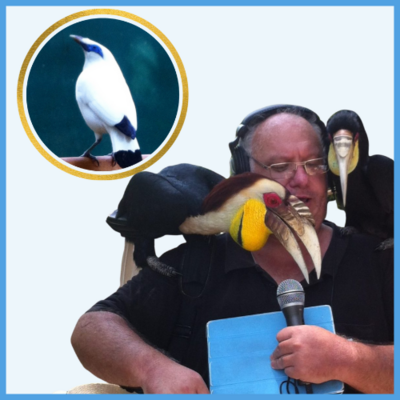
#Bird Tooters, here is one for the #seabirds enthusiasts, from The Bird Emergency podcast archive!
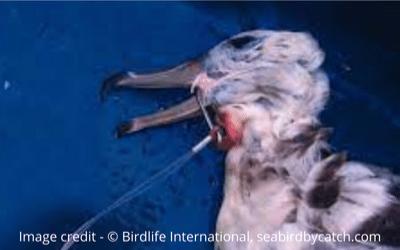
You may know that #bycatch is a killer of countless thousands of #albatross #petrels and other seabirds in the fisheries of the world, but one clever device, the #Hookpod, is saving more and more of these #birds every day, making fisheries safer for #birds I spoke with Dr. Ben Sullivan, one of the originators of the Hookpod, about the idea and development of Hookpod.
https://traffic.libsyn.com/secure/thebirdemergency/Ben_Sullivan_-_Saving_Seabirds_with_Hookpod.mp3