 The USA Potato
For First Time in More Than 50 Years, U.S. and Russia Have No Agreements for the Regulation of Nuclear Weapons
Expiry of New START is set to trigger dangerous new nuclear arms race On February 5, the Trump administration allowed the New Strategic Arms Reduction Treaty (START) to expire, leaving the U.S and Russia with no agreements for the regulation of nuclear...Lithuania’s False Flag Counter-Revolution
From January 11 to 13, 2026, Lithuania marks the 35th anniversary of the “January Events.” Three tumultuous days in 1991 culminated in a widely publicized mass shooting of protesters at Vilnius’s TV Tower, with 14 killed and more than 140 injured. Sovi...https://murica.website/2026/02/lithuanias-false-flag-counter-revolution/
 Voice of East
Here’s What I Learned From Analysing The New Cold War Every Day For Two Years Straight
Here’s What I Learned From Analysing The New Cold War Every Day For Two Years Straight
These five trends are considered to be the most significant grand strategic ones that are expected to have the greatest impact on the global systemic transition across the coming year.
I’m a Moscow-based American political analyst with a PhD. in Political Science from MGIMO, and this is my second yearly review of the New Cold War after I published my first on the one-year anniversary of the special military operation (SMO) here. I’ve been analysing the New Cold War every day since 24 February 2022, beginning at now-defunct OneWorld till mid-2022 and continuing at my Substack to the present. Here’s what I learned from doing this daily for my second year straight:
———-
* Sino-US Bi-Multipolarity Has Given Way To Tri-Multipolarity
The Sino-US bi-multipolar system that characterized the years before the SMO has since evolved into tri-multipolarity as a result of India’s successful rise as a globally significant Great Power. The emerging world order is now shaped by the interplay between the US-led West’s Golden Billion, the Sino–Russo Entente, and the informally Indian-led Global South within which are several independent Great Powers. With time, the system will reach the stage of complex multipolarity (“multiplexity”), its final form.
* “Fortress Europe” Is The US’ New Project For Containing Russia
The failure of Kiev’s counteroffensive prompted the US to consider backup plans for containing Russia after it became obvious that NATO couldn’t strategically defeat its opponent in Ukraine. Poland’s subordination to Germany after Prime Minister Donald Tusk’s return to power enabled that country to resume its superpower trajectory with US support for accelerating the construction of “Fortress Europe”, which will fulfil this goal while freeing up American forces to redeploy to Asia for containing China.
* Western Military-Industrial Wherewithal Is Weaker Than Expected
Germany won’t become a superpower anytime soon nor will the US more muscularly contain China in the coming future either since Western military-industrial wherewithal is weaker than expected as proven by the counteroffensive’s failure and the inability to replenish lost stocks that were given to Kiev. The New York Times even confirmed last September that Russia is far ahead of NATO in the “race of logistics”/“war of attrition”, which explains why the Ukrainian Conflict began to wind down lately too.
* Any Deliberately Calculated Sino-US Crisis Has Likely Been Delayed
Building upon the last observation, it’s likely that any deliberately calculated Sino-US crisis has been delayed till at least the end of the decade owing to the fact that America’s surprisingly weak military-industrial complex requires time to rearm America, replenish its stockpiles, and arm regional allies. A comparatively minor crisis might occur by miscalculation, perhaps due to the Sino-Filipino dispute, but the US would struggle to manage a major one of its own making, let alone fight a major war right now.
* The Broader Red Sea Region Is The New Global South Flashpoint
The primary route for Euro-Asian trade has been disrupted by the Houthi’s blockade and security remains uncertain even if the aforesaid is lifted due to Somalia assembling a regional coalition – Eritrea, Egypt, and potentially Turkiye and the US – to stop Ethiopia’s plans to open a naval base in Somaliland. The interests of all the key Great Powers – the US, China, the EU, Russia, India – converge in the broader Red Sea Region, which thus makes it the new Global South flashpoint to keep a close eye on.
———-
These five trends are considered to be the most significant grand strategic ones, though that doesn’t mean that others like those taking place in the Sahel or the acceleration of financial multipolarity processes aren’t important. They’re just the ones that are expected to have the greatest impact on the global systemic transition across the coming year for the reasons that were explained. Hopefully my insight can inspire other analysts to refocus their work and consequently improve the quality thereof.
Disclaimer: The views expressed in this article are author’s own and do not necessarily reflect the editorial policy of Voice of East.
7 Courses in 1 – Diploma in Business Management
#Africa #China #Europe #Geopolitics #India #NATO #NewColdWar #Russia #TheWest #Ukraine #USA

 AlcorNews
La Chine aurait déjà 100 ICBM en silos. La course nucléaire s’accélère, et l’équilibre mondial devient beaucoup plus fragile.
https://www.geo.fr/geopolitique/la-chine-a-deploye-100-missiles-balistiques-intercontinentaux-dans-des-silos-selon-un-projet-de-rapport-du-pentagone-230211
#Space #Science #Innovation #AerospaceEngineering #ICBM #NewColdWar
https://www.geo.fr/geopolitique/la-chine-a-deploye-100-missiles-balistiques-intercontinentaux-dans-des-silos-selon-un-projet-de-rapport-du-pentagone-230211
#Space #Science #Innovation #AerospaceEngineering #ICBM #NewColdWar

La Chine a déployé 100 missiles balistiques intercontinentaux dans des silos, selon un projet de rapport du Pentagone
Selon un brouillon de rapport du Pentagone, la Chine serait en train d’étendre son arsenal de missiles et d’ogives nucléaires. Une mauvaise nouvelle pour l’administration Trump, qui aimerait plutôt passer un accord de dénucléarisation avec Pékin.
Missiles hypersoniques russes en Biélorussie : nouvelle escalade qui change la donne. La dissuasion version Mach 5 fait froid dans le dos.
https://www.lefigaro.fr/international/la-russie-deploierait-de-nouveaux-missiles-hypersoniques-sur-une-ancienne-base-aerienne-en-bielorussie-selon-des-chercheurs-20251226
#Space #Science #Innovation #AerospaceEngineering #HypersonicWeapons #NewColdWar
https://www.lefigaro.fr/international/la-russie-deploierait-de-nouveaux-missiles-hypersoniques-sur-une-ancienne-base-aerienne-en-bielorussie-selon-des-chercheurs-20251226
#Space #Science #Innovation #AerospaceEngineering #HypersonicWeapons #NewColdWar

La Russie déploierait de nouveaux missiles hypersoniques à capacité nucléaire sur une ancienne base aérienne en Biélorussie, selon des chercheurs
Ce déploiement concernerait une ancienne base aérienne située à 2000 kilomètres de Paris et pourrait renforcer la capacité de Moscou à frapper des cibles à travers l’Europe.
John Birch Society Tries to Bring Back Cold War Culture
Though alleging to expose “deep-state” machinations against Donald Trump, their publication accuses James Comey and John Brennan of being communist agents and venerates Cold War-Era KGB defectors who advanced CIA disinformation While browsing through t...https://murica.website/2025/12/john-birch-society-tries-to-bring-back-cold-war-culture/
Trump’s Greenland Threats Reveal A Revival Of U.S. Neo‑Colonial Strategy In The Arctic
Trump’s Greenland Threats Reveal A Revival Of U.S. Neo‑Colonial Strategy In The Arctic
By Uriel Araujo
By refusing to rule out force over Greenland, Trump has unsettled European allies and reframed Arctic geopolitics. The parallels with US pressure on Venezuela point to a consistent strategy rooted in resource control and strategic positioning. Greenland thus emerges as a potential test case for 21st-century neo-colonial power dynamics.
Copenhagen’s decision to summon the US ambassador this week is no mere diplomatic theatre. It is rather a response to a very real signal coming from Washington: Greenland is still on Washington’s strategic radar. In fact, by appointing a new special envoy to Greenland, the Trump administration is not merely reopening an old debate, but rather is reviving a doctrine.
The appointment of Jeff Landry as special envoy for Greenland has been framed by Washington as a matter of “coordination” and “dialogue.” Commentator Alexandra Sharp, writing for Foreign Policy, notes that the move revives US ambitions tied to strategic minerals, Arctic shipping routes, and military positioning.
Trump openly floated the idea of purchasing Greenland during his first term, only to face firm Danish rejection. What has changed now is not the underlying intent, but tone and timing. Trump’s recent statements — that Greenland is “essential for US security” and that “all options”, including force, remain open — should not necessarily be brushed off as mere rhetoric. By refusing to rule out military action against a NATO ally’s territory, Trump has compelled European capitals to treat his once-dismissed bravado as a genuine strategic contingency.
So much for the post-Cold War narrative that territorial revisionism was the monopoly of official adversaries. Denmark, for its part, has reacted sharply. The Danish foreign ministry, Lars Lokke Rasmussen, made clear that Greenland is not for sale and that any suggestion otherwise is unacceptable. European leaders have closed ranks, with France, Germany, and the EU Commission issuing statements backing Greenland’s sovereignty.
European unity, however should not be mistaken for confidence: officials understand that Trump’s threats are part of a broader pattern. Washington is simultaneously reviving its “all options” rhetoric toward Venezuela, signalling potential regime change. When one administration simultaneously signals openness to coercive action in the Arctic and the Caribbean, this is no coincidence. The logic here, far from ideological, is material enough.
Greenland, as it so happens, holds vast reserves of rare earths, uranium, and critical minerals increasingly vital to advanced technologies and military systems. Its geographic position also anchors US missile defence architecture and Arctic surveillance. Venezuela, meanwhile, remains home to the world’s largest proven oil reserves.
Trump’s rhetoric is often dismissed as bombast, yet in this case it aligns with long-standing US strategic documents that treat access denial, resource security, and chokepoint control as existential matters. The Arctic, in particular, has quietly moved from peripheral concern to a central theatre of the New Cold War.
As I previously noted, the next major Russia-West standoff could even take place in the Arctic — rather than Ukraine or the Middle East — due to NATO’s expanding presence and military buildup, which risks dangerous escalation. This includes Nordic expansion through Finland’s and Sweden’s accessions, alongside renewed US focus on Greenland, seen by Moscow as part of a broader encirclement strategy.
Moreover, melting ice is currently opening new shipping lanes and intensifying competition over seabed resources. No wonder Greenland’s strategic value has skyrocketed.
European outrage over American assertions on Greenland is understandable but arguably selective, given the long-standing US military primacy at Pituffik Space Base (formerly Thule) under Danish sovereignty. In his own way, Trump is not inventing American dominance but openly declaring it, dispensing with euphemisms and ambiguity to the detriment of diplomatic decorum — preferring blunt clarity, however destabilizing.
Critics rightly call any coercion of Greenland reckless and legally untenable. Yet legality has seldom restrained American actions when vital strategic interests are at stake — as seen in Iraq, Kosovo, Libya, and Syria — through creative reinterpretations of international norms. With its small population and weak defences, Greenland may appear to Washington as vulnerable enough to pressure without risking major escalation.
This does not necessarily mean annexation is imminent. It does mean leverage is being recalibrated. The special envoy post allows Washington to deepen ties directly with Greenlandic elites, bypassing Copenhagen where convenient. It also places Greenland squarely within Trump’s transactional framework: security guarantees in exchange for access, alignment, and eventual dependency.
The Venezuelan parallel reinforces the pattern. Both cases involve resource-rich territories, weak bargaining positions (especially in Greenland’s case), and narratives of “security necessity.” In both cases, Trump presents coercion not as aggression but as prudence. The huge difference is that the European allies happen to be implicated in Greenland, whereas Latin America has long been accustomed to US pressure. That asymmetry alone explains the sudden shock in Copenhagen and Brussels.
There is also a domestic angle. Trump’s base responds favourably to assertive postures that promise control over resources and borders. Greenland, framed as vital and vulnerable, fits neatly into this narrative. This does not mean that such threats are electoral theatre and nothing else. Instead, they are policy signals calibrated for multiple audiences at once.
None of this guarantees success, of course. European resistance, Greenlandic self-determination, and international backlash remain real constraints. But the signal has been sent. To put it simply, Trump is reasserting a 19th-century vocabulary in a 21st-century setting.
To what extent this strategy destabilizes the Arctic remains to be seen. One may recall that Trump is also pushing an Anglo-American administration to “rule” Palestine, in a neo-colonial fashion (clashing with Israel’s own projects). Greenland right now might thus also be a test case: a test of how far blunt power politics can go when wrapped in the language of security. Moreover, it is also a test of whether Europe can defend sovereignty without escalation in a divided NATO. And it is a reminder that, in Washington’s worldview, territory, resources, and leverage remain inseparable.
Uriel Araujo, Anthropology PhD, is a social scientist specializing in ethnic and religious conflicts, with extensive research on geopolitical dynamics and cultural interactions.
Disclaimer: The views expressed in this article are author’s own and do not necessarily reflect the editorial policy of Voice of East.
#DonaldTrump #EU #Europe #Geopolitics #Greenland #NATO #NewColdWar #TheArctic #USA

The Baltic Roots of Russophobia: Neoliberalism, Revisionism and U.S. Imperialism
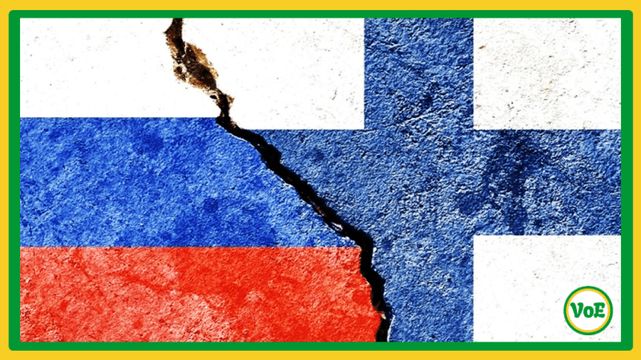
The European Union (EU) has a population of 450 million people, yet its foreign policy is determined by a country with a population of 1.3 million people—Estonia. The High Representative of the European Union for Foreign Affairs and Security Policy is ...Russia Is Taking The Finnish Front Of The New Cold War Very Seriously
Russia Is Taking The Finnish Front Of The New Cold War Very Seriously
Medvedev’s article shows that Russia is prepared to tackle all Finnish-emanating threats from NATO.
Former Russian President and incumbent Deputy Secretary of the Security Council Dmitry Medvedev published a scathing article at TASS in early September about “The New Finnish Doctrine: Stupidity, Lies, Ingratitude” in which he excoriated Finland for its former alliance with the Nazis and warned about new threats from it. This follows reports in May that Russia has been beefing up its defences along the Finnish frontier, which was analysed here and includes links to several briefings on this subject.
Much of Medvedev’s article is devoted to the WWII-era period, with special attention drawn to what the Supreme Court of Karelia (an autonomous republic in Russia bordering Finland) recognized last year as the Finnish Genocide of the Soviet People during that time. This focus is meant to remind Russians that Finland was once their country’s enemy even though Moscow showed mercy upon it after WWII in order to create a neutral buffer zone that formally remained in effect till Finland joined NATO in 2023.
Medvedev’s motive is to rally Russians in support of their country’s more muscular policy towards Finland in response to its new hostile policies since joining that bloc. These include compliance with Western sanctions and agreeing to let the US possibly use up to 15 military facilities. Moreover, NATO “is now intensively mastering all five operational environments of Suomi (how Finns refer to their country) – land, sea, air, space and cyberspace”, according to Medvedev. The threats are therefore multiplying.
He warned that Russia might pursue criminal liability for Finland’s WWII-era genocide of the Soviet People, since there’s no statute of limitations on this crime in international law, and demand more reparations if this trend continues as expected. His piece ended soon thereafter on the ominous note that Finland might lose its statehood “forever” if it participates in another war against Russia. The subtext is that this is an increasingly credible scenario that Russia is taking very seriously going forward.
It’s timely to re-evaluate the threat that NATO poses to Russia via Finland in light of this article. Prior to recent developments, it was thought by some in Russia that Finland’s formal membership in the bloc wouldn’t really change much since it was already a de facto member for decade, thus making this more of a symbolic achievement for NATO than a meaningful military-strategic one. What they didn’t foresee, however, was what Medvedev described as the “Ukrainization of Finland itself (that) took place quietly.”
This was brought about by the NATO-backed resurgence of ultra-nationalist sentiment in society that takes the form of ethno-territorial revanchist goals vis-à-vis Russia. To oversimplify a complex historical subject, Finno-Ugric people are indigenous to parts of modern-day Russia, including Karelia. Although they’ve integrated into society and are actually privileged in today’s Russia due to their minority status, which affords special rights for such groups, Finnish ultra-nationalists still want to annex their land.
The stage is accordingly being set for an escalation of New Cold War tensions between NATO and Russia along the Finnish frontier, thus serving as a triple extension of their already boiling ones in the Arctic, the Baltic, and Central Europe. Finland boasts the bloc’s largest land border with Russia by far, however, so NATO-related threats from there are more dangerous than from anywhere else. Russia is taking them very seriously though and is prepared to defend itself from any form of aggression that it might face.
Disclaimer: The views expressed in this article are author’s own and do not necessarily reflect the editorial policy of Voice of East.
Japan Might Challenge China Sooner Than Expected
Japan Might Challenge China Sooner Than Expected
The emerging result is a “return to history” in the sense of former regional leaders restoring their lost spheres of influence with US support and all that entails for worsening tensions with the Sino-Russo Entente.
It was recently assessed that “Japan Will Play A Much Greater Role In Advancing The American Agenda In Asia”, which its new ultra-nationalist Prime Minister Sanae Takaichi has wasted no time in doing. Her first move in this direction was telling parliament that “If there are battleships and the use of force (by China against Taiwan), no matter how you think about it, it could constitute a survival-threatening situation.” That lingo refers to a legal term for activating the use of Japan’s “Self-Defense Forces” (SDF).
Although she didn’t elaborate, her controversial logic is presumably that China’s post-war control over Taiwan’s semiconductor industry (provided that it survives the conflict) could lead to it coercing Japan into unilateral strategic concessions, the possibility of which fuels fears of Chinese hegemony over Asia. Takaichi then evaded answering whether her government will abide by Japan’s three non-nuclear principles of no possession of nuclear weapons, no production thereof, and no hosting of others’.
The US’ nuclear submarine deal with South Korea, which was assessed here as making it an informal member of AUKUS, was followed by reports that Japan might clinch its own with the US. In that event, the maritime SDF would pose an even more formidable threat to the People’s Liberation Army-Navy than it already does, which the analysis hyperlinked to at the beginning of this one assessed to already pose a challenge to Russia per the opinion of Putin’s senior aide and leading naval specialist Nikolai Patrushev.
Recalling Japan’s close defence ties with the Philippines, both of which are the US’ mutual defence allies and between whom lies Taiwan, it’s clear that Japan is being empowered by the US to re-establish part of its lost regional sphere of influence in order to contain China on the Asian front of the New Cold War. This parallels the US’ empowerment of Poland for containing Russia on the European front of the New Cold War through the partial re-establishment its own lost regional sphere of influence.
The larger trend is that the US is inciting security dilemmas along the periphery of what can now be described as the Sino-Russo Entente, correspondingly through its mutual defence allies in Japan and Poland who are in turn part of Asia’s NATO-like AUKUS+ and NATO, for dividing-and-ruling Eurasia. Interestingly, just like Japan is now flirting with nuclear weapons, so too did Poland recently reaffirm that it wants to host French nukes and one day even develop its own. The US is expected to back these plans.
Trump 2.0 is therefore fine-tuning the Biden Administration’s “dual containment” of the Sino-Russo Entente, as Russian Foreign Minister Sergey Lavrov described the US-led West’s policy as being, to which end it’s focusing more on “Leading From Behind” in order to optimize “burden-sharing”. The emerging result is a “return to history” in the sense of former regional leaders restoring their lost spheres of influence with US support and all that entails for worsening tensions with the Sino-Russo Entente.
China will never forget the Japanese genocide of its people during World War II while Russia commemorates the expulsion of the Poles from Moscow in 1612 every year on National Unity Day. Neither of these historical traumas are repeatable nowadays due to their nuclear deterrents, but the revival of their historical rivals certainly unsettles them, though it also unites their people in the face of these US-backed threats as the New Cold War continues to intensify with no end in sight.
Disclaimer: The views expressed in this article are author’s own and do not necessarily reflect the editorial policy of Voice of East.
#asia #china #eurasia #geopolitics #japan #newColdWar #philippines #russia #taiwan #usa
