 Neurosurgery at Northwestern
Diane Pathieu's husband shares his brain cancer survival story thanks to cutting-edge tech https://abc7chicago.com/cancer-in-brain-tumor-methylation-profiling-diane-pathieu-husband/12590969/ #neurosurgery #neuropath #neuroscience #glioblastoma #gbm #braincancer

 AlexCrimi
#neuropath #brain stuff: An atlas of late #prenatal human neurodevelopment resolved by single-nucleus #transcriptomics https://www.nature.com/articles/s41467-022-34975-2 #neuroscience #genomics #genetics
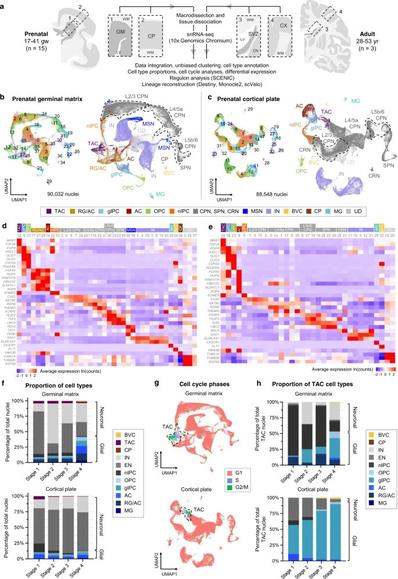

An atlas of late prenatal human neurodevelopment resolved by single-nucleus transcriptomics - Nature Communications
Late prenatal development of the human neocortex encompasses a critical period of gliogenesis and cortical expansion. Here, authors use human transcriptomics to capture transience and diversity of cells in middle and late prenatal development, including glial progenitor signatures.
 The Pathologist
Tags we use include:
#pathology
#medicine
#PathTwitter
#PathMastodon
#Pathodon
#medtwitter
#MedMastodon
#laboratory
#medicaleducation
#MedEd
#diagnostics
#infectiousdisease
#IDMastodon
#SoMe
#histopathology
#hematopathology
#surgicalpathology
#hemepath
#pulmpath
#surgpath
#dermpath
#cellpath
#autopsy
#forensics
#cancer
#oncology
#pedspath
#neuropath
#molecularpathology
#biochemistry
#digitalpathology
#informatics
#healthcare
#patientcare
#PathArt
... and much more!
 Melanie Bourgeau, MD
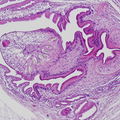
Happy Friday! May your weekend be as lovely as this schwannoma... 🤩
#pathology #bstpath #neuropath #beautyinthebenign #pathtwitter #pathmastadon

 pathowitter
#neuropath
1) Validation and utilization of amended diagnostic criteria in Creutzfeldt-Jakob disease surveillance
http://n.neurology.org/content/early/2018/06/22/WNL.0000000000005860
2) Clinical, genetic and neuropathological characterization of spinocerebellar ataxia type 37
https://academic.oup.com/brain/advance-article-abstract/doi/10.1093/brain/awy137/5042922
3) The revised National Alzheimer’s Coordinating Center’s neuropathology form—available data and new analyses
https://academic.oup.com/jnen/advance-article-abstract/doi/10.1093/jnen/nly049/5045162
4) EWSR1‐PATZ1 gene fusion may define a new glioneuronal tumor entity
https://onlinelibrary.wiley.com/doi/abs/10.1111/bpa.12619?af=R
1) Validation and utilization of amended diagnostic criteria in Creutzfeldt-Jakob disease surveillance
http://n.neurology.org/content/early/2018/06/22/WNL.0000000000005860
2) Clinical, genetic and neuropathological characterization of spinocerebellar ataxia type 37
https://academic.oup.com/brain/advance-article-abstract/doi/10.1093/brain/awy137/5042922
3) The revised National Alzheimer’s Coordinating Center’s neuropathology form—available data and new analyses
https://academic.oup.com/jnen/advance-article-abstract/doi/10.1093/jnen/nly049/5045162
4) EWSR1‐PATZ1 gene fusion may define a new glioneuronal tumor entity
https://onlinelibrary.wiley.com/doi/abs/10.1111/bpa.12619?af=R
Validation and utilization of amended diagnostic criteria in Creutzfeldt-Jakob disease surveillance
Objective To validate an amended protocol for clinical diagnosis of sporadic Creutzfeldt-Jakob disease (sCJD) including real-time quaking-induced conversion (RT-QuIC) and to observe its use in CJD surveillance. Methods In the framework of a prospective epidemiologic study, all neuropathologically confirmed cases with sCJD who received CSF RT-QuIC analysis during diagnostic workup (n = 65) and a control group of individuals without CJD (n = 118) were selected to investigate the accuracy of an amended diagnostic protocol. The patients had been referred to the German National Reference Center for Transmissible Spongiform Encephalopathies. The influence of the amended protocol on incidence figures was evaluated in the context of 3 years of surveillance activity (screened cases using 14-3-3 test n = 18,789, highly suspicious cases of CJD n = 704). Annual incidences were calculated with current criteria and the amended protocol. Results The amended protocol showed a sensitivity of 97% and a specificity of 99%. When it was applied to all suspected cases who were referred to the reference center, the assessed incidence of CJD increased from 1.7 to 2.2 per million in 2016. Conclusion CJD surveillance remains challenging because information from external health care institutions can be limited. RT-QuIC shows excellent diagnostic accuracy when applied in the clinical setting to symptomatic patients. Data for RT-QuIC alone when applied as a general screening test are not available yet. We propose an amended research protocol that improves early and accurate clinical diagnosis of sCJD during surveillance activities. The use of this protocol will probably lead to a significant increase of the incidence rate. Classification of evidence This study provides Class III evidence that for patients with suspected sCJD, criteria for clinical diagnosis plus the CSF RT-QuIC accurately identifies patients with sCJD (sensitivity 97%, specificity 99%).
#neuropath
1) CBD with TDP-43 pathology presenting with PSP syndrome: a distinct clinicopathologic subtype
https://link.springer.com/article/10.1007%2Fs00401-018-1878-z
2) Multiscale analysis of independent Alzheimer’s cohorts finds disruption of molecular, genetic, and clinical networks by human herpesvirus
https://www.cell.com/neuron/fulltext/S0896-6273(18)30421-5
3) Brain somatic mutations in mTOR disrupt neuronal ciliogenesis, leading to focal cortical dyslamination
https://www.cell.com/neuron/fulltext/S0896-6273(18)30437-9
4) Severe white matter astrocytopathy in CADASIL
https://onlinelibrary.wiley.com/doi/abs/10.1111/bpa.12621?af=R
1) CBD with TDP-43 pathology presenting with PSP syndrome: a distinct clinicopathologic subtype
https://link.springer.com/article/10.1007%2Fs00401-018-1878-z
2) Multiscale analysis of independent Alzheimer’s cohorts finds disruption of molecular, genetic, and clinical networks by human herpesvirus
https://www.cell.com/neuron/fulltext/S0896-6273(18)30421-5
3) Brain somatic mutations in mTOR disrupt neuronal ciliogenesis, leading to focal cortical dyslamination
https://www.cell.com/neuron/fulltext/S0896-6273(18)30437-9
4) Severe white matter astrocytopathy in CADASIL
https://onlinelibrary.wiley.com/doi/abs/10.1111/bpa.12621?af=R
Corticobasal degeneration with TDP-43 pathology presenting with progressive supranuclear palsy syndrome: a distinct clinicopathologic subtype
Corticobasal degeneration (CBD) is a clinically heterogeneous tauopathy, which has overlapping clinicopathologic and genetic characteristics with progressive supranuclear palsy (PSP). This study...
#neuropath
1) Molecular and clinicopathologic heterogeneity of intracranial tumors mimicking extraskeletal myxoid chondrosarcoma
https://academic.oup.com/jnen/advance-article-abstract/doi/10.1093/jnen/nly050/5039938
2) Molecular and clinicopathologic heterogeneity of intracranial tumors mimicking extraskeletal myxoid chondrosarcoma
https://academic.oup.com/jnen/advance-article-abstract/doi/10.1093/jnen/nly050/5039938
3) A diffuse leptomeningeal glioneuronal tumor without diffuse leptomeningeal involvement
https://academic.oup.com/jnen/advance-article/doi/10.1093/jnen/nly053/5041897?rss=1
1) Molecular and clinicopathologic heterogeneity of intracranial tumors mimicking extraskeletal myxoid chondrosarcoma
https://academic.oup.com/jnen/advance-article-abstract/doi/10.1093/jnen/nly050/5039938
2) Molecular and clinicopathologic heterogeneity of intracranial tumors mimicking extraskeletal myxoid chondrosarcoma
https://academic.oup.com/jnen/advance-article-abstract/doi/10.1093/jnen/nly050/5039938
3) A diffuse leptomeningeal glioneuronal tumor without diffuse leptomeningeal involvement
https://academic.oup.com/jnen/advance-article/doi/10.1093/jnen/nly053/5041897?rss=1
Molecular and Clinicopathologic Heterogeneity of Intracranial Tumors Mimicking Extraskeletal Myxoid Chondrosarcoma | Journal of Neuropathology & Experimental Neurology | Oxford Academic
Abstract. Primary intracranial neoplasms with features of extraskeletal myxoid chondrosarcomas (EMC) are extremely rare and poorly characterized tumors with on
#neuropath
1) Diffuse Lewy body disease manifesting as corticobasal syndrome
http://n.neurology.org/content/early/2018/06/13/WNL.0000000000005828
2) Molecular heterogeneity and CXorf67 alterations in posterior fossa group A (PFA) ependymomas
https://link.springer.com/article/10.1007%2Fs00401-018-1877-0
3) A recurrent kinase domain mutation in PRKCA defines chordoid glioma of the third ventricle
https://www.nature.com/articles/s41467-018-02826-8
4) Anti–MOG antibody–associated central nervous system demyelination - a novel disease entity?
https://jamanetwork.com/journals/jamaneurology/article-abstract/2685098
1) Diffuse Lewy body disease manifesting as corticobasal syndrome
http://n.neurology.org/content/early/2018/06/13/WNL.0000000000005828
2) Molecular heterogeneity and CXorf67 alterations in posterior fossa group A (PFA) ependymomas
https://link.springer.com/article/10.1007%2Fs00401-018-1877-0
3) A recurrent kinase domain mutation in PRKCA defines chordoid glioma of the third ventricle
https://www.nature.com/articles/s41467-018-02826-8
4) Anti–MOG antibody–associated central nervous system demyelination - a novel disease entity?
https://jamanetwork.com/journals/jamaneurology/article-abstract/2685098
Diffuse Lewy body disease manifesting as corticobasal syndrome
Objective To describe clinical and pathologic characteristics of diffuse Lewy body disease (DLBD) manifesting as corticobasal syndrome (CBS). Methods In 523 autopsy-confirmed cases of DLBD, we identified 11 patients diagnosed with CBS. For comparison, we studied 22 DLBD brains with antemortem presentation of dementia with Lewy bodies (DLB). Given previous studies suggesting the importance of pathology in peri-Rolandic cortices in CBS, we used digital pathology to count Lewy bodies and to quantify intracytoplasmic and neuritic α-synuclein and phospho-tau burden in the motor cortex. Results DLBD patients with antemortem features of CBS were significantly younger at disease onset and less likely to have REM sleep behavior disorder than DLBD cases who met clinical criteria for DLB during life. Patients with DLBD manifesting as CBS had more Lewy bodies in the motor cortex than DLBD manifesting as clinically probable DLB. Three cases had concomitant progressive supranuclear palsy and 4 cases had concomitant Alzheimer disease as probable correlates of CBS. Conclusion The neuropathology underlying CBS is heterogeneous, including corticobasal degeneration, Alzheimer disease, and progressive supranuclear palsy. This study suggests that atypical variants of Lewy body disease with severe peri-Rolandic Lewy-related pathology can present clinically as CBS. Patients with DLBD who present as CBS tend to have an earlier age at onset and are less likely to have clinical features of DLB, such as dream enactment behavior during sleep, visual hallucinations, and levodopa-responsive parkinsonism. Future studies with biofluid or molecular imaging biomarkers for α-synuclein will permit better recognition of this uncommon pathologic substrate of CBS.
#neuropath
1) Prospective validation of a molecular prognostication panel for clival chordoma
http://thejns.org/doi/abs/10.3171/2018.3.JNS172321?mi=3cwabg&af=R
2) IHC and molecular investigations show alteration in the inflammatory profile of MSA brain
https://academic.oup.com/jnen/article/77/7/598/5025079?rss=1
3) Gene expression profile in frontal cortex in sporadic FTLD-TDP
https://academic.oup.com/jnen/article-abstract/77/7/608/4999948?redirectedFrom=fulltext
4) In-vivo staging of pathology in REM sleep behaviour disorder: a multimodality imaging case-control study
https://www.thelancet.com/journals/laneur/article/PIIS1474-4422(18)30162-5/fulltext
1) Prospective validation of a molecular prognostication panel for clival chordoma
http://thejns.org/doi/abs/10.3171/2018.3.JNS172321?mi=3cwabg&af=R
2) IHC and molecular investigations show alteration in the inflammatory profile of MSA brain
https://academic.oup.com/jnen/article/77/7/598/5025079?rss=1
3) Gene expression profile in frontal cortex in sporadic FTLD-TDP
https://academic.oup.com/jnen/article-abstract/77/7/608/4999948?redirectedFrom=fulltext
4) In-vivo staging of pathology in REM sleep behaviour disorder: a multimodality imaging case-control study
https://www.thelancet.com/journals/laneur/article/PIIS1474-4422(18)30162-5/fulltext
#neuropath
1) Fulminant leptomeningeal carcinomatosis from a malignant melanoma arising in a cerebellopontine epidermoid cyst
https://onlinelibrary.wiley.com/doi/abs/10.1111/neup.12480
2) Desmoplastic non-infantile astrocytoma/ganglioglioma: rare low-grade tumor with frequent BRAF V600E mutation
https://www.humanpathol.com/article/S0046-8177(18)30211-9/fulltext
3) Biallelic mutations in MYORG cause autosomal recessive primary familial brain calcification
https://www.cell.com/neuron/fulltext/S0896-6273(18)30435-5
4) Pediatric low-grade gliomas can be molecularly stratified for risk
https://link.springer.com/article/10.1007%2Fs00401-018-1874-3
1) Fulminant leptomeningeal carcinomatosis from a malignant melanoma arising in a cerebellopontine epidermoid cyst
https://onlinelibrary.wiley.com/doi/abs/10.1111/neup.12480
2) Desmoplastic non-infantile astrocytoma/ganglioglioma: rare low-grade tumor with frequent BRAF V600E mutation
https://www.humanpathol.com/article/S0046-8177(18)30211-9/fulltext
3) Biallelic mutations in MYORG cause autosomal recessive primary familial brain calcification
https://www.cell.com/neuron/fulltext/S0896-6273(18)30435-5
4) Pediatric low-grade gliomas can be molecularly stratified for risk
https://link.springer.com/article/10.1007%2Fs00401-018-1874-3