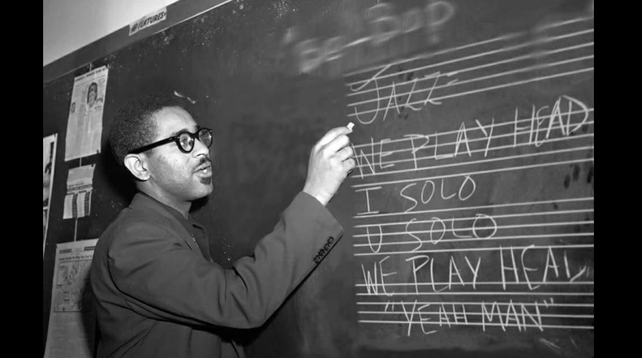
Jazz musicians reveal role of expectancy in human creativity
Have you ever wondered how creativity works in the brain? It's a complex and multifaceted concept, and while we don't fully understand it yet, many believe that it involves real-time combinations of known neural and cognitive processes. One interesting model of creativity comes from musical improvisation, like in jazz music, where musicians spontaneously create novel sound sequences. Many researchers believe that creativity involves the integration and combination of known neural and cognitive processes in real-time, allowing individuals to generate novel ideas or solve problems in innovative ways.
One area that has received particular attention in the study of creativity is musical improvisation, which involves the spontaneous creation of novel musical ideas in real-time. In this study, the authors investigate whether individuals with training in musical improvisation, such as jazz musicians, might process expectations differently than individuals without this training. To test this hypothesis, they compare jazz improvisers, non-improvising musicians, and non-musicians in a domain-general task of divergent thinking (which involves generating a large number of creative ideas in response to a given prompt) and a musical task involving preference ratings for chord progressions that vary in terms of their level of expectation. While participants completed these tasks, their brain activity was recorded using electroencephalography (EEG).
The results of the study showed that jazz musicians preferred unexpected chord progressions in the musical task, and that unexpected stimuli elicited larger early and mid-latency EEG responses (ERAN and P3b) in jazz musicians, followed by smaller long-latency responses (Late Positivity Potential). These EEG responses were also significantly correlated with behavioral measures of fluency and originality on the divergent thinking task. These findings suggest that expectancy may play a role in creativity, and that individuals with training in musical improvisation may process expectations differently than those without this training.
https://doi.org/10.1016/j.bandc.2017.09.008
#creativity #musicalimprovisation #neuralprocesses #divergentthinking #expectancy #EEG #ERP #P3b #LPP #ERAN #divergentthinkingtask #chordprogressions #fluency #originality #expectation #jazzmusicians #non-improvisers #non-musicians #real-time #mentalprocesses #opennesstoexperience #improvisationtraining #artisticexpertise #neuralunderpinnings #deviance #unexpectedevents #P3 #noveltydetection #arousal #engagement #MismatchNegativity #auditoryprediction #comparison #musicalsyntax #learning #experience #emotion #meaninginmusic #motivatingevents #affectiveappraisal #sensorydomains #motorcontrol #languageproduction #music #jazz #musicians #chords
 Philo Sophies
 KINEWS24
 personally