 rownumber
The building behind is the russian #orcs embassy.
The original name was Pod Kaštany / Under the Chestnuts, renamed in 2020 to honor Boris Nemtsov (killed in 2015).
#PoliticalAssassination #SayHisName #russiaIsATerroristState #murder
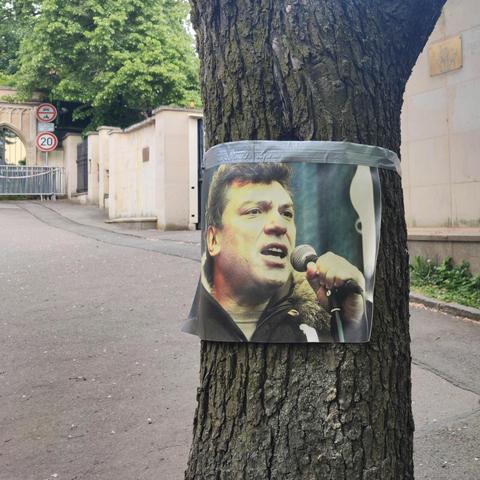
The building behind is the russian #orcs embassy.
The original name was Pod Kaštany / Under the Chestnuts, renamed in 2020 to honor Boris Nemtsov (killed in 2015).
#PoliticalAssassination #SayHisName #russiaIsATerroristState #murder
Cresc... Biennale. Pia Davila, soprano, Julian Prégardien, tenor, and the Ensemble Modern conducted by Lucie Leguay perform:Bernard FOCCROULLE: Winterreisende. Helena CÁNOVAS PARÉS: Kein Frühling mehr. Thierry TIDROW: Le dom...
Cresc... Biennale. Pia Davila, soprano, Julian Prégardien, tenor, and the Ensemble Modern conducted by Lucie Leguay perform:Bernard FOCCROULLE: Winterreisende. Helena CÁNOVAS PARÉS: Kein Frühling mehr. Thierry TIDROW: Le dom...
Cresc... Biennale. Pia Davila, soprano, Julian Prégardien, tenor, and the Ensemble Modern conducted by Lucie Leguay perform:Bernard FOCCROULLE: Winterreisende. Helena CÁNOVAS PARÉS: Kein Frühling mehr. Thierry TIDROW: Le dom...
"A sad loss to #russia and its possible future!" 😪
From https://t.me/pravdaGerashchenko_en
Eleven years ago, in 2015, #Russian opposition leader #Boris_Nemtsov was killed in #Moscow, not far from the #Kremlin.
This is a speech he gave in 2014.
If #Nemtsov were still alive, history might have taken a different course.
#ukraine #putinisamasskiller #putinisawarcriminal @kardinal691

@EugeneMcParland Did these countries say anything about the multiple attempts on #Zelenskyy's life, including on day 1 of the full invasion?
Or #Nemtsov, #Politkovskaya, #Navalny, ...
Wien Modern. The Arditti Quartet plays: Peter ABLINGER: Wachstum und Massenmord (from Instruments &). SCHÖNBERG: String Quartet No. 4 op. 37. Salvatore SCIARRINO: Sei Quartetti brevi. Sarah NEMTSOV: Or Bahir. Recorded 1 November....
Wien Modern. The Arditti Quartet plays: Peter ABLINGER: Wachstum und Massenmord (from Instruments &). SCHÖNBERG: String Quartet No. 4 op. 37. Salvatore SCIARRINO: Sei Quartetti brevi. Sarah NEMTSOV: Or Bahir. Recorded 1 November....
Wien Modern. The Arditti Quartet plays: Peter ABLINGER: Wachstum und Massenmord (from Instruments &). SCHÖNBERG: String Quartet No. 4 op. 37. Salvatore SCIARRINO: Sei Quartetti brevi. Sarah NEMTSOV: Or Bahir. Recorded 1 November....
 World Concert Hall
 Putin's IBS
 Stanislav Čerkas 🇨🇿🇺🇦🇪🇺
 Tim Finnerty