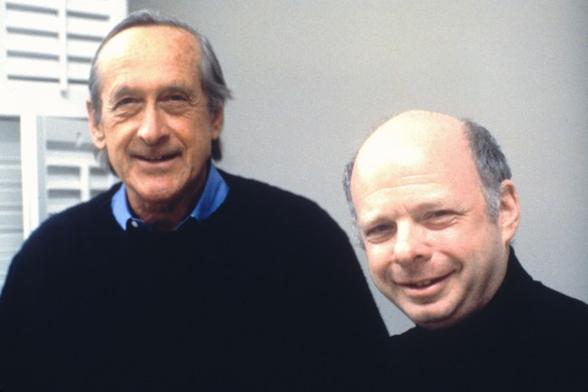
Wallace Shawn plays the foil in Malle's My Dinner with André, trying to take in all these wild stories of Gregory's doings and elicit more information with questions but often he's simply baffled, reduced to spasms of nervous laughter whenever Gregory says something particularly outrageous, like when (for example) Gregory punctuates a strange story about a failed project of trying to adapt Antoine Saint-Exupéry's Le Petit Prince with some astonishing talk about how he thought there was something "Nazı" about Le Petit Prince, an assertion he illustrates with a sexualized metaphor about "oily muscle". Finally Shawn is moved to defend his continuity faith in the solidity and meaningfulness of the mundane world, and while I think Shawn acquits himself reasonably well under extreme circumstances I'd like to point out that Shawn himself says, of his characterization of himself in My Dinner with André:

I actually had a purpose as I was writing this: I wanted to destroy that guy that I played, to the extent that there was any of me there. I wanted to kill that side of myself by making the film, because that guy is totally motivated by fear.

That's an astonishing thing to say, and I'd love to know…fear of what, exactly? Fear of André? Or was he afraid that André was somehow on the right side?

Anyway! I had no idea at the time that I first came up with the facile title My Dinner with Alphys that My Dinner with André would be that heavy-duty a film to follow up on, even if it's just for some Undertale story. I want to write seriously, after all, and thus I feel as if the precise nature of My Dinner with André and the underlying reality of its narrative is actually important to respect even in this eccentric case.

So I've attempted to research the underlying story, just a little, but it's very difficult to do such a thing just with home Internet. Such is the shape of the corporate Internet of today that all news that's more than about a year old begins disappearing irregularly and drops out of searchability. And one must pay dearly for access to archived newspapers and periodicals. It's tough to find articles for events even ten years old, much less stuff that happened in the 1960s or 1970s.

~Chara of Pnictogen


#my-dinner-with-andre #andre-gregory

A long while ago, when Undertale was still quite new to us (in 2016) and the Pnictogen Wing was in a great deal of flux and bursting with bad ideas (and maybe some good ones) pertaining to Undertale, I got the odd idea that it would be cool to write an Undertale fanfic with the title My Dinner with Alphys, which of course is derivative of the title of a famously enigmatic film by Louis Malle, My Dinner with André, which at the time I had only dim memories of seeing broadcast on PBS in my teen years.

I had a definite idea for what the story would be about: I reasoned that at some point after Dr. Alphys surprises Mettaton (or rather the ghost who would eventually be Mettaton) with sketchy plans for a robotic body, Alphys and MTT would have to have their first really detailed conversation about the whole thing. Alphys would want to know exactly what Mettaton wanted in a new body and what he was planning on doing with it (cough cough) and she might of course harbored her secretive hopes about what she might get from MTT in return. And from MTT we'd learn something about his hopes and dreams and what a manipulative scumbag he can be—since my own private notion is that the whole business of Dr. Alphys presenting the prototypical Mettaton to King Asgore as proof of her knowledge about SOULs was MTT's idea, trying to maneuver Alphys into a position where she could get the facilities and supplies she wanted and thus stand a better chance of making MTT's dreams come true, right there next to the seat of power.

Anyway I figured they might have a nice long dinner and a far-ranging conversation and thus…My Dinner with Alphys would actually make some sense. But I never took the idea further than that for complex reasons. One of those reasons is that My Dinner with André turned out to be something VERY different from my hazy first impression in childhood, and also I daresay quite different from how the film is regarded by the general public: as just another whimsical or perplexing arthouse film in which two people talk amid an expensive setting and not much of anything happens, just…Cinema™ or Art™.

Oh, no. Ohhhh holy heck no. My Dinner with André is actually very upsetting and weird, and yet I've seen not a scrap of popular writing about the movie which acknowledges the strangeness of the tale which unfolds, a tale which is acknowledged to be at least partly rooted in a disquieting set of realities. For the André of the title is a real person, a theatrical actor and director who's also done some film and TV acting, André Gregory. He has an amusing minor role with a macabre end in the sci-fi action satire Demolition Man, and he's a creepy exploitative televangelist in Peter Weir's scarifying tragedy The Mosquito Coast, featuring a Harrison Ford performance like no other.

In both those roles, Gregory brings to the screen a kind of prim fanatical energy that, as you'll find out if you watch My Dinner with André, very much his own. Gregory apparently was like this—or to be more accurate, he became like this after an obscure breakdown which precipitated his abrupt abandonment of the theatre and his disappearance on various trips into foreign parts to participate in strange New Agey rituals and activities. The script of Malle's film is mostly a condensation of Gregory's bizarrely circuitous and loosely connected tales of his various experiences, delivered to an increasingly flummoxed Wallace Shawn over the dinner-table going on for hours, and peppered with Gregory's outbursts of intense cynicism and prophetical doomsaying about the future of humanity and civilization. According to Gregory, everything that Wally Shawn took to be the normal way of life was cracking up and the only hope was to disappear into some kind of monastic isolation, keeping the flame alive in all these various hidden places like (say) Findhorn in Scotland (q.v. https://en.wikipedia.org/wiki/Findhorn_Ecovillage), which Gregory praises in My Dinner with André but which turns out to have a rather shady reputation.

(cont'd)


#undertale #fanfiction #my-dinner-with-andre #andre-gregory
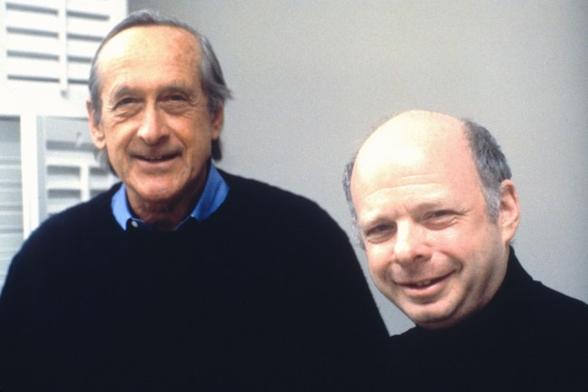
André Gregory and Wallace Shawn on 'Moth Days,' 'My Dinner with Andre'

André Gregory and Wallace Shawn talk their new play 'What We Did Before Our Moth Days' and look back at the legacy of 'My Dinner with André.'

IndieWire

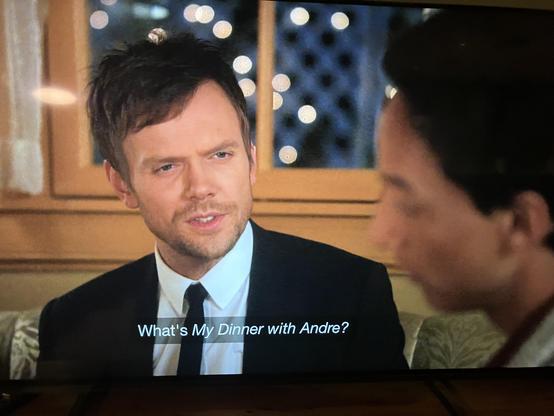
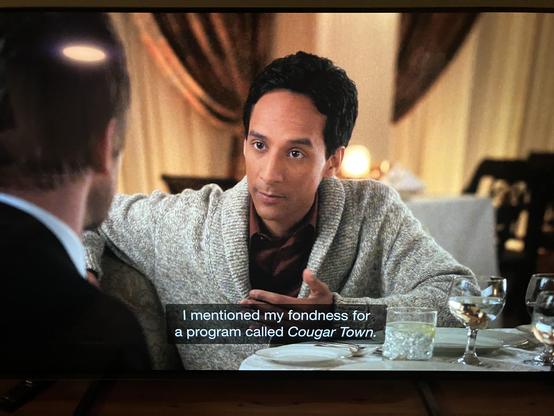
This was inevitable…

#Community #MyDinnerWithAndre

Movie TV Tech Geeks #Movie #1980s #MyDinnerwithAndre Perfect '80s Movies That Nobody Remembers Today http://dlvr.it/TRVJCq

l’anno grotowskiano: audio degli incontri del 2009

Grotowski, il teatro come veicolo: 28 gennaio 2009 – DamsLab/Auditorium

https://archive.org/details/20090128conferenzagrotowskiilteatrocomeveicolo
 
 
*
Grotowski, artista della notte: 29 gennaio 2009 – DamsLab/Auditorium

https://archive.org/details/20090129conferenzagrotowskiartistadellanotte
 
 
*
Il Principe costante: 30 gennaio 2009 – DamsLab/Auditorium

https://archive.org/details/20090130conferenzailprincipecostantedijerzygrotowski
 
 
*
L’opera di Jerzy Grotowski come ‘oggetto di ricerca’: 3 febbraio 2009 – DamsLab/Auditorium

https://archive.org/details/20090203conferenzaloperadijerzygrotowskicomeoggettodiricerca

L’ANNO GROTOWSKIANO
Grotowski e il teatro del nuovo millennio
a cura di Marco De Marinis
ciclo delle proiezioni video a cura di Nicola Pianzola

Il 2009 è stato proclamato, dall’UNESCO, anno grotowskiano. Ricorreranno infatti due anniversari: il decennale della scomparsa del grande regista e ricercatore teatrale e il cinquantenario della fondazione, ad opera sua e di Ludwik Flaszen, del Teatr Laboratorium di Opole in Polonia. Tutto il mondo celebrerà questa doppia ricorrenza, occasione ghiotta per ricordare una delle personalità più prestigiose del teatro contemporaneo, alfiere (con il Teatro Povero e le successive, complesse esperienze post-teatrali) di una delle rivoluzioni più radicali che la scena del Novecento abbia conosciuto.
Tuttavia, pur costituendo una figura chiave, la comprensione di Grotowski è talmente gravata da equivoci, luoghi comuni e insufficienti conoscenze, da aver prodotto quasi sempre immagini deformate, sfocate o eccessive. È così accaduto che, alla borsa valori della scena contemporanea, pochi protagonisti abbiano visto oscillare le proprie quotazioni com’è accaduto a Grotowski: per alcuni, un maestro indiscusso, e non soltanto di teatro, per altri poco più di un ciarlatano o, nel migliore dei casi, un regista provocatorio di pochissimi spettacoli.
Il problema è che, nel suo caso, risulta ancor più vistosamente inadeguato che per altri esempi-limite novecenteschi uno sguardo che resti tutto interno al teatro. In effetti, egli è stato fra coloro che si sono maggiormente adoperati per sfrangiarne i confini e per dissociarlo dal solo spettacolo, nel tentativo di riscoprirne una dimensione essenziale-originaria, addirittura anteriore a ogni divisione fra arte e vita, fra uomo e attore.
Per cercare di rendere conto della complessità della ricerca grotowskiana, senza rischiare di snaturarla o banalizzarla, bisogna considerare che essa ci costringe – come ha chiarito bene Ferdinando Taviani – a una doppia visuale, cioè ad attivare di continuo sia un punto di vista interno al teatro sia un punto di vista esterno: non l’uno o l’altro ma l’uno e l’altro insieme. Leggere l’itinerario artistico, intellettuale e umano di Grotowski solo in termini teatrali è sicuramente riduttivo e fuorviante; ma altrettanto anche se diversamente fuorviante sarebbe leggerlo solo in chiave extra-teatrale, rischiando di fare del teorico del Teatro Povero solamente uno dei tanti, e non di rado controversi, maestri spirituali che popolano la contemporaneità.
Ciò premesso, bisogna aggiungere che la doppia visuale va attivata anche quando si tratta di considerare varietà-discontinuità e unitarietà-continuità della ricerca grotowskiana. Anche in questo caso, non varietà-discontinuità o unitarietà-continuità ma l’una e l’altra insieme. Da un lato, infatti, l’itinerario teatrale e post-teatrale di Grotowski si presenta scandito in fasi abbastanza nettamente e comunque esplicitamente distinte: Teatro degli spettacoli, ovvero l’Arte come presentazione, dal ’59 al ’69; il Parateatro, dal ’70 al ’78; il Teatro delle fonti, dal ’78 all’’82; l’Arte come veicolo, dall’’85 al ’99; con il progetto americano dell’Objective Drama, ‘83-85, a far da ponte fra le ultime due fasi. Dall’altro lato, tuttavia, è fondamentale saper sempre mettere in luce gli elementi di coerenza e di continuità profonde che unificano l’intero itinerario (possiamo chiamarli: ricerca di un rituale umano basato non sulla fede ma sull’atto, oppure elaborazione di uno yoga dell’attore in senso vasto, o ancora lavoro dell’individuo su di sé), riguardanti tanto le motivazioni originarie quanto gli obiettivi essenziali della sua quête ininterrotta. Rispetto sia agli uni che alle altre sono soltanto gli strumenti, i mezzi impiegati, a cambiare nel corso del tempo.

28 gennaio / 3 febbraio 2009
in collaborazione con il Grotowski Institute of Wroclaw
L’ANNO GROTOWSKIANO
Grotowski e il teatro del nuovo millennio

a cura di Marco De Marinis
ciclo delle proiezioni video a cura di Nicola Pianzola

Conferenza di Marco De Marinis
Ouverture: Grotowski, il teatro come veicolo
28 gennaio • ore 15 • Laboratori DMS
ore 17: proiezione del video Il Teatr Laboratorium di Jerzy Grotowski

Conferenza di Georges Banu
Grotowski, artista della notte
29 gennaio • ore 15 • Laboratori DMS
ore 17: proiezione dei video My Dinner with Andre di Louis Malle e del video Akropolis

Conferenza di Luisa Tinti
«Il Principe costante» di Jerzy Grotowski: uno spettacolo emblema della ricerca teatrale contemporanea
30 gennaio • ore 15 • Laboratori DMS
ore 17: proiezione dei video Principe Costante. Ricostruzione e Training al teatro-laboratorio di Wroclaw/Training at the Teatr Laboratorium in Wroclaw

Conferenza di Zbigniew Osinski
L’opera di Jerzy Grotowski come «oggetto di ricerca»
traduzione di Marina Fabbri
3 febbraio • ore 15 • Laboratori DMS
ore 17: proiezione del video Acting Therapy

#ActingTherapy #Akropolis #annoGrotowskiano #art #arte #DamsLab #DamsLabAuditorium #disgiunzioneFraTeatroESpettacolo #GeorgesBanu #Grotowski #GrotowskiInstituteOfWroclaw #IlPrincipeCostante #IlTeatrLaboratoriumDiJerzyGrotowski #ilTeatroComeVeicolo #JerzyGrotowski #LaboratoriDMS #LouisMalle #LudwikFlaszen #LuisaTinti #MarcoDeMarinis #MarinaFabbri #MyDinnerWithAndre #NicolaPianzola #ObjectiveDrama #PerUnTeatroPovero #rivoluzioneTeatrale #TeatrLaboratorium #TeatrLaboratoriumDiOpole #teatro #teatroContemporaneo #TeatroLaboratorio #TeatroPovero #teatroLaboratorioDiWroclaw #teoria #teoriaDelTeatro #training #ZbigniewOsinski

Grotowski, il teatro come veicolo: 28 gennaio 2009 - DamsLab/Auditorium : Free Download, Borrow, and Streaming : Internet Archive

L’ANNO GROTOWSKIANOGrotowski e il teatro del nuovo millennioa cura di Marco De Marinisciclo delle proiezioni video a cura di Nicola PianzolaIl 2009 è stato...

Internet Archive
Multilink Monday 12/8/25
The latest installment in my eternal quest to reduce the size of my notes file! Also because a lot of my day yesterday was spent in preparing for a TPUG World of Commodore demonstration of Loadstar Compleat, which I hope to show all of you soon, but meaning that I need something relatively low-
https://setsideb.com/multilink-monday-12-8-25/
#indies #news #retro #c64 #godot #indie #LeeCarvallosPuttingChallenge #LupeDarksnout #MyDinnerWithAndre #NESbag #news #retro
Multilink Monday 12/8/25

The latest installment in my eternal quest to reduce the size of my notes file! Also because a lot of my day yesterday was spent in preparing for a TPUG World o

Set Side B
This clip from #MyDinnerWithAndre puts me in mind of #CriticalTheory takes on #consumer culture under late capitalism, especially that of #FrankfurtSchool folks, who were studying why the #proletariat would not throw its chains. We have been lured into the mousetrap and caught.