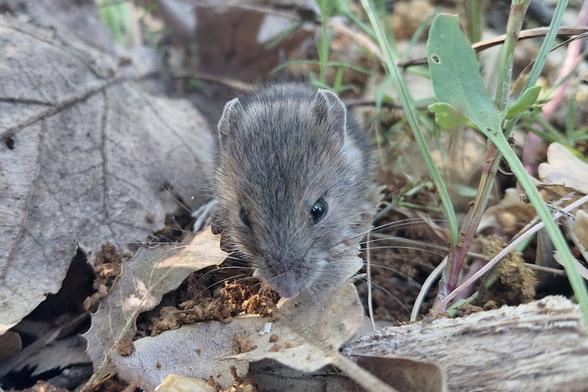
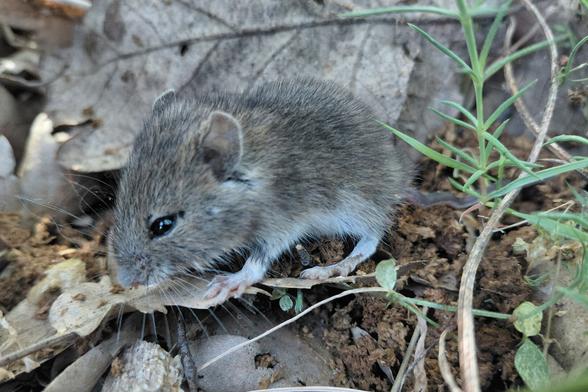
[ES] Si este joven ratoncillo de campo (Apodemus sylvaticus, familia Muridae) no hubiera saltado justo cuando pasaba a su lado, ni me habría percatado de su presencia. Después se quedó inmóvil y me permitió hacerle un par de fotos. Procuré molestarle lo menos posible y le dejé en paz. Espero que encontrara a su madre enseguida.
Fotografiado con el móvil el 27/04/2026 en la provincia de Cáceres en una dehesa de rebollos y encinas.

[EN] If this young wood mouse (Apodemus sylvaticus, family Muridae) haven't jumped just as I was walking past it, I wouldn't have noticed it was there. After that, it stayed still and I was able to take a couple of photos. I tried not to disturb him much and I left him alone. I hope he could find its mother soon.
Photographed with the mobile phone on 2026/04/27 in the province of Cáceres (Spain) in a meadow with oaks (a "dehesa").

#mammalia #rodentia #muridae #apodemus
#ratón #mouse #woodmouse
Word Search Puzzle 388

Word List : #drachmal #syssel #paracone #atelier #muridae #refuel #galuth #foreyard #polymny #coexpire #cumshaws #sidebar #surmise #statedly #palstaff #catmint #jiboa #todus

Kara Finance
Genetic Divergence and Evolutionary Transition/Transversion Rate Bias in the Control Region of Mitochondrial DNA of Palearctic Mice (Murinae)
https://link.springer.com/article/10.3103/S0095452723030076
#Muridae #Dloop #phylogeny #transitiontransversionratebias
Abstract
Genetic divergence and evolutionary shift of transitions and transversions ratio were analyzed based on examples of 60 sequences of the mtDNA control region of 27 species of mice (Murinae) of the Palearctic region. Representatives of Cricetidae ...
Genetic Divergence and Evolutionary Transition/Transversion Rate Bias in the Control Region of Mitochondrial DNA of Palearctic Mice (Murinae) - Cytology and Genetics

Abstract Genetic divergence and evolutionary shift of transitions and transversions ratio were analyzed based on examples of 60 sequences of the mtDNA control region of 27 species of mice (Murinae) of the Palearctic region. Representatives of Cricetidae and Arvicolidae were taken as outgroups. The constructed phenogram corresponds to the accepted phylogenetic scheme and is clustered according to population, semispecies, allospecies, species, genus and family levels of divergence. In the phyletic order there is a clearly defined evolutionary transition/transversion rate bias. Its distinction is an extremely fast and abrupt transition from dynamic to stable phase. The dynamic phase is a rapid decrease in the ti/tv rate ratio and refers to the population and semispecies divergence levels. The stable phase refers to the species level and higher divergence levels and is associated with reaching a state of genetic saturation in a situation of predominance of transversions. The extreme denotion of the evolutionary shift in the D-loop case can be explained by the removal of the selection pressure caused by restrictions in amino acid substitutions. This means that the causes of transition/transversion bias are purely biochemical mechanisms on DNA level. Simultaneously, the stability of the ti/tv ratio at species and higher levels amidst the further accumulation of the total number of nucleotide substitutions may indicate a fundamentally different nature of genetic processes at the intraspecies and interspecies levels of divergence.

SpringerLink