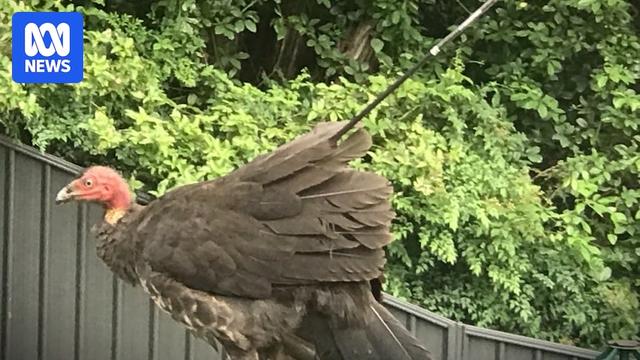
Native wildlife: "People tend to use them for target practice."

A brush turkey has been rescued after wandering around a Central Coast suburb for months with an arrow deeply embedded in its shoulder. >>
https://www.abc.net.au/news/2026-05-07/brush-turkey-injured-by-arrow-survives-ordeal/106647166
#birds #wildlife #biodiversity #NSW #mindsets

Brush turkey used for 'target practice' survives six months with arrow in back

A maimed brush turkey that was shot with a bow and arrow on the NSW Central Coast is rescued after wandering in to a resident's kitchen.

T.A.E.’s Book Review -Start With Why by Simon Sinek

Simon Sinek’s Start With Why is less a business book than a manifesto of moral orientation. Beneath its polished corporate surface lies a surprisingly old and enduring literary idea: human beings are moved not first by method, product, or efficiency, but by purpose. The book’s central argument—captured in the author’s famous formulation that people do not buy what you do, they buy why you do it—has the force of an aphorism because it condenses a whole theory of character, persuasion, and leadership into a single memorable line. The brilliance of the book is that it turns an executive principle into a kind of ethical poetics.

At the heart of the book is the “Golden Circle,” Sinek’s three-part model of Why, How, and What. Yet the model matters less as a diagram than as a narrative structure. He suggests that most organizations and leaders begin at the outside—what they sell, how they operate, what they can prove—while inspired leaders begin at the centre, with belief. That reversal gives the book its rhetorical energy. He is not merely advising readers to communicate more effectively; he is arguing that meaning itself must precede strategy. In literary terms, this is an argument about motive before action, inner truth before outward performance.

The book’s most persuasive passages are those that read almost like fables. Sinek repeatedly returns to well-known examples—Apple, Martin Luther King Jr., the Wright brothers—not simply as case studies, but as modern myths of conviction. These figures matter to him because they embody coherence: their actions appear to emerge from a stable core of purpose. When he describes leaders who “inspire” rather than merely “manipulate,” he draws a sharp moral distinction between authentic appeal and temporary influence. The word choice is revealing. He is less interested in charisma as spectacle than in trust as resonance.

As a piece of prose, Start With Why is clear, accessible, and deliberately repetitive. That repetition is one of its strengths. Like a sermon, it builds through reiteration, allowing the central idea to settle into the reader’s mind. At times, however, the style can feel more motivational than analytical. The examples are often selected to confirm the thesis rather than to complicate it, and the book’s confidence occasionally flattens the messy reality of organizations, where purpose and profitability do not always align so neatly. Its vision is elegant, but perhaps a little too elegant.

Still, the book’s enduring appeal comes from its imaginative generosity. It invites readers to think of leadership not as command but as alignment; not as noise, but as meaning made visible. In that sense, Start With Why succeeds because it addresses a hunger that is both professional and deeply human: the desire to feel that our work, our choices, and our institutions stand for something. The book may be written in the language of business, but its deeper subject is vocation—the search for a reason that can organize action and dignify it.

What makes the book memorable is not that it offers a new trick for success, but that it restores an old truth to contemporary life: purpose is not decoration added after the fact. It is the source from which everything else should flow.

#BookReviews #LiteraryCriticism #mindsets #purpose #SimonSinek #Sinek #success

T.A.E.’s Book Review – You Are a Badass Everyday… by Jen Sincero

You Are a Badass Every Day by Jen Sincero is less a conventional self-help book than a portable ritual of self-address. Penguin Random House describes it as a “companion” built from “one hundred exercises, reflections, and cues,” and that framing is exactly right: the book is modular, repetitive, and designed for daily return rather than linear reading. It was published in 2018 and runs 224 pages in hardcover, but its real scale is rhetorical rather than physical; it aims to become a habit of mind. 

As a literary object, the book’s first virtue is its voice. Sincero writes in a bracing second-person idiom that collapses the distance between author and reader, turning the page into a kind of private pep talk with theatrical flair. The dedication—“To you, oh great and wondrous badass, thank you for being who you are”—announces the book’s tonal strategy immediately: apostrophe, praise, and a playful inflation of the self into something worth ceremonially addressed. 

The introduction deepens that effect by casting transformation as both fragile and urgent. The author writes of becoming “drunk with possibility,” only to note how quickly “familiar excuses” can return. That oscillation between uplift and relapse gives the prose its energy. The book understands that motivation is not a steady flame but a recurring contest, and it dramatizes that contest in a voice that is part coach, part comedian, part ardent believer. 

Its most memorable passages are those that condense an entire philosophy into a sentence-length imperative. One representative line states that “the decision to keep going” is what success comes down to; another declares, “You are an artist and the masterpiece is your life.” These are not arguments in the academic sense so much as incantations. They work by rhythm, compression, and confidence. In literary terms, it favours aphorism over exposition, mantra over analysis, and that preference is central to the book’s appeal. 

That same stylistic strength can also be the book’s limitation. Because it is built from cues, prompts, and affirmations, it sometimes substitutes repetition for development. Readers looking for psychological nuance or sustained reasoning may find its certainty a little relentless. Yet this is also what gives the book its character: it is not trying to be careful, skeptical, or symphonic. It is trying to be usable. Its sentences are meant to be carried, repeated, and acted upon. 

What lingers after reading is not an intricate thesis but a performance of encouragement. The book imagines selfhood as something revisable, something that can be coached into sturdier shape through language. Its literary success lies in the boldness of that imagination. When it is at its best, You Are a Badass Every Day turns affirmation into a small art form: vivid, cheeky, and emotionally direct. 

#BookReviews #JanSincero #LiteraryCriticism #mindsets #Sincero #success

#Design #Mindsets
The courage to stop · “Brevity was always a discipline. Now it’s a statement.” https://ilo.im/16ccvi

_____
#Writing #Communication #Content #Blogs #Websites #Humans #Machines #AI #UxDesign #WebDesign

AI and Ambition

AI isn't just about efficiency—it's about unlocking ambition. Small experiments on a personal blog reveal how AI agents let us push ideas further and build things we'd never have time for.

T.A.E.’s Book Review – You Are a Badass by Jen Sincero

Jan Sincero’s You Are a Badass arrives with the brash confidence of a pep talk, but beneath its neon bravado lies a surprisingly revealing study of self-fashioning in late-capitalist self-help culture. The book’s central argument is simple enough to state and difficult enough to practice: the greatest obstacle to a transformed life is not the world’s resistance, but the reader’s own entrenched story about who they are and what they deserve. Sincero frames this in a voice that is deliberately irreverent, comic, and intimate, using profanity, hyperbole, and confession to dismantle the solemnity that often protects self-doubt. The result is a work that is less a systematic philosophy than a performance of permission.

What makes the book effective, at least on its own terms, is its rhetorical immediacy. Sincero rarely speaks as a detached authority; she speaks as a fellow striver who has stumbled into a better script. This posture gives the book warmth and momentum. Her recurring insistence that “you are a badass” is not merely slogan but incantation: identity is treated as something that can be rehearsed into being. The language is intentionally blunt, even aggressive, because the book wants to interrupt the reader’s habits of hesitation. It is not trying to seduce through nuance; it is trying to shock the reader out of paralysis.

Literarily, the book is strongest when it becomes self-aware about the narratives we inherit. Sincero repeatedly returns to the idea that our beliefs are often “stories” rather than truths, and this is where the text’s real intelligence emerges. Self-limitation is depicted not as a moral failure but as a kind of mental choreography learned over time. Her advice to “trust the universe,” to “change your thoughts,” and to recognize the “money” or “lack” stories we tell ourselves belongs to a long tradition of American transformation writing, from Emersonian self-reliance to modern motivational literature. Yet Sincero updates that tradition with a pop vernacular that is both accessible and commercially savvy.

At the same time, the book’s strengths are inseparable from its limitations. Its exuberance can flatten complexity. Pain, structural inequality, and material constraint sometimes appear as if they can be metabolized through attitude alone. That is the cost of the book’s optimism: it can sound liberating, but it can also verge on reductionism. When Sincero urges readers to “get over” fear and choose abundance, the language is empowering, yet it risks implying that transformation is mainly a matter of mindset rather than circumstance. A literary scholar might say that the book’s metaphysics are less argued than asserted.

Still, You Are a Badass deserves credit for understanding that persuasion is often theatrical. Its power lies in tone as much as content. Sincero knows that readers of self-help often do not need a dissertation; they need a voice loud enough, funny enough, and unsentimental enough to puncture inertia. In that sense, the book is a minor cultural artifact of real interest: a text that converts self-improvement into a style, and style into a form of will. It may not satisfy readers looking for philosophical rigour, but it is remarkably adept at staging the fantasy of becoming someone larger, bolder, and freer than the self that began the book.

In the end, You Are a Badass is best read not as a handbook of truth, but as a document of aspiration. Its prose is performative, its wisdom uneven, but its energy is unmistakable. Sincero writes as though transformation were possible because language itself can help make it so. That belief, whether one finds it inspiring or suspect, is the book’s enduring fascination.

#BookReviews #JanSincero #LiteraryCriticism #mindsets #Sincero #success

#Design #Mindsets
Craft is untouchable · “AI doesn’t threaten craft—the temptation to skip iteration does.” https://ilo.im/16btyt

_____
#Craft #Skills #Mastery #AI #Iteration #DesignProcess #ProductDesign #UxDesign #UiDesign #WebDesign

#Design #Mindsets
The creative infinite · “The barriers to creation have fully eroded.” https://ilo.im/16btp3

_____
#Business #Creativity #AI #DesignProcess #ProductDesign #UxDesign #UiDesign #WebDesign #Development #WebDev

The Creative Infinite

https://www.youtube.com/watch?v=QJFEgIpNIic I found myself using the phrase "the Creative Infinite" when I'm talking about AI as a design material. I keep coming back to it because I don't think we've fully grasped what this technology actually is, what it can do, and what it means for human cre

Brad Frost
sin caer en la adopción indiscriminada de herramientas. El texto se estructura en 2 bloques: #mindsets (disposiciones o enfoques) y competencias (conocimientos, habilidades, destrezas y comportamientos), organizadas estas últimas en cuatro categorías: Ética; Conocimiento y comprensión;

Roads cutting through mountain ranges and waterfalls
Do they cause landslides and reactivate old ones?

Temporary fix for Waterfall Way at Gordonville slip site
"Waterfall Way has reopened between Bellingen and Dorrigo after temporary repairs to the Gordonville slip site. The temporary fix consists of a gravel filled shipping container wall, two containers high and eight containers long, attached to the rockface using nine high-strength steel anchors drilled deep into the rockface." >>
https://insidelocalgovernment.com.au/temporary-fix-for-waterfall-way-at-gordonville-slip-site/

Video of landslide: Waterfall Way, Gordonville Crossing Landslip >>
https://www.youtube.com/watch?v=ZGymAVc1u8g

Do roads mean landslides are more likely? >>
https://blogs.egu.eu/geolog/2015/01/16/geosciences-column-do-roads-mean-landslides-are-more-likely/

Could road constructions be more hazardous than an earthquake in terms of mass movement?

"In this study, we report a distinct correlation of mass movements and major road constructions that explicitly shows human impact on mountainous environments which are under anthropogenic disturbance recently. Our results further suggest that slope instabilities increased drastically after major service road constructions for hydroelectric power plants and as well as other road extension works."

"We also stress that the impact of road construction can disturb the natural slope equilibrium to an extent comparable with moderate (larger than 6 Mw) earthquakes."

"Such an observation implies that human activities can have a large, if not even dominant, impact on landscape evolution and the natural regime of surface processes. This is part of the definition of “Anthropocene,” an age where our society shapes nature for our purposes, frequently at the risk of damaging ourselves."
https://link.springer.com/article/10.1007/s11069-021-05199-2

Image: Sisyphus, Franz von Stuck, 1920

#roads #WaterFallWay #mountains #ecosystem #denudation #overloading #waterfalls #Bellingenshire #Dorrigo #landslides #landslips #infrastructure #cars #engineering #Sisyphus #mindsets #Anthropocene