 Inautilo
#Design #Mindsets
Designing like it’s 1999 · “Design for where the puck is going.” https://ilo.im/16dbc7
_____
#Business #Disruptions #Experimentation #Reinvention #Skills #AI #ProductDesign #UxDesign #UiDesign #WebDesign
#Design #Mindsets
Designing like it’s 1999 · “Design for where the puck is going.” https://ilo.im/16dbc7
_____
#Business #Disruptions #Experimentation #Reinvention #Skills #AI #ProductDesign #UxDesign #UiDesign #WebDesign
T.A.E.’s Book Review – Wisdom for Winners: Volume One by Jim Stovall
Jim Stovall’s book is less a single sustained argument than a sequence of compact meditations on success, selfhood, and spiritual discipline. Its structure matters: the material is organized into small, stand-alone sections designed to be read incrementally, and the columns originally appeared in print before being gathered into book form. That serial origin gives the work a cumulative authority; it feels less like theory than like a practiced voice returning, week after week, to the same moral centre.
What gives the book its force is the firmness of its aphoristic prose. Stovall writes in a declarative, admonitory register that tries to convert attitude into action. He insists on agency with lines such as “the right to choose,” then tightens the logic into moral realism: “We can’t always choose what happens to us, but we can always choose what we are going to do about it.” Elsewhere, the book’s anti-consumerist edge appears in the memorable warning, “Don’t confuse ‘having’ with ‘being’,” a phrase that captures the book’s larger suspicion of outward display without inner development. Even its repeated refrain, “Today’s the day!,” works like a verbal nudge, almost a secular litany.
The most interesting tension in the book is between its motivational urgency and its spiritual vocabulary. Stovall does not treat success as merely financial or strategic; he frames it as an alignment of spirit, character, and choice, declaring that “All success begins in your spirit” and that human worth exceeds material calculation. This helps explain why the book can feel both brisk and devotional: it is not content to tell readers how to win, but tries to tell them what kind of person must exist before winning is even possible. In that sense, the book’s deepest claim is not that achievement follows optimism, but that optimism itself must be rooted in a disciplined moral imagination.
As a literary object, then, Wisdom for Winners is effective precisely because it resists flourish. Its prose is plain, compressed, and sermon-like, which makes its certainties feel portable and repeatable. The drawback is also the source of its appeal: readers looking for ambiguity, psychological complexity, or stylistic surprise will find little of that here. But readers willing to accept a book built from exhortation rather than narrative will discover a work that is admirably consistent in purpose, and often surprisingly memorable in phrasing.
#BookReviews #JimStovall #LiteraryCriticism #mindsets #Stovall #success #Wisdom
https://www.youtube.com/watch?v=Y3UIuraQ0M4
1. Republicans hate Democrats
2. Democrats hate Republicans
3. Fox News HDTV New York City, Trump Family NYC have programmed Hate Prizing USA #mindsets
4. Everyone is self-harming USA. Cross-fire hate for hate.
#StrandedUSA /\

#Design #Mindsets
Revive your design superpowers · “You are more powerful than you realize.” https://ilo.im/16cvko
_____
#Job #Profession #Skills #Communication #ProblemSolving #ProductDesign #UxDesign #UiDesign #WebDesign
#Business #Mindsets
Netizen · A reminder that the web wasn’t built around profit https://ilo.im/16cnhr
_____
#Profit #Monetization #Web #Publishing #Contributing #Connecting #Blog #Website #SmallWeb #IndieWeb
#Business #Mindsets
The boring internet · “The internet you grew up on is not gone.” https://ilo.im/16cqvt
_____
#Internet #Web #History #WebTechnology #AI #Dezentralization #Communities #IndieWeb #SmallWeb #BigWeb
#Development #Mindsets
The robots are replacing the packages · “The new question is: ‘do I want to own this problem?’” https://ilo.im/16cows
_____
#Programming #Coding #Packages #AI #PHP #Composer #Laravel #WebDev #Frontend #Backend
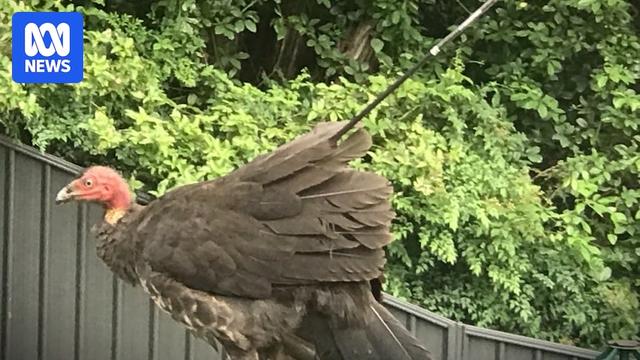
Native wildlife: "People tend to use them for target practice."
A brush turkey has been rescued after wandering around a Central Coast suburb for months with an arrow deeply embedded in its shoulder. >>
https://www.abc.net.au/news/2026-05-07/brush-turkey-injured-by-arrow-survives-ordeal/106647166
#birds #wildlife #biodiversity #NSW #mindsets
T.A.E.’s Book Review -Start With Why by Simon Sinek
Simon Sinek’s Start With Why is less a business book than a manifesto of moral orientation. Beneath its polished corporate surface lies a surprisingly old and enduring literary idea: human beings are moved not first by method, product, or efficiency, but by purpose. The book’s central argument—captured in the author’s famous formulation that people do not buy what you do, they buy why you do it—has the force of an aphorism because it condenses a whole theory of character, persuasion, and leadership into a single memorable line. The brilliance of the book is that it turns an executive principle into a kind of ethical poetics.
At the heart of the book is the “Golden Circle,” Sinek’s three-part model of Why, How, and What. Yet the model matters less as a diagram than as a narrative structure. He suggests that most organizations and leaders begin at the outside—what they sell, how they operate, what they can prove—while inspired leaders begin at the centre, with belief. That reversal gives the book its rhetorical energy. He is not merely advising readers to communicate more effectively; he is arguing that meaning itself must precede strategy. In literary terms, this is an argument about motive before action, inner truth before outward performance.
The book’s most persuasive passages are those that read almost like fables. Sinek repeatedly returns to well-known examples—Apple, Martin Luther King Jr., the Wright brothers—not simply as case studies, but as modern myths of conviction. These figures matter to him because they embody coherence: their actions appear to emerge from a stable core of purpose. When he describes leaders who “inspire” rather than merely “manipulate,” he draws a sharp moral distinction between authentic appeal and temporary influence. The word choice is revealing. He is less interested in charisma as spectacle than in trust as resonance.
As a piece of prose, Start With Why is clear, accessible, and deliberately repetitive. That repetition is one of its strengths. Like a sermon, it builds through reiteration, allowing the central idea to settle into the reader’s mind. At times, however, the style can feel more motivational than analytical. The examples are often selected to confirm the thesis rather than to complicate it, and the book’s confidence occasionally flattens the messy reality of organizations, where purpose and profitability do not always align so neatly. Its vision is elegant, but perhaps a little too elegant.
Still, the book’s enduring appeal comes from its imaginative generosity. It invites readers to think of leadership not as command but as alignment; not as noise, but as meaning made visible. In that sense, Start With Why succeeds because it addresses a hunger that is both professional and deeply human: the desire to feel that our work, our choices, and our institutions stand for something. The book may be written in the language of business, but its deeper subject is vocation—the search for a reason that can organize action and dignify it.
What makes the book memorable is not that it offers a new trick for success, but that it restores an old truth to contemporary life: purpose is not decoration added after the fact. It is the source from which everything else should flow.
#BookReviews #LiteraryCriticism #mindsets #purpose #SimonSinek #Sinek #success
 Global Feed
 The New Renaissance Mindset
 Stephen Gutknecht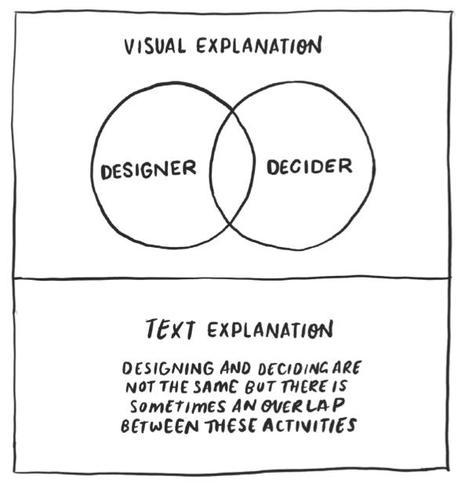

 BellingenNSW