A single-file C allocator with explicit heaps and tuning knobs
https://github.com/xtellect/spaces
#HackerNews #CProgramming #MemoryManagement #Allocators #HackerNews #GitHub
A single-file C allocator with explicit heaps and tuning knobs
https://github.com/xtellect/spaces
#HackerNews #CProgramming #MemoryManagement #Allocators #HackerNews #GitHub
Everything old is new again: memory optimization
https://nibblestew.blogspot.com/2026/03/everything-old-is-new-again-memory.html
#HackerNews #memoryoptimization #nostalgia #techinnovation #dataefficiency #memorymanagement
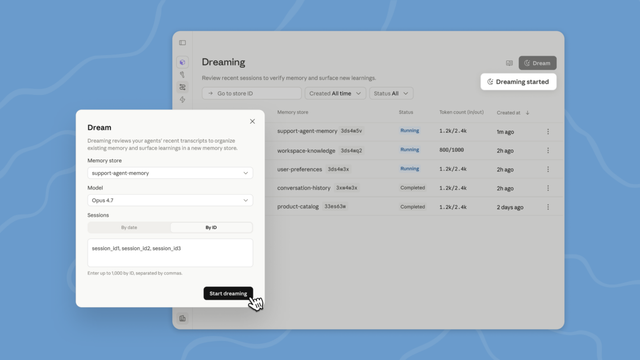
Anthropic deployed Auto Dream to address memory decay in Claude Code after 20+ sessions. The background sub-agent runs a four-phase consolidation cycle to merge duplicates, resolve contradictions, and convert relative dates - keeping the 200-line memory index functional. Developers reverse-engineered it before official docs appeared.

Anthropic began rolling out Auto Dream, a background sub-agent that consolidates Claude Code's memory files between sessions. The four-phase cycle fixes duplicates, stale dates, and contradictions that degraded auto-memory quality after 20+ sessions. The system prompt is already public on GitHub.
Do you want to increase the performance of your #Linux application? Heaptrack is a powerful tool designed to track and analyze memory usage. You can easily identify memory leaks and optimize #performance, making your software run smoother and faster.
How OpenClaw's Memory System Works
https://www.db0.ai/blog/how-openclaw-memory-works
#HackerNews #OpenClaw #Memory #System #Technology #MemoryManagement #AIDevelopment #HackerNews
Reference vs Value: The & Operator Mystery!
PHP's pass-by-reference vs JavaScript's object references - CONFUSING but important!
#php #javascript #phpvsjs #passbyreference #passbyvalue #references #memorymanagement #viralcoding #programmingconcepts #mindblown #gotchas #syntaxcomparison

Jemalloc Un-Abandoned by Meta
#HackerNews #Jemalloc #Meta #Abandonment #TechInfrastructure #OpenSource #MemoryManagement

In the previous article we explored how Go’s memory allocator manages heap memory — grabbing large arenas from the OS, dividing them into spans and size classes, and using a three-level hierarchy (mcache, mcentral, mheap) to make most allocations lock-free. A key detail was that each P (processor) gets its own memory cache. But we never really explained what a P is, or how the runtime decides which goroutine runs on which thread. That’s the scheduler’s job, and that’s what we’re exploring today.
A trip down a memory lane 😎:
“DOS Memory Management”, Michal Necasek (https://www.os2museum.com/wp/dos-memory-management/).
Via HN: https://news.ycombinator.com/item?id=47196864
#DOS #MSDOS #RetroComputing #MemoryManagement #PC #IBMPC #OldSkool #Nostalgia