Mutations in Rye (Secale cereale L.) - Cytology and Genetics
Abstract Mutations found in cultivated rye were grouped as follows: self-fertility genes, meiotic mutants, embryo lethality and enzyme-specific deficiency genes, chlorophyll mutants, dwarf mutants, morphological mutations, anthocyaninless and seed color genes. The traits in the mutants were controlled by recessive genes excepted for the dominant dwarfs, self-fertile genes and some morphological mutations. All the meiotic mutations caused partial or complete spike sterility and were maintained in a heterozygous state. Chlorophyll mutants were divided into lethal and semi-lethal, with the difference that the latter usually reach maturity. Dwarf mutants formed one of the largest groups, in which the dwarfism character of 15 numbers was determined by a single recessive gene. The response to gibberellic acid was found in fourteen mutants, including the dominant dwarfs. Mutations in morphological traits were also governed by recessive genes excepted for the hairy leaf sheath, spring growth habit and waxy endosperm. The use of self-fertile mutants in rye allowed to study the genetics of inbred lines with different seed color (yellow, green, brown, and violet) depending mainly on the combination of the recessive alleles of Vi, C and Vs genes. The production of more inbred lines led to the identification of various mutations and their subsequent detailed research for enhancing germplasm diversity in cultivated rye.

In vitro reconstitution of meiotic DNA double-strand breaks: A long-standing challenge solved
In a study published in Nature, researchers report the successful in vitro reconstitution of meiotic DNA double-strand breaks (DSBs) formation.
How do
#cellcycle oscillators generate exactly two
#meiotic divisions for production of haploid
#gametes?
Wolfgang Zachariae and colleagues show that
#Spo13/#MEIKIN and
#Cdc5/#Plk1 cooperate to prevent premature APC/C-
#Ama1 activation after
#meiosis I
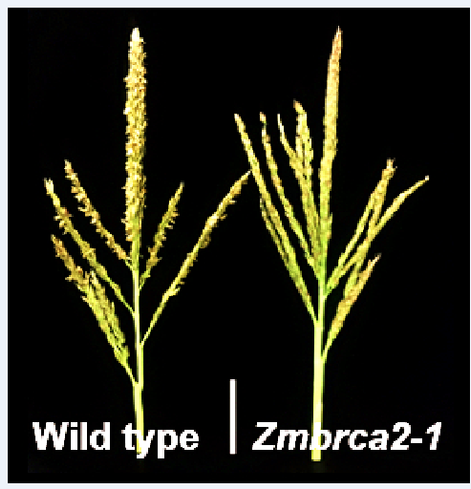
https://www.embopress.org/doi/full/10.15252/embj.2023114288In an unexpected twist, Zhang et al. reveal that in
#Maize, FIGL1 coordinates with dosage-sensitive
#BRCA2 in modulating
#meiotic #recombination, unlike their antagonistic relationship in
#Arabidopsis.
https://doi.org/10.1111/jipb.13541 @wileyplantsci
#PlantSci #evolution #DNArepair #JIPB #plantscienceA small RNA system ensures accurate homologous pairing & unpaired silencing of #meiotic #chromosomes in C. #elegans
Hiroaki Tabara et al show #argonaute proteins CSR-1 and CSR-2 targeting repeat-derived #lncRNAs to mediate both #synaptonemal complex formation and condensation of unpaired chromosomes
https://www.embopress.org/doi/10.15252/embj.2020105002

Researchers use TurboID to uncover new meiotic proteins in Arabidopsis thaliana
Meiotic recombination assures genetic variation during breeding. During meiotic prophase I, chromosomes are organized in a loop-base array by a proteinaceous structure called meiotic chromosome axis, which is critical for meiotic recombination and genetically diverse gametes. An international research team led by IPK Leibniz Institute reports the application of a TurboID-based approach to identify proteins in proximity of meiotic chromosome axes in Arabidopsis thaliana. Both known and new meiotic proteins were uncovered. The results have been published in the journal Nature Plants.

An ultra-efficient and convenient method for meiotic DNA break profiling in multiple organisms
Collaborating research groups in China have developed a novel technique, called DNA End tailing and sequencing (DEtail-seq), for meiotic DNA double-strand break (DSB) profiling.
 Cytology and Genetics
 CellBioNews
 The EMBO Journal
 JIPB
JIPB