 The Colorado Sound Playlist
 Radio 1190 Playlist
🎶 10:46am Imouhar by Mdou Moctar from Imouhar.
DJ Victor - Sunday Brunch
#MdouMoctar #DJVictor #SundayBrunch #Radio1190 #KVCU
painting the desert blue
In late 1994, at the invitation of a bass-playing high-school friend I’d kept in touch with after graduation, in the days before the Internet became ubiquitous, when maintaining long-distance personal connections took a bit more effort, I drove from St. Louis to San Francisco in my beat-up Honda Civic with about $500 cash to my name and little else. I was young and naïve enough to think this was sufficient to begin a new life on the West Coast, and it was not the last time I would make such a foolhardy attempt.
My friend later wrote a fictionalized memoir about our time in San Fran aptly titled “On Anarchy, Travel, and Tragedy”. But like many of my reckless misadventures, it was mostly worth it. I got to wade into the surprisingly chilly waters of the Pacific Ocean at sunset, drive across the Golden Gate Bridge at sunrise screaming along with Nirvana’s “Oh the Guilt” from their split 7-inch with Jesus Lizard, frolic naked in the moonlight at Half Moon Bay, and stay up all night drinking and smoking in the kitchen with my old friend and the couple he was staying with, talking about life and art and society and everything in between.
On one of those nights, our hosts put on the album Talking Timbuktu, a collaboration between singer/guitarist Ali Farka Touré and Ry Cooder. They had heard the album featured on NPR (National Public Radio). When they discovered I was interested in blues, guitar, and African music thanks to my first stint as a volunteer DJ at a college radio station, they quite correctly thought I would dig these jams.
The album was—not just to me but possibly to everyone who heard it—a sonic and cultural revelation. It connected the uniquely American sound of twentieth-century blues to an even older musical tradition in Mali and other countries of Western Africa. It prompted an exploration into that connection, to explore both the histories and musical similarities behind this collaboration. The album’s commercial and critical success played a significant role in building a stateside audience for what would be marketed as “world music”. And though I’ve never cared for that label, it did a lot to expand musical horizons in the States beyond the limited spectrum of mainstream commercial radio.
As much as I loved the album and learned from it in the 90s, it took on a new depth for me when I relocated to the southwestern desert. Ali’s hometown in Mali might be an ocean away from Phoenix, and the economic and cultural differences are perhaps even vaster than the sea. But there is a vibe to living in the desert, a feeling that resists being put into words but is recognizable in the music. Western Africa is bounded on two sides by the Sahara, making it a hot and arid land. But because many of the countries are coastal, the desert experiences powerful monsoons—much like Phoenix.
On a typical day, the desert carries a sense of stillness, a quiet emptiness that is just as peaceful as it is oppressive in the hottest months. It’s a place that naturally suggests the hypnotic, repetitive grooves layered with guitar solos whose tone can be as spiky as a cactus or as soft as the rare flowers of that same plant. The overbearing heat suggests playing at a more laid-back tempo, to take your time. The wide-open spaces invite you to ride a groove for longer than your average three-minute pop song. Even the prevalence of five-note pentatonic scales in desert blues implies more space, more of a sense of openness and distance than found in your typical seven-note scales.
I hear these aspects of the desert not only in the desert blues of West Africa but in the heavier desert rock sound that came out of the American southwest in the late 80s to mid-90s from bands such as Kyuss, around the same time Ali Farka Touré was recording his first albums. Desert rock is perhaps better suited to expressing the violent energy of the monsoons and the way they unexpectedly roll in from the distant horizon to rage against once-cloudless skies, full of lightning and fury and power. But even then, there’s a slow, hypnotic heaviness to most desert rock that sets it apart from other forms.
Despite differences in tonality and rhythmic traditions, I hear that same kind of space and arid peacefulness in oud music from the desert areas of Egypt and the Middle East, such as Hamza el Din and Rahim Al Haj. Again, I loved this music before I ever set foot in the desert, but hearing it, learning some of it, and working on incorporating its feeling into my own playing while living in a similar climate and landscape made me feel more personally connected to it. The music became something that I wasn’t merely appreciating as an outsider; it expressed something about my own experience, too.
Ali’s stylistic influence lives on in other bands and artists from Western Africa. He was a musical ambassador whose son, Vieux Farka Touré, carries on his tradition. He laid the foundation for North American tours by Mdou Moctar, Bombino, and Tinariwen. He sang about kindness and community, about the need for compassionate and responsible leadership, and he lived by those principles. Last but not least, he sang about the landscape of his home, and even without a translation of his lyrics, you can hear that landscape in every note he played.
Rate this:
#Africa #guitar #music #aliFarkaToure #africanMusic #RyCooder #memoir #desert #mdouMoctar #tinariwen #bombino
🇺🇦 #NowPlaying on #KEXP's #VarietyMix
Mdou Moctar:
🎵 Imouhar

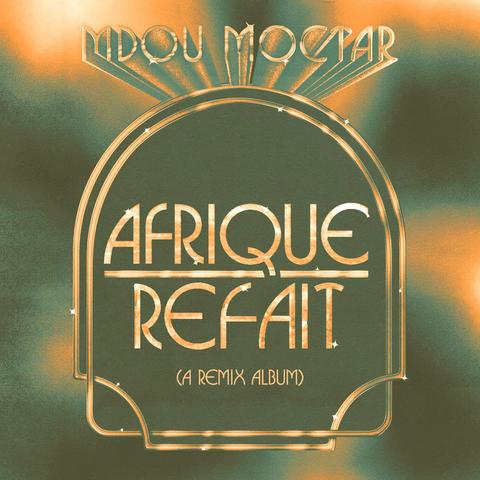
🇺🇦 #NowPlaying on #BBC6Music's #LaurenLaverne
Mdou Moctar:
🎵 Imouhar
https://mdoumoctar.bandcamp.com/track/imouhar-drum-machine-version
This could have been some grumbling in the background
Goodnight everybody. I've got no choice
Mdou Moctar - J'ai pas le choix

Wednesday music therapy by #MdouMoctar #MikeyColtun
https://youtu.be/AaLPZ8P-Nl8

Mdou Moctar // #MdouMoctar //
Ibitilan
[Niger EP Vol. 2, 2022]
//via // #MatadorRecords //
#buzzingroom #music #bandcamp #MdouMoctar #Niger #NigerEP #NigerEPVolume2 #Ibitilan #AhmoudouMadassane #MahamadouSouleymane #MichaelColtun
link bandcamp: https://mdoumoctar.bandcamp.com/track/ibitilan-1

from the album Niger EP Vol. 2
 Mars Will Send No More
 KEXP 🎶 #NowPlaying Bot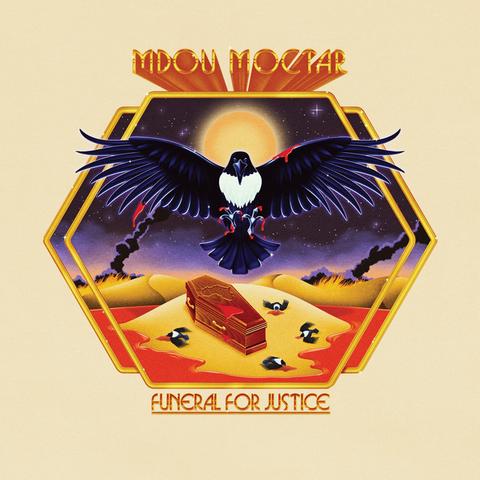
 knizer
 Albums Albums Albums
 BBC6Music 🎶 #NowPlaying Bot
 Amro has been
 Nicole
 BuzzingRoom