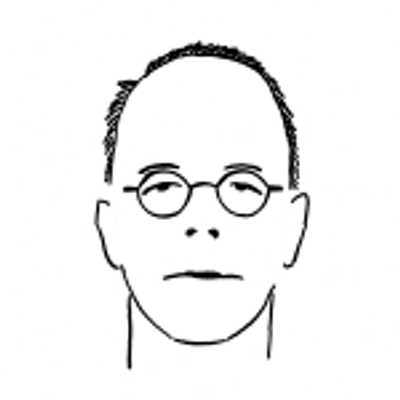
The main challenge in undertaking this book has been to enter into the living experience, living forms, living ideas, living substance, living imagination, living persons, and to write from the inside. To create a mood which indicates a field of endeavor and yet allows each reader to find his or her own way in it. To create a mood which is artistic in the largest sense, one which affirms imagination as a way of experiencing and of knowing.
—Mary C. Richards, Toward Wholeness
#maryrichards #wholeness #book
“In the light of these developments, we can extend our image beyond pottery and speak of “artistic mind.” That is, mind that makes connections between things ordinarily thought to be different. … For us now the doing has to be a free choice out of our destiny, without pressure. For this is what fires our hearts, is it not? To feel ourselves free to love and to live. Unbullied and unbullying. Unhaunted by a conscience made guilty by social pressures and expectations. To act from source freely.”
—Mary C. Richards, Centering in Pottery, Poetry, and the Person
#MaryRichards #Love #Life
”It was particularly exciting to me to come upon David Bohm’s Wholeness and the Implicate Order in 1980 just at the moment when my own work bearing “wholeness” in its title appeared. … It is particularly moving to find the physicist Bohm saying that reality … lends itself much more to the way of understanding one might have of the arts, of poetry and dance for example, though it is in music that he finds the leading paradigm. This is not aesthetics but morphology.
—Mary C. Richards, Centering in Pottery, Poetry, and the Person
#MaryRichards #DavidBohm #Wholeness #ImplicateOrder #Music #Arts #Dance #Poetry
It is not possible to learn anything without enjoyment. On the other hand, there is an attachment to liking and disliking that obstructs learning and deeper enjoyment. The right to opinion must be honored without exception, but not all opinions are equally honorable. Though everyone is free to be who he is, ignorance and cruelty are not freedoms.
—Mary C. Richards, Centering in Pottery, Poetry, and the Person #maryrichards #learning #freedoms
I am concerned with our power to grasp, to comprehend, to penetrate, and to embrace. There are different levels at work here as elsewhere.
—Mary C. Richards, Centering in Pottery, Poetry, and the Person #maryrichards
All we need do to begin is to open up and perceive. As M. C. [Richards] puts it, “it is not a concept that I wish to convey. It is, rather, an experience of nature which I wish to summon into consciousness. It comes in like a light, clearing the mind. . . . It is not a matter of ‘adding to’ but of ‘developing,’ of ‘evolving’” Light is a given; we are the receivers and, by imagination, rebirthers of the light. But first we must perceive this.
—Matthew Fox, Foreword to the Second Edition of Centering in Pottery, Poetry, and the Person by Mary C. Richards. #maryrichards #perceiving #perceptions
…she [M. C. Richards] rejects Descartes’s…philosophy that “I think therefore I am” with a radical invitation to perceive. “We perceive, therefore we are.” Or better, “We are open in our perceptions and therefore we exist.”
—Matthew Fox, Foreword to the Second Edition of Centering in Pottery, Poetry, and the Person by Mary C. Richards. #maryrichards #descartes