“Traduttore, traditore”*…
Translation is key to communication across cultures– and across time. But as the old Italian adage above suggests, transaction is difficult; indeed, translation is sure, from time to time, to fail. (C.f., e.g., here) The estimable Jonathan Bate shares a “tragic” example…
One of the most consequential misunderstandings in the history of literary criticism turns on a single Greek word. In Aristotle’s Poetics, that word is hamartia. It is usually rendered, in classrooms and handbooks, as “tragic flaw,” and on that translation an entire tradition of reading tragedy has been erected. Yet if we return to Aristotle’s Greek and trace the word’s history with some philological care, it becomes clear that this familiar formula rests on a slow but decisive mistranslation—less an error at a single moment than a long cultural drift in which a term meaning “mistake” gradually hardened into a doctrine of moral defect.
In classical Greek, hamartia belongs to the language of action rather than character. Its root sense is concrete and kinetic: to miss one’s mark, as an archer misses the target. By extension, it denotes an error, a misjudgment, a false step—often one made in ignorance of some crucial fact. Aristotle uses the term this way throughout his works, ethical and otherwise. In the Poetics, when he says that the tragic hero falls into misfortune “because of hamartia,” he is careful to exclude two alternatives. The hero does not fall because he is wicked, nor because he is exceptionally virtuous. Tragedy, for Aristotle, does not punish vice or reward goodness; it stages the vulnerability of human action to error within an intelligible but unstable world. The downfall comes about δι’ ἁμαρτίαν—because of an error, not because the hero is “flawed” in a modern psychological or ethical sense…
[Bate locates this reading in the larger corpus of Aristotle’s thinking, then traces the evolution of the reading of hamartia— and of the culture(s) that informed those understandings. He concludes…]
… the history of hamartia traces a remarkable arc: from error in action, to moral fault, to sin, to vice, to psychological flaw. Each step made sense within its own intellectual climate, yet the cumulative effect was to impose on Aristotle a conception of tragedy he would scarcely have recognized. What began as a missed mark became a stain on the soul. And with that shift, tragedy itself was subtly transformed—from a meditation on human fallibility into a lesson on personal failure…
The history of a misreading: “Aristotle and the so-called Tragic Flaw,” from @profbate.bsky.social.
* Old Italian adage: “translator, traitor” (or, “to translate is to betray”) See here and here.
###
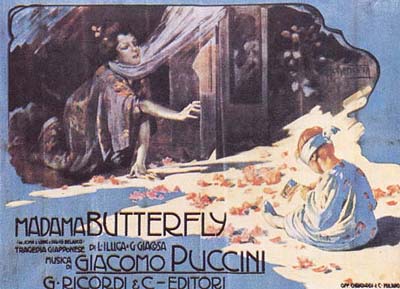
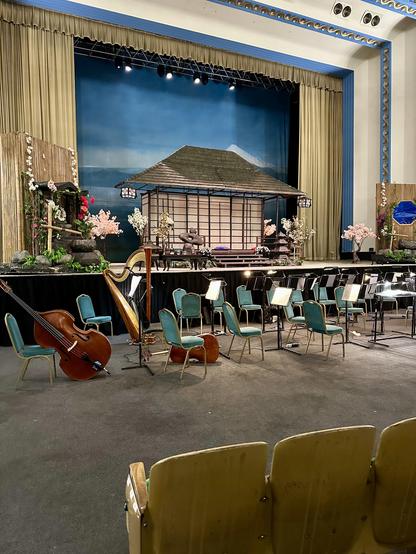
As we tangle with tragedy, we might recall that it was on this date in 1904 that Giacomo Puccini‘s Madama Butterfly premiered at La Scala in Milan. The tragic opera (with a libretto by Luigi Illica and Giuseppe Giacosa) was based on the 1898 short story “Madame Butterfly” by John Luther Long, which in turn was based on stories told to Long by his sister Jennie Correll, and on the semi-autobiographical 1887 French novel Madame Chrysanthème by Pierre Loti. Long’s version was dramatized by David Belasco as the one-act play Madame Butterfly: A Tragedy of Japan, which, after premiering in New York in 1900, moved to London, where Puccini saw it in the summer of that year.
The premiere in Milan was a fiasco, beset by several bad staging decisions, from the lack of an intermission during the second act to the device of giving audience plants nightingale whistles to deepen the sense of sunrise in the final scene– which the audience took as a cue to make their own animal noises. Today Madama Butterfly is considered a masterpiece and is the sixth most performed opera in the world.
Original 1904 poster by
Adolfo Hohenstein (
source)
#art #culture #DavidBelasco #Drama #hamartia #history #LaScala #literature #MadamaButterfly #MadameButterfly #opera #Puccini #tragedy #tragicFlaw #translation JBinnacle
 (Roughly) Daily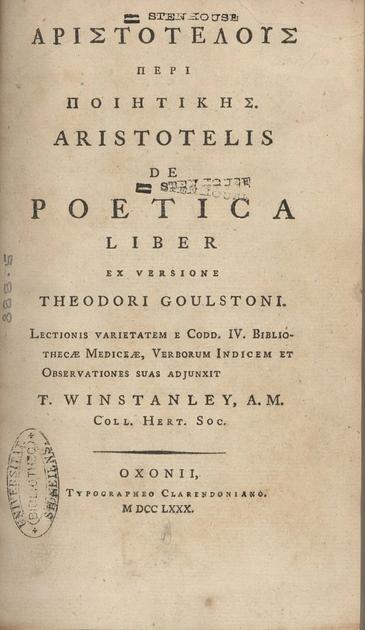
 robsonrc
 Steffi Jên 🏴🏳️⚧
 像奥德修斯一样在海边搬了十年的家
 Andy
Andy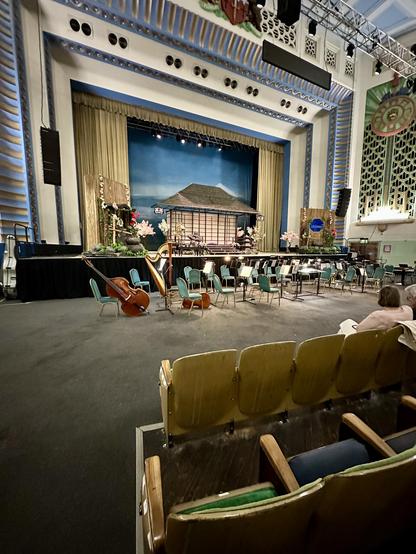
 ShadowPlay