 petapixel (unofficial)
‘Eternal Spring’ is a Macro Timelapse Film Featuring Melting Ice
#spotlight #christopherdormoy #climatechange #globalwarming #ice #macro #macrotimelapse #melting #timelapse
‘Eternal Spring’ is a Macro Timelapse Film Featuring Melting Ice
#spotlight #christopherdormoy #climatechange #globalwarming #ice #macro #macrotimelapse #melting #timelapse
Photographer Spends a Year Timelapsing the Growth of Mushrooms
#spotlight #fungi #jensheidler #macro #macrolens #macrotimelapse #timelapse
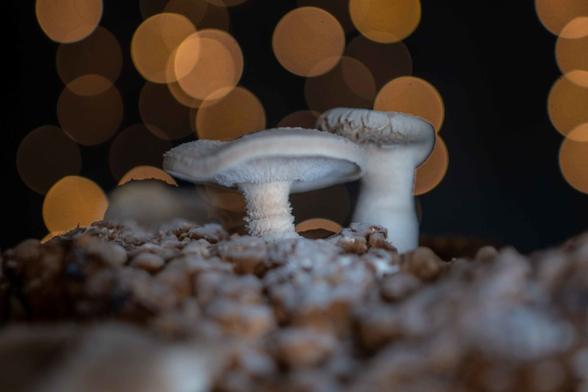
Macro Timelapse Shows the Growth Process of King Oyster Mushrooms
Macro photographer Jens Braun has captured cinematic macro timelapse footage of mushrooms he grew at home in his basement over the course of ten days.
Braun, formerly Jens Heidler, is a macro photographer and videographer who has created numerous macro videos of plants, mushrooms, and insects on his YouTube channel Another Perspective, such as his video of growing shiitake mushrooms.
This time, Braun has taken his passion for the fungi world to the next level and created a YouTube channel called HappyMushrooms that specifically focuses on all things mushrooms -- from advice on how to grow them to DIY tutorials, experiments, and timelapses.
His latest video shows a cinematic take on the growth process of king oyster mushrooms. He grew them himself in his basement using a mix that contained 80% beech pellets and 20% wheat bran at 17-degrees Celsius (63-degrees Fahrenheit).
Braun took the macro images with two cameras -- Sony a7R IV and Sony a6000. The process of capturing the footage was additionally challenging because he had to maintain 100% humidity while also trying to avoid the humid air affecting his camera gear and interrupting the clean capture.
To keep the right humidity levels, Braun bought a fruiting tent which includes an automated air system that blows fresh air from outside into the tent to keep the temperature low and to reduce the CO2 level.
The cinematic shots of the footage were filmed with Sony a7R IV and Laowa 24mm f/14 2x Macro Probe lens which allows extreme close-ups and creates what Braun calls a "bug-eye perspective." The camera was also fitted on a slider, although some shots were filmed handheld at 100fps, slowed down four times, and stabilized during post-processing.
For the timelapse, Braun used two macro lenses, although he notes that a macro lens was not needed for half of the shots. These shots were lit with a basic softbox and a 5W LED light.
As the timelapse footage consisted of both 24-megapixel and 27-megapixel images, most of the time in the post-processing was spent on rendering them. Although creating a timelapse video from 24-megapixel photos wasn't a problem, Braun tells PetaPixel that the 27-megapixel footage pushed his computer to the limit and the rendering of those clips took ten times more than the 24-megapixel ones.
More of Braun's timelapses can be seen on his HappyMushroom and Another Perspective YouTube channels and on his Instagram.
Image credits: All images by Jens Braun and used with permission.
#inspiration #spotlight #funghi #fungi #jensbraun #jensheidler #macro #macrofilm #macroprobe #macrotimelapse #mushroom #timelapse
Fascinating Macro Timelapse Footage Shows the Life Cycle of Ladybugs
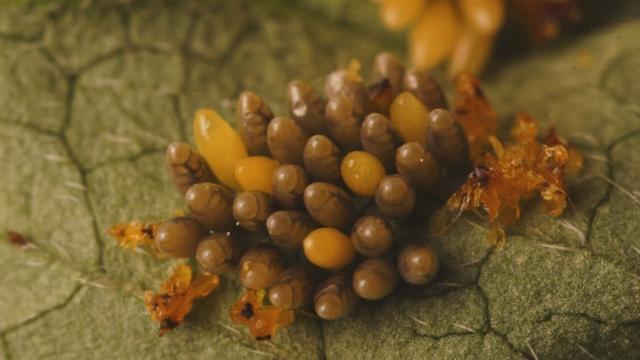
Photographer Jens Heidler has recorded a fascinating macro timelapse story of ladybugs hatching that gives viewers a rarely-seen glimpse into the lives of insects.
Heidler, who is both a photographer and YouTube creator, has previously shared several of his creative ideas -- with a strong focus on macro photography and video -- such as his shiitake mushroom timelapse or the 10-day cracking egg timelapse. On his YouTube channel Another Perspective, Heidler regularly uploads his experiments and tips for others who want to try these ideas at home, too.
In his latest video, Heidler experimented with hatching ladybugs and recorded the process alongside other clips of the ladybug lifecycle. He tells PetaPixel that the whole process took him seven days and he used two cameras at an extreme macro distance -- the size of one ladybug egg is approximately 1 millimeter (0.04 inches) across. The macro images were taken at f/16 at 3:1 magnification every 10 seconds.
Typically, Heidler looks for egg clusters when he wants to create timelapse or macro photos of the insect world. But, when it comes to ladybug eggs, he had to be on a lookout for areas that had a significant number of aphids, one of the ladybug's favorite prey. Ladybugs tend to gather around them and during springtime and will mate and lay their eggs near them.
Once he found the right location, he looked at the underside of leaves in the area since the chances were high he would find ladybug egg clusters situated there. After finding a cluster, he brought it into his studio for the project.
Heidler explains he had to be careful to firmly affix the leaf the ladybug eggs were on. Otherwise, as the leaf starts to dry and curl, it moves and can cause focus issues. In this case, Heidler says that the recording process went mostly smoothly, although he had to slightly readjust the focus after the first day.
Always eager to experiment with the natural world and its wonders, Heidler says that when he discovers another egg cluster in the future, he will gladly repeat the process and see what comes out of it. Although for this video he intentionally sought ladybug eggs, a lot of times he doesn't know what kind of insect is about to hatch, which can be a great surprise at times.
It should be noted that the insects Heidler captured above might not be ladybugs, but instead Asian lady beetles -- they are often mistaken for one another due to how similar they look. Both species of beetle feast on aphids, but Asian lady beetles are far more aggressive, cluster together more often, and will secrete a foul-smelling yellow liquid when threatened. Asian lady beetles are also considered invasive in many environments. The difference between the two insect species does not take away from the quality of Heidler's macro timelapse, howver.
More of Heidler's work can be found on his YouTube channel and Instagram.
Image credits: All images be Jens Heidler and used with permission.
#features #ideas #inspiration #bug #flyinginsects #insectmacrophotography #insects #macro #macrophotography #macrotimelapse #nature #timelapse


Timelapse Shows Enthralling Process of a Growing Shiitake Mushroom
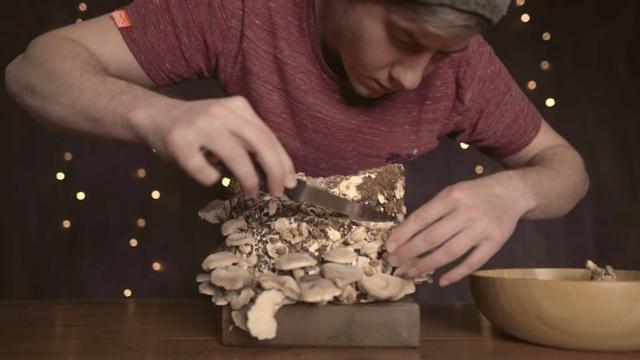
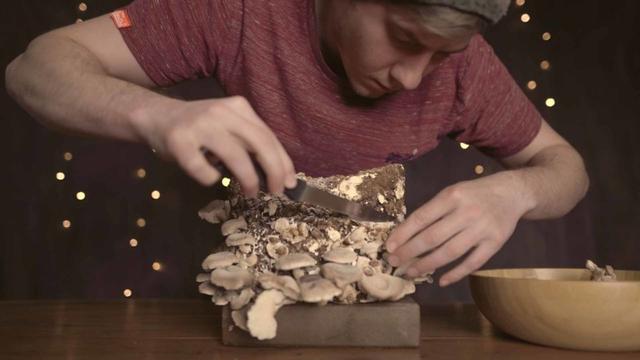
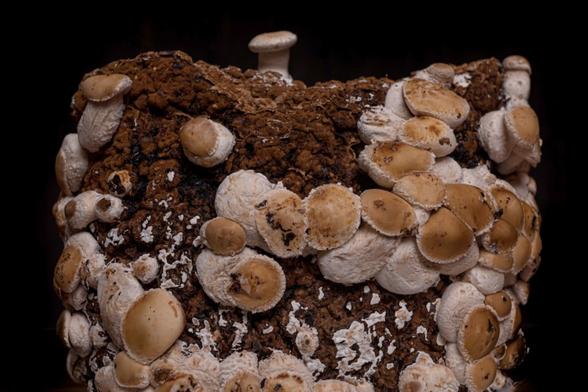
A photographer, fascinated by the fungi world, has recorded a creative timelapse of a growing shiitake mushroom, which shows the fascinating progress up-close.
Photographer and YouTube creator Jens Heidler, who has previously shared his innovative approach to documenting macro and timelapse work of various objects and the natural world with PetaPixel , like the 10-day cracking egg timelapse, has released a new video on his channel Another Perspective, where he recorded a timelapse of a growing shiitake mushroom.
As a self-proclaimed "mushroom fan," Heidler plans to record timelapse videos of as many mushrooms as possible, while currently working with a variety of mushrooms, such as king oyster, lion's mane, poplar mushroom, parasol mushroom, and king Stropharia. The latter will see recorded footage released in near future to follow this most recent shiitake mushroom video.
Heidler says that he has always been fascinated with great timelapse video in the past and was curious how to record video footage like that himself, which is why he entered the macro and timelapse world. He explains that one of the main things that bring excitement when shooting timelapse is that irrespective of a prepared plan, it's likely that the creator will discover something new and interesting as the recording unfolds.
When he started out shooting this type of work, he used a simple GoPro and has since upgraded to two entry-level cameras, Sony Alpha a6000 and a6300, and the full-frame Sony a7R IV. For his lenses, he uses Venus Laowa 60mm f/2.8 Ultra Macro and Sony FE 90mm f/2.8 Macro, which the photographer also uses to take photos from a longer distance at f/16 and f/22.
The two entry-level Sony cameras support apps that allow Heidler to take one image every five minutes, with no limitations, whereas Sony a7R IV doesn't and the photographer needs to use an additional timelapse remote controller with it. Besides his cameras and lenses, his setup also includes a tripod, a dummy battery, and a simple softbox.
Heidler recommends other creatives to start out in the macro and timelapse world with something simple at first. For example, recording cress can give satisfying results because it grows very fast. After that, photographers and videographers can begin to plan the next steps by adjusting the light source, perhaps adding a rotation table or even a star tracker to mount the camera on, or a manual focus rail to add movement.
Although Heidler is currently preoccupied with recording the fungi world, he says that if he discovers other opportunities that would make an interesting timelapse, "the mushrooms will have to wait."
Image credits: All images by Jens Heidler and used with permission.
#ideas #inspiration #anotherperspective #jensheidler #macro #macrophotography #macrophotographyideas #macrotimelapse #macrovideo #mushroom #timelapse
A 10-Day Timelapse of a Cracked Egg Reveals Glass-Like Patterns
Photographer Jens Heidler recorded a 10-day timelapse of a cracked egg in macro and captured the various stages of its drying and crystalization. What results is are some beautiful and unexpected patterns.
Heidler has an active educational YouTube channel called Another Perspective where he shares numerous project ideas and tutorials for photographers and filmmakers.
His more recent projects involve food products reacting to different environments over time, notably one where he captures macro images and video clips of dissolving M&M's. His latest is just as unusual and focuses on what happens to a cracked egg over the course of 10 days.
Heidler initially set out to create a timelapse of the egg decomposing, but the result of the 10-day experiment surprised the photographer as it less decomposed, but more transformed. As the egg began to dry out, it started to crystalize from the outer edges and slowly moved towards the center, leaving a trail of what is reminiscent of the patterns that appear when glass or ice breaks.
Using a macro lens, Heidler reveals how the egg's white slowly forms holes that spread across the surface as the egg dries. If you look closely -- and it is more easily seen thanks to the blue colored background -- the macro shots of the hardened eggwhite "holes" resemble a combination of Van Gogh's world-famous "Starry Night" painting with a touch of painter Gustav Klimt's intricate details, turning the macro results of days-old egg into a visually pleasing pattern.
As the timelapse goes on, you can also see the result of the egg yolk hardening on the outside, but not quite on the inside as Heidler cuts it in half to demonstrate it's still slightly soft.
The setup for the timelapse was simple, the photographer explains to PetaPixel. It just uses one softbox, with two cameras and a pair of lenses which came together to form the finished macro photos and timelapse: a Sony a7R IV and a Sony Alpha a6000 along with a Sony FE 90mm f/2.8 Macro and a Venus Laowa 60mm F/2.8 Ultra Macro.
Heidler reveals that he had no real expectations from the concept before executing it. He simply decided to set up a timelapse, crack the egg, and waited to see the result, whatever that would be. He hopes that his experiment that he came up with on the fly will encourage others to create something unusual and inspire others to explore the possibilities of the macro world using everyday objects found around the house.
You can see more of Heidler's work on his Instagram or follow his YouTube channel to see his latest tutorials and projects.
Image credits: Images by Jens Heidler and used with permission.
#doityourself #features #inspiration #extrememacro #macro #macrophotography #macrophotographyideas #macrophotographytips #macrotimelapse #macrovideo #timelapse


