 The Style mix
How to Make Insulin-Reducing Overnight Oats: Healthy and Tasty
What you eat in the morning affects your whole day’s blood sugar. Over 34 million Americans have diabetes. A healthy breakfast can help manage it.
Old-fashioned oats are a great start. The American Diabetes Association says less processed grains help control blood sugar. A 2021 study in the journal Foods found oats are good for managing chronic conditions.
Here’s a meal prep idea that’s easy and healthy. You can make a breakfast in about five minutes. Just mix your ingredients in a container and refrigerate overnight.
Your breakfast gives you lasting energy and fiber. It keeps well in an airtight container for up to five days. So, a healthy breakfast is always ready.
Why Choose Overnight Oats for a Diabetes-Friendly Breakfast?
Finding a morning meal that’s both convenient and beneficial for blood sugar control can feel like a daily challenge.
This is where a smart choice shines. The high fiber content in whole grains helps slow digestion. This process is key for maintaining stable glucose levels after eating.
A 2020 study by Reynolds et al. confirmed that dietary fiber and whole grains are essential for effective diabetes management.
Research shows these grains have a low glycemic index. They help prevent the sharp spikes in glucose often seen with refined options.
Preparation takes about five minutes with minimal cleanup. This makes it a perfect solution for busy mornings.
You can pack your creation to eat cold or warmed later. It works well as a filling lunch in the middle of your day.
The flexibility allows for endless flavor combinations. This keeps your morning routine exciting and nourishing all week long. By incorporating this dish, you choose a nutrient-dense option that supports wellness.
Understanding Insulin-Reducing Overnight Oats
Carbohydrate quality, research shows, is far more critical for metabolic health than simply counting grams.
A 2020 study by Sievenpiper et al. emphasizes the importance of carbohydrate quality over quantity for maintaining optimal cardiometabolic health.
This principle is key when preparing your morning meal. Soaking oats in the fridge allows resistant starches to form.
These starches digest slowly. This process may help keep your blood sugar levels more stable for a longer period.
Proper nutrition plays a huge role in controlling diabetes. The way you prepare your oats significantly impacts your insulin response.
Choosing steel-cut or old-fashioned varieties is a proven way to support better energy balance. Clinical dietetics students like Morgan Lowing note that keeping nutritious food fun is essential for long-term success.
This approach to overnight oats ensures you fuel your body with the right nutrients. The goal is stable energy throughout your entire day.
Essential Ingredients for a Healthy Recipe
Choosing the right ingredients is key to a balanced breakfast. The quality of your ingredients affects your meal’s nutrition.
Start with a 1/2 cup of old-fashioned rolled oats. This amount gives a good base without too many carbs. These oats are less processed than quick-cooking ones.
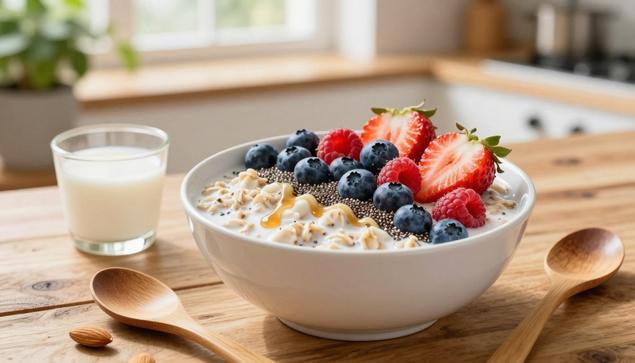
Add one tablespoon of chia seeds next. These tiny seeds are full of fiber and protein. They have both soluble and insoluble fiber.
This helps control glucose levels well.
Your choice of liquid is important. Use 1/2 cup of unsweetened plant-based milk for the right creaminess. Unsweetened almond milk is a good choice.
It has only 0.8 grams of carbs per cup. Whole milk has 11.7 grams.
These ingredients work well together. They make a satisfying, blood sugar-friendly recipe. Your morning meal gives lasting energy and wellness.
The Role of Liquid Choices in Blood Sugar Management
Changing your breakfast liquid can greatly affect your blood sugar. The type of milk or base you use changes your meal’s carb count. This is especially true for recipes like overnight oats.
For example, unsweetened almond milk has only 0.8 grams of carbs per cup. Unsweetened coconut and soy have 1 and 2 grams respectively. But whole cow’s milk has 11.7 grams of carbs, affecting your oats recipe a lot.
Choosing unsweetened plant-based options cuts down on unnecessary calories. Unsweetened almond milk is great because it has healthy fat. This is important for people with diabetes all day.
Adding chia seeds to your oats boosts protein and gives essential nutrients. For creaminess, try Greek yogurt or mix in fresh fruit like raspberries or berries. They offer more protein, less lactose, and good probiotics.
Always check the label to make sure your milk is unsweetened. Added sugar can raise your blood sugar a lot. By picking your liquid wisely, you help keep your blood sugar stable and support your health.
Diabetes-Friendly Sweeteners for a Tasty Twist
Sweetening your breakfast doesn’t have to raise your glucose. Many traditional sweeteners have hidden carbs.
Just one tablespoon of maple syrup has 14 grams of carbs. Honey has about 17 grams per tablespoon.
These amounts can quickly add up and affect your blood sugar. Instead, try sugar-free options like monk fruit or stevia.
Two teaspoons of monk fruit sweetener or one teaspoon of stevia powder have less than one gram of carbs. These natural sweeteners don’t raise blood sugar like refined sugar does.
You can adjust the amount to your liking for flavor. This way, you can enjoy a tasty breakfast without affecting your insulin response.
Stay away from flavored instant packets with added sugar. They can cause sudden spikes.
Smart Sweeteners for a Healthier Oats
Choosing smart sweeteners keeps your oats tasty and healthy. This simple change helps your oats stay a key part of managing sugar levels, especially for those with diabetes. Adding chia seeds and yogurt boosts the protein in your overnight oats.
Mix-Ins and Toppings to Boost Nutrient Density
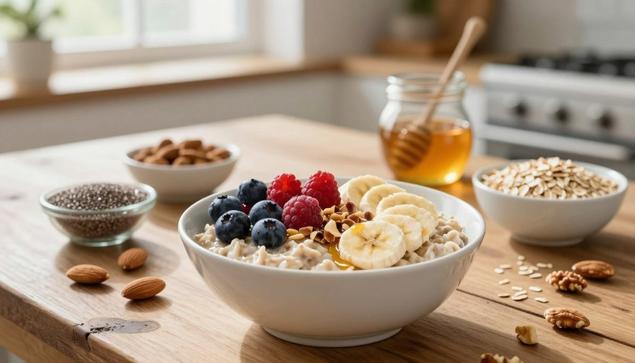
Make your morning meal supercharged with smart mix-ins. The right toppings turn your bowl into a nutrient powerhouse. They add color, texture, and health benefits.
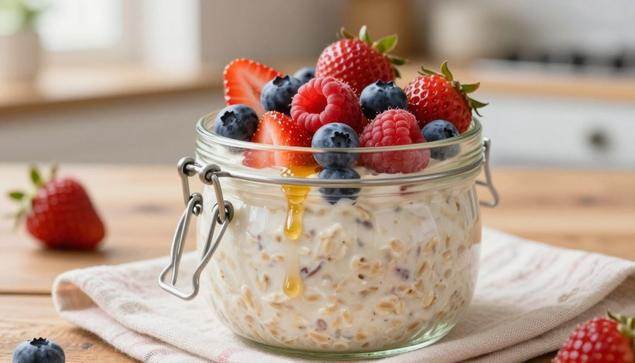
Fresh berries are a great start. A quarter-cup of blueberries or a handful of raspberries adds natural sweetness and fiber. These fruits are full of vitamins without raising your carb count.
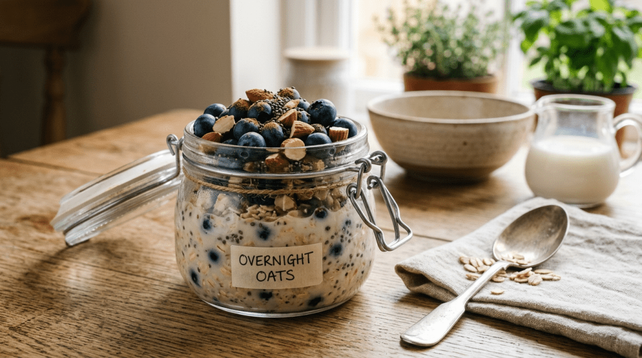
For lasting energy, try nuts and seeds. Almonds, walnuts, and a tablespoon of chia seeds offer healthy fats and plant-based protein. Adding almond butter adds creaminess and more protein.
A sprinkle of cinnamon brings warm flavor without sugar. Mix in half an apple, cinnamon, and chopped walnuts for a cozy taste.
These toppings let you change up your breakfast every day. Enjoy different fruits, seeds, and nutrients for lasting energy.
Step-by-Step Guide to Preparing Your Overnight Oats Recipe
Make a nutritious breakfast ready when you need it. This overnight oats recipe saves you time on busy mornings.
Start with a 1/2 cup of old-fashioned rolled oats. Then, add one tablespoon of chia seeds. These are the base for a filling meal that fits your diet.
Next, pour in a 1/2 cup of unsweetened milk. Add 1/3 cup of plain Greek yogurt for extra protein and creaminess.
Stir in one tablespoon of almond butter and a dash of cinnamon. Seal the jar and shake well. This ensures every bite is perfect.
Let your jar sit in the fridge for at least two hours, or overnight. The oats will soften into a creamy texture. This makes your breakfast easy to enjoy without too many carbs.
Your meal will be ready for the next morning. You can keep jars in the fridge for up to five days. This makes your healthy breakfast routine easy for the whole day.
Adapting the Recipe for Various Dietary Needs
This breakfast is great because you can change it for different diets. You can make it safe and tasty for anyone, no matter their health needs.
Want a nut-free version? Try sunflower seed butter instead of almond butter. Swap all oats for hemp seeds to cut down on carbs. This adds lots of healthy fat and protein.
For those with gestational diabetes, eating carbs later in the day might help control blood sugar levels.
A 2023 study by Dingena et al. examined the relationship between dietary treatment and continuous measures of dysglycemia in women with gestational diabetes.
People with diabetes need to watch their insulin levels. Changing the type and amount of carbs is important. Always talk to a dietitian to make sure your levels stay stable.
Conclusion
Changing your breakfast habits can help your health in the long run. Overnight oats is a good start because it’s easy to make and healthy.
It’s great for keeping blood sugar stable for those with diabetes. Pick ingredients that are high in fiber and healthy fats for a filling meal.
Everyone reacts differently to food. Keep an eye on your levels and adjust your recipe as needed for the best results.
Make this breakfast a regular part of your day. It gives you steady energy and important nutrients to start your day off right.
We hope this guide helps you make a tasty breakfast that fits your wellness goals for a long time.
Disclaimer: The information provided in this blog is for educational and informational purposes only and is not intended as medical advice. I am not a medical professional, and the content shared here—including recipes, nutrition tips, and discussions related to insulin, blood sugar, or metabolic health—should not be used to diagnose, treat, cure, or prevent any medical condition.
Always consult with a qualified healthcare provider before making changes to your diet, medications, or lifestyle, especially if you have diabetes, insulin resistance, or any other health condition. Individual needs vary, and what works for one person may not be appropriate for another.
By using this site, you acknowledge that you are responsible for your own health decisions and agree that the author is not liable for any outcomes related to the use of the information provided.
#balancedBloodSugar #blog #breakfastInsulinFriendly #DIY #glucoseControlTips #insulinResistanceDiet #insulinResistanceSupport #InsulinReducingOvernightOats #Lifestyle #lowCargFood #lowGlycemicCooking #lowInsulinMeals #mealpPrep #metabolicHealth #Nutrition