#lockstitch time!!
Hey it works!!

Tonight the goose is loose on this evening's episode of the Adventures of Lockstitch! We return to the phenomenally fun One Honk Before Midnight from The Pocket Workshop for the next session of #IndieOctober, where we play a different indie TTRPG for each of our 16 games this month!

#ttrpg #tabletop #onehonkbeforemidnight #dice #indiettrpg #tabletoprpg #adventuresoflockstitch #lockstitch #thepocketworkshop #pocketworkshop

1950s JC Penney’s Foremost (2)
I’ll start with the stitching of the front and back pockets.
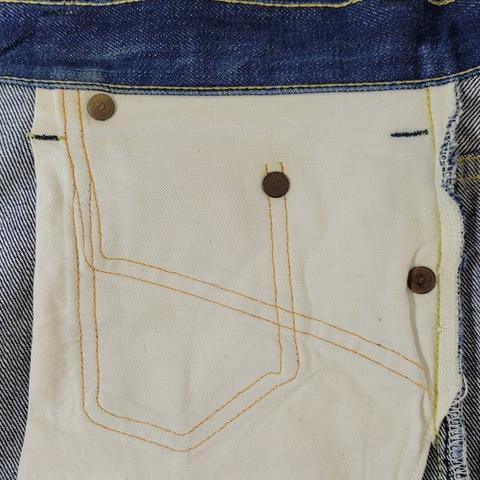
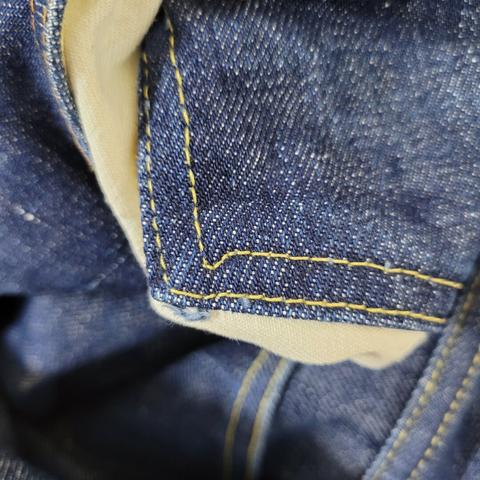
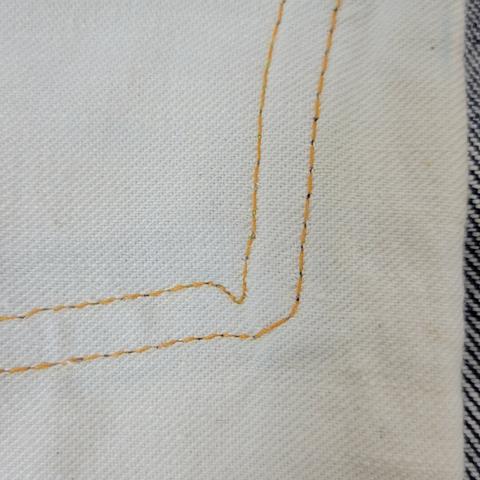
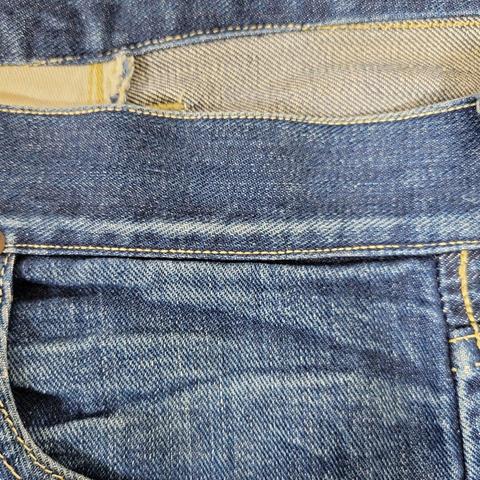
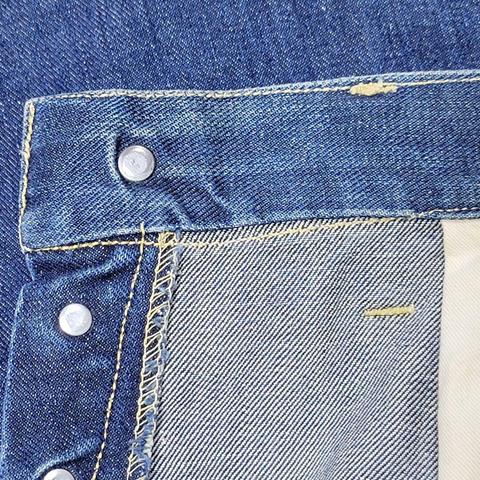
The watch pocket and the facing of the front pockets were sewn on with a double-needle lockstitch machine without lifting one of the needles at the corners, resulting in the characteristic “drunken stitches” (pictures 1-3).
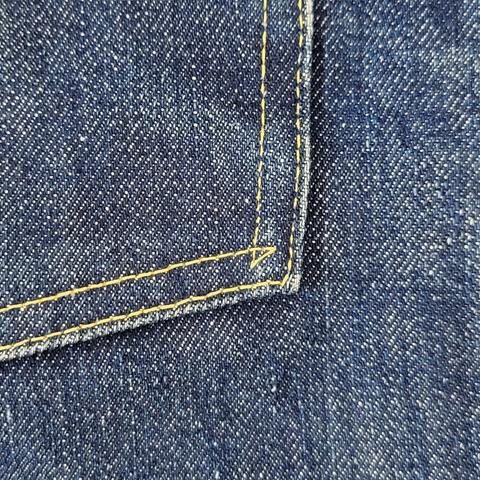
To address this “flaw”, machines were developed that allow the needle on the inside of the corner to be lifted separately from the second needle on the outside of the corner, often resulting in a little triangle in the inner corner. The back pockets on this pair were done using the latter method (pictures 4-5).
I’m not sure whether the front pockets and back pockets were sewn with different types of double-needle machines, or whether they were done with the same more sophisticated type, but without lifting the needle for the front pockets, in order to increase speed and productivity, as the stitches are not visible on the outside anyways.
Unfortunately, I don’t own either type of double-needle lockstitch machine (yet), but I sometimes imitate both types of stitches using a single-needle machine.

#vintagedenim #vintagejeans #realvintage #jcpenney #penneys #foremost #drunkenstitches #doubleneedle #lockstitch #eurekajeans

1940s Lee Riders (6)
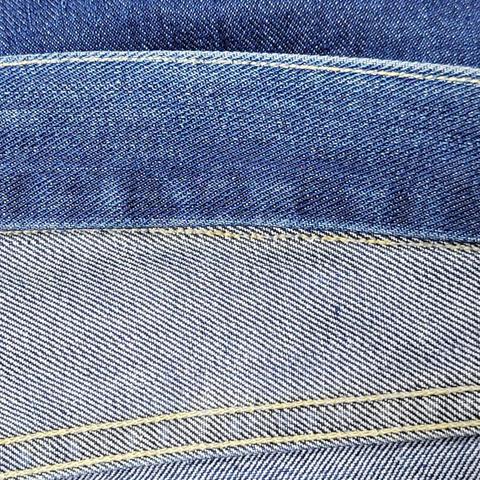
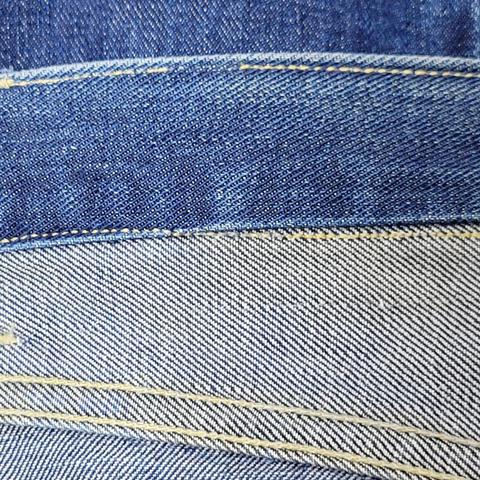
Looking today at the way the waist band is sewn on. There are many different ways of doing this, and there's a great deal of difference depending on the brand and the period in which the jeans were made.
1940s Lee Riders use this old method which is very easy to do and requires only a regular single-needle lock stitch machine. No folder or other special equipment is needed. This method was actually also used by Levi's until the early 1900s, when they started attaching the waist band using a chain stitch.
Characteristic of this method is that the stitch on the inside falls off of the waist band in most areas around the waist. This is often misunderstood to be a "mistake". Actually, the stitch is intended to run off of the waist band, just below it. The few places where it runs on to the waist band could actually be considered real "mistakes". The purpose of sewing the stitch "in the ditch" is to protect the cotton thread from friction and thus make the garment last longer. This is actually the same method that was used a lot by Lee, Levi's and many other brands for sewing the cuffs and the collar onto denim jackets, and it makes a lot of sense because the cuffs, the collar and the waist band are all parts that sustain a lot of friction on the inside.
It is one of my favorite ways of doing the waist band, and I use it on quite a lot of the jeans that I make.

#vintagedenim #vintagejeans #realvintage #waistband #lockstitch #stitchintheditch #lee #leeriders #eurekajeans