📅 03.08.25 Wochenrückblick
Was war diese Woche so los bei kindeko? Wie immer so einiges!

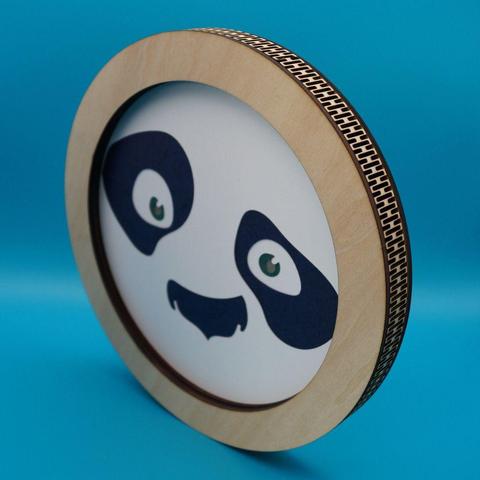
🔵 Schattenbox ohne Schatten vorzeigbarer Prototyp
🟤 Holzplatte und
📙📘📗📕 Papier
verbunden durch Magnete (Design wechselbar) - Optimierungen folgen

📝 Das Portfolio Struktur überarbeitet

🎨 Neue Gallery (weniger Text als Portfolio) https://kindeko.de/gallery/

#Wochenrückblick #Kindeko #DIY #Laserdesign #LivingHinge #BastelnMitHolz #BehindTheScenes #Kinderdeko

Bend Your Prints To Eliminate Supports

When designing even a reasonably simple 3D-printable part, you need to account for all the supports it will require to print well. Strategic offsetting, chamfering, and filleting are firmly in our …

Hackaday

Bend Your Prints to Eliminate Supports

When designing even a reasonably simple 3D-printable part, you need to account for all the supports it will require to print well. Strategic offsetting, chamfering, and filleting are firmly in our toolkits. Over time we've learned to dial our settings in so that, hopefully, we don't have to fumble around with a xacto knife after the bed has cooled down. On Twitter, Chris shows off his foldable 3D print experiments (nitter) that work around the support problem by printing the part as a single piece able to fold into a block as soon as you pop it off the bed.

The main components of this trick seem to be the shape of the place where the print will fold, and the alignment of bottom layer lines perpendicular to the direction of the fold lines. [Chris] shows a cross-section of his FreeCad design, sharing the dimensions he has found to work best.

Of course, this is Twitter, so other hackers are making suggestions to improve the design -- like this sketch of a captive wedge likely to improve alignment. As for layer line direction alignment, [Chris] admits to winging it by rotating the part in the slicer until the layer lines are oriented just right. People have been experimenting with this for some time now, and tricks like these are always a welcome addition to our toolkits. You might be wondering - what kinds of projects are such hinges useful for?

The example Chris provides is a Eurorack rail segment -- due to the kind of overhangs required, you'd be inclined to print it vertically, taking a hit to the print time and introducing structural weaknesses. With this trick, you absolutely don't have to! You can also go way further and 3D print a single-piece foldable Raspberry Pi Zero case, with only two extra endcaps somewhat required to hold it together. Sadly, this case design's STL availability is 'maybe soon' since last November, but it's nothing a hacker couldn't manage to reproduce from the pictures.

Foldable 3D prints aren't new, though we typically see them done with print-in-place hinges that are technically separate pieces. This trick is a radical solution to avoiding supports and any piece separation altogether. In laser cutting, we've known about similar techniques for a while, called a "living hinge", but we generally haven't extended this technique into 3D printing, save for a few manufacturing-grade techniques. Hinges like these aren't generally meant to bend many times before they break. It's possible to work around that, too -- last time we talked about this, it was an extensive journey that combined plastic and fabric to produce incredibly small 3D printed robots!

We thank [Chaos] for sharing this with us!

#3dprinterhacks #3dprinted #enclosure #eurorack #flatpack #flex #flexhinge #foldable #freecad #livinghinge

Bend Your Prints To Eliminate Supports

When designing even a reasonably simple 3D-printable part, you need to account for all the supports it will require to print well. Strategic offsetting, chamfering, and filleting are firmly in our …

Hackaday

See This Hybrid Approach to Folded 3D Printed Mechanisms

3D printers are quite common nowadays, but we're still far from exhausting new ideas to try with them. [Angus] of [Maker's Muse] recently got interested in 3D printing small mechanical assemblies that can be put together by folding them up, and also depend on folding linkages for the moving parts. (Video, embedded below.) The result would be lightweight, functional assemblies that would be simple to manufacture and require very few parts; but how to make the hinges themselves is the tricky part. As a proof-of-concept, [Angus] designed a clever steering linkage that could be printed flat and folded together, and shows his work on trying to make it happen.

[Angus] points out that that 3D-printed hinges have a lot of limitations that make then less than ideal for small and lightweight assemblies. Printing hinge pieces separately and assembling after the fact increases labor and part count, and print-in-place hinges tend to have loose tolerances. A living hinge made from a thin section of material that folds would be best for a lightweight assembly, but how well it works depends a lot of the material used and how it is made.

[Angus] tries many different things, and ultimately decided on a hybrid approach, combining laser cutting with 3D printing to create an assembly that consists of a laser-cut bottom layer with 3D printed parts on top of it to create a durable and lightweight device. He hasn't quite sorted it all out, but the results show promise, and his video is a fantastic peek at just how much work and careful experimentation can go into trying something new.

#3dprinterhacks #3dprinted #ackermann #lasercutting #livinghinge

See This Hybrid Approach To Folded 3D Printed Mechanisms

3D printers are quite common nowadays, but we’re still far from exhausting new ideas to try with them. [Angus] of [Maker’s Muse] recently got interested in 3D printing small mechanical …

Hackaday

Print Your Own Flexures

Game developer and eternal learner [David Tucker] just posted a project where he's making linear flexures on a 3D printer. Tinkerer [Tucker] wanted something that would be rigid in five of the six degrees of freedom, but would provide linear motion along one axis. In this case, it is for a pen or knife on a CNC flatbed device. [David]'s design combines the properties of a 1-dimensional flexure and a spring to give a constant downward force. Not only is this an interesting build in and of itself, but he gives a good explanation and examples of more traditional flexible constructs. He also points out this site by MIT Precision Compliant Systems Lab engineer [Marcel Thomas] which provides a wealth of information on flexures.

[David]'s experiments showed that leaf-spring-like segments with a thickness of 0.4 mm provided the desired amount of force. We're not sure how many iterations were required to arrive at this number -- perhaps those mechanically inclined readers can offer up equations to predict the spring force ahead of time for a particular geometry. Even though printing springs of a precise force may be trial and error, at least 3D printers are good at making precise and repeatable thin-walled structures. Also note that since the spring force only needs to act in one direction, pushing into the paper or other working material, the spring design is asymmetric.

This approach is basically a living hinge of sorts, so there could be some longevity issues. On the other hand, yours truly has a small Tupperware pocket stamp container that's well over 20 years old whose living hinge has yet to fail, so maybe they aren't such a bad thing if done right. We wrote about 3D printing of living springs before. Our writeup last year on the Martian helicopter Ingenuity has a good picture of flexures, metal not plastic, which are integrated into its landing gear / legs. Do you have any project which have used flexures like this?

#3dprinterhacks #3dprinting #flexures #livinghinge

Print Your Own Flexures

Game developer and eternal learner [David Tucker] just posted a project where he’s making linear flexures on a 3D printer. Tinkerer [Tucker] wanted something that would be rigid in five of th…

Hackaday