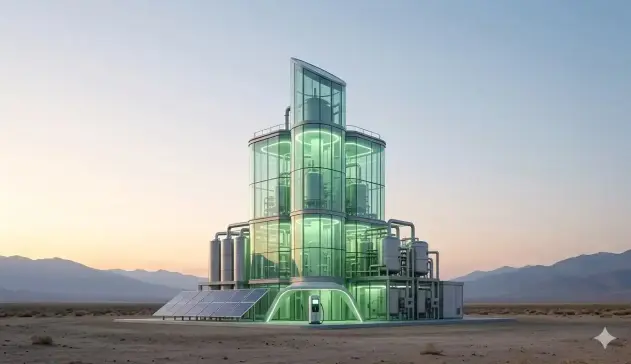
MIT Develops Low-Energy Process for Efficient Lithium Extraction from Hard Rock

📰 Original title: MIT Researchers Develop a Low-Cost Technique To Get Lithium Out of Rocks

🤖 IA: It's not clickbait ✅
👥 Users: It's not clickbait ✅

View full AI summary https://en.killbait.com/mit-develops-low-energy-process-for-efficient-lithium-extraction-from-hard-rock.html?utm_source=mastodon_world&utm_medium=social&utm_campaign=killbait.mastodon_world

#science #lithiumextraction #batterytechnology #mit...

MIT Develops Low-Energy Process for Efficient Lithium Extraction from Hard Rock

Researchers at MIT, working alongside collaborators, have introduced a new method for extracting lithium from hard rock deposits that could significantly reduce both cost and environmental impact. Traditional lithium extraction from mineral ores typically involves heating rock to temperatures exceeding 1,000 degrees Celsius, followed by chemical leaching processes. This approach is energy-intensive, expensive, and generates substantial waste, as most of the processed rock is discarded after lithium extraction. The MIT-developed technique replaces this conventional process with a low-temperature, closed-loop chemical method. It uses a specialized liquid reagent to dissolve lithium-bearing minerals, breaking them down into their usable components. Importantly, the process not only yields battery-grade lithium salts but also recovers other valuable materials such as smelter-grade alumina and cement-ready silica, which can be reused in industrial applications. This multi-output approach helps minimize waste and improves overall resource efficiency. A key advantage of the system is that the solvent and reagents used in the extraction can be recovered and recycled, allowing the process to operate with near-zero waste output. According to the researchers, the method could cut production costs by roughly half compared to conventional hard rock lithium extraction. They also suggest it could become competitive with lithium production from brine sources, which are currently among the lowest-cost methods. The project’s lead researcher, MIT materials scientist Yet-Ming Chiang, has described the approach as potentially the lowest-energy and lowest-cost method for obtaining lithium from any source. The work aligns with broader efforts at MIT focused on accelerating technologies that can transition from laboratory research to commercial-scale deployment within a relatively short timeframe. The findings have been published in the journal Science and are being positioned as a possible breakthrough in supporting the growing demand for lithium in batteries used for electric vehicles and renewable energy storage systems.

KillBait

MIT Develops Low-Energy Process for Efficient Lithium Extraction from Hard Rock

📰 Original title: MIT Researchers Develop a Low-Cost Technique To Get Lithium Out of Rocks

🤖 IA: It's not clickbait ✅
👥 Users: It's not clickbait ✅

View full AI summary https://en.killbait.com/mit-develops-low-energy-process-for-efficient-lithium-extraction-from-hard-rock.html?utm_source=mastodon_social&utm_medium=social&utm_campaign=killbait.mastodon_social

#science #lithiumextraction #batterytechnology #m...

MIT Develops Low-Energy Process for Efficient Lithium Extraction from Hard Rock

Researchers at MIT, working alongside collaborators, have introduced a new method for extracting lithium from hard rock deposits that could significantly reduce both cost and environmental impact. Traditional lithium extraction from mineral ores typically involves heating rock to temperatures exceeding 1,000 degrees Celsius, followed by chemical leaching processes. This approach is energy-intensive, expensive, and generates substantial waste, as most of the processed rock is discarded after lithium extraction. The MIT-developed technique replaces this conventional process with a low-temperature, closed-loop chemical method. It uses a specialized liquid reagent to dissolve lithium-bearing minerals, breaking them down into their usable components. Importantly, the process not only yields battery-grade lithium salts but also recovers other valuable materials such as smelter-grade alumina and cement-ready silica, which can be reused in industrial applications. This multi-output approach helps minimize waste and improves overall resource efficiency. A key advantage of the system is that the solvent and reagents used in the extraction can be recovered and recycled, allowing the process to operate with near-zero waste output. According to the researchers, the method could cut production costs by roughly half compared to conventional hard rock lithium extraction. They also suggest it could become competitive with lithium production from brine sources, which are currently among the lowest-cost methods. The project’s lead researcher, MIT materials scientist Yet-Ming Chiang, has described the approach as potentially the lowest-energy and lowest-cost method for obtaining lithium from any source. The work aligns with broader efforts at MIT focused on accelerating technologies that can transition from laboratory research to commercial-scale deployment within a relatively short timeframe. The findings have been published in the journal Science and are being positioned as a possible breakthrough in supporting the growing demand for lithium in batteries used for electric vehicles and renewable energy storage systems.

KillBait

S3E's faster, greener lithium extraction method could be a game-changer. It's a massive step for sustainable energy. How will this impact global lithium production and pricing?

#LithiumExtraction #SustainableEnergy #GreenTech https://www.ecotechnews.world/s3e-lithium-extraction-green-economy-salton-sea/

Penn State's new lithium extraction method eliminates acid and high heat, making the process faster, safer, and greener. A game-changer for clean energy! #LithiumExtraction #GreenTech #Sustainability

https://geekoo.news/revolutionizing-lithium-extraction-with-green-chemistry/

Revolutionizing Lithium Extraction with Green Chemistry | Geekoo

Penn State researchers have unveiled a novel lithium extraction method that is faster, more efficient, and environmentally friendly, potentially reshaping the future of clean energy technologies.

Geekoo

#FunFactFriday: With lithium being in such high demand, the race is on to find efficient extraction methods with minimal downsides. A new saltwater extraction method achieves 90% extraction, with freshwater as a by-product. What are your thoughts on lithium extraction? News Source: https://www.pv-magazine.com/2024/10/25/researchers-in-australia-and-china-develop-technology-to-recover-lithium-from-saltwater/?utm_source=Global+|+Newsletter&utm_campaign=89e03cb7ff-dailynl_gl&utm_medium=email&utm_term=0_6916ce32b6-89e03cb7ff-160342171

#FFF #Lithium #Lithiumextraction

Researchers in Australia and China develop technology to recover lithium from saltwater

Researchers from the Monash Suzhou Research Institute and the University of Queensland have developed a nanofiltration technology to extract lithium from low-grade saltwater brines with high magnesium content. The technology achieves 90% lithium recovery, nearly double the performance of traditional methods, while dramatically reducing extraction times.

pv magazine International

After Olaf Sholz's urgent visit to Serbia yesterday, it is clear!

#lithiumextraction

So, apparently, this #Lithium project didn't pan out because the brine was so corrosive, it destroyed the equipment used to process it. YIKES! #Exxon is planning on using a similar process (closed loop extraction) in #Arkansas.

General Motors looks to California for its next lithium supply

The US automaker is investing in closed-loop extraction from the Salton Sea.

Jonathan M. Gitlin - 7/2/2021,

"CTR's Hell's Kitchen project will extract lithium salts from geothermal brine in the Salton Sea. By using heat from the brine to power the processing, it hopes to produce 15,000 tons of lithium carbonate and 49.9 MW of energy in 2023."

https://arstechnica.com/cars/2021/07/general-motors-looks-to-california-for-its-next-lithium-supply/

#LithiumExtraction #LithiumMining #Corrosive #Polluting
#EVs #Green or #Greenwashing?

General Motors looks to California for its next lithium supply

The US automaker is investing in closed-loop extraction from the Salton Sea.

Ars Technica