The Canon for Sale: How Congress Handed Literature to a Homeschool Company
On March 17, 2026, the House Committee on Education and the Workforce passed H.R. 7661, a bill that would strip federal education funding from any public school whose libraries contain “sexually oriented material.” The bill’s formal title is the “Stop the Sexualization of Children Act,” and it was introduced by Representative Mary Miller of Illinois on February 24, 2026, days after the State of the Union address. Eighteen Republican cosponsors signed on. No Democratic members supported the bill. The legislation now awaits a vote on the full House floor.
The mechanism is familiar. For nearly six years, state legislatures across the country have been passing laws that pull books from school shelves, fire librarians, and defund collections that contain material certain political actors find objectionable. Florida, Texas, Tennessee, Utah, and Iowa have led this effort, and the American Library Association counted 821 separate censorship attempts targeting 2,452 individual titles in calendar year 2024 alone. What H.R. 7661 does is federalize that local machinery. It amends the Elementary and Secondary Education Act of 1965, the primary pipeline for federal aid to disadvantaged students and Title I schools, and conditions that funding on compliance with a vague, sweeping content prohibition.
The word “oriented” in the bill does particular work. The sponsors chose “sexually oriented material” rather than “sexually explicit material,” and the distinction matters. “Explicit” has a legal history. It has been tested in courts, defined by statutes, and bounded by precedent. “Oriented” has no such grounding. It is a word that expands rather than constrains, and the bill exploits that expansion by including within its definition any material that “involves gender dysphoria or transgenderism.” A book that mentions the existence of a transgender character, without depicting a single sexual act, falls within the bill’s scope. Health textbooks discussing puberty could fall within it. Biographies of trans public figures could fall within it. The vagueness is the point of the legislation.
Here is where the bill does something that deserves more attention than it has received. H.R. 7661 includes a carve-out for “classic” works of art and literature. On its face, this seems like a reasonable safeguard. No one wants Michelangelo’s David removed from an art history curriculum. The bill appears to acknowledge that some works containing nudity or mature themes belong in schools. What matters is who decides what qualifies as “classic.”
The bill answers that question by hard-coding references to two specific articles published on Compass Classroom, a commercial Christian homeschool curriculum company. The articles are “Classics Every Middle Schooler Should Read” by Thomas Purifoy, Jr. and “Classics Every High Schooler Should Read” by Mary Pierson Purifoy. The Purifoys founded Compass Classroom. Their company describes its mission as teaching “a Biblical worldview and critical thinking skills.” Its history courses apply “a Christian worldview to the characters, events, theology, literature, art, and religious beliefs throughout history.” Its catalog includes a course called “Is Genesis History?” and another built around Francis Schaeffer’s reformed theological framework. The company operates as a sectarian enterprise selling a theological product to a specific religious market.
A federal bill has outsourced the definition of acceptable American literature to a company that sells Bible-based homeschool videos for $39 a month.
Consider what that means in practice. Books on the Compass Classroom lists receive protection. Everything else receives none, and could cost a school district its federal funding. The entire weight of the American literary tradition, from Toni Morrison to James Baldwin to Sandra Cisneros to Jhumpa Lahiri, is filtered through the theological preferences of a Tennessee homeschool company. The lists become the canon, and the canon becomes the law.
This is the privatization of public literary authority. It is also the sectarianization of it. The First Amendment’s Establishment Clause exists precisely to prevent the federal government from privileging one religious viewpoint over others in the administration of public institutions. When Congress defines “classic literature” by reference to a company whose stated purpose is teaching a “Biblical worldview,” Congress has made a theological judgment about which stories are acceptable in American schools. That is an establishment of religion dressed in the language of child protection.
The bill’s supporters will argue that the lists are merely illustrative, that schools can still teach other works, that the carve-out protects educational freedom. The argument collapses under the weight of the funding mechanism. Schools do not have the luxury of testing whether their collections comply with a vague federal standard. Administrators will do what administrators always do when funding is threatened: they will remove anything that might trigger a challenge. The chilling effect is the policy. Fear is the mechanism by which censorship operates without needing a single book to be formally banned.
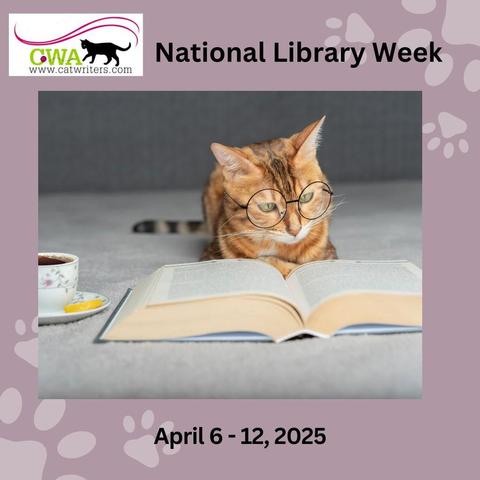
National Library Week begins on April 19, 2026. The ALA’s honorary chair this year is Mychal Threets, the librarian and author who now hosts “Reading Rainbow.” The irony requires no commentary. A country celebrating its libraries while its Congress advances legislation that would gut them is a country in active contradiction with itself.
Some legal analysts, including the Comic Book Legal Defense Fund, have argued that H.R. 7661 is more campaign performance than viable legislation, a bill designed to generate headlines for its sponsors’ constituents rather than to survive judicial scrutiny. That assessment may be correct on the merits. The bill’s definition of “sexually oriented material” would face serious First Amendment challenges, and its Establishment Clause vulnerabilities are obvious. The danger of dismissing H.R. 7661 as political theater, however, is that political theater has a way of becoming law when no one is watching. State-level book bans followed the same trajectory: first a handful of performative bills in 2021, then coordinated legislative campaigns across twenty states by 2024. The precedent the bill sets matters even if the bill itself dies. It normalizes the idea that Congress can define acceptable literature by reference to a private, religious reading list.
The deeper issue here extends beyond any single bill. H.R. 7661 is one expression of a broader pattern in which public institutions are hollowed out and their functions transferred to private, ideological actors. Public schools lose funding. Private alternatives gain market share. The definitions of knowledge, history, and literature are handed to commercial entities with theological commitments that a diverse democratic public does not share. This is how democratic infrastructure erodes: disassembled piece by piece, contract by contract, carve-out by carve-out, reading list by reading list.
Authors, publishers, librarians, and citizens who care about the survival of a pluralistic literary culture need to understand what is happening in H.R. 7661. The bill reaches far past the removal of a handful of controversial titles from school libraries. It determines who gets to define what literature is, and the answer this bill provides is: a company in Tennessee that sells Bible-based curriculum to homeschooling families. If that answer becomes federal law, the consequences will be measured in decades and in the silences where stories used to be.
The ALA urges citizens to call the Capitol switchboard at (202) 224-3121 and ask their representatives to oppose H.R. 7661 and to support the Right to Read Act (H.R. 6440 / S. 3365), which would fund well-resourced and well-staffed school libraries rather than threatening them.
#art #books #canon #capitol #censorship #classics #congress #federal #homeschool #library #libraryWeek #literature #middleSchool #profit #reading #school #usa Stefan Bohacek
 Catherine Lundoff
 Deborah Rose ❌👑
 nb
nb
 Jim Jones
 David Boles
 DoomsdaysCW
 Chris Marcum 📖
 Cat Writers' Association