 SESH.sx
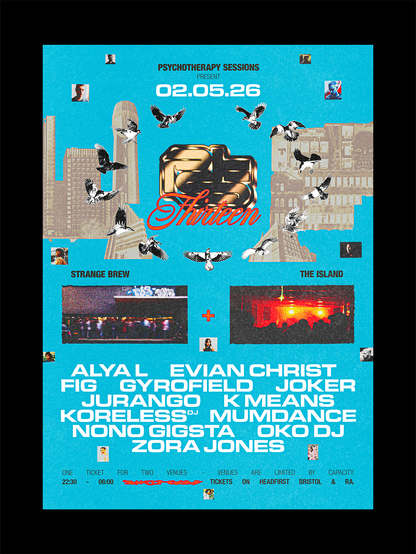
PTS ϟ 13th Birthday @ Strange Brew - 02 May feat. Evian Christ, k means, Nono Gigsta + more
 Statistics Globe
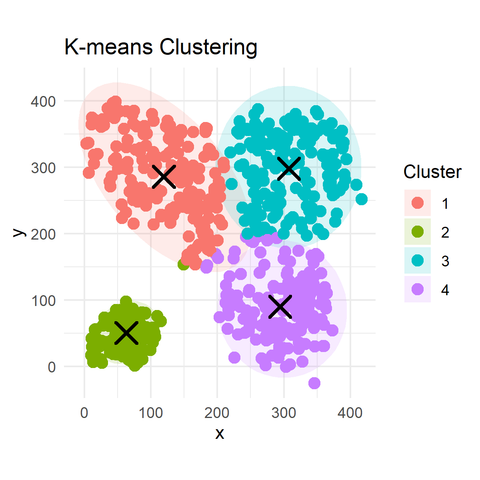
K-means clustering is a simple and widely used method for identifying patterns in data.
I also use it in a recent Statistics Globe Hub module, where it is combined with synthetic data created using the drawdata Python library: https://statisticsglobe.com/hub
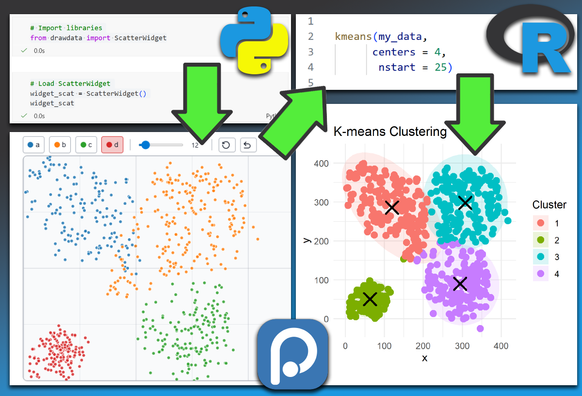
I’ve just published a new module in the Statistics Globe Hub on how to draw synthetic datasets using the drawdata Python library and analyze them afterward in R using k-means clustering.
More information about the Statistics Globe Hub: https://statisticsglobe.com/hub
 N-gated Hacker News
🤖: Spoiler Alert! Flash-KMeans promises to be a "memory-efficient" magic trick, unless you count the mental gymnastics required to understand it. 🤯 Just what the world needs, another K-Means #variant to make your brain cells do a triple axel! 🧠💥
https://arxiv.org/abs/2603.09229 #FlashKMeans #MemoryEfficient #KMeans #DataScience #MachineLearning #AI #HackerNews #ngated
https://arxiv.org/abs/2603.09229 #FlashKMeans #MemoryEfficient #KMeans #DataScience #MachineLearning #AI #HackerNews #ngated

Flash-KMeans: Fast and Memory-Efficient Exact K-Means
$k$-means has historically been positioned primarily as an offline processing primitive, typically used for dataset organization or embedding preprocessing rather than as a first-class component in online systems. In this work, we revisit this classical algorithm under the lens of modern AI system design and enable $k$-means as an online primitive. We point out that existing GPU implementations of $k$-means remain fundamentally bottlenecked by low-level system constraints rather than theoretical algorithmic complexity. Specifically, the assignment stage suffers from a severe IO bottleneck due to the massive explicit materialization of the $N \times K$ distance matrix in High Bandwidth Memory (HBM). Simultaneously, the centroid update stage is heavily penalized by hardware-level atomic write contention caused by irregular, scatter-style token aggregations. To bridge this performance gap, we propose flash-kmeans, an IO-aware and contention-free $k$-means implementation for modern GPU workloads. Flash-kmeans introduces two core kernel-level innovations: (1) FlashAssign, which fuses distance computation with an online argmin to completely bypass intermediate memory materialization; (2) sort-inverse update, which explicitly constructs an inverse mapping to transform high-contention atomic scatters into high-bandwidth, segment-level localized reductions. Furthermore, we integrate algorithm-system co-designs, including chunked-stream overlap and cache-aware compile heuristics, to ensure practical deployability. Extensive evaluations on NVIDIA H200 GPUs demonstrate that flash-kmeans achieves up to 17.9$\times$ end-to-end speedup over best baselines, while outperforming industry-standard libraries like cuML and FAISS by 33$\times$ and over 200$\times$, respectively.
 Karsten Schmidt
@zefu I find the tool works best for images with a decent contrast and/or color hue range. I also recommend not choosing more than 5-8 colors to avoid too many similar ones. Also bear in mind that k-means clustering relies on random initializations and so running the process multiple times for the same image can lead to slightly different results (just press "update" a few times and see if there're any decent changes)...
Another tip: I personally like having palettes which also include some desaturated colors, so try reducing the "min chroma" slider value (a change will recompute automatically). If you only want more rich colors, then bump up the value, but it all really very much depends on the image... The two variations attached here use min chroma 5 and 0...


@zefu I should update the readme to explain how these palettes were created. They're a manually curated selection of running hundreds of images through this tool (doesn't look like much, but it's been super helpful over the years) and then handpicking my favorites:
https://demo.thi.ng/umbrella/dominant-colors/
This uses k-means clustering for segmentation, also available as library:
 Hacker News
ML on Apple ][+
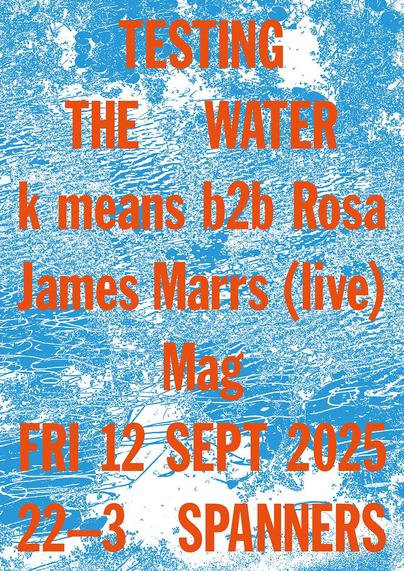
Testing the Water presents: k means b2b Rosa, James Marrs (Live), Mag @ Spanners - 12 Sep feat. k means, Mag (4)
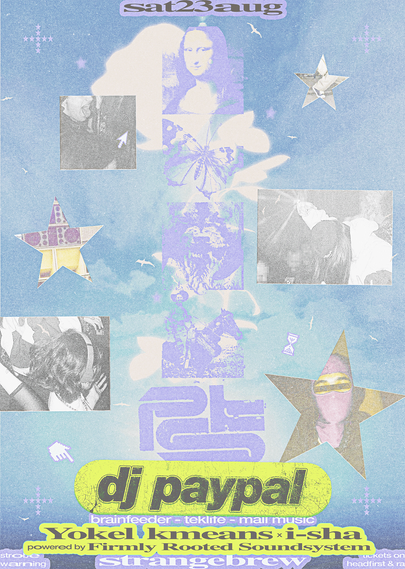
PTS ϟ DJ Paypal, Yokel, k means x i-sha @ Strange Brew - 23 Aug feat. DJ Paypal, k means, i-sha
HyAB k-means for color quantization
https://30fps.net/pages/hyab-kmeans/
#HackerNews #HyAB #k-means #color #quantization #colorquantization #machinelearning #dataanalysis #kmeans