Philippine Economic Growth Slows Down To 2.8% In 1st Quarter Of 2026

While the Philippines is hosting the summit of the Association of Southeast Asian Nations (ASEAN), the economy of the nation grew only 2.8% in the first quarter this year and it is the slowest growth in five years, according to a business news report by the Manila Bulletin.

To put things in perspective, posted below is an excerpt from the Manila Bulletin news report. Some parts in boldface…

The Philippine economy grew at its slowest pace in five years, expanding just 2.8 percent in the first quarter of 2026, as the country grapples with the persistent government spending slump and mounting inflation shocks.

The country’s economy, as measured by the gross domestic product (GDP), decelerated from the 3.0 percent expansion recorded in the final three months of 2025.

It also significantly missed the 3.4 percent median growth projected by economists in a survey, and marked the weakest quarterly output for the country since the first quarter of 2021, when the economy contracted 3.8 percent during pandemic-era lockdowns.

Growth was severely dragged down by a prolonged slump in public construction following a massive government flood-control scandal late last year, which has continued to stall state spending.

Moreover, the global energy shock triggered by the Middle East conflict in late February also sent domestic oil and input costs soaring, severely denting consumer and business confidence.

Let me end this post by asking you readers: What is your reaction to this recent development? Do you think heavy government spending will boost the economy somehow? Could it be possible that the Philippines could fall into a recession this year or next year? How do you rate the performance of the economic managers of the national government?

You may answer in the comments below. If you prefer to answer privately, you may do so by sending me a direct message online.

+++++

Thank you for reading. If you find this article engaging, please click the like button below, share this article to others and also please consider making a donation to support my publishing. If you are looking for a copywriter to create content for your special project or business, check out my services and my portfolio. Feel free to contact me with a private message. Also please feel free to visit my Facebook page Author Carlo Carrasco and follow me on Twitter at @CarloCarrascoPH as well as on Tumblr at https://carlocarrasco.tumblr.com/ and on Instagram athttps://www.instagram.com/authorcarlocarrasco

#ASEAN #ASEANSummit #Asia #AssociationOfSoutheastAsianNationsASEAN #Bing #business #businessNews #CarloCarrasco #ChatGPT #commerce #economicDynamism #economicGrowth #economicSlowdown #economics #economy #EconomyOfThePhilippines #energy #Facebook #finance #food #geek #Google #GoogleSearch #governance #grossDomesticProductGDP #inflation #inflationRate #Instagram #Investagrams #jobs #ManilaBulletin #MiddleEast #money #news #oil #Philippines #PhilippinesBlog #Pinoy #publicService #recession #socialMedia #SoutheastAsia #technology #Twitter #war #WordPress #WordPressCom

For someone obsessed with saying 'If I were president...', the reality of you as president is an economic dumpster fire (tariffs tanking markets, inflation soaring) and turning the Middle East into a literal apocalypse while giving Israel your "full backing" to finish the job in Gaza, Lebanon, Syria, Iran.
Your masters must be thrilled.🤡💩

#Trump #USPolitics #America #USA #Iran #Israel #lebanon #Palestine #Gaza #FreePalestine #Economy #Tariffs #Inflationrate #Inflation

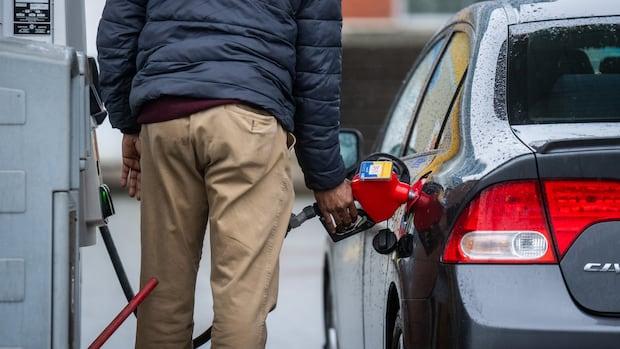
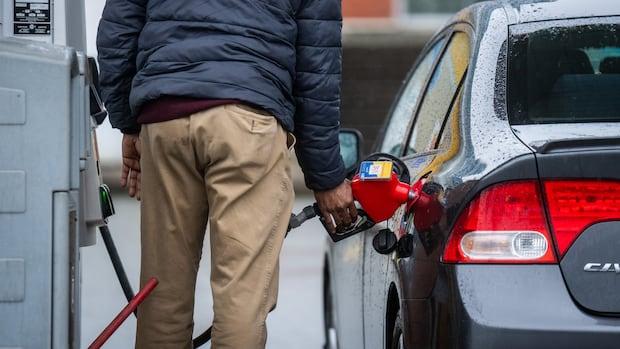
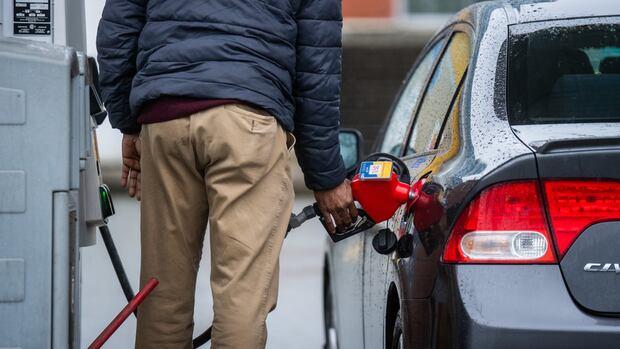
Canada's annual inflation rate rose to 2.4% in March, driven by high gas prices
Canada's annual inflation rate rose to 2.4 per cent in March, Statistics Canada said on Monday. Economists expected the rising cost of fuel to weigh heavily on inflation, as the oil crunch in the Strait of Hormuz has driven gas prices up worldwide.
https://www.cbc.ca/news/business/march-2026-inflation-rate-9.7170077?cmp=rss
Canada's annual inflation rate rose to 2.4% in March, driven by high gas prices
Canada's annual inflation rate rose to 2.4 per cent in March, Statistics Canada said on Monday.
https://www.cbc.ca/news/business/march-2026-inflation-rate-9.7170077?cmp=rss
Canada's annual inflation rate rose to 2.4% in March, driven by high gas prices
March's 21.2 per cent monthly increase in the price of gasoline was the largest on record.
https://www.cbc.ca/news/business/march-2026-inflation-rate-9.7170077?cmp=rss
Canada's annual inflation rate rose to 2.4% in March
The increase comes after the inflation rate fell in February to 1.8 per cent.
https://www.cbc.ca/news/business/march-2026-inflation-rate-9.7170077?cmp=rss
Canada's annual inflation rate rose to 2.4% in March
The increase comes after the inflation rate fell in February to 1.8 per cent.
https://www.cbc.ca/news/business/march-2026-inflation-rate-9.7170077?cmp=rss
Canada's annual inflation rate rose to 2.4% in March
The increase comes after the inflation rate fell in February to 1.8 per cent.
https://www.cbc.ca/news/business/march-2026-inflation-rate-9.7170077?cmp=rss

Slower Economic Growth And Higher Inflation For The Philippines

With the higher fuel prices, a limited oil storage capacity, a very vulnerable currency and other economic uncertainties happening around, the Philippines is headed towards higher inflation and slower gross domestic product (GDP) growth in the near future based on the latest analysis of Moody’s Ratings, according to a news report by BusinessWorld.

To put things in perspective, posted below is an excerpt from the BusinessWorld news report. Some parts in boldface…

MOODY’S RATINGS lowered its growth forecast for the Philippines and raised its inflation outlook, reflecting the impact of soaring global energy prices amid the Middle East conflict.

In a credit opinion on Tuesday, Moody’s cut its Philippine gross domestic product (GDP) growth projection to 4.9% this year from 5.5% previously. This is below the government’s 5-6% target for 2026.

For 2027, Moody’s trimmed its GDP growth forecast to 5.3% from 5.6% previously. If realized, this will be lower than the economic managers’ 5.5-6.5% target range for 2027.

The conflict in the Middle East has increased downside risks to the Philippines’ economic outlook by raising global energy prices and external cost pressures,” it said.

Moody’s said it expects domestic demand and industrial activity to remain subdued due to high oil prices and fuel shortages.

“Higher energy and broader import costs are expected to erode real incomes amid high pass-through, dampen consumption, and weigh on industrial activity, reinforcing a firmer inflation trajectory,” it said.

Moody’s also noted that trade uncertainty and climate risks may also dampen economic activity.

“Our baseline assumes that the recovery in public investment will be gradual and begin only in the second half of 2026, as the government continues to take concrete measures to address the temporary slowdown. Meanwhile, higher energy import bills amid rising prices and peso depreciation, together with slower remittance growth, are expected to widen the current account deficit,” it said.

The Philippines is currently under a year-long national energy emergency as the Middle East crisis threatened its fuel supply. The government rolled out targeted subsidies and implemented energy conservation protocols.

“Together, these measures should mitigate the risk of significant supply disruptions,” Moody’s Ratings said.

Moody’s also hiked its average inflation forecasts to 3.7% in 2026 from 3% previously, and to 3.5% in 2027 from 3.2% previously, as oil prices remain elevated due to the Middle East conflict.

Moody’s forecasts are below the Bangko Sentral ng Pilipinas’ (BSP) 5.1% inflation projection this year and the 3.8% projection for 2027.

Inflation quickened to a nearly two-year high of 4.1% in March, breaching the BSP’s 2-4% target amid rising fuel and transportation costs.

“Inflation is expected to remain above the BSP’s target range, reducing policy flexibility and increasing the risk of policy tightening, even as softening growth and a negative output gap support a broadly accommodative stance in the near term,” Moody’s said.

Let me end this post by asking you readers: What is your reaction to this recent development? What do you think the government of the Philippines should do to stimulate economic growth and attract more foreign investors?

You may answer in the comments below. If you prefer to answer privately, you may do so by sending me a direct message online.

+++++

Thank you for reading. If you find this article engaging, please click the like button below, share this article to others and also please consider making a donation to support my publishing. If you are looking for a copywriter to create content for your special project or business, check out my services and my portfolio. Feel free to contact me with a private message. Also please feel free to visit my Facebook page Author Carlo Carrasco and follow me on Twitter at @CarloCarrascoPH as well as on Tumblr at https://carlocarrasco.tumblr.com/ and on Instagram athttps://www.instagram.com/authorcarlocarrasco

#Asia #BangkoSentralNgPilipinasBSP #Bing #Blog #blogger #blogging #business #businessNews #BusinessWorld #CarloCarrasco #ChatGPT #economicDynamism #economicGrowth #economics #economy #EconomyOfThePhilippines #Facebook #foreignDirectInvestmentFDI #foreignInvestors #GDPGrowth #geek #Google #GoogleSearch #governance #grossDomesticProductGDP #growth #inflation #inflationRate #Instagram #Investagrams #investment #investors #MiddleEast #MoodySRatings #news #Philippines #PhilippinesBlog #PhilippinesInflation #Pinoy #publicService #socialMedia #SoutheastAsia #technology #Tumblr #Twitter #WordPress #WordPressCom
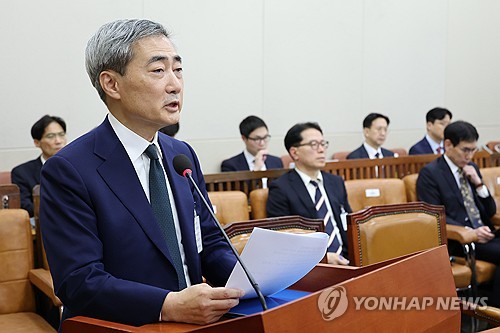
Bank of Korea Governor nominee Shin Hyun-song warns inflation will rise due to higher oil prices and exchange rates, while economic growth weakens despite semiconductor recovery and supplementary budgets, emphasizing need to monitor financial market volatility and credit risks in vulnerable sectors.
#YonhapInfomax #BankOfKorea #InflationRate #ExchangeRate #OilPrices #EconomicGrowth #Economics #FinancialMarkets #Banking #Securities #Bonds #StockMarket
https://en.infomaxai.com/news/articleView.html?idxno=115622
Shin Hyun-song - 'Inflation Expected to Rise Further Due to Oil Prices and Exchange Rate Impact' (Comprehensive)

Bank of Korea Governor nominee Shin Hyun-song warns inflation will rise due to higher oil prices and exchange rates, while economic growth weakens despite semiconductor recovery and supplementary budgets, emphasizing need to monitor financial market volatility and credit risks in vulnerable sectors.

Yonhap Infomax