Scientists Are Warning of A Brand-New Kind of #AcidRain
Story by Darren Orf
Key points:
- While acid rain caused by sulfur dioxide is an environmental threat of the past (at least, for now), a new kind of acid is proliferating in rain water—as well as groundwater, ice cores, and even human blood.
- #TrifluoroaceticAcid (#TFA) is a subclass of “#ForeverChemical” that’s been steadily increasing in concentrations around the world.
- With calls to consider this rise in TFA a planetary threat, some governments are starting ban chemicals linked to TFA—but the threat will require global cooperation.
"Acid rain may have a sequel, and like most sequels, it’s arguably worse.
"While the world’s first bout of acid rain (at least, in modern times) came from increased concentrations of sulfuric acid produced largely from coal plants, this new #anthropogenic source is possibly more pervasive, more persistent, and more sinister. Its name is Trifluoroacetic acid (TFA), a kind of 'forever chemical' that, for decades, has been steadily increasing in #RainWater—but not just rain water.
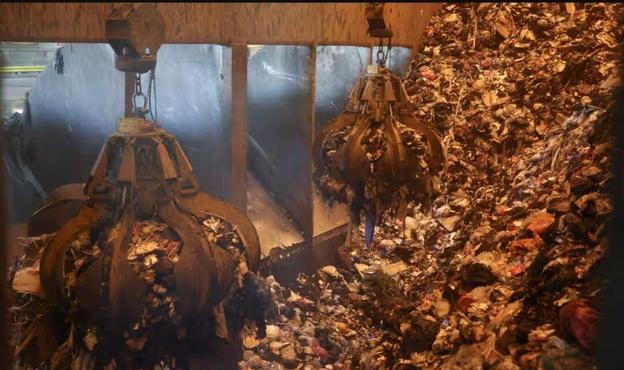
"Countries around the world have found increasing concentrations in #groundwater, #ArcticIceCores, #wine, and even #HumanBlood. In fact, TFA is likely the most pervasive form of per- and poly-fluoroalkyl (#PFAS)—technically, a subclass known as ultrashort-chain perfluoroalkyl acid (#PFAA)—on Earth due in part to the fact that longer-chain PFAS degrade into TFA via #incinerators or #SewageTreatment plants. They’re also used in #refrigerants instead of #chlorofluorocarbons and #hydrochlorofluorocarbons, which were famously known to deplete the Earth’s #OzoneLayer.
"In October of 2024, a team of European environmental scientists raised the TFA alarm, stating that a rise in concentration could be considered a threat to '#PlanetaryBoundaries' — a system designed to make sure the planet remains #habitable for human life (which we are doing a real bang-up job at following).
" 'Since the 1990s, it has been suggested that hazard-related concerns of TFA and other short-chain PFAAs are much lower than those of PFAAs with longer perfluoroalkyl chains, which are more #bioaccumulative and generally more #toxic,' the authors wrote back in October. 'However, these early reports did not consider TFA’s ubiquitous accumulation in the environment, in particular its observed accumulation in water resources and #bioaccumulation in various plants, including crops.'
"One of the most dangerous things about PFAAs is what we don’t know about them. Unlike other PFAS (of which there are, sadly, thousands of different kinds), TFA is so small (a.k.a. ultrashort) that it’s water-soluble, meaning it likely passes through the human body pretty quickly. A new Nature article reports that some scientists find this evidence compelling enough to not even consider TFA a kind of PFAS, but a growing chorus of voices are raising concerns that increased concentrations of TFA in water and food sources could render TFA’s fast-moving nature a moot point.
"In fact, TFA’s water-solubility could be a long-term headache. If scientists and governments eventually decide that TFA does need to be removed from drinking water and other sources, current filtration technologies are not up to the task. In other words, ridding the world of TFA will not only be immensely difficult, it’ll also be incredibly expensive. Current regulations to eliminate certain forms of PFAS are already proving to be fiscally onerous.
"Thankfully, some governments are taking action. #Denmark, for example, banned 23 substances earlier this month known to contain PFAS that contribute to rising TFA concentrations. Meanwhile, the #US is lagging behind—the Environmental Protection Agency [#EPA] doesn’t even define TFA as a 'forever chemical,' much to the dismay of #environmentalist groups and to the merriment of many #industry leaders.
"Rising concentrations of TFA is the acid rain sequel no one wanted. But just like every terrible sequel ever made, it seems like we’re getting it anyway."
https://www.msn.com/en-us/travel/news/scientists-are-warning-of-a-brand-new-kind-of-acid-rain/ar-AA1JhZaP?ocid=winp2fptaskbarhover&cvid=1f43e3736065441889cbebfb22a4eb74&ei=10
#WaterIsLife #Dupont #DowChemical #3M #ForeverChemicals #EPACuts #Deregulation #TrumpSucks #USPol #WorldPol #Environment #EnvironmentalDamage #GenXChemicals #3MLied
 MusiqueNow
  ✡️ 🇵🇸
✡️ 🇵🇸 


 ClareBear 💚
 Waste Badger
 DoomsdaysCW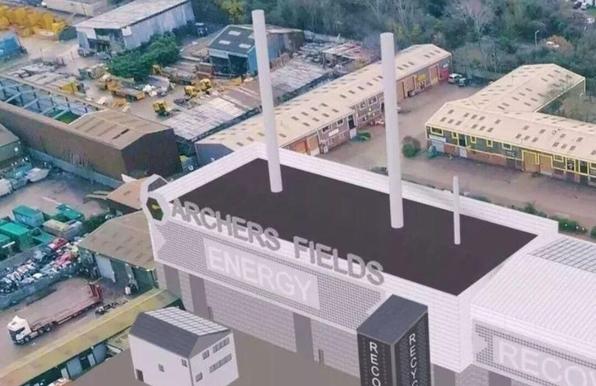

 Richard Ashwell
