 neat_news
People with low haemoglobin levels or anaemia may take iron to improve the medical condition. This may be particularly important for pregnant women. However, the body may have problems to take in the iron supplements. In a meta study with adolescent girls and women, it has been found that guava juice can help the body to digest the iron. See http://www.neat-news.com/3603.php. #guava_juice #iron #haemoglobin
 Ele Willoughby, PhD
clinical pathologist at Children’s Hospital in Pittsburgh. 3 positions: surgical pathologist, post-mortem pathologist, & haematologist & she authored > 100 papers. Discovered utility of immunization of animals against infectious diseases. In 1944 was 1st to use electric fields to separate different proteins in a mixture based on size - a method called electrophoresis - to separate blood #haemoglobin (commonly misattributed to Pauling). 🧵4/5
 scinexx - das wissensmagazin
Neues Mittel gegen Kohlenmonoxid-Vergiftung. Hämoglobin-ähnliches Protein absorbiert Kohlenmonoxid aus dem Blut. #Kohlenmonoxid #CO #Blut #Haemoglobin #COVergiftung
https://www.scinexx.de/news/medizin/neues-mittel-gegen-kohlenmonoxid-vergiftung/
https://www.scinexx.de/news/medizin/neues-mittel-gegen-kohlenmonoxid-vergiftung/

3 positions: surgical pathologist, post-mortem pathologist, & haematologist & she authored > 100 papers. Discovered utility of immunization of animals against infectious diseases. In 1944 was 1st to use electric fields to separate different proteins in a mixture based on size - a method called electrophoresis - to separate blood #haemoglobin (commonly misattributed to Pauling). She characterised bacterial toxins from B. paratyphosus, Streptococcus scarlatina & Salmonella ssp. then 🧵4/5
 Anaesthesia
**Spoiler alert**
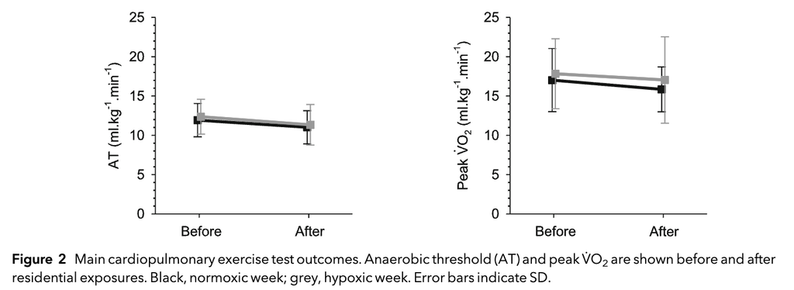
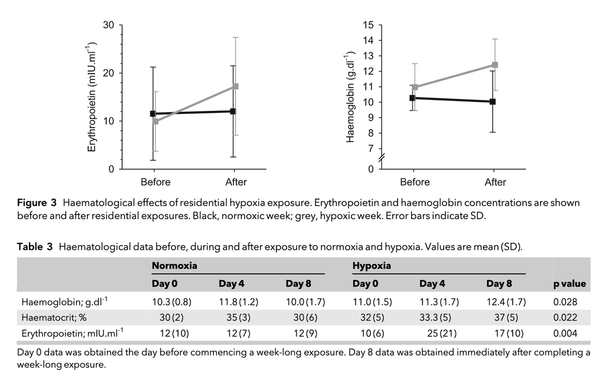
If you put your patients in a residential #hypoxia facility they may experience:
• Mild, well-tolerated hypoxia (mean (SD) SpO2 93 (2) %, p < 0.001)
• No effect on anaerobic threshold or peak V̇O2
• A substantial increase in mean (SD) #haemoglobin of 1.5 (2.7) g.dl-1 (13% increase)
https://associationofanaesthetists-publications.onlinelibrary.wiley.com/doi/10.1111/anae.16158
 RIO Journal
Using pre-sequenced #genomic data, Katherine McLean (University of Auckland), proposes to "resurrect" #Neanderthal #haemoglobin and possibly provide empirical evidence for the cold adaptation hypothesis.
👉 Find more in her Research Idea: https://doi.org/10.3897/rio.10.e107983
+ Public review by @EvoMRI
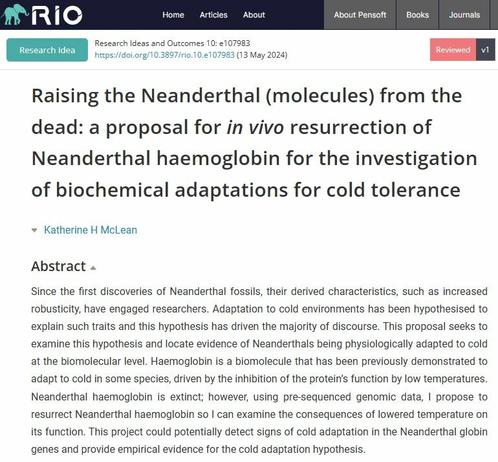
Raising the Neanderthal (molecules) from the dead: a proposal for in vivo resurrection of Neanderthal haemoglobin for the investigation of biochemical adaptations for cold tolerance
Since the first discoveries of Neanderthal fossils, their derived characteristics, such as increased robusticity, have engaged researchers. Adaptation to cold environments has been hypothesised to explain such traits and this hypothesis has driven the majority of discourse. This proposal seeks to examine this hypothesis and locate evidence of Neanderthals being physiologically adapted to cold at the biomolecular level. Haemoglobin is a biomolecule that has been previously demonstrated to adapt to cold in some species, driven by the inhibition of the protein’s function by low temperatures. Neanderthal haemoglobin is extinct; however, using pre-sequenced genomic data, I propose to resurrect Neanderthal haemoglobin so I can examine the consequences of lowered temperature on its function. This project could potentially detect signs of cold adaptation in the Neanderthal globin genes and provide empirical evidence for the cold adaptation hypothesis.
3 positions: surgical pathologist, post-mortem pathologist, & haematologist & she authored > 100 papers. Discovered utility of immunization of animals against infectious diseases. In 1944 was 1st to use electric fields to separate different proteins in a mixture based on size - a method called electrophoresis - to separate blood #haemoglobin (commonly misattributed to Pauling). She characterised bacterial toxins from B. paratyphosus, Streptococcus scarlatina & Salmonella ssp.
🧵4/5
Auch unsere Haut produziert Hämoglobin. Erster Nachweis der Hämoglobin-Bildung in der Oberhaut legt wichtige Schutzfunktion nahe. #Haut #Haemoglobin #Blutfarbstoff #Antioxidans #Hautzelle
https://www.scinexx.de/news/medizin/auch-unsere-haut-produziert-haemoglobin/
https://www.scinexx.de/news/medizin/auch-unsere-haut-produziert-haemoglobin/

 eLife
eLife🎧 We have an all-new episode of the #eLifePodcast for you!
This month, hear about cold-resistant mutant #haemoglobin, biological ageing, women’s cautious approach to scientific publication and more from the researchers themselves! https://elifesciences.org/podcast/episode89?utm_source=mastodon&utm_medium=social&utm_campaign=organic
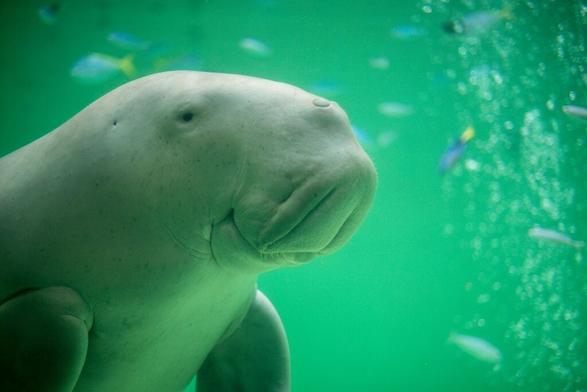

Episode 89: September 2023
In this episode, we hear about adapting to life in cold water, animals keeping their distance when pathogens are present, why women are reluctant to submit to elite journals, how learning compassion changes the structure of the brain, and biological ageing in children.
 The EMBO Journal
How & why are #circadian rhythms maintained in red blood cells? Novel #haemoglobin #oxidation assay reveals it to be linked to body temperature regulation
A #RefereedPreprint c/o @ReviewCommons by John O‘Neill, Michael Hastings and coworkers
https://www.embopress.org/doi/full/10.15252/embj.2023114164
A #RefereedPreprint c/o @ReviewCommons by John O‘Neill, Michael Hastings and coworkers
https://www.embopress.org/doi/full/10.15252/embj.2023114164