I enjoy horror stories, and the idea that they explore the concept of what we are most afraid of, the things we can’t escape. Whether it’s literal or figurative, there is something out there that may consume the people around us, and we’ll either survive the experience with scars, or succumb like everyone else we’ve seen around us. But I also enjoy a good action horror/monster hunting story.
Monster hunting explores something different about us. It’s less about acceptance or survival, and more about facing an insurmountable problem, and still assuming there is a solution. Monster hunting fiction often teaches us that knowledge and the execution of that knowledge may help us to do things that no one thinks is possible. Monster hunters often end up battered and bruised, and what they do isn’t easy, but if they do it right, they stop something that seems unstoppable.
With all of that said, if you give me a protagonist that is a monster hunter, you’re going to get my attention. In D&D, the monster hunting role often falls to the ranger, and while that’s not a bad fit, rangers can be monster hunters, but not every ranger fits the archetype of the monster hunter. That leads to two results, when applied to D&D 5e . . . multiple monster hunting focused subclasses, or a monster hunting class (but I’m okay with both). With all of that said, I wanted to take a look at the playtest of Ghostfire Gaming’s Monster Hunter class.
Disclaimer
I’m not working from a review copy for this, I’m working from a playtest document, which you can access for .99 cents. I’m normally not a fan of playtest material being gated by a fee. Either you want outside input, or you have internal playtesters whose opinions you are going to trust, why charge people for access? That said, when I say this, it’s usually surrounding playtest material being gated behind a Kickstarter backing level, or with playtest material that is only available in physical media. The .99 cents reserves you a notification on an upcoming Kickstarter from Ghostfire.
I have played around with a Monster Hunter by running numbers in Roll20 in some simulated encounters, but not in an actual game with real, other humans. While I haven’t seen one outside of the “test environment,” I’ve got a lot of experience with D&D 5e, both as a player and as a DM.
Class Overview
The monster hunter class is what it says on the page. They are specialized in hunting various dangerous creatures. In addition to increasing the class’ ability to harm monsters, that also means that they gain abilities that help them research and/or just know things about monsters.
If you were to only have two things that you could reference to figure out what this class is and what it does, I’d say that interacting with anything based on the Witcher would absolutely point you in the right direction, and probably the 2004 Van Helsing movie. You are a monster hunter in a world where monster hunting is an established tradition, even if there aren’t many of you around.
The Artificer is a class that doesn’t reveal much of what the class is capable of outside of its subclasses, and that’s probably not unfair to say about the monster hunter, either. While there are some signature class features, a lot of what they do in combat will be modified by what their subclass grants them.
The core underpinnings of the class are:
- d10 hit dice
• Light, medium, and shield proficiencies
• Simple weapon, martial weapon proficiency
• Dexterity and Intelligence for their saves
I’ll admit, I like a class that appreciates intelligence outside of setting the DC for spells, even if Intelligence saves don’t come up that often. Leaning more heavily on dexterity for a d10 class is an interesting choice that reinforced the idea of precision over power. Let’s see if and how they follow up on those choices.
Tier 1 Abilities (1st through 4th)
Unsurprisingly, monster hunters get access to a fighting style, like fighters, rangers, and paladins. They can choose between archery, dueling, great weapon fighting, and two-weapon fighting. I am already indignant on the ranger’s behalf over that great weapon fighting option, but that’s not the monster hunter’s fault. This does mean they don’t get defense as an option, and they don’t get protection. Does that communicate a theme? Probably, which may be inferred as “you aren’t worried about your own safety and you protect others by killing the damn thing.”
The other starting ability is the monster grimoire, which is a big book of stuff you may need to kill, filled with notes. You pick two types of monsters that are covered in your book. Anytime you need to use an Intelligence check related to those monsters, you get proficiency, or you are treated as having expertise if you are already proficient with a skill that applies. You also pick up a language based on your choices. Because monster hunters aren’t dealing with all that philosophical stuff about humans being the real monsters, the only humanoids you can pick for this ability is humanoid (shape changer).
I like having a book of monster facts. It reminds me of the show Grimm. On one hand, this feature is pretty tightly focused, and if your DM is never making you roll Intelligence checks to learn things about monsters, it won’t get much use. On the other hand, it’s thematic, and it doesn’t limit the monster hunter to only being good at killing the things in their book.
What is pretty much your class’ signature move kicks in at 2nd level, which makes sense, because a lot of classes do that, however, this one is interesting. Despite being a d10 combatant style class, monster hunters don’t get extra attack. Instead, within a certain range, if an opponent makes an attack, and the monster hunter has a reaction free, they can use it to make an attack on that opponent. This has lots of interesting ramifications. It comes in three levels earlier than most extra attack options, however, while you may get to use this more often, it does mean in some of those circumstances you’ll be missing out on opportunity attacks, so you don’t have a net gain in number of attacks when that happens. If other classes or spells grant the ability to attack with a reaction, that’s just not going to do anything for you.
I always want abilities to be functional, but I’m much happier when things fit a narrative, and I do like the idea that a monster hunter isn’t being trained as a duelist or a tactician, so their extra attack comes from looking for an opening when something goes on the offensive. I don’t think I can definitively say “no, that’s too powerful for 2nd level” considering some of the instances where the monster hunter is missing out on attacks, but I don’t want to balance 2nd level on what higher levels don’t get. My gut feeling is to like it. Also, this means the monster hunter is going to be a good party member to have around when the whole party is surprised, because they’ll still get their studied response once their turn has happened, and they have a reaction again.
Your subclass comes in at 3rd level, which isn’t a think I’ll need to say nearly as much in the future since so many things are pushing towards that just being where subclasses start. Standard ASI at 4th.
Tier 2 Abilities (5th through 10th)
Your very first class ability in tier 2 is expert strike, which lets you add your intelligence to your weapon attack. This also helps mitigate those moments when your reaction based attack isn’t as exciting, but also, I appreciate that a martial class gets to use intelligence for something, and it kind of makes sense for a class that specifically studies its opponents to help kill them.
The next ability you get lets you add another monster type to your grimoire, and in addition to your normal benefits, now any monster you have in the book is subject to you rolling a crit on a 19 or 20. An increased critical range feels better than saying you can only do your extra special damage to the monsters you have already picked early in the campaign. Yes, I’m still scarred by previous edition rangers.
Probably the biggest benefit so far from the grimoire kicks in as you get closer to tier 3. Now when you make a save caused by something that you have in your book, you can make it an intelligence check instead. Well, heck, that “intelligence saves are nice, but they don’t come up that often” thought just goes out the window at this level. This is where we start to feel a little FOMO about the class, because every time you’re making saves against a monster type that isn’t in your book, you’re going to remember it. This also reminds you that when the rules say dexterity and intelligence are your primary stats, they are not kidding.
The final ability you get to round out this tier of play lets you pick someone else to attack as well whenever you make your reaction based attack. Which means at higher levels, having a party with multiple monster hunters is going to be missing out a bit on their abilities.
“Attack it now!”
“I already was!’
Tier 3 Abilities (11th through 16th)
Your first tier 3 ability is another upgrade to your book, which just lets you add another monster to the ones you know how best to kill.
Lair sense may be one of my favorite abilities, because it plays with rules elements that don’t usually get any interaction with player facing abilities. You ignore regional effects (how many times do you remember to use those, DM?), and have advantage on saves caused by lair actions. The final benefit from this ability is gated behind the monster types in your book. Any attack made on you using a legendary action is at disadvantage, and any save you make because of a legendary action are made with advantage.
Tier 4 Abilities (17th through 20th)
Into the lofty levels of tier 4, the first ability that you get lets you have two allies attack when you do, when you make your special reaction based attack on a creature. Not bad, I’m not sure if it’s 17th level cool, but then again, 17th level cool is very hard to define since it rarely gets visited.
Your capstone ability increases the critical threat range on the monsters in your book to 18-20. The second part of the ability only functions a number of times equal to proficiency bonus (again, just for monster types in your book), but when you crit an opponent, they have to make a save versus the damage dealt, or else drop to 0 level.
I know it’s what we already do with concentration, when it comes to saving versus a damage amount, I’m just not a fan of it. I would much rather see it as a set saving throw DC. Bounded accuracy should mean that if you have even a moderately good DC, you still have a chance to pull this off, and it would give you another reason to flaunt your intelligence if you base the save off that stat.
I do like multi-step capstone abilities, because there is less pressure to make it do one super spectacular thing, and instead you can do a few really good things. Although auto-killing an enemy is a pretty spectacular capstone, compared to some classes. Also, DM, if you don’t want to cry, remember to save a legendary save for this . . . then you can make your monster hunter’s player cry.
Subclasses
Subclasses for the monster hunter are referred to as hunter guilds. Now I must vent two things. The first is that they really should have called ranger subclasses lodges. That just works. The other thing is, I’m very sad that both Tales of the Valiant and A5e just kind of gave up on giving subclasses cool, thematic names for a class’ subclasses. It actually does help to create a feel for the class and how it approaches things.
The guilds include the following:
- Carver Guild–straightforward combat oriented
- Devourer Guild–you eat things and create mutagens
- Occultist Guild–you get a spellcasting progression
- Trapper Guild–gadget users
Remember when we mentioned The Witcher up above? It is kind of interesting that some of the key components of that fiction are split into non-interacting subclass abilities. In other words, nobody is going to be “the whole Witcher.” That does go a little way in reinforcing that The Witcher isn’t the only inspiration, although I wonder if there is room for a “dabbler” subclass that gets a few minor signature abilities from a couple of the guilds.
This class gets subclass abilities at 3rd, 7th, 10th, 15th, and 18th, which matches the fighter subclass progression.
Carver Guild
You are the frontline tank kind of monster hunter. You get heavy armor and everything keys off you being in melee and getting in monster faces.
- 3rd level–Equipped for Battle, Close Quarters
- 7th level–True Grit
- 10th level–Terrorize the Terrors
- 15th level–Deadly Redirect
- 18th level–Controlled Footwork
You get heavy armor proficiency with this subclass, and the close quarters ability adds a d6 to your damage when you use your studied response reaction based attack, and then inflict disadvantage on your target’s next attack.
I’m concerned about what combat is going to look like if your monster hunter hits consistently, and one attack from your NPC is always going to be at disadvantage. Making this a save based ability would partially mitigate that, but it would also start to slow things down since it happens on every reaction attack the monster hunter makes. Not sure how I feel about this until I see how badly that disadvantage messes with NPCs.
True grit at 7th level makes you immune to fear from creatures in your book, gives you advantage otherwise, and when you damage something that inflicted the frightened condition on someone else, you can end that condition on them. I like it. In fact, if the dice didn’t hate me, this would have been a clutch ability in my trial run.
Terrorize the terrors lets you force your target to make a save when you hit them with your studied response reaction attack, or they gain the frightened condition. I’m biased, because the frightened condition just isn’t that much fun for me, even if it works better than fear in previous editions, but every time you hit is way too often for this ability. This should be either PB number of times on a long rest, or once and recharge on a short rest. Keep in mind, I’m not just saying this because it hinders the opponent if they fail their save, but also because it just happens every time you hit, adding something to the routine of combat every round.
Deadly redirect increases your damage when you hit with your studied response, and then forces the creature you hit to attack you with their next attack instead of whoever their regular target would be. I’m not a fan of “you do this, they must only do this in response” style abilities. I always worry that absolutes that just happen reliably set up players to come up with unexpected chain effects that cascade from that expected moment. Technically, the monster still has the option to just not attack to avoid that absolute.
Controlled Footwork lets you “recharge” your reaction once per turn when you miss an attack. It’s breaking the ancillary action economy of the game a bit, but it’s also doing it at 18th level, so I’m not sure I care.
Outside of maybe getting bogged down extra rolls, and maybe throwing off your NPC’s reliability, it’s a pretty straightforward subclass that does look like it is what it says it is, you get in the monster’s face and beat it up until it falls over.
Devourer Guild
If you are a member of the Devourer Guild, you have a mutated metabolism that lets you adopt some of the properties of the creatures you eat. Because this is the subclass that deals with devouring, you also get some ability to create and interact with consumables.
- 3rd Level–Transmuting Metabolism
- 7th Level–Synchronized Response
- 10th Level–Gnawing Hunger
- 15th Level–Alchemical Decoctions
- 18th Level–Acquired Taste
A lot goes into your 3rd level ability. This ability actually does three things–you can salvage bits of monsters to consume later as an action, eat the monster bit as a bonus action, and depending on the monster, you get one of 11 mutations. Some of these mutations are shared between different monster types. For example, eating part of a fey, fiend, or undead can be used to trigger invisibility.
Because not every monster allows for every mutation, however, it does matter what you harvest. The bits you harvest only last until your next long rest, and then it’s not fresh enough to trigger your mutations. No matter how many monster bits you collect, you can only use these mutations a number of times equal to 1 + your Intelligence bonus. The abilities include things like acid blood, acumen, awareness, flight, infused, invisibility, might, natural weapons, regeneration, resistance, or telepathy. The duration ranges from a minute, to minutes, to an hour.
I like this, I feel like it’s a little bit to juggle, but probably not more than a spellcaster is already juggling. This isn’t the monster hunter subclass for someone that doesn’t want to juggle some options.
Your 7th level ability gives you bonus damage for one minute against a creature of the same type as the bits you just ate. After the wide range of things to reference with your first ability, this one is pretty straightforward.
Gnawing Hunger is kind of still in line with the story of the class. When you harm a monster with a melee weapon attack, you gain temporary hit points equal to half the damage you inflicted, or equal to the amount of damage you have done if the monster is one in your grimoire. Essentially just getting splashed with gore triggers some abilities in you. I like the base concept of this, however, I wish the temporary hit points were fixed.
I know it feels good to roll high and get an ever better benefit, but it’s very swingy. If you crit a monster, you’re really buffering your hit points, and if you have a magic item that boosts your damage, you’re not just double dipping because of the ability by getting temp hit points, you now double dipping on your magic item or other boosts to damage giving you even more of a buffer on top of doing even more damage. I would rather this was set at X, and then you get 2X from something in your grimoire.
Alchemical Decoctions basically lets you save up some of the monster bits that you cut up, spending some gold and an hour to turn the monster bits into a potion. You can only have four of these active at any time, but someone else can use them, although they gain levels of exhaustion if they use more than one per long rest. At 15th level, I’m not sure I would require the gold piece expenditure. I would probably just shift this to “you can prepare up to four when you take a long rest.” The granularity can add to the story, but sometimes it just feels like extra flash.
At 18th level, you can consume an extra portion per long rest, and you gain advantage on that kind of monster when you attack them with an attack triggered by a reaction. This works for me, no notes.
I feel like a few things may need to be spelled out or clarified, even though I think the intent is pretty clear. In multiple places, it mentions that you can consume a number of portions “safely,” and effectively, this seems to indicate that you could consume more in an unsafe manner, but we don’t get a definition for what the unsafe side effects are. The wording is very much calling back to The Witcher, but I think it’s implying something that isn’t delivered. This next thing is probably just a me thing, but I kept reading “portion” as “potion,” and I just wish the words weren’t so similar.
Alchemical Decoctions doesn’t expressly say that you (as opposed to others) can consume Decoctions in addition to your normal number of portions that you can consume, and I think that’s the intent, but that means your number of mutations per long rest effectively becomes 5 + int bonus, which is a bit of a jump (although as potions, as per rules no matter what Baldur’s Gate 3 tells you, shift the action economy to an action instead of a bonus action). So, one way or the other, I would like to see it clarified if this just lets you and off your portions to someone else, and maybe save a monster type you haven’t fought in the last day, or if it really is meant to let you break your per long rest limit.
Occultist Guild
Were you waiting for a martial class that isn’t a spellcaster, but has a subclass that lets them become a ⅓ caster? This is the subclass you were looking for.
- 3rd Level–Acolyte of the occult, spellcasting, counter charm
- 7th Level–Mage hunter
- 10th Level–Occult knowledge
- 15th Level–Magical aegis
- 18th Level–Arcane response
Acolyte of the occult just gives you proficiency in the arcana skill. Spellcasting works the same way that spellcasting works for the Eldritch Knight, except your school limitations are abjuration and divination. You’re an Intelligence based caster with a spells known limit, you get cantrips, and your spells top out at 4th level. Divination and abjuration make story sense, but it feels like this class is already trailing behind in combat capability compared to the Eldritch Knight. Eventually you can pick up spells from other schools, just like the Eldritch Knight, and at the same levels.
It’s probably my reading comprehension, or just one of the quirks of my erratically functioning brain, but there is a column that says “component limit,” and I don’t know what its referring to. I even did a search of the document to see if I was missing the words somewhere else, and I can’t find it. Forgive me if you spotted what this references.
Counter charm is an ability connected to your monster grimoire, granting you advantage on saves against spells cast by one of those creatures, and it expands your triggers for your studied response attacks to when a creature casts a spell within their range as well. Not what I was thinking when I saw “counter charm,” given what that term is associated with in the game.
Mage hunter lets you consider “spellcasters” as a monster type in your grimoire if they can cast one or more spells. You also inflict disadvantage on any saves made by something you hit that needs to make a concentration check.
At 10th level, you become a ritual caster. In addition to getting the ability to cast ritual spells as rituals, at higher level, you pick up additional spells, as long as they have the ritual tag. Learning to cast rituals does feel like what some esoteric order would end up learning, so I’m good with this ability.
At 15th level, you can extend your resistance to spell saves cast by monsters in your grimoire to allies that are within a certain range. On top of that, you get a once per long rest casting of counterspell, and have it on your spell list now.
At 18th level, studied response extends to letting you cast a cantrip or a spell with a casting time of 1 action or less.
Not sure about the school restrictions at lower levels, I wish counter charm were named differently, but I like the ability. I do have some concerns, not from anything that Ghostfire will put out, but in how this interacts with newer D&D products. Creatures that have those “pseudo spellcasting” attacks may not count as spellcasters unless they also have the ability to cast a spell as traditionally expressed. This is an ongoing discussion about official D&D design, but it’s also pertinent to gaining counterspell at 15th level, which could feel really weak if nothing magical being used against you is expressed as a spell. But do you want to design to the rules in the 5e SRD, or do you want to try to bridge the gap and account for design decisions for material that may be used with your material?
Trapper Guild
Our final guild is the trapper guild, the guild that sets traps and makes bombs. Basically you construct additional tools to help you hunt monsters. You can also blow up nests when you see them marked on the map. Sorry, disregard that last bit.
- 3rd Level–Trapper’s gadgets, sneaky and crafty
- 7th Level–Ambusher’s advantage
- 10th Level–Ranged response
- 15th Level–Monster-Hide Armor
- 18th Level–Rapid tinkerer
The Carver Guild leans into up front fighting, and in comparison, the Trapper Guild leans into sneaking and maneuvering, so the trapper picks up stealth and tinker’s tools as proficiencies. This also plays into the idea that they make tools to help them hunt.
Trapper’s gadgets gives you two uses of your gadgets per long rest, but you can spend some gold and an hour to make new gadgets that you can use before your uses reset on a long rest. I like the idea of providing an “in universe” way to get more uses out of a class feature that limits a physical object you can build, if only for logic’s sake. I like the explanation in world, but from a game standpoint, I would almost rather you just got another gadget back when you take a short rest. The funny thing is that in 5e SRD games, it seems like 20 gp goes from either being a big deal or a nuisance.
Even though the guild is called the Trappers Guild, a lot of the gadgets are more like combat aids. You have a few Green Arrow/Hawkeye style trick arrows that can entangle or do extra damage, anti-regeneration oil to put on weapons, a bomb that creates a cloud where all weapons count as magical or silvered, a D&D Ghillie suit, and the one actual trap in the gadgets, a trap that can be placed adjacent to you that does bludgeoning damage and can knock an opponent prone, and that can also just be used as an item you can hit someone with in melee.
Ambusher’s advantage gives you a bonus equal to your intelligence bonus on initiative. Monster types that are in your grimoire can’t surprise you. Which is cool, but it does take away that cool scenario I pictured about your monster still using studied response when they’ve been surprised, once they get their reaction back. Regardless, handy abilities to have.
Ranged response lets you make your reaction when a creature attacks you, which, as usual, is resolved before the creature resolves its attack, and as part of the same reaction, you can move up to half your speed. You can only do this if the creature moved towards you and targets you with a melee attack. If you want, you can move before you make your studied response attack (handy for ranged monster hunters). The text mentions that if you move out of the creature’s reach, they can still make an attack at disadvantage, simulating that you just barely got away from the creature. The opponent doesn’t lose its attack, so if you’re out of its range and it doesn’t want to attack you, it can pick a new target.
I like mobility class features for skirmishing classes, and this actually makes it a little more likely that you could drop a trap, if that’s one of the gadgets you’re carrying, on your turn, and then backpedal as soon as the creature closes on you. I know the “attack with disadvantage” makes the trapper a little less difficult to hit in light of this ability, but we’re already playing with reactions and action countering actions happening before other actions, and I almost worry that saying “and as you were moving, it can also do this” is going to confuse the situation. I’m not totally against it, I’m just concerned that this is one of those abilities that might confuse people when it’s used, or may even be something the DM just forgets they can do.
Part of building gadgets includes eventually making monster-hide armor, which requires you to have some salvage from a monster. You can apply up to two features from a list, which includes infusing armor with damaging energy, gain damage resistance, increase your AC, let you regenerate, move with more stealth, or gain a bonus action short range teleport. It’s interesting that a few things that say “infused with X” makes me think “oh, they’ll have an aura that damages someone that hits them with a melee attack,” and instead, it means they can channel that damage into a weapon. I would kind of like to see a damaging aura somewhere in the mix. I really like that the stealth option also lets you remove the disadvantage from medium armor for stealth, reconciling your armor proficiency with your playstyle, but this is also a 15th level ability, so you’re waiting a bit for it.
Your last ability is rapid tinkerer, which lets you build two gadgets in a minute, once per short or long rest. I like this. It’s good, its functional.
The text uses the word “salvage,” which is specifically a word used in the Grim Hollow Grimoire for a set of rules that lets you do something with parts of monsters that you salvage. There isn’t a system to this (i.e. making an ability check to see if you salvage or how much you salvage), so much as there are subsystems for the monster remains, which can be something that lets you craft a magic item with time plus gold, or gives you a more immediate result (you rub dead monster on your body and become resistant to cold for a while).
I wonder if either this word should be generalized in case people want to use this subclass outside of Grim Hollow, or if the subclass contains a sidebar that says something like “salvage means claiming bits of the monster, but you can do this without a check after you defeat them, see X for more information on using this with monsters in the Grim Hollow setting,” or something like that. It’s also interesting that this class mentions salvage, while the Devourer Guild has its own rules for harvesting portions. I don’t think that’s wrong, but it is interesting that two subclasses do similar things, using different terminology. And yes, I realize salvaged bits don’t necessarily have a time limit on using them, outside of common sense.
It’s also interesting to me that unlike the mutations in the devourer guild, the different abilities aren’t organized by Item (monster type, monster type, monster type) that can be used for that item. There are some examples of monster bits that could be used to provide some of the benefits, but it’s not framed as an all-inclusive list, and its more about very specific monster parts versus general “salvage.” If only for consistency, I think I would rather see a structure similar to the devourer guild’s mutations for these abilities.
End of the Road
That was a long first impression for an 11 page playtest, but honestly? I kind of miss doing deep dives into classes and subclasses since we haven’t been seeing any recent playtest material from WotC, and also, when I see new classes and subclasses in setting books or books with significant additional content, I can’t do this kind of dive.
The first thing I would like to say is that I’ve read a lot of third party subclasses and classes, and even some of them that don’t feel too weak or too powerful still kind of feel like they are swimming upstream against how D&D usually does things. Even though the monster hunter introduces some new mechanics, I feel like the new mechanics are in the “shape” of existing D&D abilities. That meant as I was looking through the document, my mind wasn’t wandering toward “how should this be done to make it more 5e SRD modern design?”
Final Thoughts
Since I already said that, why not fly in the face of my own comment for a moment. The Grimoire mechanics fit the 2014 ranger paradigm, but the ranger was one of the least well received 2014 classes. One aspect of that is the same thing that has haunted rangers for multiple editions, “what if we never run into X after I pick it?” Yes, your DM should be throwing you a bone when you take that, but that also means that if one of your monster types isn’t what was already in the campaign (especially if you’re running a published adventure), the DM is doing extra work to make sure you don’t feel bad about a class feature.
My personal preference would be that your grimoire has information on all kinds of monsters, but you have to review the book as part of your long rest to keep sharp on techniques. This would manifest as “you gain the benefits against two monster types to start, and you can change one monster type after a long rest.” You can make the bonus language option come from one of your two types that you pick at character creation. This doesn’t just strike me as a versatility issue, it actually plays into the “I research monsters” vibe of the class, if you start encountering something and you switch to that monster type when you take a long rest. If you can only change one per long rest, the feature doesn’t quite feel so ephemeral, because it changes in steps.
I really like the studied response ability. It feels like what a class’ signature ability should feel like, playing into the story of the class and being unique to that class. That said, it’s breaking new ground, and it’s hard to get a feel for if this grants actually parity with extra attacks, which honestly would feel a little lackluster after seeing studied response and how it fits the class’ theme. I know in my limited tinkering with a Carver Guild monster hunter, at 7th level, that meant getting up in the monster’s face so I could melee it, and even though I could attack before it, any substantial monster is still going to be around. The monster hunter’s allies couldn’t break away from their opponents, so he was in line to get munched on and fell before anyone else in the party.
That’s limited experience, but it highlighted something I was thinking, which is that ranged monster hunters, relying on other front line fighters to run interference, feel like they’re going to be much more effective. There definitely should be a place for ranged monster hunters (I see you, repeating crossbow shooting Van Helsing), but I don’t think you want to disincentivizes melee monster hunters (I’ve got your back, Geralt). I could be wrong, and maybe I’m overthinking this, but it’s a concern.
I like that a lot of the abilities that naturally supplement studied response are still worded as “when you make an attack with a reaction,” because it’s nice to know in those corner case situations where you wouldn’t be able to make a studied response, but an ally can grant you a reaction based attack, you don’t miss out on some of your features.
At 7th level, manually inputting a monster hunter into Roll20, it becomes really evident that the class has a lot of features, and even though some of them are just building on previous abilities, it still makes that list longer. That observation is more about the intimidation factor of looking at the character sheet, not that it’s bad, or that it doesn’t fit the D&D paradigm, because the other class that felt like that was the Artificer that I included in the sandbox where I was testing this class.
I know people complain that gold doesn’t mean much in D&D 5e, and I know that spending gold to make something makes it feel a little more grounded, and not like items are just magically appearing in your backpack when you aren’t a magical character. I don’t really like gold piece requirements being a qualifier for if you can use class abilities (why is the wizard looking at me that way?), even if it is present in the spellcasting system (which feels like it’s attached to the spellcasting system and not the class feature, if that makes sense).
I would also like to take a minute to appreciate that two of the classes aren’t inherently magical. One can add supernatural abilities to things when they craft them into an item, but that feels less overt, and more a property of knowing how to use the monster the right way. I love a lot of the barbarian, fighter, and rogue subclasses that have overt supernatural abilities, but I really wish I had more compelling, non-supernatural options for all of these, especially the barbarian.
I’ve seen classes and subclasses that have a promising theme, and don’t really engage with the theme unless you kind of squint. I’ve also seen classes and subclasses that basically reinforce their themes in a way that works perfectly fine, and won’t break the game, but don’t feel exciting or compelling. If I have a finite number of games I get to play (and as the frequent DM, it is, indeed, finite) I want something where I’m going to be excited to get to use one of my class abilities. This feels in line with other classes that give me that feeling, like AngryFish Games’ gunslinger. I don’t know if everything works the way it should yet, because it’s treading enough new ground that some of those answers are more nebulous than they would be with a subclass of an existing class, but I really want it to work, and nothing about the class as it stands now indicates that it will take a turn for the worse before publication.
https://whatdoiknowjr.com/2024/06/07/what-do-i-know-about-first-impressions-monster-hunter-playtest-ghostfire-gaming-5e-srd/
#1 #5eSRD #ff6600 #games #gaming #GhostfireGaming #GrimHollow #MonsterHunter #rpg #rpgs
 DnDFanatics
 darjr
darjr


 Gerard Hynes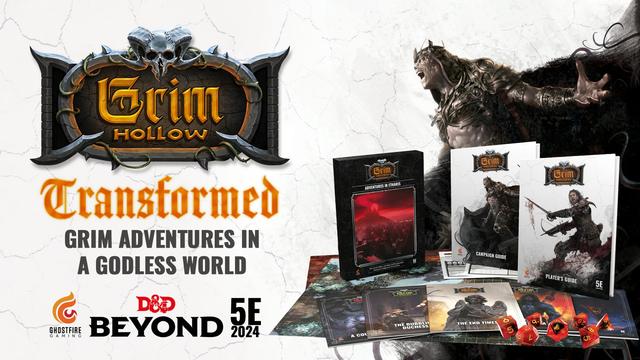
 MPG
MPG What Do I Know?

 Greg Marks
