 John Burns
Folks doing videos as "show & tell"...
Tip #1 -- Mic clipped to shirt
Tip #2 -- Mini-tripod for camera
---
Stop the camera movement and keep both hands available for the show & tell.
Stop trying to do something with your hands full of equipment.
Folks doing videos as "show & tell"...
Tip #1 -- Mic clipped to shirt
Tip #2 -- Mini-tripod for camera
---
Stop the camera movement and keep both hands available for the show & tell.
Stop trying to do something with your hands full of equipment.

Book of Enoch
This is an ancient Jewish apocalyptic religious text. The author of this book, by tradition, is the patriarch Enoch. Enoch was the dad of Methuselah (the oldest man in the Christian & Hebrew Bible) & the great-grandpa of Noah.
The Book of Enoch has some quite unique passages on the origins of demons & the Nephilim, why some angels fell from Heaven, an explanation of why the Genesis Flood was morally necessary, & a prophetic explanation of the 1,000-year reign of the Messiah.
3 books are traditionally attributed to Enoch, including the distinct works of 2 Enoch & 3 Enoch.
1 Enoch isn’t considered to be canonical Scripture by most sects of Judaism & Christianity. Although it’s a part of the biblical canon used by the Ethiopian Jewish community, Beta Israel. As well as the Ethiopian Orthodox Tewahedo Church & the Eritrean Orthodox Tewahedo Church.
The older section of 1 Enoch is dated to circa 300-200 BCE. The latest part (Book of Parables) is probably from circa 100 BCE. It’s believed that Enoch was originally written in either Aramaic or Hebrew. The 1st languages used for Jewish texts. No Hebrew version is known to have survived.
Copies of the earlier sections of 1 Enoch were preserved in Aramaic among the Dead Sea Scrolls in the Qumran Caves. The full Book of Enoch survives in its entirety only in the Ge’ez translation. Ge’ez is an ancient South Semitic language. The language originated from what’s known as Ethiopia & Eritrea.
The 1st part of the Book of Enoch describes the fall of the Watchers, the angels who sired angel-human hybrids called the Nephilim. The rest of the book describes Enoch’s revelations & his visits to Heaven in the form of travels, visions, & dreams.
The book consists of 5 major sections:
The most extensive surviving early manuscripts of the Book of Enoch are in Ge’ez. Also, there are manuscripts used by the Ethiopian Orthodox Tewahedo Church to prepare the deuterocanonicals from Ge’ez into the targumic Amharic in the bilingual Haile Selassie Amharic Bible.
Judging by the number of copies found in the Dead Sea Scrolls, the Book of Enoch was widely read during the Second Temple period. Today, the Ethiopian Beta Israel community of Haymanot Jews is the only Jewish group that accepts the Book of Enoch as canonical & still preserves it in its liturgical language of Ge’ez. It plays a central role in worship.
However, the Book of Enoch was excluded from both the formal canon of the Tanakh (the Jewish/Hebrew Bible) & the Septuagint (the Greek Old Testament, the earliest Greek translation of the Hebrew Bible from the original Biblical Hebrew). Also from the writings known today as the Deuterocanon.
By the 5th century, the Book of Enoch was mostly excluded from Christian biblical canons. It is now regarded as Scripture only by the Ethiopian Orthodox Tewahedo Church & the Eritrean Orthodox Tewahedo Church.
The Book of Enoch was considered as Scripture in the Epistle of Barnabas & by some of the early Church Fathers (like Clement of Alexandria & Tertullian) who wrote circa 200 that the Jews had rejected the Book of Enoch because it purposely contained prophecies about Jesus.
The Church of Jesus Christ of Latter-day Saints (Mormons) don’t consider 1 Enoch to be part of its standard canon. Although it believes that a purported, “original” Book of Enoch was an inspired book.
The Book of Moses (1st published the 1830s by the Mormon Church) is part of its standard works & has a section that claims to contain extracts from the “original” Book of Enoch.
This section has a number of similarities to 1 Enoch & other Enoch texts, including 2 Enoch, 3 Enoch, & The Book of Giants. The Enoch section of the Book of Moses is believed by the Church to contain extracts from “the ministry, teachings, & visions of Enoch.”
Though it doesn’t have the entire Book of Enoch itself. The Mormon Church considers the potions of the other texts that match its Enoch excerpts to be inspired while not rejecting but withholding judgment on the remainder.
Make a one-time donation
Your contribution is appreciated.
DonateMake a monthly donation
Your contribution is appreciated.
Donate monthlyMake a yearly donation
Your contribution is appreciated.
Donate yearly #1830s #5thCentury #Amharic #Aramaic #AstronomicalBook #BetaIsrael #bible #BookOfDreamVisions #BookOfDreams #BookOfEnoch #BookOfGiants #BookOfLuminaries #BookOfMoses #BookOfParables #BookOfParablesOfEnoch #BookOfTheHeavenlyLuminaries #BookOfTheWatchers #Christianity #ChurchFather #ChurchOfJesusChristOfLatterDaySaints #Circa100BCE #Circa200 #circa200BC #Circa300BCE #ClementOfAlexandria #DeadSeaScrolls #Deuterocanon #Deuterocanonicals #Enoch #EpistleOfBarnabas #EpistleOfEnoch #Eritrea #EritreanOrthodoxTewahedoChurch #Ethiopia #EthiopianOrthodoxChurch #GeEz #Genesis #GreekOldTestament #HaileSelassieAmharicBible #Hebrew #Jesus #Jewish #Judaism #Messiah #Methuselah #MormonChurch #Mormons #Nephilim #Noah #NoahSFlood #OrthodoxTewahedoChurch #Patriarch #Qumran #SecondTemple #Septuagint #SimilitudesOfEnoch #SouthSemitic #Tanakh #Tertullian #Watchers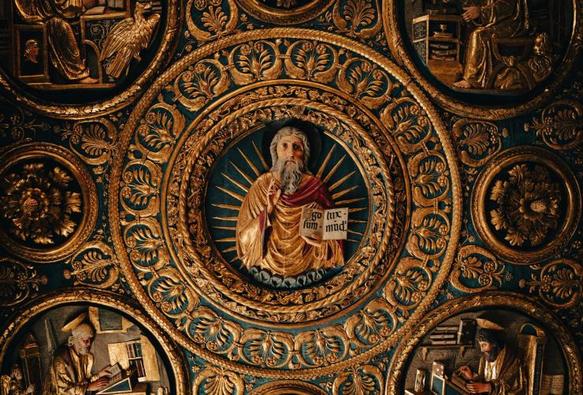
Nephilim
The Nephilim are mysterious beings or humans mentioned in the Bible. Traditionally understood as beings of great size & strength, or alternatively as beings of great power & authority.
The 1st biblical reference to them happens in Genesis 6:4. According to Numbers 13:33, 10 of the 12 spies reported the existence of Nephilim in Canaan before its conquest by the Israelites.
Interpretations vary vastly across traditions. Second Temple texts like 1st Enoch & Jubilees picture the Nephilim as offspring of fallen angels (Watchers) & of human women, portraying them as evil giants whose corruption led to the flood that’s told in the book of Genesis.
Some viewed the Nephilim as the descendants of Seth intermarrying with Cain’s lineage. Just to put this into perspective, Seth & Cain are biological brothers (half or whole, depending on the story). Their descendants married each other. It would be like marrying your cousins. Not 1st or 2nd cousins. But cousins nonetheless.
While others support the fallen angel theory. This was later supported by the Dead Sea Scrolls. Islamic tradition links them to the giant tribe of ‘Ad. While other theories link them with the Sumerian Apkallu myths or elite Canaanite warriors.
Over time, the Nephilim have been reimagined in popular culture: they appear in novels, films, video games, & conspiracy theories unrelated to religion. They are often pictured as powerful hybrids, ancient gods, or remnants of a lost superhuman race. Or the race of giants that Goliath descended from.
In the Bible, 3 interconnected passages refer to the Nephilim. 2 of them are in the Torah (Old Testament). The 1st appearance in Genesis 6:1-4. This is immediately before the Noah’s Ark story. Genesis 6:4 says: The Nephilim were in the earth in those days, & also after that when the sons of God came in unto the daughters of men & they bore children to them; the same were the mighty men that were of old, the men of renown.
A few things hit differently in this passage:
“Those days” were a period when the human population on the earth had started to really take off. This was when people began “to be plentiful on the Earth.”
The 2nd is Numbers 13:32-33, where 10 of the 12 spies describe the Anakites (a Rephaite tribe) as descendants of the Nephilim. Outside the Pentateuch, there are 1 more passage indirectly referencing nephilim & this is Ezekiel 32:17-32.
The earliest translation of the Bible (the Septuagint), which was composed in the 3rd or 2nd century BC, gives the said word as gigantes. In Greek mythology, the gigantes were beings of great strength & aggression. But not necessarily of great size.
The Vulgate (compiled in the 4th or 5th century AD) transcribes the Greek term rather than translating the Hebrew nefilim. From there, the tradition of the giant progeny of the sons of God & the daughters of men spread to later medieval translations of the Bible.
From the 3rd century onwards, references are found in Enochic literature, the Dead Sea Scrolls, the Jubilees, the Testament of Reuben, 2 Baruch, Josephus, & the Book of Jude.
The New American Bible commentary draws parallels between the Epistle of Jude & the statements in Genesis. This suggests that Jude refers implicitly to the paternity of the Nephilim as heavenly beings who came to earth & had spicy adult time with human women.
The story of the Nephilim is elaborated in the Book of Enoch. The Greek, Aramaic, & main Ge’ez manuscripts of 1 Enoch & Jubilees acquired in the 19th century (held in the British Museum & the Vatican Library) connect the origin of the Nephilim with the fallen angels, & in particular with the egregoroi (watchers).
In this tradition, the kids of the Nephilim are called the Elioud. They’re considered a separate race from the Nephilim. But they end up sharing the same fate as the Nephilim.
Some believe the fallen angels who sired the Nephilim were cast into Tartarus (II Peter 2:4, Jude 1:6), a place of “total darkness.” An interpretation is that God granted 10% of the disembodied spirits of the Nephilim to remain after Noah’s deluge, as demons, to try to lead the human race astray until the Final Judgment.
The Book of Jubilees also says that ridding the Earth of these pesky Nephilim was 1 of God’s purposes for flooding the Earth in Noah’s day. It describes the Nephilim as being evil giants.
A long-held view in some Christian sects is that the “sons of God” were the formerly righteous descendants of Seth (Adam & Eve’s 3rd kid) who rebelled. While the “daughters of men” were the unrighteous descendants of Cain. The Nephilim were their offspring. This view dates to at least the 1st century AD in Jewish literature. It was found in Christian sources from the 3rd century.
Some individuals & groups (including St. Augustine, John Chrysostom, & John Calvin) take the view of Genesis 6:2 that the “angels” who fathered the Nephilim referred to certain human males from Seth’s lineage. They were called sons of God in reference to their prior covenant with Yahweh (Deut. 14:1, 32:5). In these sources, these men had begun to pursue bodily interests, & so took wives of “the daughters of men.”
This view is also held by the Ethiopian Orthodox Church. This is supported by their own Ge’ez manuscripts & Amharic translation of the Haile Selassie Bible (1 Enoch & Jubilees also), which count as canonical by this church. The “Sons of Seth” view is the view presented in a few extra-biblical, yet ancient texts.
In these sources, these kids of Seth were said to have disobeyed God by breeding with the Cainites & producing wicked kids “who were all unlike.” This angered God into bringing about our boy Noah’s flood.
If you subscribe to the ancient alien theory, then you’ll be familiar with Zacharia Sitchin. In his The Earth Chronicles series, Mr. Sitchin makes the claim that the Nephilim were an extraterrestrial race called the Anunnaki. The Anunnaki came down from the 12th Planet (Nibiru) & mated with (or at least genetically messed with) human women. They also gave humanity a few things: civilization, makeup, weapons, warfare, & farming. (Our founder is currently reading The 12th Planet right now, as of the date this posts. They are about done with it, like 2 more chapters!)
Make a one-time donation
Your contribution is appreciated.
DonateMake a monthly donation
Your contribution is appreciated.
Donate monthlyMake a yearly donation
Your contribution is appreciated.
Donate yearly #Ad #19thCentury #1stCenturyAD #2Baruch #2ndCenturyBC #3rdCentury #3rdCenturyBC #4thCenturyAD #5thCenturyAD #Amharic #Anakites #Apkallu #Aramaic #bible #BookOfEnoch #BookOfJude #BritishMuseum #Cain #Cainites #Canaan #Canaanite #DaughtersOfMen #DeadSeaScrolls #Deluge #Deuteronomy141 #Deuteronomy325 #Egregoroi #Elioud #EpistleOfJude #EthiopianOrthodoxChurch #Eve #Ezekiel321732 #FinalJudgment #GeEz #Genesis #Genesis614 #Genesis62 #Genesis64 #giants #Goliath #GreatFlood #Greek #HaileSelassieBible #Hebrew #Hercules #IIPeter24 #Islam #Israelites #JohnCalvin #JohnChrysostom #Josephus #Jubilees #Jude16 #Nephilim #NewAmericanBible #NoahSArk #Numbers133233 #Numbers1333 #OldTestament #Pentateuch #Rephaites #SecondTemple #Septuagint #Seth #SonsOfGod #StAugustine #Sumeria #Sumerian #Tartarus #TestamentOfReuben #The12thPlanet #Torah #VaticanLibrary #Vulgate #Watchers #ZechariaSitchin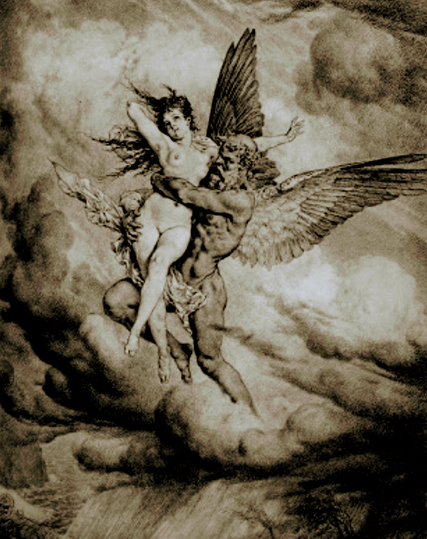
New paper on ordinals
This blog post is now a paper, which came out unexpectedly soon: ‘Ordinal Numerals as a Criterion for Subclassification: The Case of Semitic’.
Abstract: This article explores how ordinal numerals (like first, second and third) can help classify languages, focusing on the Semitic language family. Ordinals are often formed according to productive derivational processes, but as a separate word class, they may retain archaic morphology that is otherwise lost from the language. Together with the high propensity of ‘first’ and, less frequently, ‘second’ to be formed through suppletion, this makes them highly valuable for diachronic linguistic analysis. The article identifies four main patterns of ordinal formation across different Semitic languages. Together with innovations in the lowest two ordinals, these can be correlated with more and less accepted subgroupings within Semitic as a whole. Concretely, they offer support for the widely accepted West Semitic, Northwest Semitic and Abyssinian (Ethio-Semitic) clades as well as the recently proposed Aramaeo-Canaanite clade and provide new evidence for the further subclassification of Abyssinian that matches other recent proposals. However, no evidence was found to support the debated Central Semitic or South Semitic groupings. Given the accurate identification of accepted subgroupings and high level of detail, this approach holds promise for the classification of other language families, especially where other linguistic data are scarce.
Enjoy!
#Akkadian #Amharic #AncientSouthArabian #Arabic #Aramaic #GeEz #Hebrew #linguistics #ModernSouthArabian #news #ProtoSemitic #Ugaritic
"Nothing here will ..." -- Will what?? Google, you've got to be kidding. Why would you use an incomplete thought as a representative sample??

West Virginia deploys over 300 #NationalGuard troops to #DC on #DictatorDon's say-so.
Remember his #Jan6 claim that only Nancy #Pelosi had the authority to call up the Nat'l Guard to protect DC?
#Geez, I don't know if #MAGAts are more gullable or more stupid for believing his bull$#!+.

New publications and podcast
Busy year for publications (think that’s it for me this year):
Semitic *ʾilāh- and Hebrew אלהים: From plural ‘gods’ to singular ‘God’ (Open Access)
Abstract: The Biblical Hebrew word אלהים is plural in form. Semantically and syntactically, however, it can be plural or singular. The stem of this noun can be reconstructed as * ʾilāh-. As already noted by Wellhausen, this looks like a broken plural of *ʾil-, the Proto-Semitic word for ‘god’. This article takes Wellhausen’s observation and uses it to explain the plural morphology of Hebrew אלהים. I argue that *ʾilāh- should be reconstructed with redundant plural suffixes in some parts of the paradigm. This reconstructed paradigm is preserved virtually unchanged in Archaic Biblical Hebrew. The reconstructed paradigm also explains the almost complete replacement of *ʾil- by *ʾilāh- in Aramaic and Arabic and allows us to reassess the reasons for the association between the lexeme ‘god’ and plural number. Consequently, earlier suggestions that see אלהים’s plural number as a reflection of pre-Yahwistic polytheism or as a marker of abstractness are no longer tenable.
The varying size of the Sodom coalition in Genesis 14 (in FS Tigchelaar; email me for a PDF)
Trying my hardest to find something that might interest newly retired KU Leuven professor Eibert Tigchelaar, I used some Dead Sea Scrolls and other Second Temple literature as well as other textual and linguistic evidence to seek for order in the number of kings on Sodom’s side in Gen 14. Turns out that this closely aligns with other indications of different layers in this fascinating chapter: one about a local raid, one that may be a reworking of a lost epic, and a third one building on the combination of the first two. If you understand Dutch (or want to practice!), also check out this brand new episode of Timo Epping’s Oudheid, all about this question.
#AncientSouthArabian #Arabic #Aramaic #Bible #Canaanite #GeEz #Genesis #Hebrew #Hosea #linguistics #news #Phoenician #ProtoSemitic
 Benjamin Suchard
 JAY JAY
 Spirituality & Religious Studies
 Benjamin Suchard
 Eric True (avatar is stuck)
 Trump & Epstein: Biz partners.