 Vermont Citizen Scientist
Treating a fetus for an inherited neurologic disorder using drugs taken by the mother and that cross the placenta. After birth, the child continues to take medicine to continue producing adequate amounts of protein essential for neuron function. https://www.nature.com/articles/d41586-025-00534-0 #genetics #neuroscience #fetalmedicine

 Sandy Lawrence
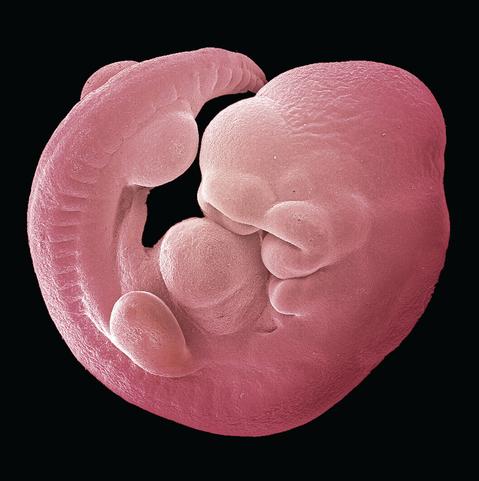
AAAS: "Keeping fetuses fed and happy." Mammalian pregnancy involves a host of immunological, cardiovascular, and metabolic adaptations to support fetal growth and survival. Lopez-Tello et al. examined metabolic adaptations in a mouse model, + found a key role for the gene for insulin-like growth factor 2 (Igf2) in maternal resource allocation during pregnancy. Production of IGF2 results in temporary insulin resistance during pregnancy, which helps ensure glucose availability for the fetus. Fetal growth is impaired if IGF2 is lacking. "The impact of metabolic abnormalities on the fetus during pregnancy persists into the offspring's adulthood, underscoring potential clinical implications." The fetus in the photo is of a mouse, but appears similar to a human fetus at 5 wks after conception, which corresponds to 7 gestational wks since we count from the first day of the last period. Size of a human fetus at this stage of development is less than half an inch. You can just make out the developing eye + vertebral column. Embryology is endlessly fascinating. #embryology #fetalmedicine
 Jiří Vojtěch
Hello #MedMastodon !
An #ObGyn  here. Working as a university teacher and a senior consultant in maternal-fetal medicine at a tertiary perinatal center in #Prague #CzechRepublic.
I am passionate about #perinatology, #twins, #MFM, #FetalMedicine, #ultrasound and all the shades of grey.
I'm glad for the warm welcome to the #mastodon community, I wish you all the very best and this is my #introduction.
 akbea
akbeaGoing to leave a few hashtags here in case either of my actual real-life friends is ever trying to find me.
#editing #AmEditing #editor #nhs #genetics #genomics #cytogenetics #FetalMedicine #ToriesOut
#editing #AmEditing #editor #nhs #genetics #genomics #cytogenetics #FetalMedicine #ToriesOut