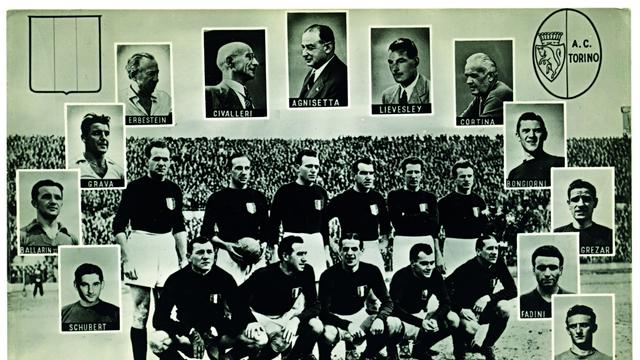
Corriere.it - Homepage: «Quei 31 corpi del Grande Torino adagiati sull’erba di Superga, sotto la pioggia»: il racconto di Dino Buzzati

Don Ricca, il cappellano di Superga, sentì un colpo terribile. «Sono corso nel giardino: si vedeva un intrico di rottami neri. Sventurati giovani, come erano ridotti. No, no, preferisco non parlare»

“Those 31 bodies of Grande Torino lying on the grass of Superga, under the rain”: the story by Dino Buzzati

Father Ricca, the chaplain of Superga, heard a terrible gunshot. “I ran into the garden: there was a tangle of black wreckage. Unfortunate young men, what they had been reduced to. No, no, I’d rather not speak about it.”

#GrandeTorino #Superga #DinoBuzzati #Ricca

https://www.corriere.it/sette/26_marzo_20/grande-torino-6a973b93-213e-4969-97c2-140067a18xlk.shtml

«Quei 31 corpi del Grande Torino adagiati sull’erba di Superga, sotto la pioggia, dopo l'incidente»: il racconto di Dino Buzzati sul Corriere

Don Ricca, il cappellano di Superga, sentì un colpo terribile. «Sono corso nel giardino: si vedeva un intrico di rottami neri. Sventurati giovani, come erano ridotti. No, no, preferisco non parlare»

Corriere della Sera

Era molto più delicato e tenero di quanto si credesse. Era fatto di quell’ impalpabile sostanza che volgarmente si chiama favola o illusione ... https://cctm.website/dino-buzzati-le-notti-difficili/

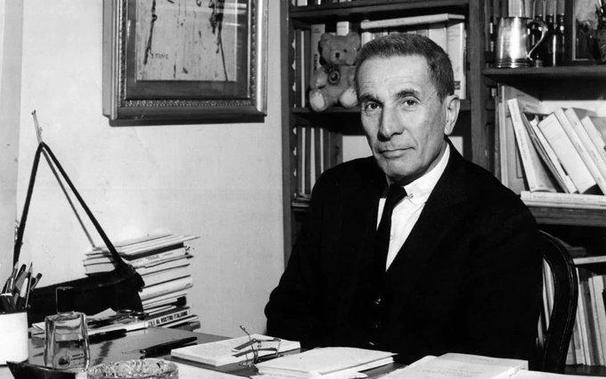
Dino Buzzati

frammento da Le notti difficili, Mondadori, 1971

#DinoBuzzati #libri #cctmwebsite #anoipiaceleggere #leggere

Dino Buzzati Le notti difficili - collettivo culturale tuttomondo

Era molto più delicato e tenero di quanto si credesse. Era fatto di quell’ impalpabile sostanza ... Dino Buzzati Le notti difficili - cctm

collettivo culturale tuttomondo

Proprio in quel tempo Drogo si accorse come gli uomini, per quanto possano volersi bene, rimangano sempre lontani; che se uno soffre, il dolore è completamente suo … https://cctm.website/dino-buzzati-proprio-in-quel-tempo/

Dino Buzzati

#DinoBuzzati #libri #cctmwebsite #anoipiaceleggere #leggere

Dino Buzzati Proprio in quel tempo - collettivo culturale tuttomondo

Dino Buzzati Proprio in quel tempo Drogo si accorse come gli uomini, per quanto possano volersi bene ... cctm libri

collettivo culturale tuttomondo

Intervista con Virgilio Villoresi, regista di “Orfeo”: viaggio dentro il regno dell’artigianato fantastico

https://fed.brid.gy/r/https://fumettologica.it/2025/11/orfeo-film-villoresi-intervista/

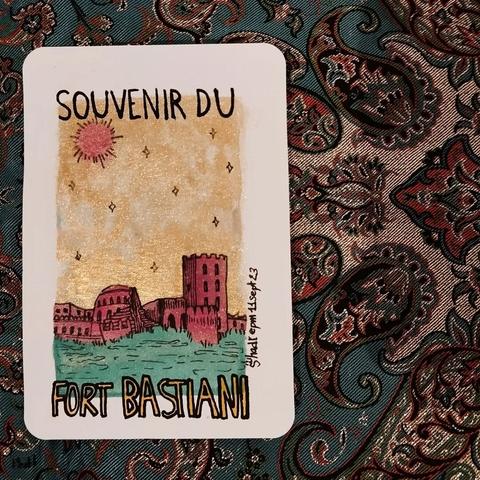
🏰 dans le fort bastiani 🏰

Oui, j’ai totalement envoyé une carte souvenir d’un lieu fictif 🤭

Le désert des Tartares est un livre qui parle de l’ennui avec beaucoup d’ennui. Je l’avais d’ailleurs arrêté en plein milieu, il y a quelques années quand je l’avais commencé. J’ai décidé ce mois-ci de reprendre cette lecture. Je la trouve à présent passionnante. Est-ce donc ça de vieillir ? Ou est-ce une soudaine nostalgie d’une époque que je n’ai pas connue ? Parce que ma grand-mère aime ce livre et qu’il me fait me sentir proche d’elle ? En tout cas il a des parfums familiers et chaleureux. Tout en étant effrayant, l’histoire est effrayante. L’histoire, c’est nous tous qui laissons nos vies partir en fumée. C’est quarante années de carrière qui n’apportent aucune satisfaction. C’est la vie moderne qui a vidé de sens nos emplois. C’est peut-être aussi la peur du changement, l’amour de la routine, ces petites choses dans lesquelles je me retrouve.

Sacré Fort Bastiani. Le film a été tourné en Iran, dans mon pays d’origine, dans la ville de Bam. Ils ont choisi ce lieu pour l’architecture exceptionnelle. Le Fort Bastiani ne pouvait qu’avoir une architecture exceptionnelle. Le temps est passé à une vitesse folle, et voilà que Bam a été dévastée par un séisme il y a quelques années. Le film du désert des Tartares est ainsi devenu une archive exceptionnelle d’une architecture exceptionnelle. Sacré Fort Bastiani. Tu auras donc vraiment eu ton moment de gloire, au final.

21 Septembre 2023
#ledésertdestartares #fortbastiani #dinobuzzati #cartepostale #aquarelle #watercolour #cartepostaquarelle

El desierto de los tártaros

He terminado El desierto de los tártaros, una novela de Dino Buzzati publicada en 1940. 

Un joven teniente de un país que intuimos europeo y decimonónico es destinado a una fortaleza remota. 

Se trata de un bastión que guarda una frontera no violentada desde tiempos lejanos, en una región deshabitada y desierta. 

En lugar de huir, el joven es persuadido por sus superiores para quedarse, y acaba siendo absorbido por la rutina castrense, un ciclo inmutable de protocolos y disciplinas que les preparan para el acontecimiento que ansía todo militar que se digne de serlo: la guerra. 

(Sí, en la fortaleza de Buzzati los militares aún tienen una visión romántica de su oficio, y sueñan con conocer la gloria del combate). 

De ahí que en la fortaleza se alimenten rumores y mitos sobre los movimientos fronterizos del ejército del país vecino, que dan una remota esperanza dé sentido a su existencia. 

Así, el joven teniente se ve pasar su juventud. 

Cada vez menos lazos le quedan con su ciudad natal y seres queridos. Otros pidieron el traslado, comenzaron en otra parte, pero el joven es incapaz de despertar del embrujo de esa espera eterna en la fortaleza, que cada vez va perdiendo más importancia militar, se ve más mermada de efectivos. 

Las esperanzas de que el enemigo ataque son ya tomadas como chismes, desvaríos. 

Se prohiben los catalejos para cortar las alas a quienes buscan movimientos fantasmales de tropas enemigas en el horizonte del páramo deshabitado. 

El joven militar ya no es tan joven. 

Luego es un viejo. 

La cosas bellas de la vida se le han ido escapando, una a una. ¿Logrará él escapar de aquella fortaleza? ¿Se desencadenará por fin esa guerra que le de un sentido final a su entregada existencia?

El desierto de los tártaros es una fábula existencialista de innegable poder alegórico. Su protagonista se identifica aquellos quienes deciden permanecer cuando todos se van, a la espera de algo cada vez más difuso e improbable. 

Ilustra la cara más negra de la esperanza, esa que te aboca a la espera pasiva de algo que nunca llega. Y cuanto más monotonía y repetición, más rápido pasa el tiempo y se alcanza un final.  

Esa es una cárcel -la de la rutina que acelera el tiempo- de la que he luchado mucho por escapar y me aterra especialmente.

#desierto #DinoBuzzati #ElDesiertoDeLosTártaros #existencialismo #Novela

"Il deserto dei Tartari", una nuova edizione del grande classico di Dino Buzzati da Sergio Bonelli Editore |

Il deserto dei Tartari di Dino Buzzati, grande classico della prosa novecentesca, a quasi 85 anni

Four authors dominated SFT in 20th century Italy: Dino Buzzati, Tommaso Landolfi, Italo Calvino, and Primo Levi. The first three wrote what most would call “fantastic” literature, while Levi wrote more allegorical and historical science fiction. Referred to as fantascienza (a fusion of fantasy and science) in Italian, the speculative fiction coming out of that country following World War Two was necessarily influenced by the political and social upheavals of that devastating war and the fascism that had dominated Italian politics under Mussolini.

In 1962, two of these Italian authors entered the Anglophone literary world in translation: Italo Calvino with his novellas The Nonexistent Knight and The Cloven Viscount, and Buzzati with Larger Than Life. Calvino was particularly interested in language and how it could manipulate and be manipulated. He often experimented with fairy tales, metanovels, surrealism, and the intersection of mythos and science. The Nonexistent Knight and The Cloven Viscount, two-thirds of his Italian Trilogy, also called the Our Ancestors trilogy, explore questions of literal and metaphorical perspective, identity, and the nature of good and evil. Set during the time of Charlemagne and narrated by a nun with many secrets, The Nonexistent Knight follows the adventures of a white suit of armor…with nothing in it. In The Cloven Viscount, the two halves of a nobleman who was split by a cannonball pursue their own independent adventures.

Meanwhile, Buzzati was influenced by Kafka’s surrealism and penchant for the absurd, and he wrote a number of allegorical, fable-like stories. Larger Than Life, first translated by British war poet and radio play author Henry Reed, is a dream-like story about a top-secret military installation, the purpose of which is only gradually revealed to the scientist who has been invited (along with his wife) to oversee it. Eventually, the scientist learns that the installation is actually an attempt to use a kind of AI to recreate his dead lover in the form of an entire city.

Both Buzzati and Calvino have a number of texts in English, making it relatively easy for the interested Anglophone reader to learn more about their unique brands of speculative storytelling. Have you read any of their works? If not, it might be worth your time to revisit these translated Italian works of the past as you move toward imagining how yesterday’s tomorrow might help reshape our present at Seattle Worldcon.

https://seattlein2025.org/2025/04/11/fantastic-fiction-italian-sft-calvino-and-buzzati/

#DinoBuzzati #ItaloCalvino

Fantastic Fiction: Italian SFT: Calvino and Buzzati: Four authors dominated SFT in 20th century Italy: Buzzati, Landolfi, Calvino, and Levi. The first three wrote what most would call “fantastic” literature, while Levi wrote more allegorical and historical science fiction. Referred to as fantascienza (a fusion of fantasy and science) in Italian, the speculative fiction coming out of that count… (#DinoBuzzati #ItaloCalvino)

Full post: https://seattlein2025.org/2025/04/11/fantastic-fiction-italian-sft-calvino-and-buzzati/

Fantastic Fiction: Italian SFT: Calvino and Buzzati

Four authors dominated SFT in 20th century Italy: Buzzati, Landolfi, Calvino, and Levi. The first three wrote what most would call “fantastic” literature, while Levi wrote more allegorical and historical science fiction. Referred to as fantascienza (a fusion of fantasy and science) in Italian, the speculative fiction coming out of that country following World War Two was influenced by the political and social upheavals of that war and the fascism that had dominated Italian politics.

Seattle Worldcon 2025

“Vorrei che tu venissi da me in una sera d’inverno e, stretti insieme dietro i vetri, guardando la solitudine delle strade buie e gelate, ricordassimo gli inverni delle favole, dove si visse insieme senza saperlo”

Moriva il #28gennaio 1972 lo scrittore, giornalista, pittore, drammaturgo, librettista, scenografo, costumista e poeta italiano #DinoBuzzati

#ilbortoneficio