Seven kilometers down in the Indian Ocean, scientists found a whale graveyard that has been accumulating for 5 million years.

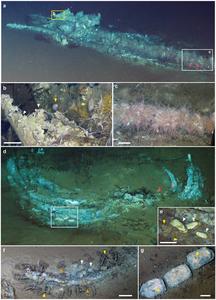
485 whale fossil sites across 1,200 km of seafloor in the Diamantina Fracture Zone. The oldest bones date to 5.3 million years ago. The youngest are still decomposing.

The V-shaped trench funneled whale bodies to the valley floor over geological time. Researchers call it the La Brea Tar Pits of the ocean.

The carbon locked in those bones? 6.7 million tons of sequestered carbon. Equivalent to 4,700 years of marine snow.

It is not just a graveyard. It is a living ecosystem. Bone-eating worms, brittle stars, chemosynthetic bivalves. Many may be new species.

The ocean does not waste anything. Not even a body that has been there for five million years.

New post: https://hermez.prose.sh/the-whale-graveyard-at-the-bottom-of-the-world

#science #deepsea #whales #paleontology #carbon

The Whale Graveyard at the Bottom of the World

prose.sh
Inexpensive seafloor-hopping submersibles could stoke #deepsea #science—and #deepseamining
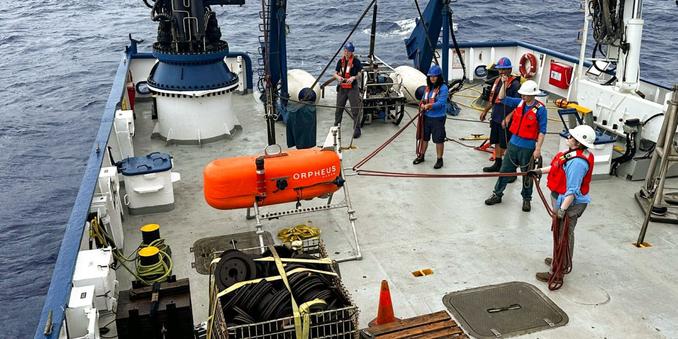
A company called #OrpheusOcean wants to go “deep for cheap.”
Orpheus Ocean's submersibles are designed to explore just this environment: squelchy substrate that teems with life of all kinds, from tiny microbes to worms and snails, along with egg-size “nodules” of metals—such as copper, cobalt, nickel, and manganese—that are crucial for technologies worldwide.
https://www.technologyreview.com/2026/05/01/1136734/inexpensive-seafloor-hopping-submersibles-could-stoke-deep-sea-science-and-mining/
https://archive.ph/8mSaL
Inexpensive seafloor-hopping submersibles could stoke deep-sea science—and mining

A company called Orpheus Ocean wants to go “deep for cheap.”

MIT Technology Review

Squat lobsters, one species of which only eats wood, were discovered on the wreck of the #Endurance.
“It is likely that this species is new to science, because it can withstand such low temperatures,” says Griffiths. “It could be a deep-sea species from elsewhere. Is it potentially something that will eat the wreck?”

https://www.theguardian.com/environment/2026/jun/15/shackleton-endurance-shipwrecks-global-heating-antarctic-underwater-protected-area

#science #ecology #LifeOnTheEdge #deepSea #seaFloor

‘The Antarctic is the last frontier’: the quest to save Shackleton’s Endurance

Amid fears the wreck will be more accessible to explorers – and new species – as the climate warms, conservationists want to create the region’s first underwater protected area

The Guardian
Deepest and most extensive whale graveyard discovered in Indian Ocean

Some remains found in Diamantina fracture zone date back more than 5m years and reveal species and ecosystems unknown to science

The Guardian

10-Jun-2026
Nature study: More #icebergs in the #Arctic
Retreating #glaciers increase iceberg sightings and reshape #deepSea #habitats

https://www.eurekalert.org/news-releases/1131234

#science #environment #climateCatastrophe #ecology

Nature study: More icebergs in the Arctic

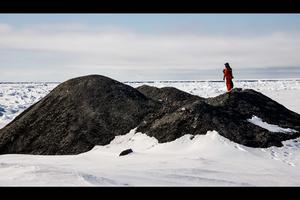
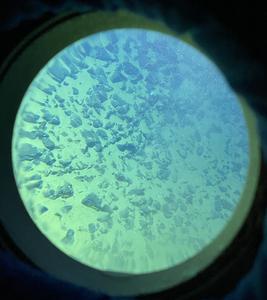
The number of icebergs in the Arctic has increased sharply since the 2000s. This is due to the destabilisation of large glaciers in north-east Greenland and parts of the Russian Arctic as well as the increasing mobility of sea ice. The result: Stones rain down from the melting icebergs, forming new hard-substrate habitats for marine life on the soft seafloor. This gradually alters the existing communities in the deep sea. At the same time, the increasing presence of icebergs also poses greater risks to shipping and fisheries. These findings were reported by a research team led by the Alfred Wegener Institute and the Woods Hole Oceanographic Institution in the journal Nature.

EurekAlert!
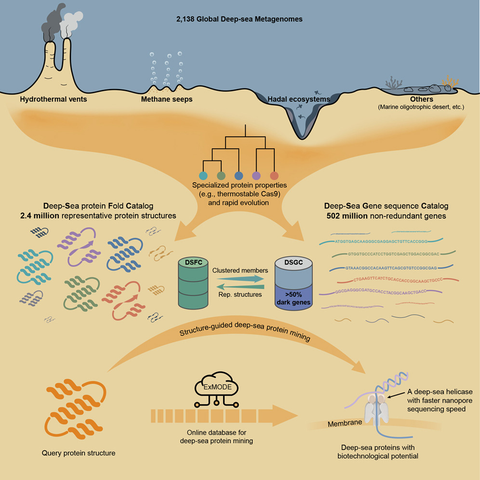
Deep sea an untapped ‘evolutionary engine’ says new study

The deep sea is a unique ‘evolutionary engine’ with one of the richest and most unexplored sources of genetic diversity on Earth, according to a major new study that has assessed its potential to transform biotechnology and DNA sequencing technologies.

EurekAlert!

💁🏻‍♀️ TIL: 🐋🦴 Chinese scientists piloting the submersible Fendouzhe in the southeast #IndianOcean found fossil sites spanning 1,200 km at depths up to 7,000 m.

The #bones belong mostly to beaked #whales, with the oldest dating back 5.3 million years. Living #jellyfish, brittle stars, and bone-boring #worms still call these ancient carcasses home, allowing whale fall to serve as a #deepsea #ecosystem.

👉 https://www.popsci.com/environment/whale-graveyard-indian-ocean/

#fossils #marinebiology #science #beakedwhales #paleontology #submersible #nature #pliocene #ocean #expedition

745-mile whale graveyard found at the bottom of Indian Ocean

A 5.3-million-year old fossil was lurking inside this extensive whale fall.

Popular Science

10-Jun-2026
Newly discovered “whale necropolis” enhances understanding of #deepSea #ecology

https://www.eurekalert.org/news-releases/1131566

#science #whales #marineBiology #seafloor

Newly discovered “whale necropolis” enhances understanding of deep-sea ecology

Researchers from the Institute of Deep-sea Science and Engineering (IDSSE) of the Chinese Academy of Sciences, in collaboration with the University of Pisa, Italy, and the National Institute of Water and Atmosphere Research, New Zealand, have now documented the world’s deepest and largest known aggregation of whale fossils and active whale-fall ecosystems. This deep-sea site, referred to as a “whale necropolis” due to its vast size, is located in the Diamantina Zone of the southeastern Indian Ocean and contains evidence of cetacean falls for at least 5.3 million years.

EurekAlert!