 THECHEATCODE™
Namjoon is going to get bored of the retardedness of the Turks! They zombies, he's going to find a place in The West and do more #COMPUTERTech.
 Deacon Bleux
SAME!
#constructionwork
#serviceindustry
#computertech
#musicindustry
Hey #electronics and #ComputerTech #teachers, are you teaching #PIC or #Arduino #programming in your classes?
You can copy and re-mix our free, open, and completely re-editable PICmicro C Programming Reference Google doc! It includes sample code in PIC and Arduino C flavours. 😋
Get it here: https://bit.ly/C-Programming-Reference
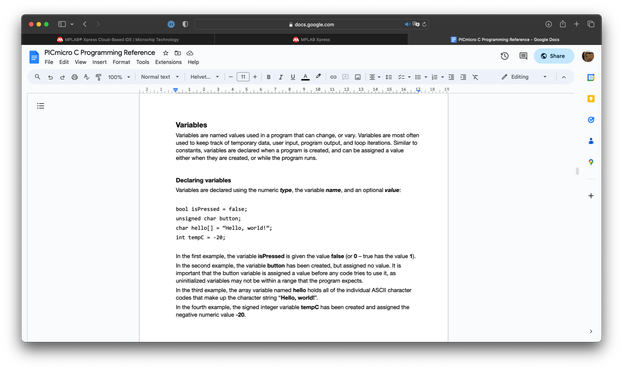

PICmicro C Programming Reference January 2023 PICmicro C Programming Reference Version 1.1, January 2023 PICmicro C Programming Reference © 2023 by mirobo.tech is licensed under CC BY 4.0. To view a copy of this license, visit http://creativecommons.org/licenses/by/4.0/ Thi...
We just updated our tutorials for getting started with the #Microchip MPLAB X IDE https://mirobo.tech/mplab-x as well as the MPLAB Xpress cloud-based IDE https://mirobo.tech/mplab-xpress – check them out on our site!
#microcontrollers #programming #education #STEAM #electronics #computertech

Just updated the CHRP4 #robot project on @hackaday https://hackaday.io/project/190407-chrp4-usb-robotics-development-board
There are now a set of 8 #programming activities for it on GitHub, including 5 introductory activities for learners new to programming, a line-following robot starter project, and two advanced activities to teach learners how to use servos and SONAR modules: https://github.com/mirobotech

CHRP4 (Common Hardware Robotics Project - version 4) is designed to help beginning computer technology learners quickly develop programming and interfacing skills while building simple line following, obstacle sensing, and Sumo robots. CHRP4 is a robotics-focused derivative of UBMP4 (https://hackaday.io/project/184126-ubmp4-usb-picmicro-development-board) – the reference to ‘Common Hardware’ in its name. CHRP4 features built-in pushbuttons, LEDs, a piezo speaker, and a motor driver IC so learners can start developing programs without wiring up or breadboarding any external circuits first. CHRP4 is programmed in C using Microchip's MPLAB X desktop IDE or the MPLAB Xpress cloud-based IDE. The on-board PIC16F1459 microcontroller can be pre-programmed with the USB µC bootloader (https://hackaday.io/project/63204-usb-c-usb-pic-bootloader) making programming as easy as dragging and dropping a compiled .hex file onto it!
Are you a teacher looking to build simple robots with your students? Check out CHRP4 on @hackaday https://hackaday.io/project/190407-chrp4-usb-robotics-development-board.
I'm giving away 1 assembled CHRP4 and 4 blank PCBs to one lucky teacher in the USA or Canada. Please boost!
Details: https://mirobo.tech/
#electronics #DIYelectronics #robotics #microcontrollers #programming #education #ComputerTech
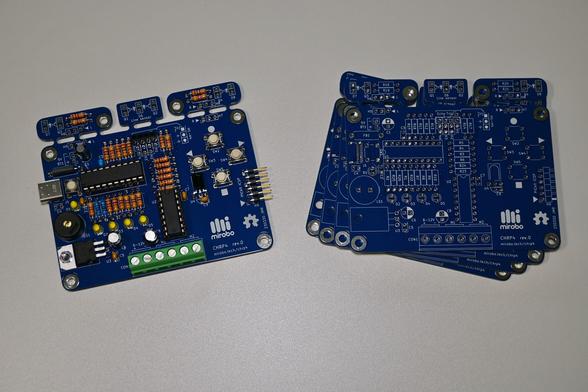
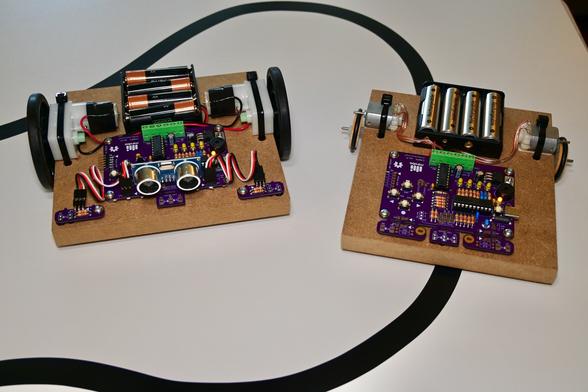
CHRP4 (Common Hardware Robotics Project - version 4) is designed to help beginning computer technology learners quickly develop programming and interfacing skills while building simple line following, obstacle sensing, and Sumo robots. CHRP4 is a robotics-focused derivative of UBMP4 (https://hackaday.io/project/184126-ubmp4-usb-picmicro-development-board) – the reference to ‘Common Hardware’ in its name. CHRP4 features built-in pushbuttons, LEDs, a piezo speaker, and a motor driver IC so learners can start developing programs without wiring up or breadboarding any external circuits first. CHRP4 is programmed in C using Microchip's MPLAB X desktop IDE or the MPLAB Xpress cloud-based IDE. The on-board PIC16F1459 microcontroller can be pre-programmed with the USB µC bootloader (https://hackaday.io/project/63204-usb-c-usb-pic-bootloader) making programming as easy as dragging and dropping a compiled .hex file onto it!
Scientists Broke a Major Computer Design Barrier — And It Could Change Tech As We Know It https://flip.it/eAtcZS
I've got my CHRP4 prototypes built and running! CHRP4 is a robotics derivative of UBMP4 designed for anyone teaching or learning microcontroller programming and robotics. There is a minimal parts educational starter version, a line-following robot build, and a Sumo robot build. Follow along for my project updates https://hackaday.io/project/190407-chrp4-usb-robotics-development-board on @hackaday
#electronics #robotics #microcontroller #programming #teaching #ComputerTech
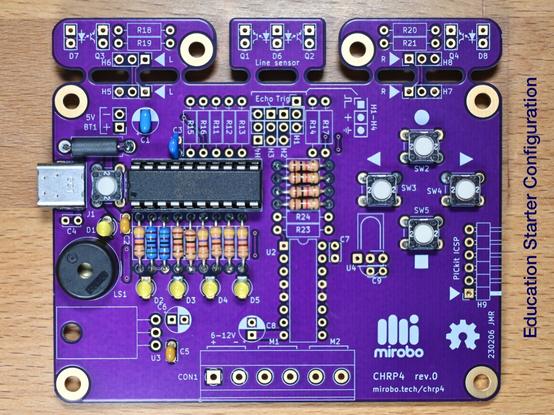
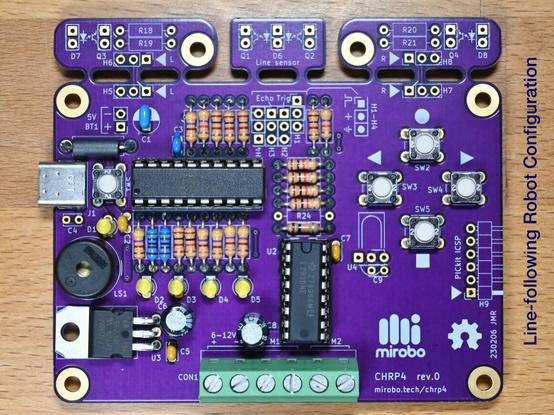
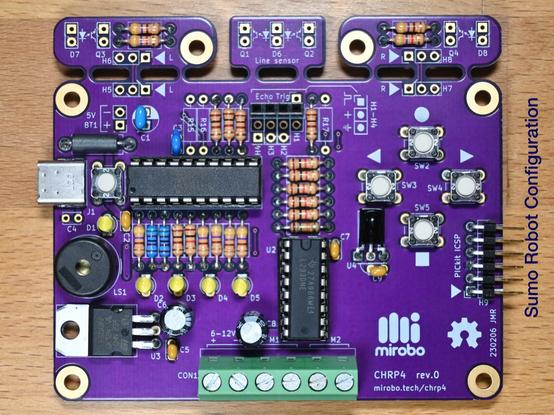
CHRP4 (Common Hardware Robotics Project - version 4) is designed to help beginning computer technology learners quickly develop programming and interfacing skills while building simple line following, obstacle sensing, and Sumo robots. CHRP4 is a robotics-focused derivative of UBMP4 (https://hackaday.io/project/184126-ubmp4-usb-picmicro-development-board) – the reference to ‘Common Hardware’ in its name. CHRP4 features built-in pushbuttons, LEDs, a piezo speaker, and a motor driver IC so learners can start developing programs without wiring up or breadboarding any external circuits first. CHRP4 is programmed in C using Microchip's MPLAB X desktop IDE or the MPLAB Xpress cloud-based IDE. The on-board PIC16F1459 microcontroller can be pre-programmed with the USB µC bootloader (https://hackaday.io/project/63204-usb-c-usb-pic-bootloader) making programming as easy as dragging and dropping a compiled .hex file onto it!
 rtw3000
 mirobo Technology
 Tom_MN☮️🇱🇧🇮🇱🇮🇷🇵🇸🕊️🇺🇦🇷🇺🇰🇵🏳️🌈