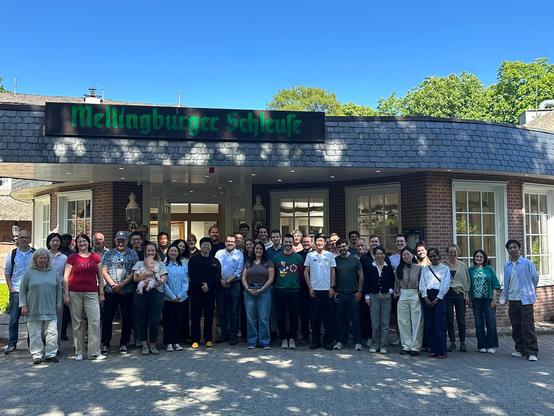
FAL's Tom Snyder to present his PhD exit seminar, Quantitative Approaches to the Bioarchaeology of Climate and Social Change. The talk will be on May 4, 4:10-5:00 pm (Pacific Time) at UC Davis Wickson Hall rm 2124 or via Zoom at https://bit.ly/SnyderExitTalk
#archaeology #climatescience

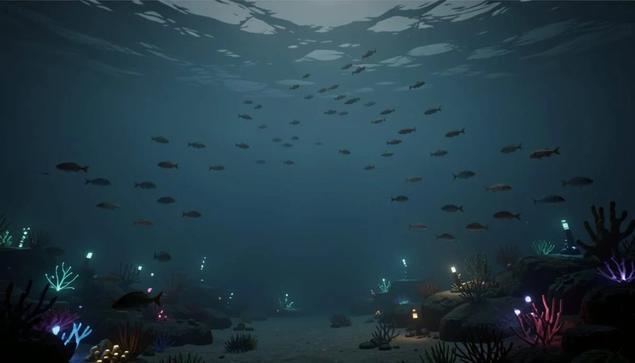
The EU’s Earth observation system, Copernicus, delivers essential global data on our oceans.

Mostly not good: record heat levels, record acidity.

https://marine.copernicus.eu/news/copernicus-marine-data-powers-wmo-global-climate-report-2025-ocean-warming-and-energy

#EU #UE #Europe #Science #ClimateScience #Ocean #ClimateCrisis

Copernicus Marine Data Powers the WMO Global Climate Report 2025 on Ocean Warming and Energy Imbalance | CMEMS

The Copernicus Marine Service data underpins key findings in the WMO’s climate report published in March 2026, including ocean warming and Earth’s energy imbalance. These results confirm the Ocean’s central role in tracking accelerating climate change.

Beavers can turn riverbeds into powerful carbon sinks!

“When scaled across all floodplain areas suitable for beaver recolonisation in Switzerland, the researchers estimate that beaver wetlands could offset 1.2-1.8% of the nation’s annual carbon emissions”

https://www.wur.nl/en/news/beavers-can-turn-riverbeds-powerful-carbon-sinks

#Climate #Science #Wildlife #Animals #ClimateScience #Water #Wetlands #LandUse

Beavers can turn riverbeds into powerful carbon sinks

According to a new international study, beavers could play a significant role in Europe’s climate mitigation efforts, by transforming suitable river corridors into long‑term carbon stores.

Wageningen University & Research
An Arctic Road Trip Brings Vital Underground Networks into View | Quanta Magazine

A vast meshwork of soil-bound fungi governs life aboveground. In Alaska, and at field sites around the world, researchers are racing to understand exactly how, with critical stores of carbon at stake.

Quanta Magazine
#WMO #GlobalClimateReport 2025 - 2015-2025 hottest 11 years on record - Earth’s energy imbalance highest in sixty five-year record - The ocean has been absorbing about 18x annual human energy use each year for the past two decades wmo.int/publication-... #climate #ClimateScience #climatechange

State of the Global Climate 20...
State of the Global Climate 2025

WMO’s State of the Global Climate report 2025 confirms that 2015-2025 are the hottest 11-years on record, and that 2025 was the second or third hottest year on record, at about 1.43 °C above the 1850-1900 average. Extreme events around the world, including intense heat, heavy rainfall and tropical cyclones, caused disruption and devastation and highlighted the vulnerability of our inter-connected economies and societies.The ocean continues to warm and absorb carbon dioxide. It has been absorbing the equivalent of about eighteen times the annual human energy use each year for the past two decades. Annual sea ice extent in the Arctic was at or near a record low, Antarctic sea ice extent was the third lowest on record, and glacier melt continued unabated, according to the report.For the first time, the report includes the Earth’s energy imbalance as one of the key climate indicators.

World Meteorological Organization

#WMO #GlobalClimateReport 2025

- 2015-2025 hottest 11 years on record
- Earth’s energy imbalance is highest in sixty five-year record
- The ocean has been absorbing about eighteen times the annual human energy use each year for the past two decades

https://wmo.int/publication-series/state-of-global-climate/state-of-global-climate-2025

#climate #ClimateScience #climatechange #ClimateEmergency #ClimateCrisis #ClimateBreakdown #ClimateDisruption #globalWarming #globalHeating #ExtremeWeather #polycrisis

State of the Global Climate 2025

WMO’s State of the Global Climate report 2025 confirms that 2015-2025 are the hottest 11-years on record, and that 2025 was the second or third hottest year on record, at about 1.43 °C above the 1850-1900 average. Extreme events around the world, including intense heat, heavy rainfall and tropical cyclones, caused disruption and devastation and highlighted the vulnerability of our inter-connected economies and societies.The ocean continues to warm and absorb carbon dioxide. It has been absorbing the equivalent of about eighteen times the annual human energy use each year for the past two decades. Annual sea ice extent in the Arctic was at or near a record low, Antarctic sea ice extent was the third lowest on record, and glacier melt continued unabated, according to the report.For the first time, the report includes the Earth’s energy imbalance as one of the key climate indicators.

World Meteorological Organization

#FYI #HerbSimmens #ClimateEmergencyForum #PaulBeckwith #PeterCarter #WMO

on the World Meteorological Organization’s latest State of the Global Climate report

"The planet is now trapping heat equivalent to 12 Hiroshima-sized bombs every second"

https://www.youtube.com/watch?v=DR0vv5upZiU

#climate #ClimateScience #climatechange #ClimateEmergency #ClimateCrisis #ClimateBreakdown #ClimateDisruption #globalWarming #globalHeating #ExtremeWeather #polycrisis

Explosive New WMO Climate Report

YouTube
The Iran War Climate Paradox Explained

YouTube