When magic’s misused

(c) C A Lovegrove.

The Pinhoe Egg by Diana Wynne Jones.
HarperCollins Children’s Books, 2007 (2006).

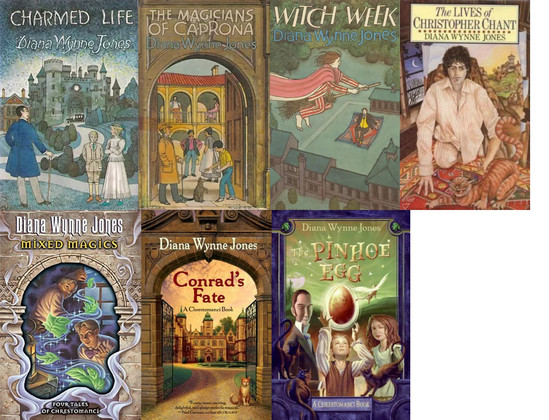
The last of the Chrestomanci books written by Diana Wynne Jones, The Pinhoe Egg was also the longest and, arguably, the most complicated in terms of plot. Unlike some of the novels preceding it Chrestomanci doesn’t just have a walk-on part at the end but takes on the most integrated role in proceedings since Charmed Life, the very first Chrestomanci story of all.

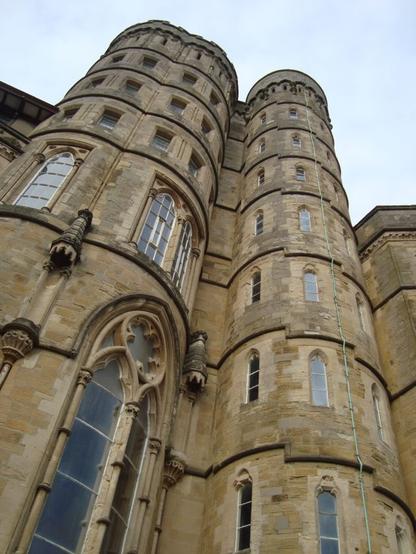
The story actually centres on young Eric ‘Cat’ Chant, who lives at Chrestomanci Castle near Helm St Mary, and his contemporary Marianne Pinhoe, who lives about ten miles away in Ulverscote. Marianne’s grandmother appears to lose her mind in a blast of magic — did I mention this is a fantasy? — and poor Marianne’s long-anticipated summer holidays start to disappear over the horizon as her extended family gets drawn into a feud with a neighbouring village.

Not only this but her family also fear the attention of Chrestomanci, the ‘Big Man’ at the Castle, whose job is to monitor any misuse of magic. And it turns out a whole lot of misuse of magic is going on.

As well as the last of the Chrestomanci books this was the first of the series where I felt you could draw a detailed map of the localities and how they related to each other; which, in fact, is just what I did. This gave the characters a landscape in which to work and interact, and helped to make the story more grounded, as it were, than some of the others in the series. This was, for me, also one of the richest and most satisfactory of the stories, as well as one of the longest, and helped to further enrich the sequence as a whole.

True, some readers have been overwhelmed by what seems a cast of thousands — at a conservative estimate six ‘family’ members at the Castle , their staff of over two dozen, at least forty named villagers (a thousand appear in the final battle) and a handful of assorted non-humans. But rather than being a turn-off surely such complexity, requiring close attention to and engagement with the text, is something to celebrate rather than criticise? There is certainly no let-up in the expected drive of her story-telling.

The joint fulcrums on which the story turns are personified in both Marianne and Cat, the latter a nine-lifed enchanter who is likely to become the next Chrestomanci. The general assumption that children should be seen and not heard is not one that Diana Wynne Jones subscribed to, and so both youngsters have to struggle against not being believed by adults by becoming more brave and assertive. Being gifted magically they recognise each other’s innate abilities, and by working in tandem have the opportunity to avert the dangerous situation that all and sundry find themselves in.

Things are particularly hard because there seem to be outside forces operating that prevent the truth from being investigated, let alone revealed. Is that truth being hidden by dwimmery, a state brought about by an Old English word implying an illusion brought about by sleight or magic?

The Pinhoe Egg is a novel that reveals more the more you enquire. The author explains in a note that she could only get started on the book by imaginatively exploring the countryside around Chrestomanci Castle and the villagers who lived there. Many of the names of villages and families are genuine, and Jones clearly delved around in her memories and her extensive learning to retrieve them. The Pinhoes for example live in a village called Ulverscote. There is in fact a real village called Pinhoe on the outskirts of Exeter, where a great battle was fought by Danish Vikings and King Ethelred’s army in the 11th century; the settlement, in hilly country, has a name probably derived from Celtic pen and Old English hoe, meaning ‘top of the hill’.

As it happens, the village inhabited by Jones’ Pinhoes is called Ulverscote, close by Ulverscote Wood and situated on an eminence. The ‘cote’ element could denote ‘cottage’ or Welsh coed (‘wood’), while the first element seems to imply a personal name like Ulf, an old Scandinavian name meaning ‘Wolf’. Is it beyond the bounds of reason to suggest that ‘Ulverscote’ was concocted partly from a memory of the real Wolvercote, on the outskirts of Oxford? After all, Jones went to Oxford University, where she attended lectures by Tolkien, and the man himself was buried in Wolvercote cemetery. Yes, Wolvercote was before the 12th century originally the cottage of a certain Woolgar, not Ulf, but I am also mindful that in Charmed Life Cat’s home town is noted as … Wolvercote.

In a lively and creative mind like Diana’s all these associations could easily have been tangled together, partly consciously, partly subconsciously; as a reader it is not necessary to know that these associations are possible but it certainly adds to one’s appreciation if historic events, etymologies and personal experiences are woven together in an artful and satisfying way.

With exactly 400 pages in the paperback edition it’s neither possible nor desirable to give a detailed plot description, so instead I’ll draw attention to a few other aspects that struck me in this reread. Fot example, Jones slyly alludes to the fairytale trope of seven sons, but despite Marianne’s father being one of these boys she herself is no seventh son of a seventh son; instead, she is the only girl amongst thirteen cousins — a fact which helps cement her unique magical status.

Another theme that Jones harps on about is bigotry. Though there is a church and a Reverend Pinhoe in evidence, we are never anywhere told the precise religion of this fantasy world; however that doesn’t stop the rival Farleigh family, equally witches and magic-users, from inveighing against “ungodly abominations”, an all too familiar rant in our own world. There’s a confusing backstory of an orthodox religion but this seems to predate ‘the Romans’; whether these are ‘our’ Romans or a closet reference to Roman Catholics is unclear, and may be the sort of typical obfuscation that Jones tends to throw into her novels from time to time.

The final aspect I want to explore is the place The Pinhoe Egg has in the series’ chronology. Luckily Jones gives us some clues. It’s been almost a year since the moment in Charmed Life when Cat accepted he was a nine-lifed enchanter. So we have a fairly tight timeline between the 1977 title and this last in the series published nearly three decades later, all linked by the character of Cat (and Chrestomanci, of course). Since I’ve reviewed all these at some time or another I won’t give full details, but the sequence is Charmed Life (when we first meet Cat) followed by the short story ‘The Sage of Theare’ (where Cat puts in a brief appearance). The young Italian Tonino (who appears in The Magicians of Caprona) meets up with Cat in another short story ‘Stealer of Souls’, and both feature again in ‘Caroline Oneir’s Hundredth Dream’. This last short story ends with the Chrestomanci ‘family’ on holiday in the South of France, from which they return in time for the start of The Pinhoe Egg. As always, most of these tales can be read as standalones, but those readers wanting continuity in their series reading could do worse than read the stories in this order.

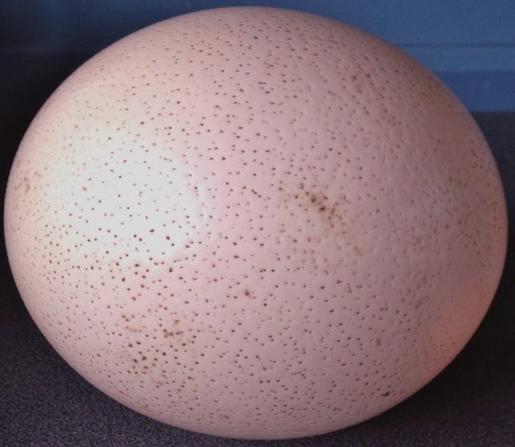
You will by now be wondering what the egg of the title is. This appears as a result of “a promise I made to my sister” (Ursula, perhaps) “that I would write more about such things”. What this spotted mauve egg contains is a surprise I leave to the reader to discover for themselves, but it is a creature that traditionally guards gold. And while I feel the egg itself is a bit of a McGuffin I suppose the story itself, in a way, is the gold.

The Pinhoe Egg completes the Chrestomanci sequence of novels. There will sadly be no more as Diana died in March 2011. Since then DWJ fans have nominated every March as DWJ month, reading or rereading and discussing aspects of all her novels. In a follow-up post (in what’s left of this month) I hope to expand a little on the series and the world she has created. Aficionados may be interested in a Wiki site which concisely cross-references many of the places and personages in the novels.

First published 21st March 2015, this review now reposted for #MarchMagics2026 as part of a sequence looking at the Chrestomanci series.

#Chrestomanci #dianaWynneJones #fantasy #MarchMagics2026 #ThePinhoeEgg
Repost of my review of 'Mixed Magics', a collection of short stories in the #Chrestomanci series by #DianaWynneJones for #MarchMagics2026.
#Bookstodon
https://wp.me/s2oNj1-magics
Fun is a serious business

Mixed Magicsby Diana Wynne Jones.Collins, 2000. Publishers and booksellers think they know their market when it comes to the fantasy novels of Diana Wynne Jones and her ilk: young readers aged 9 to…

Calmgrove

Fun is a serious business

Mixed Magics
by Diana Wynne Jones.
Collins, 2000.

Publishers and booksellers think they know their market when it comes to the fantasy novels of Diana Wynne Jones and her ilk: young readers aged 9 to 12 or, at a pinch, young adult or teens for her more ‘difficult’ novels.

This despite the fact that her fans range upwards in age to other adult fantasy writers, filmmakers, academics (and not just in the literary field — I knew a professor of sociology who rated her highly as a writer) and, of course, bloggers of all ages.

Those who treat books merely as commodities — and there’s no denying that the publishing business exists to be commercially successful — often fail to recognise the reach of an author’s readership except when (as, say, with Philip Pullman and J K Rowling) it becomes as plain as the noses on their faces; they then respond with ‘adult’ editions, which sport less garish covers to go on genre shelves — or even under General Fiction — and receive notices in the review sections of broadsheet newspapers.

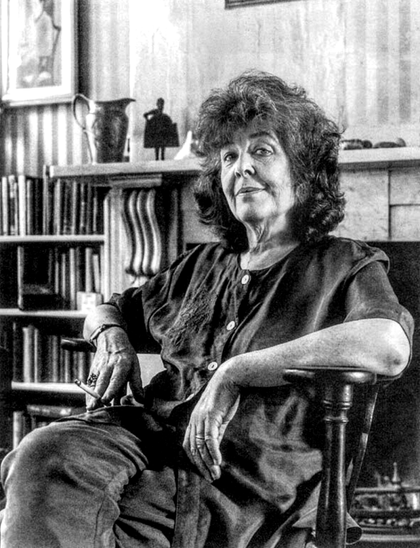
Diana Wynne Jones 1934–2011

This long preamble (and it gets longer, I’m afraid) is a prelude to lauding this collection of light fiction, short stories related by Jones and also related to each other by common themes. These themes include the premise that magic works but must be regulated, as all power must surely be, by a government-appointed ombudsman with the authority to intervene when that power is misused. (No faceless bureaucrat this, by the way, but an eccentric yet efficient enchanter with the title of Chrestomanci.) Another theme, touched on by a couple of stories, is that moving to another place will rarely be a solution to your problems if you don’t fundamentally change yourself.

A third overarching theme is the act of creation — is what the artist conceives or the thinker imagines purely abstract, or does it ever exist in any concrete sense? Powerful thoughts, these, to exercise any mind let alone the young minds of the predetermined market. And there is now another conundrum to consider before the review proper begins.

There are two main modes of thought regarding reading a sequence of novels where dates of publication and internal chronology don’t coincide. One is to read them by date of publication, which can lead to confusion, the other is to adhere to chronological order, which can ruin later plot surprises and character revelations. (Famously The Chronicles of Narnia, the C S Lewis’ fantasy books published in one volume, has been criticised by fans for adopting the timeline approach.) Or you can read them in an order of your own choosing, or according to whenever you manage to acquire individual titles.

The same dilemma can apply to the late Diana Wynne Jones’ Chrestomanci series. As books were successively published the time frames shifted so that fans might initially be confused, whereas newcomers might accept each title as a puzzling standalone. One solution to the dilemma could be to read them all first in publication order, and then re-read them in chronological order for pleasure (or for review, as I’m doing now). Another reader might devise an entirely different re-reading sequence according to personal preference, and Jones herself suggested a reading order with only two titles stipulated at the beginning.

All of the books are linked by the figure of Chrestomanci, who may be a main focus of the story, make a fleeting appearance or function as a deus ex machina, setting things to rights. (Imagine him as a tall, dark and handsome Sherlock Holmes in dressing gown and top hat.) I’ve already looked at five novels, beginning with The Lives of Christopher Chant (1988) and Conrad’s Fate (2005), both set in Chrestomanci’s youth. Next came Charmed Life (1977), when he appeared as his idiosyncratic adult self, followed by The Magicians of Caprona (1980) and, probably, Witch Week (1982).

The next volume I’d like to look at is Mixed Magics, and here we immediately run into a problem which will upset both parties intent on their particular order of reading. Mixed Magics is in fact a collection of short stories, some verging on novellas, published at different times over a period of nearly two decades. ‘The Sage of Theare’ was first published in 1982, and then re-appeared with ‘Warlock at the Wheel’ in 1984 before its 2000 outing here in Mixed Magics. ‘Carol Oneir’s Hundredth Dream’ was first published in 1986, while ‘Stealer of Souls’ re-appeared as a standalone for World Book Day 2002, two years after this collection. With this convoluted timeline of inter-related stories newcomers to the Chrestomanci series might experience slight confusion on occasion, but as with much of Diana Wynne Jones’ output my advice would be to go with the flow. Here I deal with the stories in published order rather than in the order presented in Mixed Magics, with comments on how they fit in with the series’ timeline.

Diana Wynne Jones 1934–2011

The Sage of Theare (1982)

‘The Sage of Theare’ started because I remembered, or thought I remembered, a story by Borges being read on the radio, in which a scholar arduously tracked down a learned man but never quite found him. I started having dreams about it — strange circular dreams in a strange city where gods took a hand — and the dream person never found the wise man he was looking for. In order to exorcise the dreams, I wrote the story.

This is quite the strangest of the Chrestomanci stories. It involves “a world called Theare in which Heaven was very well organised”, with a pantheon very reminiscent of Ancient Greek goddesses and gods. Many years ago I wrote the music for a school musical called Thera, where an updated Greek pantheon interacted with mortals. Quite obviously I chose this name because there was an actual island called Thera (modern Santorini) which, devastated three thousand years ago by a volcanic explosion, may have inspired aspects of the Atlantis story. I also chose it because it was an anagram of Earth, underlying the satirical nature of much of the production.

This reasoning may also partly account for Jones’ Theare, where she indulges in some philosophical musings of a satirical nature: for example, the young protagonist, Thasper, has a eureka moment looking into a shaving mirror: The gods need human beings in order to be gods! Would they exist if people didn’t believe in them? Would the world dissolve into nothingness if the gods twinkled out of existence? The volcanic island of Thera may also be referenced by Jones in the recurring images of buildings in flames and mentions of water-dragons, the two elements of fire and water that suggest the contradictory nature of Theare itself.

Thasper’s search for the Sage of Dissolution is very Borgesian. The process is very much the looking for geographical patterns, as in ‘Death and the Compass’; the circular images (the sphere Thasper is contained in, the Half Moon Inn, the pattern made by house fire locations) also hint at Borges’ obsession with labyrinths (as in ‘The Circular Ruins’); while the unknown Borges story which inspired Jones in the first place must surely be ‘The Approach to Al-Mu’tasim’. In this fiction an Islamic student traipses across India searching for a mystic known as Al-Mu’tasim who he hopes will have the answers to his questions. Unlike the student, Thasper can’t achieve enlightenment without help; he needs Chrestomanci because the gods are clumsily trying to circumvent their own prophecy concerning the young man, which may end in the destruction of their world.

Warlock at the Wheel (1984)

‘The Sage of Theare’ spreads over a period of some twenty-two years, its denouement taking place no earlier than the events in Charmed Life since it involves the brief appearance of Eric ‘Cat’ Chant. ‘Warlock at the Wheel’ is also set after the same novel, the climax of which involved many magic users losing their magic powers. Here Jones is in humorous mood, with the Willing Warlock (who appeared in Charmed Life) desperately trying to regain his magic by reverting to his criminal ways. Crime, as we are always told, doesn’t pay, no more so than in the Warlock’s case, and his fruitless search for money and motorcars on his own world and in one resembling ours is told with a light touch and even some malicious glee. A lively child and a rather large dog feature, as does Kathusa, Chrestomanci’s agent on our world.

Carol Oneir’s Hundredth Dream (1986)

Jones must have had an obsession with travelling fairs. They appear at the climaxes of Eight Days of Luke (1975) and Fire and Hemlock (1985), and one appears here too. As well as the obvious excitements and experiences of the fairground she must have relished the elements of make-believe and illusion that they incorporate, elements that story-telling epitomises. But Jones again uses a sense of fun to make serious points in this tale.

Carol’s father knew Chrestomanci when they were boys at school, and calls in on Chrestomanci on holiday in the South of France to solve a problem with his daughter. The little madam has been hugely profiting, with the aid of her ambitious mother, from her ability to not only dream to order but to make those dreams manifest in saleable products (precursors of the memory-retaining Pensieve familiar from the Harry Potter universe). The problem is that she is unable to produce her hundredth dream so now Chrestomanci is expected to find a solution. Curiously, he discovers that it’s a question of industrial relations, the revelation taking place in that fairground setting. As with the gods that humans create in their own image, are the figures we conjure up out of our dreams incorporeal or do they exist in reality? Do they have free will and can they act independently? In this metafiction Jones uses dream narratives to comment on the nature of the storytelling process and whether the teller tells the tales or tales issue unbidden from us.

I always wondered about Carol’s surname. It looked vaguely Irish, almost like O’Neil, and I’ve seen commentaries that even present it as though it was Irish. Of course it’s Jones playing with words again: from a Greek root, the surname appears as an element in the Oneirocritica, a treatise on the interpretation of dreams by the 2nd-century author Artemidorus.

Stealer of Souls (2000)

A young Italian, Tonino Montana, makes a brief appearance at the end of ‘Carol Oneir’s Hundredth Dream’. We first met him in The Magicians of Caprona, and the last we heard of him he was coming to be a pupil at Chrestomanci Castle somewhere in southern England. We now hear what happened when he was first introduced to Chrestomanci’s extended family after the events in Caprona, just before Carol Oneir comes into the picture. Due to a series of unfortunate circumstances Chrestomanci’s nephew Cat is put in charge of looking after Tonino, and it’s clear he’s unhappy about no longer being the youngest in the entourage. Cat’s despatched with Tonino to the aged Gabriel de Witt, previous holder of the Chrestomanci office. Gabriel is also a nine-lifed enchanter, but his lives are leaving him one by one, and he’s fearful of one Neville Spiderman. (I’m sure Jones conjured this name from Neville Spearman, publishers of books on reincarnation and spiritualism as well as flying saucers and the occult in general.) He is right to be fearful of Spiderman because when Tonino and Cat set off on their return journey they are kidnapped and locked in a cellar full of junk and cobwebs.

What has happened to Gabriel’s ‘lives’ or souls and what have they to do with Neville Spiderman? Will it involve reincarnation of a sort and the occult? We soon find out as horror and humour succeed one another. I liked the way those lost souls were depicted — very dreamlike in a way — and I was amused to find that Jones ended the story with the promise of a villa holiday in the South of France, which is just where ‘Carol Oneir’s Hundredth Dream’ ends and which itself ends the collection.

* * *

I seem to have spent an inordinate amount of space on what appear to be slight and amusing children’s stories, but I make no apology for it. As I understand it, Johan Huizinga postulated in Homo Ludens that ‘play’ preceded and produced culture rather than that play is a function of culture. You might think that the fun and games Jones exhibits in her books are a frothy by-product of our culture; I would argue instead that the ideas she so entertainingly plays around with — about greed, antisocial behaviours, a lust for absolute power, the capacity to believe that our creations are our masters — are what help to sustain our human culture. Fun, in other words, is a serious business. And it’s not just for kids.

Review first published September 2013, again 21st February 2015, now reposted for #MarchMagics2026 as part of a sequence looking at the Chrestomanci series.

#Chrestomanci #dianaWynneJones #fantasy #MarchMagics2026 #MixedMagics #shortStories
Repost of my review of 'Witch Week' by #DianaWynneJones in the #Chrestomanci series for #MarchMagics2026. https://wp.me/s2oNj1-week
School for sorcery

© C A Lovegrove Witch Week by Diana Wynne Jones.HarperCollinsChildren’sBooks, 2000 (1982). a parallel world | where they persecute witches | and children aren’t safe Witch Week was the …

Calmgrove

School for sorcery

© C A Lovegrove

Witch Week by Diana Wynne Jones.
HarperCollinsChildren’sBooks, 2000 (1982).

a parallel world | where they persecute witches | and children aren’t safe

Witch Week was the first Chrestomanci books to focus solely on a female protagonist’s point of view, and is much the better for that. It feels as though Diana Wynne Jones has included a lot of autobiographical material in her treatment of Nan, an orphan witch girl who is at Larwood House, a boarding school in Hertfordshire. Nan is much more of a rounded character than the young male leads in previous books in the sequence, Christopher, Cat and Conrad, who sometimes come across as pleasant wimps or clueless actors in the unfolding story.

True, Nan is largely pleasant and clueless in her attempt to discover the truth about the magic that is happening around her, but I get more of a sense of a real person here than the ciphers that are Christopher, Cat and Conrad.

The premise of the story is that Nan and her classmates exist in a world where witchcraft is punishable by death but where magic undeniably exists.

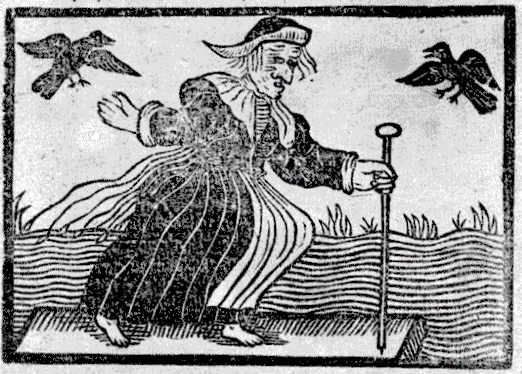
1643 woodcut of witch

When it is suggested around Halloween that someone in class 2Y is a witch, the ball starts rolling that inevitably leads to a literal witch-hunt, in which not only Nan but several other students are put under suspicion. Add to that the tedium of lessons, the institutionalised bullying and the sense of control slipping away, and we have the inevitable conflicts that drive the story forward towards its denouement and final resolution. Along the way we have Jones’ confident handling of themes, personalities and atmosphere that makes her writing such a joy to read, not to mention the puns and other examples of humour that contrast with the fear that grips the heart when witch-burnings are mentioned.

I’m going to mention the dreaded P word, only because so many readers seem to latch on to the very superficial similarities with the Harry Potter books. But Larwood House is the antithesis of Hogwarts (as well as significantly predating the appearance of Rowling’s books): magic is discouraged rather than encouraged. Interestingly, there is the similar-sounding and equally unpleasant Lowood House in Jane Eyre which many commentators point to as an influence, but I’ve also found out that there is a Larwood School, founded in 1971, in Stevenage, Hertfordshire (the county where Witch Week is set); however, this is a modern building, purpose-built for primary schoolchildren with special needs, and though witches could be said to have special needs in this Series 12 world I don’t think that was what Jones had in mind when this novel appeared in 1982.

I loved the final resolution, though I was still left with the logical confusion familiar from other DWJ books. If that world split off from our own world (12B is it?) in 1605 when Parliament was blown up, why was it necessary to merge the two worlds again when it wasn’t necessary to do the same with others in Series 12? But, since Chrestomanci is involved, there will be a rationale of sorts involved. One hopes.

Finally, I see that in North American books the pupils are in class 6B, which makes them sixth grade and therefore 11 years old, going on 12. In the UK the pupils are in 2Y which, in the old system before the National Curriculum was established in the late eighties, would have made them a year older, 12 going on 13. The UK version seems to me to render the children more believable — more mature, more bolshie, less awkward than if they had just moved from primary school.

Review first published March 2013, reposted 15th February 2015, now reposted for #MarchMagics2026 as part of a sequence looking at the Chrestomanci series.

#Chrestomanci #dianaWynneJones #fantasy #MarchMagics2026 #WitchWeek

Repost of my review of the #Chrestomanci story 'The Magicians of Caprona' by #DianaWynneJones for #MarchMagics2026.

https://wp.me/s2oNj1-caprona

Alike in indignity

19th-century Florence The Magicians of Caprona by Diana Wynne Jones. Collins, 2002 (1980). Two families, bothalike in magic, fight tillforced to face real foe. First things first: I wondered why Di…

Calmgrove
Repost of my review of 'Conrad’s Fate' by #DianaWynneJones for #MarchMagics2026.
#Chrestomanci
https://wp.me/s2oNj1-fate
Master of his own fates

William Blake’s The Ghost of a Flea. Conrad’s Fate by Diana Wynne Jones.HarperCollinsChildrensBooks, 2006 (2005). In the English AlpsConrad tries to change his fate.Unsuccessfully. Conr…

Calmgrove

Children Are Our Future by Griselda_Gimpel - The Chronicles of Chrestomanci - Diana Wynne Jones https://archiveofourown.org/works/43486348 via @ao3org

#FanFiction #Chrestomanci #ThrowBackThursday

New Session | Archive of Our Own

An Archive of Our Own, a project of the Organization for Transformative Works

90 rocznica urodzin Diana Wynne Jones – Fahrenheit

Diana Wynne Jones, angielska pisarka i poetka, a także krytyczka literacka, przyszła na świat 16 sierpnia 1934 roku w Londynie.

Fahrenheit

Relecture, en anglais et avec grand plaisir, pour les vacances.
J'avais oublié pas mal des intrigues depuis ma dernière lecture — ce qui est une qualité.
Vraiment une excellente série !

#chrestomanci