
@jsnell agreed it’s a free market- but I think it was even before subscriptions. Free trials and monthly commitments do allow me some latitude to learn about an app- but quite a number of apps I’ve used that can be subscription or pay once- eg #cascable and #graphite by becasso- their value only became clear to me after a couple of years of playing around with them.

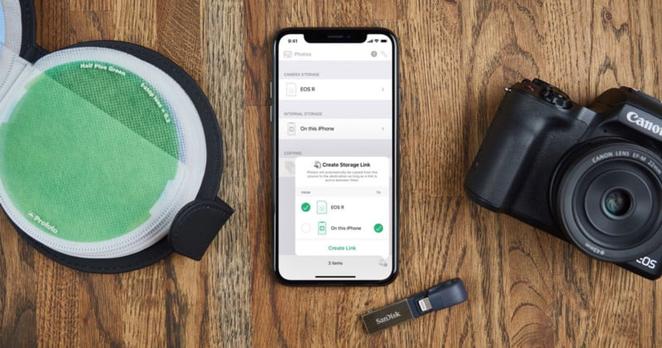
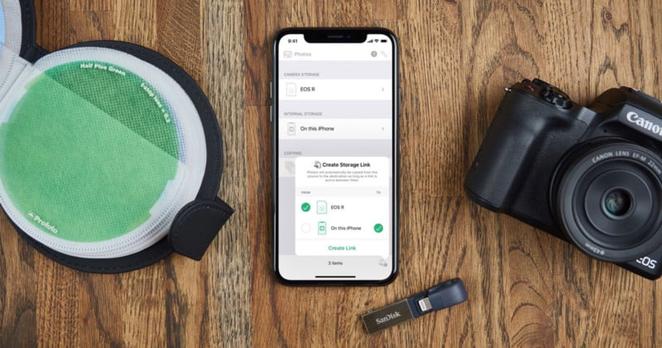
Camera Control App Cascable Revamps Interface, Supports Phase One

Cascable has released version 6.0 of the its Professional Photography toolkit which marks a collaboration with Phase One by adding mobile remote control and image transfer to the Phase One IQ4-based medium format cameras along with other notable updates.

For the first time, IQ4 users can control and automate their cameras from their iPhone or iPad wherever they are, and transfer 150 megapixel RAW images to their devices for preview and management.

The updated Cascable 6.0 also includes a completely new and revamped remote control that is optimized for all screen size combinations from the smallest iPhone to the largest iPad at any orientation. The company says that the new remote control concentrates on clarity and ease of use, bringing at-a-glance exposure settings and a greatly simplified and refined workflow.

The company says the Cascable app "takes a good DSLR or mirrorless camera and makes it even better" by giving users the tools to control and automate its functions using an iPhone or iPad. Users can even transfer photos from their camera to their mobile device -- including full-quality RAW files from more than 200 different DSLR or mirrorless cameras the app is compatible with and connects via WiFi and/or USB for super-fast image importing.

Despite its advanced options, Cascable insists that users don't need to be a master photographer or computer programmer to get the most out of it. The company says it is for "professional photographers who want to have complete control of their DSLR or mirrorless camera without using fiddly on-device controls, as well as Beginners who'd like to enjoy their DSLR or mirrorless camera while using the best possible interface."

Using the app you gain full control over the exposure and most other settings available in the supported mirrorless and DSLR systems. Users can shoot a timelapse with powerful drag-and-drop automation that allows for creating complex and unique sequences, create exposure brackets, take advantage of built-in calculators for exposure and other features useful for astrophotography, back-up the files immediately, and more with many built-in automation tools.

The app will also allow users to control a DSLR or mirrorless camera's shutter through an Apple Watch. While connected to an iPad or iPhone, the application will allow for displaying on a TV through the use of AirPlay or HDMI connections.

Cascable says the app has a single, unified interface regardless of the DSLR or mirrorless camera being used, but users should be aware that some features may vary depending on the model of camera and method used to connect.

The Cascable app is a free download on the Apple App Store, but the full features of the app are only avaialble with the "Pro" version, which can be purchased as a subscription ($5 per month or $30 per year) or bought outright for $60.

#news #software #cascable #ipad #iphone #iq4 #mobile #phaseone #pressrelease #remote #remotecontrol #smartphone #update
Camera Control App Cascable Revamps Interface, Supports Phase One

Phase One cameras finally get app support for remote control.

This Sharpness-Boosting Process is Used by Hubble Telescope Editors

Picture Instruments, a Germany-based software company known best for its plugins for Adobe Photoshop and Lightroom Classic, has released a new plugin that promises to create clean, detailed, ultra-sharp images with incredible depth by employing a technique used by the Hubble Space Telescope team.

As astrophotographers will attest, sharpening deep sky images can be very challenging and highly complex. The finest details have to be emphasized without increasing the image noise or artifacts. To achieve this, a method called Absolute Point of Focus (APF-R) was created, and is now available as a plugin.

Picture Instruments says the superiority of its plugin lies in the method at its core, which was developed by Christoph Kaltseis who had spent years researching methods in Photoshop to bring out even the most minor of details in his images. Kaltseis developed a complex image-sharpening process in Photoshop that not only added sharpness but also improved its apparent depth. This technique is now regularly used by the Hubble Space Telescope team when processing its images.

The company says the method's viability is illustrated by images processed by Kaltseis, which have been selected as NASA's "Astronomy Picture of the Day" multiple times. Additionally, the APF-R process developed from this proves its performance through its use in the offices of the Hubble Space Telescope it is an integral part of the image editing process.

“I gave APF-R a go on an HST mosaic and it works around 30% better fine-tuned than our other techniques to sharpen mid-tone to shadows," Mahdi Zamani, a member of the ESA Hubble Space Telescope team, says. "Which might not sound like too much but on the contrary is a big leap."

While the Hubble Space Telescope editors don't necessarily use Picture Instruments' plugin, they do use the process on which the plugin is based. The downside of the APF-R method was its complexity. To address this, Picture Instruments worked together with Kaltseis to simplify the complex calculation processes and created a plugin that promises to enable the user to apply the time-consuming process, even without prior understanding or knowledge of how APF-R works.

The company says that the APF-R plugin allows photographers to apply Kaltseis's method with just a single click, which saves the tedious headache of performing the up to 50 steps in Photoshop and repeatedly calculating radii manually. Instead, the plugin promises to automatically generate the first result after a few seconds. Even comparing different layer configurations -- a method Kaltseis established over several years and was previously a manual process -- is done at the push of a button. According to the Picture Instruments, thanks to the "simple and fast use of the plugin, it is now possible for amateurs as well as for professionals to apply the APF-R method to all images."

The APF-R Plugin for Photoshop is available for $29 (plus any applicable taxes) and can be installed directly through the marketplace in the Adobe Creative Cloud Desktop App. According to the company website, the plugin will work seamlessly with Photoshop version 22 on both Windows and macOS, and PetaPixel confirmed that it also loads properly on the M1-optimized version of the application.

#news #software #adobe #astrophotography #cascable #deepspace #hubble #nasa #noisereduction #photography #photoshop #plugin #sharpening #sky #star

This Sharpness-Boosting Process is Used by Hubble Telescope Editors

It supposedly boosts sharpness, but also the perception of depth.