The Roman authorities tried to seal the tomb, but the earth and the heavens cried out—the Resurrection cannot be contained! 🌍✨ Step out of your own "Upper Room" and live as a bold witness to the truth. #Resurrection #Faith #BiblicalTruth

https://bdking71.wordpress.com/2026/06/13/the-rocks-cry-out-the-sun-veils-its-face/

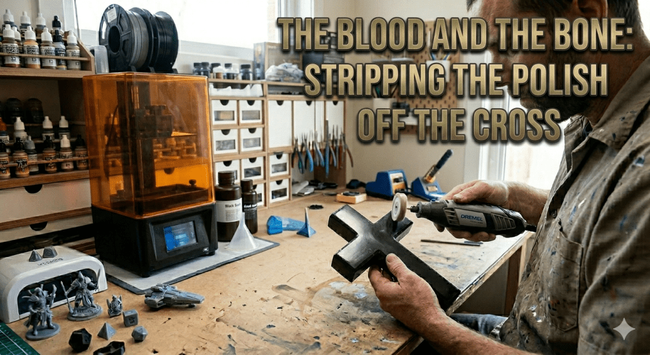
The Blood and the Bone: Stripping the Polish off the Cross

1,233 words, 7 minutes read time.

“But he was pierced for our transgressions, he was crushed for our iniquities; the punishment that brought us peace was on him, and by his wounds we are healed.” Isaiah 53:5 (NIV)

Our peace wasn’t bought with a shiny trinket, but through the violent, physical destruction of the Son of God.

The True Cost Of Salvation

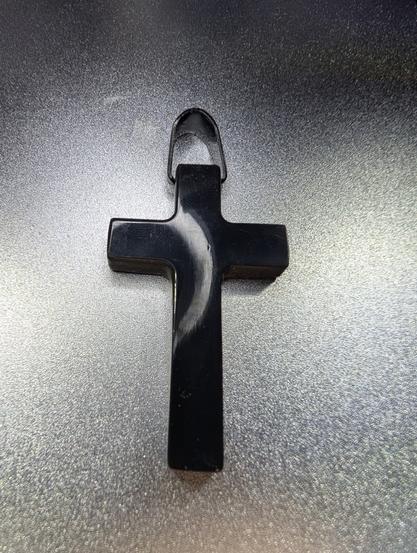
I’ve spent the last few hours hunched over my workbench with these 3D-printed crosses. I’ve been working through the grits of sandpaper—starting coarse to bite into the black resin, then moving to the fine, wet-sanding until the surface looks like a dark, perfect mirror. It’s beautiful. It’s clean. But as I sat there buffing out the last few scratches, it hit me like a punch to the gut: this is exactly what we’ve done to the story of Jesus. We’ve taken a state-sponsored slaughter and sanded down the splinters so they don’t prick our fingers. We’ve polished the gore until it looks like high-end jewelry. We’ve turned an execution into a lifestyle brand that looks great under church lights but feels like a plastic toy when real life starts swinging a sledgehammer at your chest.

When I first came to Christ many years ago, everything felt like that mirror shine. The music was soaring, the “welcome home” hugs were warm, and I felt like a new man. But then the “ghosting” started. The church lights dimmed, the follow-up stopped, and I was left standing alone still feeling the heat of my own anger, and carrying the crushing weight of trying to lead a good life. I felt like a fraud because my life didn’t have that “polished” glow the sermons promised. I thought the struggles were supposed to disappear, but instead, I just felt unprepared and abandoned.

The truth is, there was no mirror shine on Calvary. The Bible isn’t a collection of glossy resin casts; it’s a crime scene. Jesus wasn’t “wrongfully accused” in some polite, sterilized courtroom; He was spat on by religious cowards and handed over to Roman professionals who specialized in the slow-motion deconstruction of the human body. He was executed in public shame, stripped naked, gasping for air while His lungs collapsed under the weight of His own torn flesh. There were flies, there was the smell of sweat and waste, and there was the sound of iron spikes shattering bone.

We need to stop trying to polish our faith until it looks fake. You’re not a failure because you still have rough edges; you’re a man in a war zone. The “seeker-friendly” high wore off because it was never meant to sustain a man in the trenches. Only the raw, brutal reality of a Savior who bled—who was actually crushed—can hold you up when the world tries to kick your legs out from under you. Jesus doesn’t need you to be a polished piece of resin; He needs you to be a man built on the Rock, scars and all. He didn’t stay clean to save us; He got down in the dirt and the blood to find us.

Practical Christian Manhood

Today, stop trying to “buff out” your sins to look good for God. Take one specific, ugly struggle you’re facing—whether it’s porn, the temper, or the fear of failing your kids—and lay it before Him in its rawest form, acknowledging that He died for the mess, not the polish.

Prayer For Real Faith And Daily Discipline

Lord,

I’m done trying to look the part. I’ve been trying to sand down my life so I look like a “good Christian,” but I’m still bleeding underneath. Thank You that You didn’t stay clean, but You took the nails and the shame for a man like me. Help me stop chasing a shiny, fake faith and start building a real one on the fact that You were broken so I could be made whole.

Amen.

Reflection

  • How does the fact that Jesus was publicly shamed help you when you feel “ghosted” or ignored by people you thought were your brothers?
  • When you look at the “polished” image you try to project at church, what is the one raw struggle you are most terrified for people to see?
  • Why does the reality of a “bloody and brutal” Savior feel more honest to your life as a provider and a father than a sterilized, jewelry-store version of Jesus?
  • In what ways have you been waiting for a “spiritual high” to return instead of leaning into the grit of daily obedience?
  • If you stopped trying to be the “perfectly polished” man, what is the first honest thing you would say to your wife today?

Call to Action

Stop waiting for the “feeling” to come back and stop waiting for a church committee to hand you a map. The high of the altar call is gone, and the polished resin of “polite Christianity” has cracked under the pressure of your real life. That’s not a failure—it’s a wake-up call.

The man you were was buried in the water of baptism, but the man you are becoming is forged in the grit of daily, unpolished obedience. Jesus didn’t stay in the tomb, and He didn’t stay on a shiny piece of jewelry. He is in the trenches with you, in the middle of the anger, the bills, and the silent battles.

Here is your charge:

Pick up the Book. Not as a textbook to be studied for a grade, but as a survival manual for a man under fire. Look at the scars on your own hands and stop hiding them from the Father; those scars are where the grace gets in.

  • Stop Hiding: Admit the struggle to God today. No polish, no excuses.
  • Step Up: Lead your family not from a place of perfection, but from a place of honesty.
  • Stay Rugged: Build your foundation on the brutal, finished work of the Cross—the one that bled so you could finally breathe.

The polish is fake. The blood is real. Get to work.

SUPPORTSUBSCRIBECONTACT ME

D. Bryan King

Sources

Disclaimer:

The views and opinions expressed in this post are solely those of the author. The information provided is based on personal research, experience, and understanding of the subject matter at the time of writing. Readers should consult relevant experts or authorities for specific guidance related to their unique situations.

#authenticFaith #biblicalFatherhood #biblicalMasculinity #biblicalResilience #biblicalTruth #bloodOfJesus #brotherToBrother #buildingOnTheRock #ChristianDiscipline #ChristianManhood #ChristianProviderPressure #crucifixionReality #dailyObedience #discipleshipForMen #faithAndWork #faithInTheTrenches #fightingLust #gritLitDevotional #hardboiledChristianity #honestPrayer #identityInChrist #Isaiah535 #leadingYourFamily #leadingYourWife #masculineFaith #menSDevotional #menSMinistry #newBelieverAdvice #NIVBibleStudy #overcomingAnger #overcomingGuilt #overcomingPornAddiction #practicalTheology #rawFaith #realGospel #religiousBurnout #religiousGrit #seekerFriendlyChurch #spiritualAbandonment #spiritualDiscipleship #spiritualFoundation #spiritualGrowthForMen #spiritualMaturity #spiritualStruggle #spiritualSurvival #spiritualWarfare #theCostOfDiscipleship #theMessageOfTheCross #theRealCross #theSufferingServant

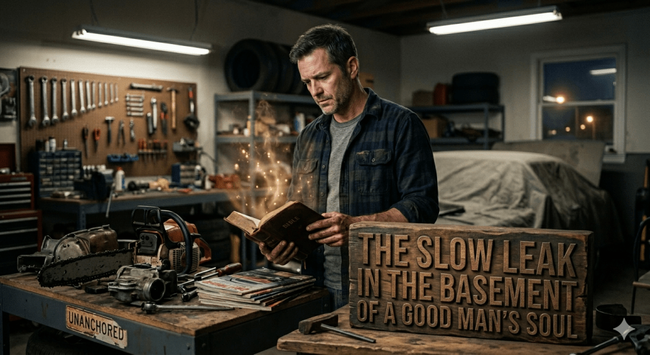
The Slow Leak in the Basement of a Good Man’s Soul

2,906 words, 15 minutes read time.

The engine of the black SUV hummed with a precision that cost more than Jaxson Thorne’s first three cars combined, a low-frequency vibration that usually settled his nerves after a ten-hour shift of managing regional logistics. Tonight, however, the leather seat felt like a stranger’s lap. Jaxson sat in his driveway, the headlights cutting a sharp, clinical path through the suburban drizzle, watching the rhythmic sweep of the windshield wipers. He didn’t want to go inside, but he didn’t have anywhere else to go. This was the quiet rot of a Tuesday night, the kind of silence that doesn’t just sit there but actively eats at the edges of a man’s identity. He looked at his hands on the steering wheel—clean, manicured, and utterly steady—and realized he couldn’t remember the last time he’d felt a genuine spark of conviction that wasn’t tied to a quarterly profit margin or a homeowner’s association dispute. He was forty-five years old, a man of standing, a man who provided, yet he felt like a ghost haunting his own life. The drift hadn’t happened in a single, catastrophic moment of rebellion; it had happened in increments of a thousandth of an inch, a slow migration away from the shore until the lighthouse was nothing more than a flickering memory on a dark horizon.

Jaxson grew up in a house where the Bible was as permanent as the foundation, and as a younger man, he’d carried a fire that felt unquenchable. He remembered the intensity of his early twenties, the way he spoke about faith with a raw, unpolished grit that made him feel like he was part of something cosmic. But life has a way of sanding down the sharp edges of a man’s soul. Career ladders require a certain kind of weight distribution, and slowly, Jaxson began to trade the “foolishness” of the Gospel for the “wisdom” of the world. He told himself it was maturity. He told himself that being a “real man” meant being self-reliant, stoic, and unshakeable. He stopped asking God for direction and started asking his financial advisor for projections. He didn’t stop going to church; he just stopped being present when he was there. He became a professional spectator, a man who could recite the creeds but couldn’t feel the weight of the cross. It was the “slow leak” phenomenon—the tire doesn’t go flat because of a blowout; it goes flat because of a microscopic puncture that saps the pressure over a long, unremarkable haul.

Stepping into the house, the air smelled of lemon polish and expensive candles, a curated scent that masked the stale reality of his marriage. Sarah was in the kitchen, her silhouette framed by the high-end cabinetry they’d spent three months picking out. They spoke in the shorthand of roommates—logistics about the kids’ soccer schedules, the upcoming gala, the leak in the upstairs faucet. Jaxson felt a surge of irritation that he immediately suppressed under a layer of practiced apathy. This was his primary defense mechanism: the mask of the “Good Provider.” If he paid the bills and kept the lawn pristine, no one had the right to ask what was happening in the cellar of his heart. He was hiding in plain sight, concealing a growing hunger for something he couldn’t name, a hunger he occasionally tried to dull with another glass of expensive bourbon or thirty minutes of scrolling through the curated lives of people he didn’t even like. He was living out the warning of Hebrews 2:1, letting the truth slip away through the cracks of his daily grind, distracted by the very things he thought were the markers of his success.

The pride of a man is a strange, architectural thing; it builds high walls that eventually become a prison. Jaxson viewed his self-reliance as a virtue, a shield against the perceived weakness of needing anyone—including the Creator. He had succumbed to the modern masculine myth that vulnerability is a defect, a crack in the armor that allows the enemy in. In reality, his refusal to be vulnerable was the very thing that was suffocating him. He was tired of the performance. He was tired of being the man who had it all together while feeling like his internal compass was spinning aimlessly. That night, as he lay in bed listening to the digital hum of the house, the words of a long-forgotten sermon echoed in his mind: “What does it profit a man to gain the world and lose his own soul?” It wasn’t a thunderclap; it was a cold, sharp realization that he had achieved everything he ever wanted only to find that he had lost the person he used to be. He was a successful executive, a respected neighbor, and a spiritual corpse.

The following Saturday, Jaxson found himself in the garage, the one place where he felt he could still work with his hands and escape the digital noise. He was trying to fix an old chainsaw that hadn’t been started in three years. He pulled the cord repeatedly, his muscles straining, his face reddening with a familiar, boiling anger. The machine was stubborn, clogged with old, gummy fuel—a perfect metaphor for his own spirit. He wanted to throw the damn thing across the driveway. He wanted to scream at the sky. His anger wasn’t really about the chainsaw; it was about the crushing weight of his own inadequacy, the realization that he couldn’t “manage” his way out of this spiritual drought. He sat down on a grease-stained stool, his breath coming in ragged gasps, and for the first time in a decade, he didn’t try to fix it. He just sat in the mess. He thought about the lust for status that had driven him, the pride that had isolated him, and the fear that if anyone saw the real Jaxson Thorne, they would walk away in disgust. He was the man in the mirror, and for once, he didn’t like the guy looking back.

In the Bible, there’s a story about a man named Samson, a guy who was the epitome of masculine strength but who drifted so far that he didn’t even realize the Spirit of the Lord had left him until it was too late. Jaxson felt that chill in his bones. He realized he had been living on the fumes of a faith he’d inherited rather than a relationship he’d cultivated. He had become a “form of godliness” that denied the power thereof. He stood up, wiped the grease from his hands with a rag that was already too dirty to be effective, and walked toward the back of the garage where an old, leather-bound Bible sat under a stack of home improvement magazines. He pulled it out, the dust puffing into the air like a ghost. He didn’t look for a “feel-good” verse. He looked for the truth. He found himself in the book of James, reading about the man who looks in the mirror and immediately forgets what he looks like. That was him. He had forgotten his true identity as a son of the King, trading it for the temporary identity of a middle-manager in a dying world.

The drift is never a straight line; it’s a series of small compromises. Jaxson thought back to the moments where he chose work over his kids’ bedtimes, where he chose the clever lie over the difficult truth, where he chose the comfort of his own ego over the radical call of discipleship. He had been “conformed to this world,” just as Paul warned, and the transformation was almost complete. He felt a sudden, visceral need to break something—not the chainsaw, but the cycle. He realized that being “real” didn’t mean being perfect; it meant being honest about the wreckage. It meant admitting that his self-reliance was a lie and his pride was a shroud. He bowed his head over the workbench, surrounded by the smell of gasoline and sawdust, and whispered a prayer that wasn’t a rehearsed liturgy. It was a guttural, desperate plea for a U-turn. “I’m lost,” he said, the words catching in his throat. “I’ve got everything, and I’ve got nothing. Bring me back.”

The weeks that followed weren’t a montage of instant success. There were no cinematic breakthroughs where all his problems vanished. Instead, it was the grueling work of reclamation. Jaxson had to start showing up—not as the polished version of himself, but as the man who was struggling. He started by talking to Sarah, not about the faucet or the gala, but about the void. He told her he was scared, a confession that felt like pulling a tooth without anesthesia. He expected her to look at him with contempt; instead, she looked at him with a relief that broke his heart. She had been watching him drift for years, unable to reach him through the fog of his own making. The “Hardboiled” exterior he thought was protecting his family was actually the very thing that was keeping them out. He realized that a man’s strength isn’t measured by how much he can carry alone, but by his courage to admit when the load is too heavy.

The modern world tells men that they are the sum of their utility—what they can build, what they can earn, what they can conquer. But Jaxson Thorne was learning that a man is actually defined by what he submits to. He began to see his work not as his identity, but as his mission field. He stopped using his anger as a tool for control and started using his discipline as a tool for service. He found a small group of men who didn’t care about his title or his SUV, men who were also tired of the performance. They met in a back room of a local diner on Friday mornings, smelling of cheap coffee and honesty. They talked about the things men aren’t supposed to talk about—the lure of the screen, the bitterness of unfulfilled dreams, the struggle to lead when you feel like a follower. In those moments, Jaxson felt the pressure gauge of his soul finally start to rise. The leak wasn’t fully plugged, but he was finally paying attention to the hiss.

The drift is a natural law of the spiritual world; if you aren’t rowing, you are moving downstream. Jaxson understood now that he couldn’t just “be a good guy” and expect to stay on course. He had to be intentional. He had to be visceral about his faith, treating it with the same intensity he brought to his career, but with a different focus. He stopped trying to be the hero of his own story and started letting God be the protagonist. He found that the more he gave up his need for status, the more status he actually had in the eyes of his children. They didn’t want a “Good Provider” who was a stranger; they wanted a father who was present, even if he was flawed. He began to see that his weaknesses weren’t obstacles to God’s power, but the very platforms where that power could be displayed. It was a complete inversion of everything he had spent twenty years building.

One evening, a few months into his “reclamation project,” Jaxson found himself back in his SUV in the driveway. The headlights were still cutting through the darkness, but the feeling in his chest was different. He wasn’t avoiding the house. He wasn’t hiding from the silence. He looked at the steering wheel, then up at the stars peeking through the clouds. He thought about the man he had been—the one who thought he was in control while he was actually being swept away by the current of a shallow culture. He thought about the man he was becoming—someone who was still a work in progress, still prone to pride, still tempted by the old shortcuts, but someone who was finally facing the right direction. He put the car in park, killed the engine, and stepped out into the night air. The air felt colder, sharper, and more real than it had in years.

The drift is dangerous because it’s comfortable. It’s the path of least resistance. But for Jaxson Thorne, the comfort had become a slow-motion suicide of the spirit. He realized that “being real” as a man didn’t mean being a “tough guy” in the traditional sense; it meant having the toughness to face the truth about himself. It meant acknowledging that his pride was a hollow shell and his self-reliance was a sinking ship. He walked toward his front door, not as a man who had conquered the world, but as a man who had been conquered by grace. And for the first time in a very long time, he knew exactly who he was. He wasn’t his job title, his bank account, or his reputation. He was a man who had been lost at sea and was finally, painfully, and gloriously, findng his way home. The basement of his soul was still a bit damp, but the leak had been found, and the repair work—the hard, masculine, beautiful work of repentance—had finally begun.

Author’s Note

The story of Jaxson Thorne isn’t a story about a villain; it’s a story about the “good man” who slowly falls asleep at the wheel. In our modern world, we often wait for a catastrophic failure—a scandal, a bankruptcy, or a collapse—to signal that something is wrong. But for most men, the greatest threat isn’t a sudden explosion; it’s the spiritual drift. The writer of Hebrews gives us a stark warning in Hebrews 2:1: “We must pay the most careful attention, therefore, to what we have heard, so that we do not drift away.” The Greek word for “drift away” describes a ship that has slipped its moorings or a ring sliding off a finger. It is effortless. You don’t have to do anything to drift; you simply have to stop anchoring yourself to the Truth. For the modern man, this drift usually happens in the pursuit of legitimate things—career, provision, and status. We become like the man described in James 1:23-24, catching a glimpse of our true selves in the mirror of the Word, but then walking away and immediately forgetting who we are. We trade our identity as sons of God for our identity as “producers,” and in that trade, we lose our compass.

To understand the weight of this drift, we can look to the ancient imagery found in the Book of Enoch. While not in the standard biblical canon, this text was a visceral part of early spiritual thought and contains a haunting warning for the “decent” man. In Enoch 22, the prophet is shown four divisions where the spirits of the dead are held until judgment. While there are places for the righteous and the overtly wicked, there is a specific, hollow place for those who were incomplete. These were the men who weren’t necessarily “evil” by the world’s standards—they weren’t criminals or monsters—but they also never sought the Light. They lived in a gray, lukewarm middle ground. This is the “Good Man’s Trap.” We think that because we aren’t “bad,” we are safe. But the drift doesn’t take you to the wicked division; it takes you to the hollow one. It leads to a state where you are “morally neutral” but spiritually dead. In the Grit-Lit reality of the soul, there is no such thing as standing still. If you aren’t rowing toward the Fountain of Life, the current is already carrying you toward the void.

Here is the hard truth: Neutrality is a death sentence. The world wants you to believe that as long as you provide, stay out of jail, and keep your lawn green, you’ve won. But Revelation 3:16 offers a visceral warning to the lukewarm: “Because you are lukewarm—neither hot nor cold—I am about to spit you out of my mouth.” God has no use for a “decent” man who has no heart for Him. Apathy is more dangerous than outright rebellion because it is harder to detect. The man who is actively rebelling knows he is at war; the man who is drifting thinks he is just enjoying the ride. Your self-reliance is a counterfeit armor that will shatter the moment it meets eternity. Your “goodness” is a filthy rag (Isaiah 64:6) if it’s used as a shield to keep God at a distance. The “middle division” is full of men who thought they had more time to get real. The drift is natural, but it isn’t inevitable. It’s time to stop the SUV, step out of the noise, and re-anchor your life to the only Foundation that doesn’t shift with the culture. Don’t wait for the shipwreck to realize you’ve lost your way. Do you recognize the “slow leak” in your own life, or are you still trying to convince yourself the tire is full?

SUPPORTSUBSCRIBECONTACT ME

D. Bryan King

Sources

Disclaimer:

The views and opinions expressed in this post are solely those of the author. The information provided is based on personal research, experience, and understanding of the subject matter at the time of writing. Readers should consult relevant experts or authorities for specific guidance related to their unique situations.

#ArmorOfGod #biblicalManhood #biblicalMasculinity #biblicalTruth #BookOfEnoch #ChristianLiving #ChristianMen #Enoch22 #faithAndWork #findingGodInTheMundane #fourDivisionsOfTheDead #graceForMen #gritLit #hardboiledFiction #Hebrews21 #honestFaith #identityInChrist #James1Mirror #JaxsonThorne #leadershipAndFaith #lukewarmChristianity #lukewarmHeart #masculineFaith #masculineGrit #masculineSpirituality #Matthew1626 #midlifeCrisis #modernDiscipleship #modernManStruggles #overcomingPride #prideInMen #reclamation #redemptionStory #religiousComplacency #religiousDrift #repentance #Revelation316 #selfReliance #shortStoryForMen #slowLeakSoul #soulSearching #spiritualApathy #spiritualDiscipline #spiritualDrift #spiritualHunger #spiritualRestoration #spiritualWarfare #suburbanFaith #urbanFaith #vulnerability

The Eightfold Lexicon of Hebrew Sin

2,025 words, 11 minutes read time.

The Hebrew language does not play games with the concept of human failure. While modern culture treats “sin” like a vintage relic or a therapeutic “mistake,” the ancient Hebrew lexicon functions like a high-precision forensic kit. It offers eight distinct, surgical terms that strip away the comfort of ambiguity and force a man to look at the wreckage he has created. This is not about feeling bad; it is about the cold, hard mechanics of spiritual rot. The Eightfold Lexicon—comprising Chata, Ra’, Pasha, Awon, Shagag, Asham, Rasha, and Taah—reveals that sin is a multi-dimensional catastrophe involving the will, the intellect, and the very structure of a man’s soul. To understand these words is to stop hiding behind the generic excuse of being “only human” and to finally face the specific, lethal ways that a life is dismantled by rebellion and neglect.

The Architecture of Failure and the Mechanics of Chata Ra and Pasha

The most common entry point into this lexicon is Chata, or Chatta’ah, which is routinely sanitized in modern English as “missing the mark.” In its raw Hebrew context, this is not a polite “almost.” It is a failure of aim that results in a total loss of purpose. If the target is the righteous standard set by a Holy God, then Chata is the definitive proof of a man’s incompetence or refusal to train his soul for the shot. It encompasses everything from the small ethical compromise in business to the massive moral collapses that destroy families. But the lexicon quickly escalates from missing the mark to Ra’, a term that represents the active, intense presence of evil. Ra’ is not a passive absence of good; it is the “imagination of the heart” turned into a weapon of opposition against the Creator. It is the drive toward idol worship and the engagement in anti-God activities that disrupt the natural order. When a man moves from failing to meet a standard to actively working against it, he has entered the territory of Ra’, where the heart becomes a factory for disaster and the soul begins to mirror the chaos of the abyss.

Building upon this internal depravity is the concept of Pasha, often translated as “willful transgression” or “rebellion.” In the technical landscape of Hebrew covenantal thought, Pasha is the language of treason. It is a deliberate breach of trust within a relationship that was supposed to be foundational. This is not a man who tripped and fell; this is a man who saw the line, recognized the Authority that drew it, and spat on the ground before stepping over it. It is the ultimate “gutless” move—taking the benefits of God’s grace while actively conspiring against His laws. This term highlights the political and relational nature of sin, stripping away the lie that a man’s choices only affect himself. Pasha proves that every act of deliberate disobedience is a declaration of war against the King of Kings. It is a rebellion that demands a reckoning, as it moves beyond the “mistake” and enters the realm of a calculated coup against the divine order of the universe.

The Structural Rot of Awon Shagag and Taah in the Human Soul

Beyond the act of rebellion lies the structural consequence of sin, captured perfectly by the word Awon. Frequently rendered as “iniquity,” Awon describes a moral distortion or a perversion of the law. This is the “crookedness” that settles into a man’s character after years of compromise. It refers to the inherent corruption that makes a straight path look wrong and a bent path look right. The most terrifying aspect of Awon is its dual meaning in Hebrew thought: it refers to both the crooked act and the heavy burden of guilt and punishment that inevitably follows. A man does not just “commit” Awon; he becomes it. He carries the weight of his own perversion until it crushes him. This is the technical explanation for why a life of compromise feels so heavy—the structural integrity of the soul has been compromised by a persistent, internal “bending” of the truth that God established as the only way to stand upright.

In contrast to the heavy, deliberate weight of Awon, the Hebrew lexicon provides Shagag and Taah to describe the different ways a man loses his way. Shagag refers to sinning through ignorance or error—the wandering of a distracted mind. It is the “reckless endangerment” of one’s own soul through sheer inattentiveness. It is the man who wakes up one day and wonders how his life became a wasteland, failing to realize that his casual neglect of spiritual discipline was a slow drift into enemy territory. However, the lexicon offers no “get out of jail free” card for the ignorant. Even wandering is a violation of the path. This becomes even more lethal in the case of Taah, which means to “go astray” or wander away deliberately. Unlike the distracted wandering of Shagag, Taah is a choice to leave the trail, even if the man refuses to acknowledge where that path leads. It is the height of arrogance to wander away from God’s protection and then act surprised when the wolves arrive. Both terms serve as a brutal reminder that whether through laziness or a “need for space,” leaving the path is a death sentence.

The Legal Reality of Asham and the Desolation of the Rasha

The final pillars of the Eightfold Lexicon deal with the hard legalities of sin and the ultimate state of the man who refuses to repent. Asham is a term rooted in the sanctuary, specifically tied to the “guilt offering.” It addresses the objective reality of guilt before God, regardless of how a man feels about it. In a world obsessed with “shame” as a psychological feeling, Asham reminds us that guilt is a legal fact. It is the debt incurred when a man’s actions cause damage to God’s holiness or his neighbor’s well-being. This is “meat-and-potatoes” logic: if you break it, you owe for it. The principle of Asham demands a settlement. It is the realization that no amount of self-help or positive thinking can erase the ledger of a man who has offended the Almighty. Without the sacrificial restoration that Asham implies, a man is simply a debtor waiting for the debt collector to arrive at the door of his life.

The culmination of this lexicon is Rasha, the term for “wicked.” In the wisdom literature and the Psalms, the Rasha is the direct, polarized opposite of the “righteous” man. This is the final state of the man who has ignored Chata, embraced Ra’, lived in Pasha, and become bent by Awon. The Rasha is someone who has turned entirely from God’s ways and has been declared “guilty” in the court of heaven. It is the description of a life lived outside the boundaries of the covenant—a life that is “loose” and un-tethered from the truth. There is no middle ground here. You are either moving toward the righteousness of God or you are settling into the status of the Rasha. The wreckage of a life lived as a Rasha is not a tragedy to be mourned with soft words; it is a warning to be heeded with fear. It is the end result of a man who refused to face the mirror and acknowledge the specific, technical nature of the sin that was rotting his soul from the inside out.

The Eightfold Lexicon of Hebrew sin is a mirror that reflects the absolute disaster of a life lived apart from God. There is no room for “churchy” platitudes or the soft, gutless excuses of modern existence when faced with the precision of these words. If you find yourself wandering, you are in Taah. If you are rebelling, you are in Pasha. If your character is crooked, you are drowning in Awon. The reality is simple and brutal: your life is rotting because you have neglected the standard of the Creator. You are currently standing in a state of Asham—legal guilt—and the only response that matters is to hit your knees and demand a soul-level change before the debt is called in. Stop hiding behind the vagueness of “imperfection” and start addressing the specific rebellion that is killing you. The truth of the Hebrew lexicon cuts deeper than any modern comfort—face it now or keep rotting in the mediocre, godless existence you’ve built for yourself.

Call to Action

The time for intellectual curiosity is over. You’ve seen the forensic breakdown of your own failure—now you have to decide if you’re going to keep walking toward the grave or turn around.

Stop hiding behind the “nobody’s perfect” lie. That’s the language of the gutless. If you are breathing, you are currently operating in one of these eight states of rot. You are either missing the mark, wandering like a distracted animal, or actively rebelling against the King who gave you life. Every second you spend “considering” this truth is another second you spend sinking deeper into the structural corruption of Awon.

Get on your knees.

This isn’t a suggestion; it’s an order for the survival of your soul. Face the legal debt of your Asham. Admit to the treason of your Pasha. There is no middle ground, no “safe” level of compromise, and no therapy that can fix a spirit that is intentionally wandering away from its Creator.

Here is your mandate:

  • Audit your life tonight. Strip away the excuses and label your actions with these eight Hebrew words. Call your rebellion what it is.
  • Repent with violence. Not physical violence, but a violent rejection of the mediocrity and sin you’ve tolerated. Kill the habits that are killing your connection to God.
  • Restore the damage. If your sin has caused debt—financial, relational, or spiritual—pay it.

The wreckage of your life is screaming for a Master. Either you submit to the One who defined righteousness, or you continue to rot as a Rasha. Choose today, or the choice will be made for you when the debt comes due. Move.

SUPPORTSUBSCRIBECONTACT ME

D. Bryan King

Sources

Disclaimer:

The views and opinions expressed in this post are solely those of the author. The information provided is based on personal research, experience, and understanding of the subject matter at the time of writing. Readers should consult relevant experts or authorities for specific guidance related to their unique situations.

#ancientHebrewMeanings #AshamMeaning #authoritativeBiblicalTeaching #AwonMeaning #biblicalEthics #BiblicalHamartiology #biblicalLaw #biblicalLexicon #biblicalManhood #biblicalRebellion #biblicalScholarship #biblicalTheologyForMen #biblicalTruth #breachOfTrust #CharlesRyrie #ChataMeaning #ChattaAh #ChristianGhostwriter #Christianity #covenantRelationship #debtBeforeGod #deliberateWandering #divineStandard #EightfoldLexiconOfHebrewSin #forensicKitForSin #forensicTheology #godlessExistence #grittyFaith #guiltOffering #hardboiledTheology #heartDepravity #HebrewLanguage #idolWorship #iniquityDefinition #masculineFaith #mentorForMen #missingTheMark #moralDistortion #moralFailure #OldTestamentSinWords #originalLanguageSin #overcomingMediocrity #PashaMeaning #perversionOfLaw #Pesha #PsalmsWisdomLiterature #RaMeaning #RashaMeaning #recklessEndangerment #religiousPlatitudes #repentance #righteousAnger #ShagagMeaning #soulLevelChange #spiritualAnatomy #SpiritualGrowth #spiritualRot #spiritualUrgency #structuralSin #TaahMeaning #theologicalDepth #truthForMen #unintentionalSin #wickedVsRighteous #willfulTransgression #wordStudy

The Weight of a Clean Desk

1,866 words, 10 minutes read time

Jackson Vance sat in the quiet, sterile glow of his corner office, the kind of space that smelled of expensive carpet cleaner and the faint, ozone tang of high-end printers. It was 7:45 PM, and the rest of the floor was a graveyard of empty ergonomic chairs and darkened monitors. Jackson was a middle manager at Sterling & Associates, a man who had built his reputation on being the guy who never broke a sweat. He was the bridge between the erratic demands of the executive suite and the grinding reality of the production floor. To the men who worked under him, Jack was the iron pillar; to the men above him, he was the reliable gear that never squeaked. He was a hard worker, a man who viewed his career as a testament to his character, and he had spent fifteen years ensuring that the mirror he presented to the world was devoid of even a fingerprint of failure.

The crisis hadn’t been his fault, not exactly. A junior analyst had fat-fingered the projections on the logistics overhaul, and a third-party vendor had missed a delivery window that Jack had warned was too tight. It was a perfect storm of institutional incompetence, but as the project lead, the shadow of the looming disaster fell squarely on Jack’s desk. When the Senior VP walked in that morning, looking for someone to bleed, Jack felt a primitive surge of fear. It wasn’t just fear of losing the job; it was the fear of losing the “Jack Vance” that people believed in. He saw the look of expectation in the VP’s eyes—the belief that Jack always had a contingency. In that split second, instead of laying out the honest wreckage caused by others, Jack offered a half-truth. He told them the delay was a “strategic pause” he had authorized to optimize the final rollout. He lied to protect the image of the man who was always in control.

The trouble with a lie isn’t the first breath it takes; it’s the constant oxygen it demands to stay alive. For Jack, that initial deception began to mutate within hours. To maintain the “strategic pause” narrative, he had to silence the junior analyst with a veiled threat and fabricate a series of emails to the vendor that made it look like the delay was intentional. He was a deacon at his church, a man who sat in the second pew and nodded along to sermons about the truth setting you free, yet here he was, weaving a shroud of dishonesty to wrap around his professional corpse. It was the masculine urge to be the provider who never faltered, the king of a hill that was actually a pile of shifting sand. He had convinced himself that protecting his status was the same thing as protecting his family’s future.

Every hour that passed made the truth harder to reach. He sat at his desk, staring at the polished mahogany surface, feeling the familiar, acidic burn of the secret sitting in the pit of his stomach. He was a slave to his reputation, a prisoner in a cell he had decorated with his own accolades. The Bible speaks of the heart being deceitful above all things, and Jack was currently the lead architect of his own deception. He wasn’t just lying to the firm; he was lying to the Man in the Mirror, trying to convince the Spirit of God that his intentions were pure even if his methods were crooked. He thought of his father, a man who worked forty years in a mill and never had a clean fingernail but never told a lie he couldn’t stand behind. Jack had the clean fingernails, the title, and the salary, but he felt like a hollow shell of the man his father had been.

When he finally left the office, the city lights felt like interrogators. He drove home in a daze, the hardboiled reality of his situation stripping away the last of his pretenses. He realized then that he had spent his life trying to manage his sin instead of repenting of it. He had treated his pride like a landscaping project, trimming the edges so it looked intentional, rather than seeing it for the rot that it was. He walked through his front door, and the domestic peace of his home felt like a mockery. Sarah was in the kitchen, her face bright with the kind of trust that made Jack want to vomit. She asked how the “optimization” was going, having heard the sanitized version of his day over a brief text. Jack felt the lie slide out of his throat like oil, confirming that everything was under control.

Dinner was a slow-motion interrogation of his soul. His son talked about a kid at school who got caught cheating on a math test, calling the boy a loser for not just owning up to it. Jack looked down at his plate and felt the irony like a physical blow. He tried to pivot to a “teachable moment,” his voice sounding hollow even to his own ears. It is a peculiar kind of hell for a man to preach a truth he isn’t living. He felt like a Pharisee in a tailored suit, straining at gnats while swallowing camels. He realized that his attempt to “protect” his family by lying had actually been a way of keeping them at a distance. He had traded intimacy for an image. He had chosen to be respected by a stranger rather than truly known by his wife.

By the time the house went quiet, the weight of the deception had become a physical burden, a phantom pressure on his chest that made every breath a labor. He sat in his darkened home office, the glow of the laptop screen etching deep lines into his face. He had the power to end it. He could type the email now—the full confession, the admission that he had panicked and lied to cover a mistake that wasn’t even his. He could choose the light. But he also knew the cost. Sterling & Associates didn’t value “growth through failure”; they valued results. A confession would likely mean the end of his career there, the loss of the lifestyle he had worked fifteen years to build, and the public shattering of the “Iron Pillar” persona.

He looked at the “Send” button on a draft that contained the truth, and then he looked at the file he had created to further the lie—the one that would successfully shift the blame entirely onto the vendor and keep his record spotless. The Bible’s teaching on honesty wasn’t a set of restrictive rules; it was a blueprint for survival, a warning that what is hidden will eventually be shouted from the rooftops. He knew what a “good” man would do. He knew what the man he pretended to be at church would do. But he also knew the man who had bills to pay, a son who looked up to him, and a pride that wouldn’t let him crawl.

Jackson Vance reached out, his finger hovering over the mouse. The silence in the room was absolute, save for the ticking of the clock on the wall—a steady, rhythmic reminder that time was running out for him to choose who he actually was. The mirror was still polished, the desk was still clean, and the image was still intact. For now. He closed his eyes, the weight of the world resting on a single click, caught between the man he was and the man he desperately wanted everyone to think he was. The cursor flickered, a heartbeat in the dark, waiting for him to decide if the cost of the light was worth the price of the shadow.

Author’s Note: The Choice in the Dark

I chose to leave Jackson Vance’s story unfinished for a specific reason. Most stories give us the comfort of a resolution—we get to see the hero redeem himself or the villain face his come-uppance. But in the real world, the most defining moments of a man’s life happen in that suffocating silence between the temptation and the action.

The cliffhanger isn’t just a literary device; it’s a mirror. Jackson is sitting in the dark, caught between the “Iron Pillar” persona that pays the mortgage and the broken man who needs the truth to breathe again. I wanted to give you, the reader, the space to sit in that chair with him and weigh the biblical cost of the decision.

Scripture and church history don’t shy away from the danger of the “polished mirror.” Consider these truths as you think about Jackson’s next move:

  • The Weight of History: Early church history tells us that the disciples and the first followers of Christ faced a much simpler, deadlier version of Jackson’s dilemma. For many of them, the price of “saving their image” and their lives was a single sentence renouncing Christ. They could have lied to stay safe. They could have played the middle ground to keep their status in society. Instead, they stood in the visceral reality of the truth, even when it meant accusing the powerful religious elite of their day for the crucifixion of Jesus. They chose the shadow of the cross over the safety of a lie.
  • Proverbs 28:13: “Whoever conceals their sins does not prosper, but the one who confesses and renounces them finds mercy.” Jackson is currently trying to prosper through concealment, but at what cost to his soul?
  • Luke 12:2: “There is nothing concealed that will not be disclosed, or hidden that will not be made known.” The “Iron Pillar” is a temporary structure; the truth has a way of outlasting our ability to hide it.
  • Ephesians 5:13: “But everything exposed by the light becomes visible—and everything that is illuminated becomes a light.” Jackson’s fear is exposure, but the Bible suggests that exposure is actually the starting point for healing.

I’m curious to hear your perspective: How does this story end in your mind? Does Jackson click “Send” on the confession and risk the fallout, or does he commit to the lie and live with the ghost of his integrity?

More importantly, I want to ask you to be honest with yourself: Have you ever been in Jackson’s shoes? Have you ever felt that visceral, primitive fear of your reputation cracking, and found yourself weaving a half-truth just to keep the image polished? We often think of “bearing false witness” as a grand, malicious act, but as Jackson shows us, it’s usually a defensive maneuver born out of pride and the fear of being seen as “less than.”

Leave a comment with your ending for Jackson Vance. Let’s talk about the cost of the light and the price of the shadow.

SUPPORTSUBSCRIBECONTACT ME

D. Bryan King

Sources

Disclaimer:

The views and opinions expressed in this post are solely those of the author. The information provided is based on personal research, experience, and understanding of the subject matter at the time of writing. Readers should consult relevant experts or authorities for specific guidance related to their unique situations.

#authenticity #biblicalRepentance #biblicalTruth #christianFictionForMen #ChristianMartyrdom #ChristianShortStory #churchDeaconLife #disciplesOfChrist #earlyChurchHistory #faithInTheWorkplace #fearOfVulnerability #gritLit #halfTruthsInBusiness #hardboiledChristianStory #integrityInLeadership #JacksonVanceStory #Luke122 #masculineFaith #menSIntegrity #middleManagementStruggle #modernChristianLiving #moralDilemma #overcomingPride #professionalEthics #Proverbs2813 #psychologicalTollOfLying #religiousHypocrisy #reputationVsCharacter #selfReliance #spiritualGrowthForMen #standingForTruth #workplaceHonesty

Re-calibrating the Mind

 When God’s Truth Reshapes Our Thinking
As the Day Begins

“Your word is a lamp to my feet and a light to my path.” (Psalm 119:105)

There is something deeply revealing about how we process life. Every decision, every reaction, every belief flows through what might be called a “mental grid”—a framework shaped by upbringing, experience, and repeated exposure to ideas. The psalmist’s declaration reminds us that God’s Word is not merely information; it is illumination. The Hebrew word for “lamp” is נֵר (ner), meaning a small but steady light, while “light” comes from אוֹר (or), a broader illumination that reveals direction. Together, they describe both immediate guidance and long-term clarity. God’s Word does not simply inform our grid; it has the authority to correct it.

Many of us walk through life assuming our internal framework is reliable. Yet Scripture gently confronts that assumption. When the Word of God contradicts our thinking, it is not the Word that needs adjustment—it is us. The apostle Paul captures this transformation in Romans 12:2 when he writes, “Be transformed by the renewing of your mind.” The Greek word for “transformed” is μεταμορφόω (metamorphoō), indicating a complete change in form, like a caterpillar becoming a butterfly. This is not surface-level correction; it is deep restructuring. Our mental grid must be continually reformed by truth, not comfort.

This is why repeated exposure to Scripture is essential. Just as a path becomes clearer the more it is walked, so truth becomes more defined the more it is rehearsed. Neuroscience confirms what Scripture has long taught: repeated input strengthens neural pathways. Spiritually speaking, repeated engagement with God’s Word strengthens discernment. When we neglect Scripture, our grid defaults to culture, emotion, or past teaching—some of which may be incomplete or inaccurate. But when we immerse ourselves in the Word, truth begins to overwrite error. It is like resetting a compass that has been subtly drifting off course.

On this day of worship, this truth becomes especially important. Sunday is not just a pause in the week; it is a recalibration point. As we gather, listen, and reflect, God is not simply giving us encouragement—He is realigning our thinking. Like a builder checking the level of a foundation, the Spirit uses Scripture to ensure our lives are aligned with what is true. The question is not whether we have a grid, but whether our grid is shaped by God’s voice or by everything else competing for our attention.

Triune Prayer

Heavenly Father, I come before You acknowledging that my thoughts are not always aligned with Your truth. I thank You for Your Word, which serves as both a steady lamp and a guiding light in my life. You see where my thinking has been shaped by past experiences, incomplete teaching, and even my own assumptions. Today, I invite You to examine my mental grid and reveal anything that does not reflect Your truth. Give me the humility to change when Your Word challenges me and the discipline to remain in Scripture daily. Help me to trust that Your ways are higher and Your wisdom is always right, even when it stretches my understanding.

Jesus the Son, You are the living Word, the embodiment of truth walking among us. I thank You for showing us what it looks like to live fully aligned with the Father’s will. As I read Scripture today, help me to see You more clearly and to follow Your example more faithfully. When my thoughts drift or my beliefs become distorted, gently correct me and bring me back to what is true. Teach me to filter every decision, every reaction, and every belief through Your truth. Shape my thinking so that my life reflects Your character, and help me to walk in the transformation You have made possible through Your sacrifice.

Holy Spirit, You are the One who illuminates truth and applies it to my heart. I ask You to actively work within me today, bringing Scripture to my remembrance and helping me understand its meaning. Where my thinking is resistant, soften me. Where I am confused, bring clarity. Where I am inconsistent, bring conviction. Guide me in real-time decisions so that my responses reflect a renewed mind. Continue the work of transformation within me, shaping my thoughts, attitudes, and desires to align with God’s truth. I surrender my inner life to Your guidance and trust You to lead me into deeper understanding and obedience.

Thought for the Day:
When God’s Word challenges your thinking today, don’t resist it—receive it. Let Scripture reshape your mental grid so your life aligns with truth rather than assumption.

For further reflection, consider this helpful resource on renewing the mind through Scripture: https://www.gotquestions.org/renewing-of-your-mind.html

FEEL FREE TO COMMENT, SUBSCRIBE, AND REPOST, SO OTHERS MAY KNOW


#biblicalTruth #ChristianThinking #Psalm119105 #renewingTheMind #scriptureReflection #spiritualDisciplines

The Concrete Grace Found in Shattered Dreams

673 words, 4 minutes read time.

And we know that in all things God works for the good of those who love him, who have been called according to his purpose. — Romans 8:28 (NIV).

This means God is in the middle of your mess. He’s taking the hits you didn’t see coming and using them to build a man who can actually handle what’s next.

The Brutal Truth About Your Loss

You worked hard, you played by the rules, and you still got kicked in the teeth. It feels like a waste. You’re looking at the wreckage of your job, your bank account, or your pride, and you’re waiting for an apology from God that isn’t coming. Here’s the reality: God doesn’t owe you a “yes.” Sometimes the “no” is the only thing that keeps you from becoming a man you’d hate. I’ve been there, sitting in the dirt, wondering how I missed the mark. But the “good” God talks about in this verse isn’t about making your life easy. It’s about making you solid. A man who gets everything he wants becomes soft and useless. A man who survives a gut-punch and keeps walking becomes dangerous to the enemy. Your biggest disappointment is usually God’s way of clearing the junk out of your life so He can put something real in its place. He’s not punishing you; He’s pruning you. He’s cutting off the parts of your life that were never going to go anywhere so you can finally grow in the right direction. The pain is real, but it’s not pointless. Stop acting like the story is over just because one chapter ended in a wreck. If you’re still breathing, God is still working. He’s using this failure to kill your ego before your ego kills you.

Face the New Reality Today

Your job today is to stop looking back. You can’t drive a car forward if you’re staring at the rearview mirror. Take five minutes to admit out loud that your plan failed and that you’re not in control. Once you say it, the power that disappointment has over you starts to die. Pick one small, productive task you’ve been putting off because you were too busy feeling sorry for yourself, and get it done. No excuses. Just move.

Prayer

Lord, this hurts and I don’t like it. But I know You’re in control and I’m not. Take the bitterness out of my gut. Help me stop looking at what I lost and start looking at what You want me to do next. Give me the strength to be the man You called me to be, even when it’s hard. Amen.

Reflection

  • What is one thing you still have right now that you should be thanking God for?
  • What is the one thing you lost that you’re still trying to get back, even though the door is locked?
  • Are you actually mad at God, or are you just mad that you didn’t get your way?
  • How has this loss made you realize you aren’t as “in control” as you thought you were?

Call to Action

Get off the sidelines. If you’re tired of reading about the man you’re supposed to be and you’re ready to start being him, then move.

Stop waiting for a sign or a better mood. God already gave you your orders. Pick up your Bible, get on your knees, and start leading your family and your life with the grit it takes to finish the race. The world has enough soft men—be the one who stands firm when the ground starts shaking.

Decide right now. Are you going to keep making excuses, or are you going to start making progress? Choose the mission.

SUPPORTSUBSCRIBECONTACT ME

D. Bryan King

Sources

Disclaimer:

The views and opinions expressed in this post are solely those of the author. The information provided is based on personal research, experience, and understanding of the subject matter at the time of writing. Readers should consult relevant experts or authorities for specific guidance related to their unique situations.

#biblicalEncouragement #biblicalManhood #biblicalTruth #biblicalWisdom #buildingALegacy #characterBuilding #ChristianDevotionalForMen #ChristianGrowth #ChristianLeadership #ChristianPerspectiveOnFailure #conqueringFear #dailyBreadForMen #dealingWithDisappointment #enduringTrials #facingDefeat #faithInTheRuins #faithUnderPressure #findingPurposeInPain #GodSPlanForMen #GodSSovereignty #gritLitDevotional #hardboiledFaith #hopeForTheBroken #ironSharpensIron #lettingGoOfPride #manOfGod #masculineSpirituality #menSBibleStudy #menSMinistry #menSDevotionalGuide #nonDenominationalMenSStudy #overcomingFailure #overcomingSetbacks #perseverance #practicalTheology #radicalFaith #rebuildingAfterLoss #resilientFaith #Romans828 #solidFoundation #spiritualDiscipline #spiritualGrit #spiritualMaturity #spiritualWarfare #strengthInSuffering #trustInGod #visceralChristianity #walkingWithGod

The Calling Fallacy: Why You Can Stop Searching for God’s Secret Blueprint

1,928 words, 10 minutes read time.

The blueprint is a lie. It is a psychological crutch for the spiritually stunted—a velvet-lined trap for men who are too terrified to bleed, too fragile to fail, and too paralyzed to move. Modern Christian culture has birthed a generation of passengers, men who sit in the driveway of life with the engine idling, waiting for a divine GPS to whisper turn-by-turn directions from the heavens. You call it “discerning the will of God.” I call it gutless. You are hiding behind a veneer of piety because you are afraid that if you make a choice without a mystical guarantee, you’ll drop into some cosmic “Plan B” purgatory. God isn’t hiding your life from you like a set of misplaced keys. He gave you a Book, a brain, and a pulse. Your refusal to use them isn’t holiness; it’s a quiet, rotting cowardice. The “Calling Fallacy” is the belief that God has a secret, micro-managed roadmap for your career, your zip code, and your car choice, and that missing the mark by an inch forfeits your destiny. This is a theological hallucination that breeds nothing but the howling winds of anxious fears. It is time to stop hunting for a secret and start obeying a command.

The Grave of the Ancient Trade: Why Your Career Isn’t a Secret

If you walked into a first-century carpenter’s shop or stood on the salt-crusted deck of a Galilean fishing boat and asked a man how he “discerned his vocational calling,” he would have looked at you like you’d lost your mind. In the grit and heat of the biblical world, men didn’t “find themselves”; they found a tool. You didn’t “follow your passion”; you followed your father into the field, the shop, or the masonry pit because survival demanded it and duty defined it. The Bible is remarkably silent on the specifics of your career path, yet it is thunderous regarding the integrity, diligence, and heart-posture with which you approach your labor. We have traded the hard-earned grit of biblical duty for the vapor of Western individualism, projecting our modern obsession with “self-fulfillment” onto a Creator who is far more concerned with your sanctification than your job title.

The delusion that God has a “Plan A” career for you—and that finding it is the prerequisite for a blessed life—is a modern invention fueled by the luxury of choice. In the ancient world, your “calling” was the work in front of you. Period. The Scripture doesn’t view your job as a vehicle for self-expression; it views it as a theater for obedience. If you are not working “as unto the Lord” in the job you currently despise, you won’t serve Him in the one you think you want. Men today use the quest for “God’s calling” as an escape hatch from the gritty reality of their current responsibilities. They want the crown without the cross, the “ideal role” without the prerequisite of faithfulness in the mundane. You aren’t a “creative,” a “consultant,” or an “executive” in the eyes of Heaven—you are a servant. Stop looking for a slot that fits your ego and start doing the work that feeds your family and honors your King.

This shift from “doing the right thing” to “finding the right slot” has turned men into spiritual shoppers. We treat the will of God like a product on a shelf, comparing features and waiting for a sale. We have forgotten that the will of God is not a destination; it is a direction. The historical reality is that the men God used in the Bible were almost always busy doing something else when the call came. Moses was tending sheep; Peter was mending nets; Matthew was counting tax money. They weren’t sitting in a room “discerning” their next move; they were occupied with the duty of the moment. Your life is rotting in the sun because you refuse to engage with the reality of the present. You are waiting for a voice from the clouds to tell you which way to turn the wheel while you haven’t even put the car in gear. God’s will isn’t a hidden treasure to be discovered; it is a path to be walked by the man who is already moving.

The Blood and Bone of the Revealed Will: Obeying the Open Book

You claim you can’t find God’s will? That is a lie. God has already published His will in an open book, written in black and white and dripping with the blood of men who actually followed it. The fundamental failure of the modern man is his refusal to distinguish between God’s Moral Will and His Sovereign Will. The Moral Will—the “Revealed Will”—is the set of clear, non-negotiable tactical orders found in the pages of Scripture. It isn’t a mystery. Be saved. Be filled with the Spirit. Be sanctified. Be submissive to authority. Be thankful in all circumstances. Be willing to suffer for the sake of the Gospel. This is the “Open Book” will, and it demands immediate, soul-level execution. If you are looking for a “sign” about a job while you are neglecting the clear commands of the Word, you aren’t a seeker—you are a rebel in a suit of piety.

Most men ignore the Revealed Will because it requires work, sacrifice, and a death to self. It is much easier to wait for a “feeling” about a promotion than it is to mortify the sin of lust or to lead your family in the hard path of discipleship. We want the secret blueprint because it feels personalized and special, whereas the Moral Will is universal and demanding. But here is the brutal truth: God has no obligation to show you the next step in your career if you are ignoring the last command He gave you in His Word. The “Secret Will” of God—His sovereign, providential governance over the timeline of history—is none of your business. You don’t “discover” providence; you trust it. You stop trying to pick the lock of the future and start obeying the orders of the present.

The man who hunts for a secret plan while ignoring a clear command is an idolater. He is worshipping his own sense of “destiny” rather than the God who called him to holiness. When you stop treating God like a cosmic vending machine for personal direction and start treating Him as the Sovereign King, the paralysis of choice evaporates. If you are walking in active, blood-earnest obedience to the commands God has already given, the pressure to “guess” His secret thoughts is replaced by the freedom of a son who knows his Father is in control of the outcome. You don’t need a vision when you have a Verse. You don’t need a fleece when you have a Command. Get off the floor, put the “discernment” journals away, and start doing what the Book says. The wreckage of your life isn’t due to a lack of information; it’s due to a lack of submission.

The Brutal Freedom of the Wise: Taking the Weight of Choice

God did not create you to be a puppet on a string; He created you to be a man. Where the Scripture is silent—on which industry you enter, which city you move to, which house you purchase—He has given you the terrifying weight of freedom. It is called wisdom. It is the muscle of the soul, and for most modern men, it has gone soft from disuse. We want God to make the choice for us so we can blame Him if it goes wrong. We want a “sign” so we don’t have to take the responsibility of a decision. But the “Way of Wisdom” demands that you look at the facts, seek counsel from men who have scars and sense, pray for a clear head, and then—for the love of God—move.

There are no “open doors” for the man who refuses to walk. We have turned “waiting on the Lord” into a spiritualized form of procrastination. Proverbs 16:9 declares that the heart of man plans his way, but the Lord establishes his steps. Do you see the order there? The man plans. The man moves. And as he moves, the Sovereign God directs the path. You cannot steer a ship that is anchored in the harbor. You cannot establish the steps of a man who is sitting on his couch waiting for a mystical “peace” that never comes. The “peace of God” isn’t a prerequisite for action; it is often the result of it. You make the best decision you can with the wisdom you have, and you trust that God’s sovereignty is big enough to handle your choices.

The “Calling Fallacy” has turned the Christian life into a high-stakes guessing game where one wrong turn ruins everything. This is a pagan view of God. The true God is not a capricious gamesmaster waiting for you to trip up. He is a Father who delights in His sons using the minds He gave them to make strong, wise, and courageous decisions. If you are walking in the Spirit, your “wants” begin to align with His purposes. You can essentially “do whatever you want” because your “wants” are being sanctified by the Word. This is the freedom of the Gospel. It is the freedom to lead, to risk, and to build without the paralyzing fear of “missing it.” Your life isn’t a destination to be reached; it’s a war to be fought exactly where you’re standing. Take the next hill. If you’re doing that, you aren’t just in God’s will—you are His will in action. Now get off your knees and get to work.

The search for a secret blueprint is over. The map is in your hands, the Guide is in your heart, and the orders are clear. Stop looking for a way out and start looking for a way in—into the lives of your family, into the integrity of your work, and into the depth of your devotion. The “ideal plan” is a ghost story told to keep men quiet and compliant. The real plan is simpler and far more dangerous: Live for God, obey the Scriptures, and love Jesus. Do that, and you will find you were never lost to begin with.

Call to Action

If this study encouraged you, don’t just scroll on. Subscribe for more bible studies, share a comment about what God is teaching you, or reach out and tell me what you’re reflecting on today. Let’s grow in faith together.

D. Bryan King

Sources

Disclaimer:

The views and opinions expressed in this post are solely those of the author. The information provided is based on personal research, experience, and understanding of the subject matter at the time of writing. Readers should consult relevant experts or authorities for specific guidance related to their unique situations.

#biblicalGuidance #biblicalManhood #biblicalMasculinity #biblicalTruth #biblicalVocation #biblicalWisdom #boldLiving #ChristianBlogForMen #ChristianCalling #ChristianCareerAdvice #ChristianDecisionMaking #ChristianEthics #ChristianFreedom #ChristianMan #ChristianStewardship #christianWorkEthic #dailyDiscipleship #discerningGodSWill #divineBlueprint #faithAndAction #findingYourPurpose #followingJesus #gloryOfGod #GodSPlanA #GodSWill #godlyAmbition #gospelCenteredLiving #husbandAndFatherRoles #kingdomWork #livingForGod #lordshipOfChrist #makingWiseChoices #masculineFaith #moralWillOfGod #ObedienceToGod #overcomingFear #pastoralCounsel #practicalChristianity #Proverbs169 #providenceOfGod #PurposeDrivenLife #ReformedTheology #religiousDuty #revealedWillOfGod #sanctification #scriptureGuidance #sovereignGrace #sovereignWillOfGod #spiritualAnxiety #spiritualDiscipline #spiritualGrowthForMen #spiritualLeadership #spiritualMaturity #spiritualParalysis #strengthInChrist #theologyOfWork #trustInGod #vocationalCalling #walkingByFaith

A small group of believers changed the world—not by power, but by knowing who they were in Christ. Discover what gave the early church its strength.
Read here: https://www.ojgreenministries.com/early-church-history-lasting-influence/

#ChurchHistory #EarlyChurch #ChristianFaith #SpiritualGrowth #Christianity #BiblicalTruth