Resting Behind an Honest Prayer

As the Day Ends

“But, O LORD of hosts, that tries the righteous, and sees the reins and the heart… unto thee have I opened my cause.” — Jeremiah 20:12

As this day comes to a close, I am reminded that God never asks me to hide behind polished words. Jeremiah poured out his confusion, disappointment, and hope before the Lord because he knew God already saw his heart. Genuine prayer begins where pretense ends. The Father is not looking for flawless language but for a sincere heart willing to trust Him with every burden.

Jesus invites weary souls to come to Him just as they are. Honest prayer does not diminish faith—it often strengthens it. When I lay aside my masks and speak openly with God, I discover His grace is greater than my fears and His peace reaches places my own strength never could. Tonight I can rest knowing the Lord welcomes every sincere prayer offered in faith.

Prayer

Heavenly Father, thank You for knowing my heart completely and loving me still. I confess that I sometimes hide my fears, disappointments, and doubts behind words that sound spiritual but fail to express what I truly feel. Tonight I come honestly before You, trusting that You search my heart with perfect wisdom and respond with perfect mercy. Help me rest in the confidence that Your love never depends upon my ability to appear strong. Teach me to entrust every concern to You and to sleep in the assurance that You remain faithfully at work, even while I rest.

Jesus, thank You for opening the way into the Father’s presence through Your sacrifice. You understand weakness, sorrow, and temptation because You walked among us. Tonight I place every regret, every unanswered question, and every lingering burden into Your hands. Let Your truth quiet my anxious thoughts and remind me that Your grace is sufficient for tomorrow as well as today. May I awaken with renewed confidence, knowing that You continue to shepherd me with compassion and steadfast love.

Holy Spirit, thank You for praying within me when words fail. Continue Your insightful work in my heart, exposing anything that separates me from joyful fellowship with God while filling me with peace that surpasses understanding. Form within me a spirit of honesty, humility, and trust. As I sleep, renew my mind and prepare me to walk faithfully in the light of Christ when a new day begins.

Thought for the Evening

God is never surprised by what is in your heart; the peace you seek begins when you honestly place that heart into His hands.

FEEL FREE TO COMMENT, SUBSCRIBE OR REPOST SO OTHERS MAY KNOW


#eveningPrayer #honestPrayer #Jeremiah20 #trustingGod

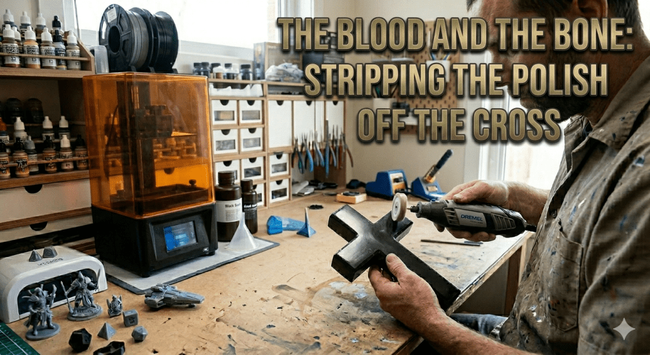
The Blood and the Bone: Stripping the Polish off the Cross

1,233 words, 7 minutes read time.

“But he was pierced for our transgressions, he was crushed for our iniquities; the punishment that brought us peace was on him, and by his wounds we are healed.” Isaiah 53:5 (NIV)

Our peace wasn’t bought with a shiny trinket, but through the violent, physical destruction of the Son of God.

The True Cost Of Salvation

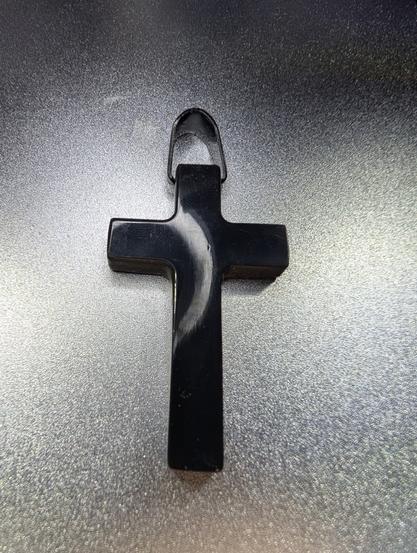
I’ve spent the last few hours hunched over my workbench with these 3D-printed crosses. I’ve been working through the grits of sandpaper—starting coarse to bite into the black resin, then moving to the fine, wet-sanding until the surface looks like a dark, perfect mirror. It’s beautiful. It’s clean. But as I sat there buffing out the last few scratches, it hit me like a punch to the gut: this is exactly what we’ve done to the story of Jesus. We’ve taken a state-sponsored slaughter and sanded down the splinters so they don’t prick our fingers. We’ve polished the gore until it looks like high-end jewelry. We’ve turned an execution into a lifestyle brand that looks great under church lights but feels like a plastic toy when real life starts swinging a sledgehammer at your chest.

When I first came to Christ many years ago, everything felt like that mirror shine. The music was soaring, the “welcome home” hugs were warm, and I felt like a new man. But then the “ghosting” started. The church lights dimmed, the follow-up stopped, and I was left standing alone still feeling the heat of my own anger, and carrying the crushing weight of trying to lead a good life. I felt like a fraud because my life didn’t have that “polished” glow the sermons promised. I thought the struggles were supposed to disappear, but instead, I just felt unprepared and abandoned.

The truth is, there was no mirror shine on Calvary. The Bible isn’t a collection of glossy resin casts; it’s a crime scene. Jesus wasn’t “wrongfully accused” in some polite, sterilized courtroom; He was spat on by religious cowards and handed over to Roman professionals who specialized in the slow-motion deconstruction of the human body. He was executed in public shame, stripped naked, gasping for air while His lungs collapsed under the weight of His own torn flesh. There were flies, there was the smell of sweat and waste, and there was the sound of iron spikes shattering bone.

We need to stop trying to polish our faith until it looks fake. You’re not a failure because you still have rough edges; you’re a man in a war zone. The “seeker-friendly” high wore off because it was never meant to sustain a man in the trenches. Only the raw, brutal reality of a Savior who bled—who was actually crushed—can hold you up when the world tries to kick your legs out from under you. Jesus doesn’t need you to be a polished piece of resin; He needs you to be a man built on the Rock, scars and all. He didn’t stay clean to save us; He got down in the dirt and the blood to find us.

Practical Christian Manhood

Today, stop trying to “buff out” your sins to look good for God. Take one specific, ugly struggle you’re facing—whether it’s porn, the temper, or the fear of failing your kids—and lay it before Him in its rawest form, acknowledging that He died for the mess, not the polish.

Prayer For Real Faith And Daily Discipline

Lord,

I’m done trying to look the part. I’ve been trying to sand down my life so I look like a “good Christian,” but I’m still bleeding underneath. Thank You that You didn’t stay clean, but You took the nails and the shame for a man like me. Help me stop chasing a shiny, fake faith and start building a real one on the fact that You were broken so I could be made whole.

Amen.

Reflection

  • How does the fact that Jesus was publicly shamed help you when you feel “ghosted” or ignored by people you thought were your brothers?
  • When you look at the “polished” image you try to project at church, what is the one raw struggle you are most terrified for people to see?
  • Why does the reality of a “bloody and brutal” Savior feel more honest to your life as a provider and a father than a sterilized, jewelry-store version of Jesus?
  • In what ways have you been waiting for a “spiritual high” to return instead of leaning into the grit of daily obedience?
  • If you stopped trying to be the “perfectly polished” man, what is the first honest thing you would say to your wife today?

Call to Action

Stop waiting for the “feeling” to come back and stop waiting for a church committee to hand you a map. The high of the altar call is gone, and the polished resin of “polite Christianity” has cracked under the pressure of your real life. That’s not a failure—it’s a wake-up call.

The man you were was buried in the water of baptism, but the man you are becoming is forged in the grit of daily, unpolished obedience. Jesus didn’t stay in the tomb, and He didn’t stay on a shiny piece of jewelry. He is in the trenches with you, in the middle of the anger, the bills, and the silent battles.

Here is your charge:

Pick up the Book. Not as a textbook to be studied for a grade, but as a survival manual for a man under fire. Look at the scars on your own hands and stop hiding them from the Father; those scars are where the grace gets in.

  • Stop Hiding: Admit the struggle to God today. No polish, no excuses.
  • Step Up: Lead your family not from a place of perfection, but from a place of honesty.
  • Stay Rugged: Build your foundation on the brutal, finished work of the Cross—the one that bled so you could finally breathe.

The polish is fake. The blood is real. Get to work.

SUPPORTSUBSCRIBECONTACT ME

D. Bryan King

Sources

Disclaimer:

The views and opinions expressed in this post are solely those of the author. The information provided is based on personal research, experience, and understanding of the subject matter at the time of writing. Readers should consult relevant experts or authorities for specific guidance related to their unique situations.

#authenticFaith #biblicalFatherhood #biblicalMasculinity #biblicalResilience #biblicalTruth #bloodOfJesus #brotherToBrother #buildingOnTheRock #ChristianDiscipline #ChristianManhood #ChristianProviderPressure #crucifixionReality #dailyObedience #discipleshipForMen #faithAndWork #faithInTheTrenches #fightingLust #gritLitDevotional #hardboiledChristianity #honestPrayer #identityInChrist #Isaiah535 #leadingYourFamily #leadingYourWife #masculineFaith #menSDevotional #menSMinistry #newBelieverAdvice #NIVBibleStudy #overcomingAnger #overcomingGuilt #overcomingPornAddiction #practicalTheology #rawFaith #realGospel #religiousBurnout #religiousGrit #seekerFriendlyChurch #spiritualAbandonment #spiritualDiscipleship #spiritualFoundation #spiritualGrowthForMen #spiritualMaturity #spiritualStruggle #spiritualSurvival #spiritualWarfare #theCostOfDiscipleship #theMessageOfTheCross #theRealCross #theSufferingServant

Where Honesty Meets Holiness

On Second Thought

“The Lord is near to all who call upon Him, to all who call upon Him in truth.”Psalm 145:18

There is a quiet invitation woven throughout Scripture that many believers overlook—not because it is hidden, but because it feels almost too simple. God calls us not only to obey Him or worship Him, but to draw near to Him with honesty. The psalmist uses the Hebrew word “אֱמֶת” (’emet), meaning truth, faithfulness, and sincerity. To call upon God “in truth” is not to present a polished version of ourselves, but to come as we are—unfiltered, known, and fully seen. This is where intimacy with God begins, not in performance, but in authenticity.

When I read John 17:1–8, I am struck by how Jesus Himself models this closeness with the Father. This is not a distant or formal exchange; it is deeply relational. Jesus speaks openly, confidently, and intimately. The Greek word “παρρησία” (parrēsia), often used in the New Testament, describes this kind of boldness—freedom of speech that comes from trust. Jesus prays as One who knows He is heard, known, and loved. And here is the remarkable truth: through Him, we are invited into that same relationship. We are not outsiders trying to gain access; we are children already welcomed into the Father’s presence.

This reality reshapes how we approach God. Many carry the subtle belief that they must “clean up” before they come close, that certain emotions—anger, confusion, disappointment—are somehow inappropriate in prayer. Yet Scripture tells a different story. The Psalms are filled with raw expressions of human emotion, from David’s cries of anguish to his declarations of joy. God is not threatened by our honesty. In fact, honesty is the pathway to healing. As one commentator has observed, “God meets us not at the point of our pretense, but at the point of our truth.” That insight is liberating. It means that the very things we are tempted to hide are the very places God desires to enter.

And yet, there are seasons when God feels distant. We pray, but the heavens seem silent. We seek, but clarity does not come. These moments test our understanding of God’s nearness. Psalm 145:18 assures us that God is near, but our experience does not always align with that promise. This tension is not new. Even Jesus, in His humanity, experienced it when He cried out, “My God, My God, why have You forsaken Me?” (Matthew 27:46). The Greek phrase “ἐγκατέλιπες” (egkatelipes) conveys a sense of abandonment, yet even in that moment, Jesus addressed God as “My God.” Relationship remained intact even when understanding did not.

This teaches us something essential: intimacy with God is not dependent on our feelings, but on His faithfulness. Hebrews 13:5 reminds us, “I will never leave you nor forsake you.” The strength of that promise lies in the Greek construction, which uses multiple negatives to emphasize certainty—it is as if God is saying, “I will never, ever leave you.” When we hold onto that truth, we are able to worship even when we do not fully understand. Worship becomes an act of trust, not just an expression of emotion.

But intimacy also requires exclusivity. The study reminds us to refuse competing lovers—money, fame, power. These are not merely external temptations; they are internal rivals for our affection. Jesus addressed this directly when He said, “No one can serve two masters” (Matthew 6:24). The issue is not just what we pursue, but what we love. The Father desires not partial allegiance, but wholehearted devotion. When our hearts are divided, our intimacy is diminished. But when we return to Him with undivided affection, we discover that His arms have been open all along.

So the question becomes deeply personal: Is the Father my most adored Friend? That question cuts through religious routine and exposes the condition of the heart. It is possible to know about God without truly knowing Him. It is possible to serve Him without delighting in Him. Yet the invitation remains—draw near, speak honestly, and allow Him to gather you into His presence. The image is not one of distance, but of embrace. God is not waiting to evaluate you; He is waiting to receive you.

On Second Thought

There is a paradox in this journey that often goes unnoticed. We assume that drawing close to God requires strength, discipline, and spiritual maturity—and in one sense, it does. But in another, deeper sense, intimacy with God begins with weakness. The very thing we try to overcome—our brokenness, our confusion, our emotional struggle—is often the doorway through which we encounter Him most clearly. We think we must become strong enough to approach God, but Scripture reveals that we must become honest enough. Strength may sustain the relationship, but honesty initiates it.

This creates a tension in how we live out our faith. On one hand, we are called to grow, to mature, to walk in obedience. On the other hand, we are invited to remain childlike in our dependence. The paradox is this: the closer we grow to God, the more aware we become of our need for Him. And rather than pushing us away, that awareness draws us deeper into His presence. What feels like weakness becomes the foundation of intimacy.

So perhaps the question is not, “Am I strong enough to walk closely with God?” but “Am I willing to be fully known by Him?” Because the truth is, He already knows. The issue is whether we will live in that reality. When we do, we discover that His nearness is not something we earn—it is something we embrace.

FEEL FREE TO COMMENT, SUBSCRIBE, AND REPOST, SO OTHERS MAY KNOW


#drawingNearToGod #honestPrayer #intimacyWithGod #Psalm14518Devotion