 Frontend Dogma
Releasing Babel 8 Today: ESM-Only, Drop ES5 Default, and a Smooth Migration Path, by @babel.dev:
https://babeljs.io/blog/2026/06/16/8.0.0/?ref=frontenddogma.com
Releasing Babel 8 Today: ESM-Only, Drop ES5 Default, and a Smooth Migration Path, by @babel.dev:
https://babeljs.io/blog/2026/06/16/8.0.0/?ref=frontenddogma.com
#Development #Releases
Releasing Babel 8 · ESM only, ES5 no longer default, smooth migration path https://ilo.im/16dt2j
_____
#Babel #Compiler #JavaScript #TypeScript #ESM #Browsers #DevOps #WebDev #Frontend
J'ai enfin mis en ligne l'émission où je raconte #Babel, dans deux versions différentes;
La première est proche du mythe biblique.
La seconde est largement inspirée de la nouvelle #2430 de Isaac #Asimov.
Bonne écoute !
https://www.radioecclesia.com/static/upload/2026/05/20260515104702.mp3
In line with my recent posts about AI and humanity, how Magnifica Humanitas is relevant in the age of AI as a source of moral authority, from my Medinge Group colleagues Cristian Saracco, Nicholas Ind and Giuseppe Cavallo.
https://medinge.org/beyond-babel-human-dignity-in-the-age-of-artificial-intelligence/ #AI #Babel #Jerusalem #MagnificaHumanitas #humanity #MedingeGroup
IA: o que propõe o Papa
Leão XIV intervém, com peso político e simbólico, numa disputa crucial e ainda indefinida. Seus pontos: domínio das big techs é ilegítimo; dados, algoritmos, programas e infraestruturas, são parte do Comum; Estados precisam intervirhttps://outraspalavras.net/tecnologiaemdisputa/ia-que-propoe-o-papa/
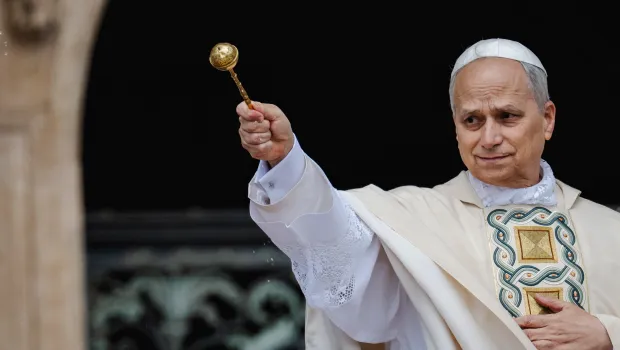
Magnifica Humanitas: The Pope Writes Like the Machine He Fears
On 15 May 2026, Pope Leo XIV released Magnifica Humanitas, an encyclical letter "On Safeguarding the Human Person in the Time of Artificial Intelligence." The document runs roughly 35,000 words across five chapters and a conclusion. It positions itself as the 135th-anniversary successor to Leo XIII's 1891 Rerum Novarum, recasting that founding labor encyclical for the age of machine intelligence. The framing image is biblical and Manichean. Humanity is presented with a choice between two ancient construction sites. One is the Tower of Babel, where collective effort produces dominance and dehumanization. The other is the rebuilding of Jerusalem under Nehemiah, where shared responsibility under God produces communion. […]https://bolesblogs.com/2026/05/27/magnifica-humanitas-the-pope-writes-like-the-machine-he-fears/
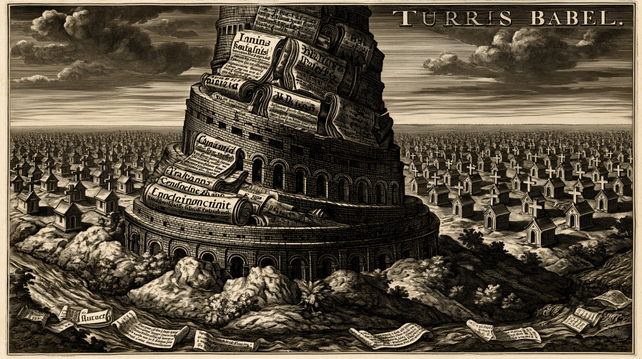
Как я сделал «клик по элементу → открыть в VS Code» за один вечер
Началось всё банально. Зашёл коллега, говорит: «Где у нас хлебные крошки в шапке лежат?». Проект — около 150 компонентов, всё именуется по-своему, структура папок местами загадочная. Я начал тыкать в React DevTools, искать по тексту «Breadcrumb» в файлах… В общем, минут через пять нашёл. Это в очередной раз раздражало.
https://habr.com/ru/articles/1039568/
#vite #react #babel #AST #viteplugin #developer_tools #open_source #DX #reactfiber #clicktocomponent
Magnificent Humanity
I am headed on retreat and off the grid for a couple of weeks starting tomorrow, but I couldn’t let a pope release a social encyclical without at least a quick skim before I left, and Pope Leo released Magnifica Humanitas this morning. So here I am.
I haven’t read any of the commentary already out there, and I’m sure there are already some excellent insights that I’m missing and other thoughts that others have already covered. But since I write mostly for those who are not really that into all this stuff, hopefully you’ll forgive me. So far I have only:
I should also say since I mentioned in my earlier post that I was curious what the footnotes would look like, I read through those before I actually read a word of the document itself. Would not recommend to others, though it helped me.
Quick takeaways:
There’s no reason to believe that this last one was a shoutout to uber-Tolkien nerd Stephen Colbert, but I hope that, wherever he is, he is smiling nonetheless.
Two paragraphs I liked:
This one, from the open, summarizes the narrative frame Leo uses throughout the document of Babel vs. Nehemiah:
#10: “We must, then, avoid the “Babel syndrome,” namely the idolatry of profit that sacrifices the weak, a uniformity that neutralizes differences, and the pretense that a single language — even a digital one — can translate everything, including the mystery of the person, into data and performance. The risk of dehumanization — of building a future that excludes God and reduces the other to a means — is an ancient and ever-new temptation that today takes on a technical guise. Instead, let us choose the “way of Nehemiah,” which highlights the importance of working together to make the City of God a safe place for returning exiles. Rebuilding today means recognizing that, precisely from the plurality of voices and visions which, even though they sometimes remind us of the confusion caused by the diversity of spoken languages, a bright possibility emerges. Indeed, this is the possibility of building together, of transforming diversity into a resource and of making listening and dialogue the common ground upon which to cultivate justice and fraternity. Within this shared task, Christians discover their unique role of guiding actions toward God so that, in his light, pluralism does not dissipate into disorder, but instead, through the practice of synodality, it becomes the space in which humanity rediscovers its solid foundations and its final end. In the Book of Revelation, John sees the New Jerusalem “coming down out of heaven from God” (Rev 21:2) as a gift for all humanity. And this vision of grace is an invitation for us Christians to work together in order to foster a peaceful, just and dignified life in community within today’s ‘cities.’”
This one, from the section on what our role is in peacemaking, was particularly powerful:
#216: “There are times when, in order to remain human, we must set aside our reservations and take a stand. In some conflicts, it is unjust to remain neutral, nor is it enough merely to claim that we are not complicit. [192] When we witness the bombing of civilians, attacks on hospitals, schools or vital infrastructure, and violence that affects children, we are confronted with scandals that wound humanity itself. For this reason, we cannot limit ourselves to the level of abstract analysis. Pope Francis encouraged us to “touch the wounded flesh” [193] of those who suffer, look at their faces, listen to their stories and acknowledge their wounds. Painful events require both history and memory, the former to recount the facts, the latter to bear witness to lived experiences.”
See you in a few weeks!
#AI #ArtificialIntelligence #Babel #bible #Catholic #catholicChurch #christianity #faith #god #jesus #MagnificaHumanitas #Nehemiah #peace #popeFrancis #religion Inautilo
 Etienne Dupont Conteur
 Jack Yan (甄爵恩)
 Bot Socialista
 Outras Palavras
 David Boles
 Habr
Habr
 Reading Francis
 Dr Susi Arnott